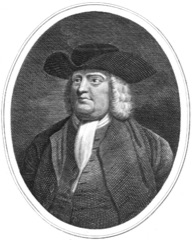
William Penn
1644–1718 · English Quaker leader and writer who founded Pennsylvania as a colony with religious freedom.
William Penn was born in London in 1644, the son of Admiral Sir William Penn. Sent down from Oxford for religious nonconformity, he later joined the Quakers in Ireland in 1667, to his father's distress. He was imprisoned in the Tower of London for his writings, where he wrote No Cross, No Crown, and in 1670 he and William Mead were tried for preaching in the street; the jury's refusal to convict them, despite being locked up, became a landmark for the independence of English juries. In 1681 King Charles II granted Penn a vast territory in America to settle a debt owed to his father. Penn drew up a Frame of Government guaranteeing freedom of worship, founded Philadelphia, and made treaties with the Lenape people. He spent only about four years in the colony, troubled by disputes and debt. His Some Fruits of Solitude (1693) is a collection of maxims, and in 1693 he also proposed a European parliament to keep the peace. He died in England in 1718. He suffered imprisonment for his faith and defended liberty of conscience.
William Penn is also an author in the library: author page and works.
Faith: Accepted the tenets of Quakerism as a young man. Source: Appletons' Cyclopaedia of American Biography (via Wikisource)
See also: George Fox

Key dates
- 1644 Born in London
- 1667 Joins the Quakers
- 1670 Penn and Mead trial
- 1681 Charter for Pennsylvania
- 1682 Frame of Government; arrives in America
- 1693 Some Fruits of Solitude
- 1718 Dies in Berkshire
Read about them
Grades 9–12
- No Cross, No Crown · In the library
More lives
Fra Angelico · Francis Bacon · William Bradford · Thieleman J. van Braght · John Calvin · Thomas Cranmer