Work record
A Child's Garden of Verses
1885 · 19th Century · Poetry · English
Abstract
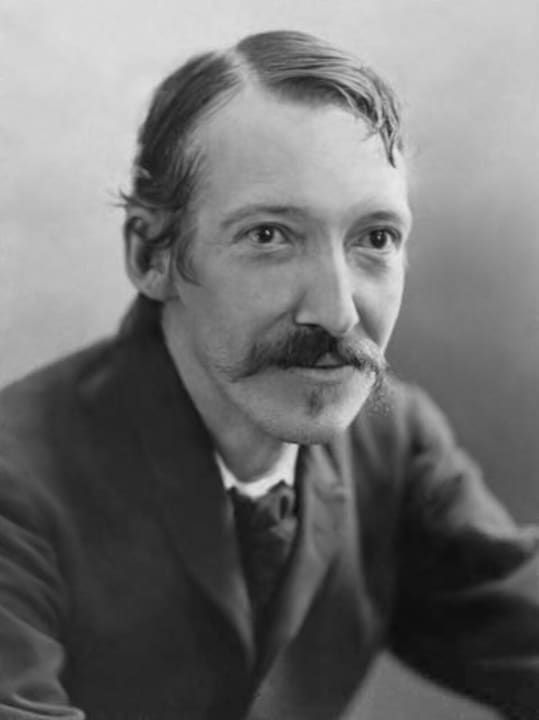
Background. Stevenson composed most of these lyrics in his early thirties, during years of lung haemorrhage and enforced rest in Scotland, Switzerland and southern France. He dedicated the book to Alison Cunningham, the nurse who had sat with him through his own sickly Edinburgh boyhood.
Content. Every poem is voiced by a small child. Bed in Summer protests going to bed by daylight; The Land of Counterpane turns a sickbed quilt into a battlefield for toy soldiers; My Shadow puzzles over an unruly companion; Windy Nights hears a horseman galloping past the house in the dark. Foreign Lands, Where Go the Boats? and Pirate Story stretch a garden wall or a stream into routes toward distant countries.
Structure. A long opening sequence follows the child's day and year, from candle-lit winter mornings to summer games. Three shorter groups follow: solitary play, the garden and its seasons, and envoys addressed to family members and to the reader.
Themes. Imagination as travel, the sharpness of small fears and pleasures, gratitude, and the bodily world of illness, weather and bedtime seen at a child's eye level.
Significance. Stevenson gave English children's verse a believable child's voice in place of moral instruction. Poems such as The Swing, Rain and the two-line Happy Thought became staples of recitation in British and American schools and nurseries.
Main characters
- The child speaker: First-person voice who plays, wonders, fears the dark and gives thanks
- Leerie the lamplighter: Evening lamplighter whom the child longs to follow on his rounds
- The shadow: The child's comic companion that grows and shrinks unpredictably
- Alison Cunningham: Stevenson's childhood nurse, 'Cummy', to whom the book is dedicated

Summary
A Child's Garden of Verses (1885) is Robert Louis Stevenson's book of poems spoken in a child's voice: rising by yellow candle-light in winter, watching rain fall on field and sea, playing at pirates, noticing a shadow, and blessing the world's abundance in the two lines of Happy Thought. Written while Stevenson often lived under the discipline of illness, the poems remember gardens, nurseries, and indoor days with affection rather than irony. They are short enough for recitation and clear enough for a young listener, yet made with a poet's care for rhythm and exact image. Bed in Summer turns a child's complaint about daylight bedtime into music; the rain poem widens from umbrella to ships; Happy Thought crowns gratitude without lecture. For School Launch's K-2 band the collection is ideal memory and narration work—authored lyrics to set beside Mother Goose's folk rhymes. Older readers can hear how Stevenson dignifies ordinary hours. The garden of the title is both a place and the cultivated ground of imagination, where travel, night fears, and kindness to playmates all have room, and where delight in a number of things becomes a habit of attention that School Launch can train early and keep for life through repeated recitation. Stevenson never talks down. The child's complaints are allowed to stand as music; the gladness of Happy Thought is not padded with adult irony. That respect is why the book still works aloud. A teacher can move from Mother Goose's anonymous beat into these authored lyrics and ask what changes when a named poet shapes childhood. The medical background—Stevenson's own frailty—explains some indoor weather-watching without turning the poems into case history. School Launch can use one poem a day for a fortnight of memory work, then return months later to find the lines still present. The full Gutenberg text lets families browse beyond the anthology favorites to quieter pieces on shadows, boats, and foreign lands. In a K-2 year that also holds Peter Rabbit and Aesop, Stevenson's garden supplies the lyric third: not moral plot and not folk chant alone, but the habit of stating a moment of attention in shaped speech, which is the beginning of both poetry and prayerful noticing of the given world.
Virtues in this work
- Hope: Happy Thought teaches glad expectation toward the given world of many things.
- Temperance: Poems of bedtime and quiet play honor the day’s order and limits.
Plot or Argument
- The day round
Poems of rising, weather, play, and night.
- Imagination as travel
Pirates, foreign lands, and shadows enlarge the nursery.
- Gratitude
Happy Thought and kindred lyrics teach delight in the given world.
Characters
- The child speaker, persona
First-person child who notices weather, play, and delight.
Lessons
Ordinary hours deserve verse
Bedtime, rain, and play are fit subjects for art; children learn their days can be spoken with care.
- What ordinary moment does Bed in Summer make important?
- Why write poems about rain?
Gratitude in two lines
Happy Thought shows thanksgiving can be brief and complete.
- What does the speaker mean by a number of things?
- How does rhyme help the thought stick?
Attention widens
The rain poem moves from near umbrellas to ships at sea—attention growing outward.
- What places does the rain touch?
- How is watching weather a moral habit?
Context
Late-Victorian authored childrens poetry. The work belongs to the wider English-language tradition of formative reading for the young, preserved here in a public-domain text for school and home use without commercial branding.
Composition
Published 1885. See the Gutenberg source metadata in content/texts for the exact file used.
Reception
Standard English childrens poetry book on both sides of the Atlantic.
Comparisons
- the-real-mother-goose
Folk rhyme versus authored lyric.
- treasure-island
Same author: adventure prose versus garden lyrics.
Quotes
“In winter I get up at night And dress by yellow candle-light. In summer quite the other way, I have to go to bed by day.”
“The world is so full of a number of things, I'm sure we should all be as happy as kings.”
“The rain is falling all around, It falls on field and tree, It rains on the umbrellas here, And on the ships at sea.”
For Students
A reading companion for classical Christian high school students. See the student guide.
Reading Guide
Watch for
- Poems that name a time of day.
- Weather as companion.
- Complete short lyrics (Happy Thought).
- Implied indoor convalescence without self-pity.
- Lines that invite gesture in recitation.
Key terms and names
- Persona
- The speaking I of the poem—here a child crafted by an adult poet.
- Lyric
- A short poem expressing a moment of feeling or attention.
- Image
- A concrete picture in words, such as yellow candle-light or rain on ships.
- Recitation
- Speaking a poem aloud from memory so ear and mouth learn its rhythm together.
Seminar Questions
- Comprehension In Bed in Summer, what does the child do in winter, and what is his summer complaint?
- Comprehension What two lines make Happy Thought?
- Comprehension Where does the rain fall in the rain poem?
- Interpretation Why use a childs voice rather than an adult looking back?
- Interpretation Is Happy Thought naive or a deliberate virtue?
- Interpretation How do these poems differ from Mother Goose?
- Big Question What should childrens poetry do—amuse, form character, train the ear, or all three?
Faith Connections
- Psalm 24:1 (Scripture)
The earth is the Lords—Happy Thought opens toward thanksgiving for creation.
- Matthew 18:3 (Scripture)
Childlikeness esteemed; Stevenson takes childhood wonder seriously.
- Wordsworth on childhood (Great Conversation)
Nineteenth-century elevation of childhood perception in a household key.
Logic and Rhetoric
Central argument: Ordinary childhood hours, attended with clear images and steady rhythm, are worthy of art and memory.
Rhetorical device: widening catalogue. Rain on field, tree, umbrellas, and ships.
Debate: Resolved: that authored childrens poems should be memorized alongside nursery rhymes.
Memory Work
The world is so full of a number of things, I'm sure we should all be as happy as kings.
Writing Prompts
Essay: Explain how one poems rhythm matches its feeling.
Comparison with The Real Mother Goose: Set Bed in Summer beside a Mother Goose night rhyme.
Medical Lens
Stevensons illness shadows indoor days and regulated rest; useful historically without clinicalizing the poems.
- Bed in Summer
Daylight bedtime suggests regulated rest for a delicate child.
Listen to the book
Public-domain audiobook from LibriVox, read by MichaelMaggs. Recording: Child's Garden of Verses (Version 4) on LibriVox (Internet Archive).
LibriVox recordings are volunteer readings released into the public domain. The reading may follow a different edition from the text in this library.
Creative Prompts
- Fiction
Write an eight-line poem in a child’s voice about today’s weather.
- Classroom
Memorize Happy Thought and illustrate it before showing the picture.
- Essay
How does Stevenson’s child speaker differ from Mother Goose’s anonymous voice?
Further Reading
- Treasure Island, Robert Louis Stevenson
Same author, older readers.
Verification notes
Quotes verified against PG #136.
No verification flags recorded.