Work record
The Age of Fable
1855 · 19th Century · Collection · English
Abstract
Background. A Boston bank clerk trained at Harvard compiled this volume so that people without Latin could follow the mythological references crowding Victorian poetry, oratory and conversation. It appeared in 1855 and later became the first third of the collected Bulfinch's Mythology.
Content. Roughly two-thirds of the chapters condense Ovid's transformations and the Greek hero cycles, from Pandora's jar and the drowned world through Perseus, Jason, Hercules and Theseus. Homer's and Virgil's epics are summarised next, followed by surveys of Egyptian gods, oracles, medieval fabulous beasts, Persian and Indian belief, the Norse cosmos and the Druids.
Method. Latin divine names predominate, objectionable episodes are trimmed, and almost every tale ends with excerpts from Spenser, Milton, Byron, Keats or Longfellow showing how English writers used it. Occasional comments interpret a myth, as when Psyche becomes an image of the soul.
Themes. Recurring motifs include divine jealousy and the punishment of pride, rash vows that cannot be unsaid, faithful love tested by death, and the welcome or rejection of strangers. Chapter XXXV adds a short discussion of competing theories about how myths first arose, whether from scripture, history, allegory or natural phenomena.
Significance. Few reference books have reached so many ordinary readers; in print without a break since the 1850s, it served American schools and households as the standard key to classical allusion until Edith Hamilton's 1942 Mythology, and it still introduces many readers to Ovid and Virgil.
Main characters
- Jupiter: Olympian ruler, often disguised among mortals
- Phaeton: reckless boy who scorches the earth in his father's chariot
- Psyche: princess whose trials Bulfinch reads as the soul's purification
- Hercules: laboring strongman hounded by Juno
- Orpheus: singer who looks back and loses his bride
- Ulysses: Ithacan king whose decade of wandering is condensed from Homer
- Aeneas: Trojan exile who carries his household gods to Italy
- Thor: Asgard's champion, outwitted among the giants

Summary
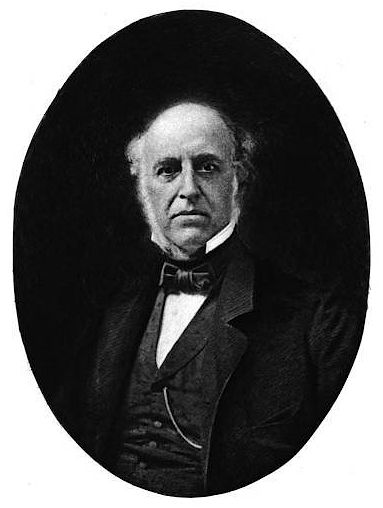
The Age of Fable, or Stories of Gods and Heroes, is Thomas Bulfinch's prose retelling of Greek and Roman mythology, with shorter chapters on Egyptian, Eastern, Norse and Celtic belief, first published in Boston in 1855. Bulfinch, a bank clerk with a Harvard classical education, wrote it so that ordinary readers could understand the mythological allusions in English poetry and speech. His preface explains that the book is not for scholars, theologians or philosophers but for readers of English literature, and that stories offensive to good morals are left out. The introduction sketches the Greek picture of the world and the Olympian gods with their Latin names, which Bulfinch uses throughout (Jupiter, Juno, Minerva, Venus). The next chapters follow Ovid's Metamorphoses closely: Prometheus and Pandora and the flood of Deucalion; Apollo and Daphne; Pyramus and Thisbe; Io, Callisto and Actaeon; Phaeton's disastrous drive of the Sun's chariot; Midas and the golden touch; Baucis and Philemon, who ask to die in the same hour; Proserpine carried off by Pluto; Pygmalion; Ceyx and Halcyone; and Echo and Narcissus. A whole chapter retells Apuleius's Cupid and Psyche, which Bulfinch reads as an allegory of the soul purified by suffering. Hero chapters follow: Cadmus and the Myrmidons, Perseus and Medusa, the monsters, Jason and the Golden Fleece with Medea, Meleager and Atalanta, Hercules, Theseus and Daedalus, and Bacchus and Ariadne. Later chapters treat the rural and water deities, Orpheus and Eurydice, the poets Arion and Sappho, and then the Trojan War, the fall of Troy, the wanderings of Ulysses and the voyage of Aeneas, drawn from Homer and Virgil, including the descent to the underworld with the Sibyl and the war with Turnus. Bulfinch then turns to Pythagoras, Egyptian deities and the oracles, a chapter on theories of the origin of mythology and on famous statues and poets, and one on the fabulous beasts of later lore such as the phoenix and the unicorn. A chapter on Eastern mythology describes Zoroaster, Hindu deities and the Buddha. The Norse chapters tell of Valhalla, Thor's visit to Jotunheim and the death of Baldur; the last chapter concerns the Druids and Iona. Throughout, Bulfinch sets passages of English poetry beside the myths, from Spenser, Milton, Pope, Byron, Keats, Tennyson and Longfellow, to show how the stories live in English verse. The library text is a later complete edition whose publishers added a section on the Nibelungen Lied and Wagner's Ring and replaced the index with a glossary of proper names; it contains The Age of Fable only.
Virtues in this work
- Charity: Baucis and Philemon share their last food with two travellers whom their rich neighbours turned away, not knowing they are gods.
- Humility: Arachne and Niobe are punished for boasting against Minerva and Latona, warnings Bulfinch tells without softening.
- Fortitude: Psyche completes every one of Venus's impossible tasks, even the journey to Proserpine's realm, to win Cupid back.
- Temperance: Midas learns that his wish for gold would starve him and begs to be freed from the golden touch.
Plot or Argument
- Prefaces and Introduction (Chapter I)
Bulfinch defends mythology as the handmaid of literature, describes the Greek idea of a flat, circular earth bounded by the river Ocean, and introduces the Olympian and lesser gods with their Greek and Latin names.
- Ovid's transformations (Chapters II-XI)
Prometheus, Pandora and the flood; Apollo and Daphne, Pyramus and Thisbe, Cephalus and Procris; Juno's rivals; Phaeton; Midas, Baucis and Philemon; Proserpine; Pygmalion and Adonis; Ceyx and Halcyone; Vertumnus and Pomona; and Cupid and Psyche from Apuleius.
- Founders and monster-slayers (Chapters XII-XVI)
Cadmus founds Thebes and Aeacus tells of the plague of Aegina and the Myrmidons; Nisus and Scylla, Echo and Narcissus, Hero and Leander; Minerva's contest with Arachne and Niobe's grief; Perseus and Medusa; and a survey of giants, the Sphinx, Pegasus, the centaurs and other monsters.
- The great heroes (Chapters XVII-XXI)
Jason and the Argonauts win the Golden Fleece with Medea's help; Meleager and Atalanta hunt the Calydonian boar; Hercules performs his labours; Theseus kills the Minotaur while Daedalus and Icarus fly; and Bacchus establishes his worship and finds Ariadne.
- Lesser deities, singers and lovers (Chapters XXII-XXVI)
Pan and the nymphs; Erisichthon's punishment by Famine; Achelous, Admetus and Alcestis, Antigone and Penelope; Orpheus and Eurydice, Aristaeus and the bees, Marsyas and Melampus; the historical poets Arion, Ibycus, Simonides and Sappho; Endymion, Orion and Aurora.
- Troy, Ulysses and Aeneas (Chapters XXVII-XXXIII)
The judgment of Paris and the Trojan War, the wooden horse and the returns of the Greeks with Orestes and Electra; Ulysses among the Lotus-eaters, the Cyclops, Circe and the Sirens, and his return to Ithaca; Aeneas with Dido, in the underworld with the Sibyl, and in the war against Turnus in Italy.
- Oracles, origins and the fabulous (Chapters XXXIV-XXXVII)
Pythagoras's teaching on transmigration, Egyptian gods such as Osiris and Isis, and the oracles of Delphi, Dodona and Aesculapius; theories of how myths arose and famous statues of the gods; the phoenix, basilisk, unicorn and salamander; and Eastern religion from Zoroaster to the Grand Lama.
- Northern and Celtic mythology (Chapters XXXVIII-XLI)
Odin, Valhalla and the Valkyrior; Thor's humiliating visit to Utgard; the death of Baldur, the elves, runes and skalds, with the added Nibelungen Lied and Wagner's Ring; and the Druids and Columba's island of Iona. A glossary of proper names closes the volume.
Characters
- Jupiter (Zeus), king of gods and men
Ruler of Olympus whose thunderbolts and disguises set many of the stories in motion.
- Prometheus, Titan benefactor
Shapes man from clay and steals fire for him, and is chained to a rock in punishment.
- Phaeton, son of Apollo
Demands to drive the Sun's chariot for a day to prove his parentage and sets the world ablaze.
- Baucis and Philemon, aged couple
Poor Phrygians who welcome disguised gods and are granted to die in the same hour, becoming two trees.
- Cupid and Psyche, lovers
The god of love and the mortal princess whose trials end in her immortality; Bulfinch reads her as the soul.
- Perseus, hero
Slays Medusa with gifts from the gods and rescues Andromeda from the sea monster.
- Jason and Medea, Argonaut and enchantress
Jason wins the Golden Fleece through Medea's magic; her later vengeance is told briefly.
- Hercules, hero of the labours
Son of Jupiter persecuted by Juno, whose twelve labours and death on Mount Oeta are retold.
- Theseus, Athenian hero
Kills the Minotaur with Ariadne's help and later rules Athens.
- Orpheus, musician
Charms the underworld to win back Eurydice and loses her by looking back.
- Ulysses, wanderer
The cunning Greek whose ten-year return from Troy and revenge on the suitors are summarised from Homer.
- Aeneas, Trojan founder
Leaves burning Troy, loves and leaves Dido, visits the underworld and fights Turnus in Italy.
- Thor, Norse thunder god
Visits the giant Utgard-Loki and loses contests that prove to be illusions.
- Baldur, Norse god
The good god slain by the mistletoe through Loki's malice.
Lessons
Mythology as the handmaid of literature
Bulfinch wrote for readers who met Niobe, Psyche or Pegasus in Milton, Byron or a public speech and did not know the story. His book teaches that English literature is full of classical allusion and that knowing the myths opens it. He sets lines of English verse after almost every tale so the reader sees the myth at work.
- Why does Bulfinch say his book is not for the learned, the theologian or the philosopher?
- Find one poem Bulfinch quotes after a myth. What does the poet borrow from the story?
- Name a phrase still used today that comes from these myths, such as a Herculean task or Pandora's box. What does it mean?
Phaeton and the father's fearful gift
Apollo swears by the Styx to grant his son any wish and then cannot refuse when Phaeton asks for the Sun's chariot. The father pleads that his fear is the best proof of his love, but the boy insists and the world burns. The story teaches the danger of rash promises and of pride that demands proof.
- Why does Phaeton need proof that Apollo is his father?
- What does Apollo mean when he says his fears for Phaeton prove he is his son?
- Who is more to blame for the disaster, the father who promised or the son who asked?
Baucis and Philemon's open door
Jupiter and Mercury, disguised as travellers, are turned away from every house in a Phrygian village until an old couple shares its little food with them. The poor cottage becomes a temple and their one wish, to die together, is granted. The story honours hospitality and faithful married love.
- How do Baucis and Philemon discover who their guests are?
- Why do they ask to die in the same hour rather than for riches?
- Why do so many traditions tell stories of strangers who turn out to be divine visitors?
Psyche, the soul purified by suffering
Psyche loses Cupid through curiosity and doubt and wins him back by enduring Venus's impossible tasks. Bulfinch points out that her name means both butterfly and soul and reads the tale as a picture of the soul that is purified by misfortune and prepared for true happiness. The chapter shows how nineteenth-century readers found moral allegory in pagan myth.
- What tasks does Venus set Psyche, and who helps her with each?
- Why does Bulfinch compare Psyche to a butterfly leaving the tomb?
- Is it fair to read a pagan story as an allegory of the soul? What is gained and what might be lost?
Context
In mid-nineteenth-century America, classical education was the mark of the college-bred, yet many readers of newspapers, sermons and poetry had no Latin or Greek. Popular handbooks of mythology filled the gap. Bulfinch, a Bostonian of a cultivated family who spent his working life as a bank clerk, wrote for the self-educated reader who wanted the allusions without the schoolroom, and he drew mainly on Ovid and Virgil, with Homer, Apuleius and modern antiquarian sources.
Composition
The Age of Fable; or, Stories of Gods and Heroes was first published in Boston in 1855. Bulfinch followed it with The Age of Chivalry (1858) and Legends of Charlemagne (1863). In 1881, after his death, the three books were issued together as Bulfinch's Mythology, edited by Edward Everett Hale. The library text, from Project Gutenberg #4925, is a later complete edition whose publishers enlarged the Norse section with the Nibelungen Lied and Wagner's Ring and added a glossary of proper names; this etext contains The Age of Fable only.
Reception
The book became one of the most widely read introductions to mythology in the English-speaking world and stayed in print continuously for more than a century and a half, in many editions and abridgments. Generations of American students learned the Greek and Roman stories from it before Edith Hamilton's Mythology (1942) became its main rival as a school text. Its practice of pairing myths with English poems shaped how teachers presented classical allusion.
Comparisons
- metamorphoses
Most of Bulfinch's early chapters (Phaeton, Baucis and Philemon, Pyramus and Thisbe, Ceyx and Halcyone, Erisichthon, the plague of Aegina) are close prose condensations of Ovid's poem, with the more erotic passages softened or removed.
- the-golden-ass
Bulfinch's chapter on Cupid and Psyche retells the tale embedded in Apuleius's Latin novel, but where Apuleius frames it as an old woman's story told to a captive bride, Bulfinch adds an allegory of the soul.
- apollodorus-library
Apollodorus is the ancient equivalent of Bulfinch: a prose handbook compiled for readers who needed the whole mythology in order, though it is more complete and genealogical and less literary.
- the-aeneid
Chapters XXXI-XXXIII summarise Aeneas's wanderings, his descent to the underworld with the Sibyl and the war with Turnus, giving younger readers a map of Virgil's epic before they read it.
- a-wonder-book
Hawthorne's 1851 children's retellings of Midas, Pandora, Perseus and Baucis and Philemon appeared four years before Bulfinch and freely reshape the myths; Bulfinch stays closer to Ovid and writes for adult general readers.
- prose-edda
Bulfinch's chapters on Thor's visit to Jotunheim and the death of Baldur are popular retellings of episodes Snorri tells in Gylfaginning.
Quotes
Frequently cited
“For Mythology is the handmaid of literature; and literature is one of the best allies of virtue and promoters of happiness.”
Frequently cited
“Psyche, then, is the human soul, which is purified by sufferings and misfortunes, and is thus prepared for the enjoyment of true and pure happiness.”
“Our work is not for the learned, nor for the theologian, nor for the philosopher, but for the reader of English literature”
“They belong now not to the department of theology, but to those of literature and taste.”
“Do you ask me for a proof that you are sprung from my blood? I give you a proof in my fears for you.”
“since here we have passed our lives in love and concord, we wish that one and the same hour may take us both from life, that I may not live to see her grave, nor be laid in my own by her.”
“Nor could the physicians help, for the disease attacked them also, and the contact of the sick gave them infection”
“Here the sick sought responses and the recovery of their health by sleeping in the temple.”
For Students
A reading companion for classical Christian high school students. See the student guide.
Reading Guide
Watch for
- The poems Bulfinch quotes at the end of many chapters, and which detail of the myth each poet picks up.
- Promises made by gods (Apollo to Phaeton, Jupiter to Semele, the wish granted to Midas) and what happens when they are kept.
- Hospitality kept and broken: Baucis and Philemon and their unfriendly neighbours, Ulysses in the Cyclops's cave, and the suitors in Ulysses's own house.
- Where Bulfinch stops the story to give an interpretation, as with Psyche's name or the origin of mythology in Chapter XXXV.
- The change in tone when the book moves from Greek and Roman to Norse mythology.
Key terms and names
- Olympus
- The mountain home of the twelve great gods, ruled by Jupiter, described in Chapter I.
- Metamorphosis
- A transformation of shape, such as Daphne into a laurel or Arachne into a spider; Bulfinch takes many of these from Ovid.
- Allusion
- A brief reference in literature to a well-known story or person; Bulfinch wrote the book so readers could understand them.
- Styx
- The river of the underworld by which the gods swore unbreakable oaths, as Apollo does to Phaeton.
- Oracle
- A shrine where a god was consulted for advice or prophecy, such as Delphi, Dodona or the temple of Aesculapius at Epidaurus.
- Argonauts
- The heroes who sailed with Jason in the ship Argo to win the Golden Fleece in Colchis.
- Valhalla
- In the Norse chapters, Odin's hall where warriors slain in battle feast.
Seminar Questions
- Comprehension Why does Phaeton go to the palace of the Sun, and what does Apollo promise him?
- Comprehension What happens to Midas when his wish is granted, and how is he freed from it?
- Comprehension How does Orpheus win Eurydice back from the underworld, and how does he lose her again?
- Interpretation Many of these myths punish pride: Niobe, Arachne, Phaeton, Erisichthon. Are the gods just in these stories, or simply jealous of their honour?
- Interpretation Bulfinch says the stories offensive to good morals have been left out. What does his choice of stories tell you about what he thought mythology was for?
- Interpretation Compare Thor at Jotunheim with Hercules at his labours. How do the Greek and Norse traditions imagine a strong hero differently?
- Big Question Bulfinch says the gods of Olympus now belong to literature, not theology. Can stories about false gods still teach true things?
Faith Connections
- Acts 14:8-18 (Scripture)
At Lystra the crowd takes Paul and Barnabas for Jupiter and Mercury come down in human form, the very gods who visit Baucis and Philemon in the Phrygian story Bulfinch tells. Paul turns them from these vanities to the living God who made heaven and earth and gave them rain and fruitful seasons.
- Hebrews 13:2 (Scripture)
Be not forgetful to entertain strangers, for some have entertained angels unawares. The Baucis and Philemon tale, like Abraham's welcome of three visitors in Genesis 18, honours hospitality to unknown guests.
- Basil the Great, Address to Young Men on the Right Use of Greek Literature (Church Fathers)
Basil advised Christian students to read the pagan poets as bees gather honey, taking what leads to virtue and passing over the rest, much as Bulfinch selected the stories he judged fit for his readers.
- John Milton, On the Morning of Christ's Nativity (Great Conversation)
Bulfinch's preface points to this ode, in which the pagan gods flee their shrines at Christ's birth, as one of the poems that cannot be enjoyed without knowing the myths.
Logic and Rhetoric
Central argument: Useful knowledge includes whatever makes us happier and better; English literature makes us happier and better; that literature cannot be understood without the classical myths; therefore a knowledge of mythology is useful, and a plain book of the stories is worth writing.
Rhetorical device: Personification (metaphor). The Author's Preface calls Mythology the handmaid of literature and literature an ally of virtue, giving each discipline a role in a household of learning.
Debate: Resolved: Bulfinch was right to leave out stories offensive to good morals when retelling the myths for general readers.
Memory Work
For Mythology is the handmaid of literature; and literature is one of the best allies of virtue and promoters of happiness.
Do you ask me for a proof that you are sprung from my blood? I give you a proof in my fears for you.
Writing Prompts
Essay: Choose three myths from the book in which a wish is granted (Phaeton, Midas, Baucis and Philemon) and explain what each teaches about the wisdom or folly of the person who asks.
Comparison with Metamorphoses: Read Ovid's version of Phaeton or of Baucis and Philemon and compare it with Bulfinch's chapter. What does Bulfinch keep, cut or explain, and why?
Medical Lens
Because Bulfinch condenses so much of Ovid, the book gathers in one place several of the ancient world's most influential medical myths, filtered through a Boston layman of the 1850s. Apollo is god of medicine as well as music, and Bulfinch explains the pairing with verses by the physician-poet John Armstrong. Chiron teaches Aesculapius, who becomes so skilled that he raises the dead and is struck down by Jupiter, an early fable of medicine overreaching its limits. The plague of Aegina, taken from Ovid, describes fever, swollen tongues, contagion that kills the physicians, and despair. Erisichthon is punished with insatiable Famine. The chapter on oracles describes incubation at Epidaurus, where the sick slept in the temple for healing, and Bulfinch remarks that the treatment has been compared to animal magnetism or mesmerism, a revealing comparison from the decade when mesmerism was still debated in America. Niobe's petrified grief and Orpheus's mourning offer classical images of bereavement. Medical readings of the myths are interpretive.
- Chapter III, Apollo and Daphne
Bulfinch explains why medicine belongs to Apollo's province, quoting the physician-poet Armstrong on music that allays grief and expels disease.
- Chapter XII, Cadmus--The Myrmidons
Aeacus narrates the plague of Aegina: corrupted air and water, the death of animals first, fever and thirst, contagion that kills the physicians, and the collapse of social restraint.
- Chapter XVI, Monsters (Centaurs); Chapter XXIII, Admetus and Alcestis
Chiron the centaur, skilled in medicine, raises the infant Aesculapius; Aesculapius later restores the dead to life and is killed by Jupiter's thunderbolt.
- Chapter XXII, Erisichthon
Ceres sends Famine to a man who cut down her sacred oak; his hunger grows with every meal until he devours his own body.
- Chapter XXXIV, Oracle of Aesculapius
The sick sleep in the temple at Epidaurus to receive healing responses; Bulfinch compares the cure to mesmerism and tells how the god's serpent came to Rome in a time of pestilence.
- Chapter XXVI, Aurora and Tithonus
Tithonus is granted immortality without youth and withers into extreme old age.
Creative Prompts
- Classroom
Make an allusion hunt: give each student one of the English verse passages Bulfinch quotes, and have them identify the myth, retell it in two sentences and explain what the poet borrows from it.
- Fiction
Retell the story of Baucis and Philemon set in your own town, keeping the disguised visitors, the rich neighbours who refuse them and the couple's single wish.
- Essay
Bulfinch reads Cupid and Psyche as an allegory of the soul. Choose another myth from the book (Pandora, Orpheus or Prometheus) and argue whether it can fairly be read as an allegory, and of what.
- Dialogue
Write the conversation between Apollo and Phaeton as a modern father and son, keeping the father's argument that his fear is the proof of his love.
Further Reading
- Metamorphoses, Ovid
The principal source of Bulfinch's early chapters.
- The Age of Chivalry, Thomas Bulfinch
Bulfinch's companion volume on King Arthur and the Mabinogion.
- Legends of Charlemagne, Thomas Bulfinch
The third volume of Bulfinch's Mythology, also in this library.
- Mythology, Edith Hamilton
The 1942 retelling that succeeded Bulfinch as the standard school introduction.
- D'Aulaires' Book of Greek Myths, Ingri and Edgar Parin d'Aulaire
An illustrated retelling for younger readers.
Verification notes
All quotations were checked by exact search against the stored Project Gutenberg #4925 text. Chapter numbers and titles follow the text's own table of contents. The Gutenberg edition reproduces a later complete edition whose publishers added the Nibelungen Lied and Wagner sections and a glossary; its preface also promises British hero-tales (Beowulf, Cuchulain, Robin Hood), but those belong to the Age of Chivalry portion and are not in this etext. Biographical facts (born 1796, Harvard 1814, Merchants' Bank clerk, died 1867) agree with the edition's own publishers' preface and standard references; the preface gives Boston as his birthplace, while some references give Newton, Massachusetts, so the record does not name a birthplace.
- Edward Everett Hale's role as editor of the 1881 collected Bulfinch's Mythology is standard but should be checked against the 1881 title page before publication.