Work record
Grace Abounding to the Chief of Sinners
1666 · Renaissance Early Modern · Memoir · English
Abstract
Background. Jailed after the Restoration for preaching without a licence, Bunyan wrote this record of God's dealings with him for the Bedford church he could no longer serve in person, and kept enlarging it in successive editions until his death in 1688.
Scope. It follows one soul from village boyhood, oaths and bell-ringing through a decade of inward conflict to settled trust, a preaching ministry and long confinement.
Content. Episodes include a voice heard mid-game on a Sunday, an attempt to command roadside puddles to dry, an imagined sunlit mountain walled off from him, the compulsion to sell Christ, the shadow of Esau's lost birthright, a crumbling volume of Luther, and the field where Christ at God's right hand becomes his righteousness. Later pages treat his call to exhort and his sentence.
Method. Bunyan deliberately rejects ornament, saying a higher style would misrepresent trials that were not play. He numbers short paragraphs, quotes and cites verses constantly, and renders inner experience as voices, battles, prisons and chains, so that private anguish acquires the vividness of outward event.
Significance. The book is the fullest example of a genre central to English Dissent, the autobiographical source of much in The Pilgrim's Progress, and an early, much-studied document of religious melancholy and its relief.
Key figures
- John Bunyan: Tinker, Baptist preacher and prisoner, narrator of his own conversion
- John Gifford: Pastor of the Bedford separatist congregation
- The women of Bedford: Poor church members whose talk of the new birth awakens him
- Martin Luther: Reformer whose Galatians commentary consoles him
- Mary Bunyan: His blind elder daughter
- Elizabeth Bunyan: Second wife, who petitions the assize judges
- Sir Matthew Hale: Assize judge who hears Elizabeth's plea

Summary
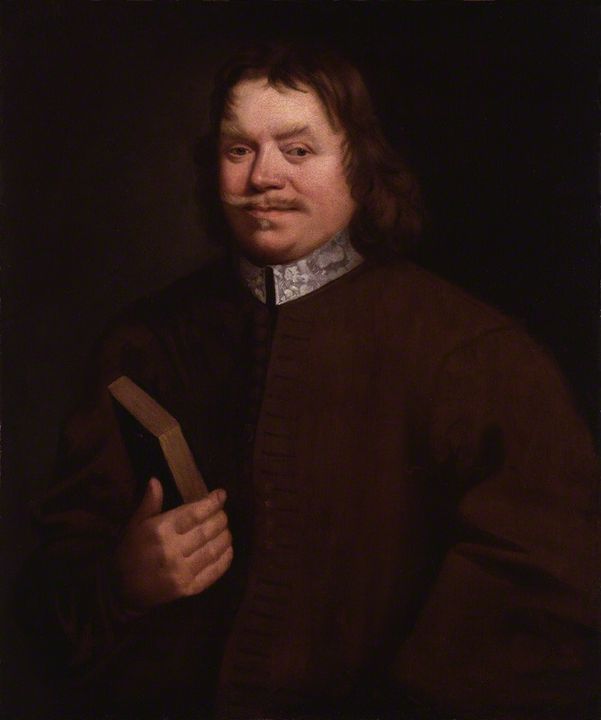
Grace Abounding to the Chief of Sinners is John Bunyan's account of his own conversion, written in the Bedford county jail and first published in 1666. It is told in 339 numbered paragraphs, opened by a preface addressed to the members of his congregation, whom he calls his children in the faith, and to whom he sends what he calls honey taken from the carcase of a lion. Bunyan begins with his low descent and his boyhood in Elstow, where at nine or ten he is terrified by dreams of devils and hell, yet cannot leave swearing, lying and Sunday sports. He records narrow escapes, including a fall into the Bedford river and service as a young soldier when the man who took his place at a siege was shot. After marriage his wife brings two devotional books, and he becomes outwardly religious, loving the bells, the parson and the forms of the church. In the middle of a game of cat on a Sunday a voice seems to ask whether he will leave his sins and go to heaven or keep them and go to hell. He gives up swearing, then bell-ringing and dancing, and then hears three or four poor women of Bedford, sitting in the sun at a door, talking of the new birth, and realizes that he knows nothing of it. Through the pastor John Gifford he joins their congregation, but there follow years of torment: doubts whether he is elect, temptations to test his faith by miracles, blasphemous thoughts, and above all an inner voice urging him to sell Christ, to which he at last seems to consent. For two years he believes he has committed the unpardonable sin and shares the fate of Esau, who sold his birthright. Luther's commentary on Galatians, found as an old book falling to pieces, steadies him, and texts of Scripture come and go like warring armies. Relief comes in a field when the sentence Thy righteousness is in heaven falls upon his soul, and he sees that his righteousness is Christ himself, unchanged by his own moods. Two appended sections describe his call to preach, his sense of preaching what he felt, and his arrest in 1660, with the anguish of leaving his wife and his blind daughter. A conclusion lists lessons he drew from temptation. The library text, the Religious Tract Society edition of 1905, follows the later enlarged editions and adds A Relation of the Imprisonment, first printed in 1765, with his examinations before the justices and his wife Elizabeth's plea to Judge Hale, plus a continuation of his life by an early admirer.
Virtues in this work
- Faith: After years of despair Bunyan rests his hope on Christ's righteousness at God's right hand rather than on his own feelings (§229).
- Fortitude: He tells Justice Keelin that he would preach again the day after his release, knowing it means continued imprisonment.
- Humility: He calls himself a poor painted hypocrite for his early pride in godliness and learns from poor women at a Bedford door.
- Charity: In prison his strongest grief is for his blind daughter Mary and the hardship his family may suffer (§§327-328).
Plot or Argument
- Preface
Bunyan writes from prison to his Bedford congregation, comparing his story to Samson's honey from the lion and explaining that he will tell it plainly because God did not play in tempting him.
- §§1-36: Boyhood, sin and outward religion
His humble descent, childhood terrors of hell, oaths and Sunday games, providential escapes and soldiering, marriage and the two books his wife brings, the voice during the game of cat, and the slow giving up of swearing, bell-ringing and dancing while he remains proud of his own godliness.
- §§37-77: The women at Bedford and the search for faith
He overhears the poor women talking of the new birth, longs to share their state, is tempted to prove his faith by commanding puddles to dry up, sees a vision of them on a sunny mountain beyond a wall, fears he is not elect or that the day of grace is past, and is brought to John Gifford.
- §§78-131: Temptations, Gifford and Luther
Blasphemous thoughts and doubts about Scripture assault him; Gifford's preaching teaches him to test truths for himself; Luther's commentary on Galatians seems written out of his own heart, and he feels a burning love for Christ.
- §§132-228: The temptation to sell Christ and long despair
An inner voice repeats Sell Him, sell Him until he seems to yield; he then lives for about two years under the conviction that, like Esau, he has sold his birthright, weighing texts of terror against texts of promise and finding passing comforts.
- §§229-264: Assurance
In a field he hears Thy righteousness is in heaven and sees that Christ himself is his righteousness; the chains fall off; later trials, including a serious illness, are met with texts of promise, and he reflects on the remaining corruption of his heart.
- §§265-317: Call to the ministry
His congregation asks him to exhort; he begins to preach in the villages, preaching first of guilt and then of Christ, and records the slanders spread about him and the temptations that attend preaching.
- §§318-339 and Conclusion: Imprisonment
He describes his arrest and sentence, his preparation for death, the parting from his wife and blind child, the scriptures that sustained him, and seven concluding observations on temptation and grace.
- Appended: A Relation of the Imprisonment and the Continuation
Bunyan's own account of his arrest at a meeting in November 1660, his examinations before Justice Wingate and the bench led by Justice Keelin, and Elizabeth Bunyan's plea before Judge Hale in 1661; followed by a friend's continuation of his life to his death in 1688 and a short character of the author.
Characters
- John Bunyan, author and narrator
A tinker of Elstow and Bedford who tells his own soul's history with unsparing plainness.
- John Gifford, pastor
Minister of the Bedford congregation whose preaching and counsel steady Bunyan.
- The poor women of Bedford, unnamed witnesses
Members of Gifford's congregation whose talk of the new birth first awakens him.
- Martin Luther, author read
His commentary on Galatians speaks to Bunyan's wounded conscience.
- Bunyan's first wife, wife
Unnamed in the book; brings to the marriage two devotional books that her father had owned.
- Mary Bunyan, daughter
His blind child, whose future troubles him most in prison.
- Elizabeth Bunyan, second wife
Pleads for her husband's release before Judge Hale in the appended Relation.
- Sir Matthew Hale, judge
Hears Elizabeth Bunyan with sympathy but says he can do nothing for her.
- Francis Wingate, justice
Magistrate who commits Bunyan to jail after his arrest in 1660.
Lessons
Outward religion is not the new birth
For about a year after the voice in the game of cat, Bunyan keeps the outward forms of religion and enjoys being thought godly. The talk of the poor women at Bedford shows him that he has reformed his manners without knowing the change of heart they describe. The book separates reformation of conduct from the faith that rests on Christ.
- What does Bunyan give up before he hears the women at Bedford, and what does he still lack?
- Why does he call himself at this stage a poor painted hypocrite?
- Can a person be sincere and still mistaken about the state of his own soul?
Temptation can be survived by the Word
During the long trial over the temptation to sell Christ, Bunyan describes texts of Scripture meeting in his mind like opposing forces, the threat to Esau against the promise that whoever comes will not be cast out. He learns to hold on to promises even when feelings point the other way. His Conclusion presents temptation as something that taught him what grace is.
- Which verses frighten Bunyan most, and which comfort him?
- Why does he compare overcome temptations to the lion in which Samson found honey?
- Is it wise to judge one's standing before God by one's feelings on a given day?
Righteousness outside oneself
The turning point in §229 is the discovery that his righteousness is Christ at God's right hand, not his own good or bad frame of heart. This frees him from measuring himself moment by moment. The book shows how the Reformation doctrine of justification by faith was experienced by an ordinary believer.
- What changes for Bunyan when he hears the sentence in the field?
- Why does it matter to him that Christ is the same yesterday, today and for ever?
- How does this discovery change the way he faces his later sickness and imprisonment?
Conscience and the cost of obedience
Bunyan could have left prison by promising not to preach. He describes the parting from his wife and children as the pulling of flesh from bones, yet he concludes that he must venture them all with God. The appended Relation shows him arguing courteously but firmly with the justices for the liberty to preach.
- What do the justices ask Bunyan to promise, and why does he refuse?
- Why does he compare himself to the milch kine that left their calves to carry the ark?
- When is it right to accept suffering for one's family rather than yield on a matter of conscience?
Context
Bunyan grew up in the years of the English Civil War and the Commonwealth, when many independent and Baptist congregations met freely outside the established church. The Bedford congregation he joined, gathered by John Gifford, met at St John's church during the Commonwealth. After the Restoration of Charles II in 1660, the Church of England was re-established and laws revived from the reign of Elizabeth I against unlicensed meetings; Bunyan was among the first arrested under them. Puritan spiritual autobiography, the record of a soul's progress from conviction to assurance, was a known form among the gathered churches, and Grace Abounding is its best-known example.
Composition
Bunyan wrote the book in prison and it was first printed in London in 1666 by George Larkin. He enlarged it in later editions with further episodes and the sections on his ministry. The library text, the Religious Tract Society edition of 1905 (Project Gutenberg #654), states in its prefatory note that it follows the edition corrected by Bunyan shortly before his death, with some spelling modernized, and that A Relation of the Imprisonment follows its first printing of 1765. It also includes a continuation of his life, a brief character of the author by an early admirer, and a postscript.
Reception
Grace Abounding has been read for three centuries as both devotional guidance and the key to The Pilgrim's Progress, whose Slough of Despond, Doubting Castle and burden at the cross echo episodes here. Evangelical readers have valued its frankness about doubt and assurance; literary historians treat it as a landmark of English autobiography written in plain style by a self-taught writer. Its descriptions of intrusive blasphemous thoughts have also drawn the attention of psychologists, including William James in The Varieties of Religious Experience (1902).
Comparisons
- the-pilgrims-progress
Bunyan's allegory turns the experiences of Grace Abounding into a journey: the despair of §§132-228 becomes Doubting Castle and Giant Despair, and the relief of §229 becomes Christian's burden falling off at the cross.
- confessions
Augustine's Confessions is the ancient model of a conversion narrative addressed to God and to readers; both men hear a voice at a decisive moment, Augustine's take up and read in a Milan garden, Bunyan's in the middle of a Sunday game.
- journal-of-john-woolman
Woolman's Quaker journal is another plain-style account of conscience by a tradesman, but its turning points concern outward duties, above all slavery, where Bunyan's are inward struggles for assurance.
- apologia-pro-vita-sua
Newman also traces the history of his religious opinions under public pressure; reading the two shows how differently a learned Oxford churchman and a self-taught Baptist tinker describe the movement of conscience.
- surprised-by-joy
Lewis's account of his conversion shares Bunyan's attention to the inward story behind outward events, though Lewis moves through reason and longing where Bunyan moves through terror and promise.
- story-of-a-soul
Thérèse of Lisieux also writes her spiritual life under obedience for her religious community and describes a late trial of darkness; the Carmelite and the Puritan offer two traditions' pictures of trust.
Quotes
Frequently cited
“God did not play in tempting of me; neither did I play, when I sunk as into the bottomless pit”
Frequently cited
“_Wilt thou leave thy sins and go to heaven_, _or have thy sins and go to hell_?”
Frequently cited
“my righteousness was Jesus Christ Himself, _The same yesterday_, _to-day_, _and for ever_.”
Frequently cited
“Now did my chains fall off my legs indeed”
Frequently cited
“the parting with my wife and poor children, hath often been to me in this place, as the pulling the flesh from the bones”
“three or four poor women sitting at a door, in the sun, talking about the things of God”
“as if his book had been written out of my heart”
“if I were out of prison to-day, I would preach the Gospel again to-morrow, by the help of God.”
For Students
A reading companion for classical Christian high school students. See the student guide.
Reading Guide
Watch for
- The voice during the game of cat in §22 and what Bunyan does immediately afterward.
- The poor women of Bedford in §§37-38 and how often Bunyan returns to them.
- The way texts of Scripture seem to arrive and fight one another during the long trial of §§132-228.
- The sentence in the field at §229 and why it brings lasting relief where earlier comforts did not.
- The scenes in the appended Relation where Bunyan answers the justices and his wife pleads before Judge Hale.
Key terms and names
- Tinker
- A travelling mender of pots and kettles; Bunyan's trade, which the justices use to mock him.
- Cat (tip-cat)
- A village game in which a short tapered stick is struck into the air with a bat; Bunyan is playing it on a Sunday when he hears the voice.
- Election
- The Reformed teaching that God chooses those who will be saved; Bunyan fears for a time that he is not among them.
- The unpardonable sin
- The sin Jesus says will not be forgiven (Matthew 12:31-32); Bunyan believes for about two years that he committed it when he seemed to consent to sell Christ.
- Esau
- Jacob's brother, who sold his birthright for a meal; Hebrews 12:16-17 haunts Bunyan as a picture of his own case.
- Conventicle
- An unlicensed religious meeting outside the established church; Bunyan is indicted for upholding them.
- Mittimus
- A warrant committing a person to prison, which Justice Wingate draws up after Bunyan's arrest.
Seminar Questions
- Comprehension What sins and pastimes does Bunyan describe in his youth, and in what order does he give them up?
- Comprehension What does the inner voice urge him to do in §§132-140, and what does he believe he has done?
- Comprehension Why is Bunyan in prison, and on what condition could he have been released?
- Interpretation Why does the talk of the poor women at Bedford affect Bunyan more than his own reformed habits?
- Interpretation Why does the sentence Thy righteousness is in heaven bring relief that earlier comforts could not?
- Interpretation In the Preface Bunyan says he will not play in relating his story. How does his plain style serve his purpose?
- Big Question Is assurance of faith something a person feels, something a person knows, or something a person trusts?
- Big Question Was Bunyan right to remain in prison rather than promise to stop preaching while his family suffered?
Faith Connections
- 1 Timothy 1:15 (Scripture)
Paul calls himself the chief of sinners whom Christ came to save; Bunyan takes his title from this verse.
- Hebrews 12:16-17 (Scripture)
The warning about Esau, who found no place for repentance, is the text that torments Bunyan through the middle of the book.
- John 6:37 (Scripture)
Him that cometh to me I will in no wise cast out is the promise that wrestles with the Esau text in Bunyan's mind and finally prevails.
- Martin Luther, Commentary on Galatians (Church Fathers)
Bunyan prefers this book to any but the Bible as fit for a wounded conscience; its teaching that Christ's righteousness is given to the believer prepares the discovery of §229.
Logic and Rhetoric
Central argument: God's mercy is shown most clearly where sin and despair were greatest. Bunyan's own life passed through outward religion, terror, the conviction that he was lost, and then rest in Christ's righteousness. Therefore his readers, however tempted, should not despair, and they should rest their hope on Christ rather than on their changing feelings.
Rhetorical device: prosopopoeia. Bunyan gives voices to texts and temptations, so that a voice speaks during the game of cat in §22 and an inner voice urges him to sell Christ in §§132-140, turning inner experience into dramatic speech.
Debate: Resolved: that Bunyan's despair in Grace Abounding was a necessary part of his conversion rather than an obstacle to it.
Memory Work
my righteousness was Jesus Christ Himself, _The same yesterday_, _to-day_, _and for ever_.
if I were out of prison to-day, I would preach the Gospel again to-morrow, by the help of God.
Writing Prompts
Essay: Bunyan says that overcome temptations become like Samson's lion with honey inside. Using at least three episodes, argue what good, in his account, came from his trials.
Comparison with The Pilgrim's Progress: Compare Bunyan's account of his despair and release in Grace Abounding with Christian's imprisonment in Doubting Castle and his escape by the key called Promise. What does the allegory add or simplify?
Medical Lens
Grace Abounding is one of the most detailed early-modern first-person records of prolonged religious despair, and it is often cited in the history of psychiatry. Bunyan describes childhood nightmares of devils, fears that a church bell or the steeple would fall on him, intrusive blasphemous thoughts he did not want, an inner voice repeating Sell Him as many as a hundred times together while he resisted it so hard that his hands and elbows moved, and about two years of conviction that he was beyond pardon. In his own framework these were temptations of Satan and trials permitted by God, and the cure he describes is theological: a text of Scripture applied to his soul. Seventeenth-century readers would have known such states as religious melancholy, the subject of a section of Robert Burton's Anatomy of Melancholy (1621). William James used Bunyan as a case of the sick soul in The Varieties of Religious Experience (1902), and modern clinicians have sometimes read the intrusive thoughts as resembling what is now called scrupulosity or obsessive-compulsive disorder; any such reading is retrospective and interpretive. The book also records an illness Bunyan took to be the beginning of a consumption, which vanished as his spirits recovered, the grief of separation in prison, and his concern for his blind daughter Mary.
- §§5-8
Childhood dreams and visions of devils and hell-fire at nine or ten years old, and their eventual fading.
- §§33-34
His fear, while watching the bell-ringers, that a bell or the steeple itself would fall and kill him.
- §§132-141
The repeated inner voice urging him to sell Christ, his bodily efforts to resist it, and the moment he believes he consented.
- §§142-228
The long period of despair under the example of Esau, with physical sensations he attributes to guilt.
- §§255-262
A spring illness he thought was consumption, his spiritual darkness during it, and his recovery in body and mind together.
- §§327-328
The grief of separation from his wife and children in prison and his fear for his blind daughter.
Creative Prompts
- Classroom
Make a two-column chart of the Scripture texts that frighten Bunyan and those that comfort him in §§132-230, and mark where each one appears.
- Fiction
Write the conversation of the poor women of Bedford on the day a young tinker stops to listen at their door, told from one woman's point of view.
- Dialogue
Stage the exchange between Elizabeth Bunyan and Judge Hale from the Relation, and add a scene in which she reports it to her husband in jail.
- Essay
Trace how the episodes of Grace Abounding reappear in The Pilgrim's Progress, and argue which change from experience to allegory is most revealing.
Further Reading
- The Pilgrim's Progress, John Bunyan
- The Varieties of Religious Experience, William James
Lectures VI-VII on the sick soul discuss Bunyan.
- A Tinker and a Poor Man: John Bunyan and His Church, 1628-1688, Christopher Hill
- The Anatomy of Melancholy, Robert Burton
Its section on religious melancholy gives the period's medical frame.
Verification notes
Contents, paragraph numbers (§§1-339), the section divisions and the appended Relation, Continuation, Character and Postscript were checked against the stored Project Gutenberg #654 text. Section ranges in plotOrArgument are approximate groupings of Bunyan's numbered paragraphs. Biographical dates (birth 1628, arrest November 1660, release 1672, death 31 August 1688) are standard and agree with the text's footnotes. The first printer (George Larkin, London, 1666) is from standard bibliographies. All quotations were found in the stored text by search; Gutenberg italics markup is kept as printed. Retrospective medical readings in medicalLens are interpretive.
- The exact paragraph boundaries used for the section headings (e.g. where the Esau despair begins and ends).
- Which edition first added the account of his call to the ministry and the later episodes (usually given as the third or fifth edition).