Work record
The Waning of the Middle Ages
1919 · Early 20th Century · History · Dutch
Abstract
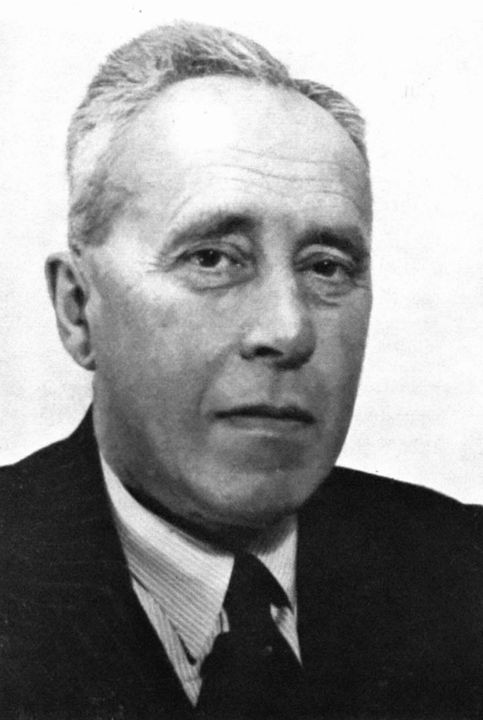
Background. A Leiden professor trained first in linguistics, Huizinga was drawn to the subject by early Netherlandish painting and wrote against the habit of treating the fifteenth century chiefly as a prelude to the Renaissance.
Scope. The study covers French and Burgundian court and town life across roughly a century and a half, from the age of Froissart to the death of Charles the Bold and beyond. Italy is left largely aside, so that the northern courts, cities and painters can be seen on their own terms.
Content. Opening with the emotional extremes of daily existence, it moves through knighthood, vows, love conventions and pastoral fantasy, a famous meditation on mortality, the saturation of devotion with images, habits of reasoning, and finally the relation of poetry to painting.
Method and Sources. Chronicles, court poetry, sermons, devotional writing and panel paintings serve as evidence for a collective sensibility. The approach owes more to literary interpretation than to archives or statistics.
Availability. No English text is held by the library. Hopman's 1924 version was an abridged rearrangement made with the author; complete translations followed in 1996 and 2020.
Significance. Widely regarded as a masterpiece of historical prose, it shaped the field of cultural history, though specialists have questioned its picture of decline and its dependence on courtly sources.
Key figures
- Philip the Good: Duke of Burgundy and patron of chivalric ceremony
- Charles the Bold: Last Valois duke of Burgundy
- Jan van Eyck: Painter at the Burgundian court
- Georges Chastellain: Court chronicler
- Eustache Deschamps: Poet of melancholy complaint
- Jean Gerson: Theologian and reformer of devotion

Summary
The Waning of the Middle Ages is a study of the forms of life, thought and art in France and the Burgundian Netherlands in the fourteenth and fifteenth centuries. Huizinga, a Dutch professor of history, published it in 1919 as Herfsttij der Middeleeuwen, literally the autumn-tide of the Middle Ages. His thesis is in the title: the age of the dukes of Burgundy and of the painters Jan and Hubert van Eyck was not the dawn of a new Renaissance, as many historians had treated it, but the ripening and decline of medieval civilization. Huizinga begins with what he calls the violent tenor of life. Life then was marked by sharp contrasts of suffering and joy, sickness and health, winter dark and summer light, noble and poor. Public executions, processions, bells, sermons by popular preachers, and the extravagant displays of princes stirred crowds to tears and fury. A deep pessimism ran through the poets and chroniclers of the court, set against a longing for a more beautiful life. The central chapters study the ideal of chivalry, which Huizinga treats as a living dream that shaped conduct even when it failed in politics and war. He describes the orders of knighthood, such as the Burgundian Order of the Golden Fleece, the vows of the Feast of the Pheasant at Lille in 1454, tournaments and the forms of courtly love, and the pastoral idyll in which lords and ladies imagined themselves shepherds. A celebrated chapter on the vision of death treats the dance of death, the image of the decaying body and the preaching of mortality. The second half turns to religion and thought. Huizinga argues that religious life had become saturated with images, so that every act and object was tied to a sacred symbol; he describes the piety of the Devotio Moderna and of mystics such as Denis the Carthusian, the counsel of Jean Gerson, and the tendency of symbolism to harden into formula. The last chapters compare literature and painting, setting the poems of Eustache Deschamps and the chronicles of Georges Chastellain beside the art of the van Eycks and Rogier van der Weyden, and close with the coming of Renaissance forms. F. Hopman's English version of 1924, The Waning of the Middle Ages, abridged and rearranged the book with Huizinga's cooperation; later complete English translations appeared in 1996 and 2020. The library stores no English text of this work, so this record offers a summary and study guide only and quotes nothing.
Virtues in this work
- Honor: The knights of the Golden Fleece bind themselves by elaborate vows and statutes to an ideal of loyalty and noble conduct, as Huizinga recounts in the chivalry chapters.
- Piety: The Devotio Moderna and mystics such as Denis the Carthusian cultivate an inward devotion that Huizinga sets against the elaborate ceremony of the court.
- Temperance: Jean Gerson urges restraint against excess in devotion and in courtly literature, a measured voice in an age Huizinga describes as given to extremes.
Plot or Argument
- Chapters I–III: The tenor of life and the social order
Violent contrasts in everyday experience, the emotional intensity of public life, the pessimism of court poets and the ideal of a sublime life; the hierarchic conception of society by estates.
- Chapters IV–VII: The chivalric ideal
Chivalry as a dream of heroism and love; orders of knighthood and vows such as the Golden Fleece and the Feast of the Pheasant; the political and military value and limits of chivalrous ideas.
- Chapters VIII–X: Love and the idyll
Courtly love formalized in conventions, debates and colors; the pastoral dream of the simple life.
- Chapter XI: The vision of death
The dance of death, the macabre image of the decaying body, and the constant call to remember mortality.
- Chapters XII–XVII: Religious life and symbolism
Religious thought crystallizing into images, types of piety from courtly devotion to the Devotio Moderna, religious sensibility, symbolism in decline, realism, and mysticism that reaches beyond images.
- Chapters XVIII–XXIII: Thought, art and the new form
Forms of thought in practical life; art in the service of life; aesthetic feeling; comparisons of poetry and painting; and the arrival of Renaissance forms.
Characters
- Philip the Good, duke of Burgundy
Duke from 1419 to 1467, founder of the Order of the Golden Fleece and host of the Feast of the Pheasant.
- Charles the Bold, duke of Burgundy
Philip's son, whose chivalric ambitions ended with his death at Nancy in 1477.
- Jan van Eyck, painter
Court painter to Philip the Good whose minute realism Huizinga reads as the fullest expression of the late medieval mind.
- Georges Chastellain, chronicler
Official historian of the Burgundian court, a key source for its ceremonies and ideals.
- Eustache Deschamps, poet
French court poet whose complaints about the world exemplify the age's pessimism.
- Jean Gerson, theologian
Chancellor of the University of Paris, critic of excess in devotion and in courtly literature.
- Denis the Carthusian, mystic and writer
Prolific monk whose piety and counsel to princes Huizinga treats as typical of the age.
Lessons
History as the study of forms of life
Huizinga writes history not as a chain of political events but as a portrait of how people felt, imagined and expressed themselves: their ceremonies, ideals, fears and images. The book asks readers to enter the sensibility of another age before judging it.
- What does Huizinga mean by the violent tenor of life?
- Why does he use poems, chronicles and paintings as historical evidence?
- What can be learned from studying how people felt rather than what they did?
Ideals that shape conduct
Chivalry, in Huizinga's account, rarely governed politics or warfare in practice, yet it was more than empty show: it was a dream of a nobler life that gave form to manners, vows and art. He treats it as a serious ideal while noting the distance between dream and deed.
- What was the Feast of the Pheasant, and what did the vows taken there promise?
- Why did the chivalric ideal persist when it seldom matched reality?
- Can an ideal be valuable even when people fail to live up to it?
Autumn rather than spring
Huizinga's central claim is that the fifteenth century in the north should be read as the end of medieval civilization rather than the beginning of the Renaissance. The van Eycks, often seen as harbingers of the new, appear in his account as perfecting the old. Historians since have debated how far this picture holds.
- Why does Huizinga call the period an autumn?
- How does his view of the van Eycks differ from a view of them as early Renaissance painters?
- Are periods of history best described as rising or declining, or do such images mislead?
Faith in images
Huizinga describes a religious culture in which every object and action pointed to the sacred, producing both profound devotion and a risk of habit and formula. He sets beside this the inward piety of the Devotio Moderna and the mystics.
- What does Huizinga mean when he says religious thought crystallized into images?
- How did figures such as Gerson respond to excesses in devotion?
- How can outward forms of worship help or hinder inward faith?
Context
The period Huizinga studies runs roughly from the mid-fourteenth century to the late fifteenth, when the Valois dukes of Burgundy ruled a rich state stretching from Burgundy to the Low Countries and maintained the most splendid court in Europe. It was an age of the Hundred Years' War, the Great Schism of the papacy, recurrent plague, and the art of the Flemish painters. Huizinga wrote in neutral Netherlands during and just after the First World War, and his book answered the influential view, associated with Jacob Burckhardt and others, that the fifteenth century was above all the dawn of the Renaissance.
Composition
Huizinga said the idea came to him on a walk near Groningen, and he was moved by the 1902 Bruges exhibition of early Netherlandish painting. He worked on the book for years before its publication in Haarlem in 1919 as Herfsttij der Middeleeuwen. F. Hopman's English version, prepared with the author, appeared in London in 1924 as The Waning of the Middle Ages: A Study of the Forms of Life, Thought and Art in France and the Netherlands in the XIVth and XVth Centuries; it was shorter and differently arranged than the Dutch. Rodney J. Payton and Ulrich Mammitzsch published a complete translation, The Autumn of the Middle Ages, in 1996, and Diane Webb another, Autumntide of the Middle Ages, in 2020.
Reception
The book became one of the most widely read works of twentieth-century historical writing and a model for cultural history. Admirers praise its literary power and its sympathy with the medieval imagination. Critics have noted its heavy reliance on Burgundian court sources and literary evidence, and some medievalists have questioned the image of decline. Its influence on later historians of mentalities and on the study of late medieval art remains considerable.
Comparisons
- le-morte-darthur
Malory completed his Arthurian romance around 1470, in the same autumn of chivalry Huizinga describes; it shows the chivalric dream in literary form.
- the-trial-of-joan-of-arc
The records of Joan's trial at Rouen in 1431, during the Burgundian-English alliance, open a window on the piety, politics and violence of Huizinga's France.
- vasari-lives-of-the-artists
Vasari's account of Italian art as a rebirth after medieval darkness is the kind of Renaissance narrative Huizinga's northern autumn deliberately complicates.
- the-canterbury-tales
Chaucer's late-fourteenth-century pilgrims, from the Knight to the Pardoner, offer an English literary panorama of the chivalry, courtly love and popular religion Huizinga analyzes in France.
- the-prince
Machiavelli, writing a generation after Charles the Bold's fall, treats politics without the chivalric ideal Huizinga finds still governing Burgundian forms.
Quotes
For Students
A reading companion for classical Christian high school students. See the student guide.
Reading Guide
Watch for
- The opening contrasts of light and dark, bells and processions in Chapter I.
- The vows sworn on a live pheasant at Lille in 1454 in the chivalry chapters.
- The dance of death and the decaying body in Chapter XI.
- How Huizinga reads the paintings of the van Eycks as evidence of a way of thinking.
- The final chapter's account of how Renaissance forms arrived in the north.
Key terms and names
- Herfsttij
- Dutch for autumn-tide, the word in Huizinga's original title, signaling his view of the period as a late ripening before decline.
- Burgundian Netherlands
- The lands of the Low Countries ruled by the Valois dukes of Burgundy, whose court Huizinga uses as his chief example.
- Order of the Golden Fleece
- Order of knighthood founded by Philip the Good in 1430, a central institution of the chivalric ideal in the book.
- Danse macabre
- The dance of death, in which Death leads people of every rank away; Huizinga treats its painting at the Innocents in Paris.
- Devotio Moderna
- Movement of inward, practical piety in the Low Countries, associated with Geert Groote and the Brethren of the Common Life.
- Symbolism
- The habit of mind, as Huizinga describes it, of seeing every earthly thing as a sign of a spiritual reality.
- Availability note
- The library holds no English text of this book; the 1924 version by F. Hopman is an abridged adaptation, and this record provides summary and guide only.
Seminar Questions
- Comprehension What contrasts in daily life does Huizinga describe at the opening of the book?
- Comprehension What were the Order of the Golden Fleece and the Feast of the Pheasant?
- Comprehension What images of death does Huizinga find in late medieval art and preaching?
- Interpretation Why does Huizinga treat chivalry as a serious ideal rather than as empty display?
- Interpretation Why does he see the van Eycks as an ending rather than a beginning?
- Interpretation How does his account of symbolism explain both the strength and the danger of late medieval piety?
- Big Question Can a whole civilization grow old, and how would we know if our own were in its autumn?
Faith Connections
- Psalm 90:10-12 (Scripture)
The psalmist's numbering of days and the brevity of life stand behind the medieval preaching on mortality that Huizinga describes in the vision of death.
- Romans 1:20 (Scripture)
Paul's teaching that the invisible things of God are seen through the things that are made grounds the symbolic habit of mind Huizinga finds everywhere in the period.
- Thomas à Kempis, The Imitation of Christ (Great Conversation)
The best-known fruit of the Devotio Moderna, written in the Low Countries in the period Huizinga studies, shows the inward piety he sets beside outward ceremony.
Logic and Rhetoric
Central argument: If the art, ceremonies and thought of fifteenth-century France and the Netherlands are dominated by medieval forms carried to their utmost elaboration, and if the new forms of the Renaissance arrived only at the end, then the period is best understood as the autumn of the Middle Ages rather than the spring of a new age.
Rhetorical device: extended metaphor. The image of autumn in the Dutch title governs the whole book, presenting the period as ripening, overripe and declining.
Debate: Resolved: that the fifteenth century in northern Europe is better described as the end of the Middle Ages than as the beginning of the Renaissance.
Writing Prompts
Essay: Explain Huizinga's argument that chivalry was a living ideal in the fifteenth century, and assess whether his evidence supports it.
Comparison with Le Morte d'Arthur: Compare the chivalric ideal as Huizinga describes it at the Burgundian court with the ideal in Malory's Le Morte d'Arthur, completed in the same decades.
Medical Lens
Huizinga's chapter on the vision of death is a classic account of late medieval attitudes to mortality: the danse macabre painted at the Cemetery of the Innocents in Paris in 1424–25, tomb sculpture showing the decaying corpse, and preaching on the corruption of the body. He sets these against an age of recurrent plague, though epidemic disease is background rather than his subject. His description of a pervasive melancholy and pessimism among court poets uses the period's own vocabulary of sadness and weariness of the world; reading it as clinical depression would be anachronistic. The book also describes public executions and the emotional extremes of crowds, of interest for the history of collective feeling.
- Chapter XI, The Vision of Death
The dance of death, the macabre image of decomposition and the call to remember mortality.
- Chapter II, Pessimism and the Ideal of the Sublime Life
The melancholy complaints of poets and chroniclers about the miseries of the world.
Creative Prompts
- Essay
Using Huizinga's account of the Feast of the Pheasant, explain how a chivalric vow could be both sincere and theatrical.
- Classroom
Display a painting by Jan van Eyck, such as the Ghent Altarpiece or the Madonna of Chancellor Rolin, and discuss whether it looks like an ending or a beginning.
- Fiction
Write a scene from the point of view of a townsperson in fifteenth-century Bruges watching a princely entry, a sermon and an execution in a single week.
Further Reading
- The Autumn of the Middle Ages, Johan Huizinga, trans. Rodney J. Payton and Ulrich Mammitzsch
Complete English translation of 1996.
- Homo Ludens, Johan Huizinga
Huizinga's 1938 study of play as an element of culture, which develops ideas from the chivalry chapters.
- The Civilization of the Renaissance in Italy, Jacob Burckhardt
The 1860 classic of cultural history against whose picture of the Renaissance Huizinga wrote.
- Philip the Good, Richard Vaughan
Political history of the Burgundian duke at the center of Huizinga's court world.
Verification notes
Abstract-only record: the library stores no English text, and no quotations are given. Publication facts (Haarlem, 1919; Hopman's London edition, Edward Arnold, 1924; Payton and Mammitzsch, 1996; Webb, 2020) are standard. The Hopman chapter titles and count (twenty-three chapters) were checked against the LibriVox listing of that translation, https://librivox.org/the-waning-of-the-middle-ages-by-johan-huizinga/, and the 1924 edition record of the National Library of Ireland. Chapter numbers in this record follow the Hopman version; the Dutch original is arranged differently.
- Confirm the date of the danse macabre at the Cemetery of the Innocents (usually 1424–25).
- Confirm the publisher of the 2020 Webb translation (Leiden University Press).