Work record
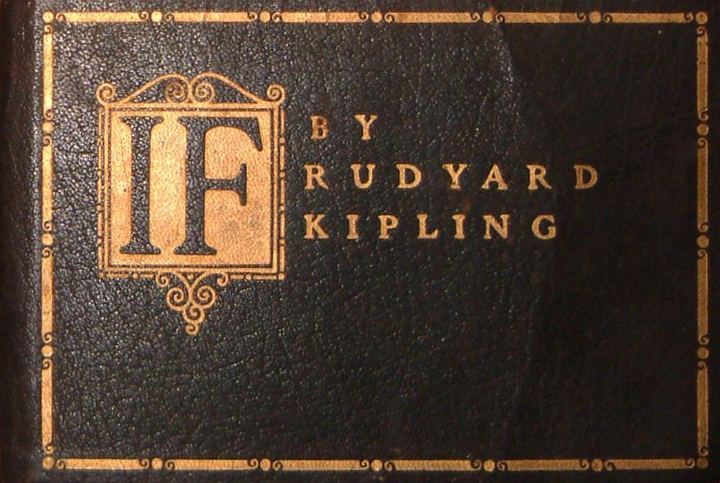
If—
written c. 1895; published 1910 · Early 20th Century · Poetry · English
Abstract
Background. Kipling traced these lines to his admiration for Leander Starr Jameson, whose 1895-1896 raid on the Boer republic collapsed in failure. The verses first reached readers between the tales of Rewards and Fairies, a 1910 sequel to Puck of Pook's Hill.
Content. A parent lays out a ladder of tests. Early ones concern slander, suspicion, and impatience; later ones concern ambition, ruined labor, and gambling everything away. The final tests require ease among commoners and monarchs alike and full use of every passing moment. Only after thirty conditional lines does the reward appear: dominion over the world and, greater still, adulthood.
Form. Each stanza alternates feminine and masculine rhymes, giving a rocking rhythm of hesitation and resolve. Grammatical suspense carries the reader across all thirty-two lines, and the capitalized abstractions (Triumph, Disaster, Will, Man) lend the counsel an almost allegorical weight.
Themes. Self-command, steadiness before fortune, and humility without false modesty dominate. Nearly every demand pairs two dangers, so that character appears as balance rather than as heroic excess.
Significance. British readers voted it their favorite poem in 1995, and tennis players pass beneath its couplet about two deceivers on their way onto Wimbledon's main court. Its familiarity has also invited countless parodies and replies.
Main characters
- The speaker: Father setting out the tests of manhood
- My son: Young man addressed throughout, named only in the final words

Summary
If— is a father's counsel to his son on what it takes to become a man, delivered as one long conditional sentence. Kipling printed it in Rewards and Fairies (1910), a book of linked stories for children in which poems sit between the tales; If— follows the story Brother Square-Toes. In his memoir Something of Myself (1937) he said the poem was drawn from the character of Leander Starr Jameson, the leader of the failed Jameson Raid into the Transvaal at the turn of 1895-1896. The poem runs to four stanzas of eight lines each, in iambic pentameter with alternating eleven- and ten-syllable lines, so that every stanza swings between a falling and a firm ending. Nearly every clause opens with If, and the grammar keeps the reader waiting: the main clause arrives only in the final two lines. The first stanza deals with other people's judgment: keeping one's head when others blame you, trusting yourself while allowing for doubt, refusing to answer lies with lies or hatred with hatred, and yet not looking too good or talking too wise. The second turns inward to dreams and thoughts, which must serve rather than rule, and names Triumph and Disaster as two impostors to be treated the same. It ends with the picture of a man stooping to rebuild his ruined life's work with worn-out tools. The third stanza is about risk and endurance. The son may stake all his winnings on a single toss, lose, and start again without complaint, and he must drive heart, nerve, and sinew onward after they are spent, by a Will that tells them to hold on. The fourth balances the crowd and the king, friends and foes, and asks him to fill each unforgiving minute with sixty seconds of distance run. Then the promise comes: the Earth and everything in it will be his, and, which is more, he will be a Man. If— became one of the most quoted poems in English. A 1995 BBC poll named it the nation's favourite poem, and its lines on Triumph and Disaster are inscribed above the players' entrance to Centre Court at Wimbledon.
Virtues in this work
- Fortitude: The son must hold on by the Will alone after heart, nerve, and sinew are gone, and rebuild broken work with worn-out tools.
- Temperance: Dreams and thoughts must not become masters, and Triumph and Disaster must be treated the same, a discipline of the passions throughout the poem.
- Humility: The poem forbids looking too good or talking too wise and requires keeping the common touch while walking with Kings.
- Justice: Being lied about, the son must not deal in lies, and being hated, must not give way to hating, refusing to repay wrong with wrong.
Plot or Argument
- Composure under others' judgment (Stanza 1)
The father opens with conditions about other people: keep your head while others lose theirs and blame you, trust yourself while making allowance for their doubts, wait without tiring, and meet lies and hatred without returning them. A closing check warns against seeming too good or too wise, so that virtue does not become display.
- Mastering one's own mind and fortune (Stanza 2)
Dreams and thoughts must remain servants rather than masters. Triumph and Disaster are personified as two impostors deserving the same treatment. The stanza ends with harder trials: hearing one's truth twisted by knaves to trap fools, and watching one's life work broken, then stooping to rebuild it with worn-out tools.
- Risk, loss, and the will to endure (Stanza 3)
The son may gamble all his winnings on one turn of pitch-and-toss, lose, start again, and never speak of the loss. When heart, nerve, and sinew are spent, nothing should remain in him except the Will that commands them to hold on.
- Balance among people, and the promise (Stanza 4)
He must keep his virtue among crowds and the common touch among Kings, be wounded by neither foes nor friends, and value all men without leaning too much on any. If he can fill the unforgiving minute with sixty seconds of distance run, the long sentence resolves: the Earth is his, and, which is more, he will be a Man.
Characters
- The speaker, Father
The voice of experience who sets out the long list of conditions and withholds his promise until the last two lines.
- My son, Addressee
The young man named only in the final word of the poem, to whom every If is directed.
Lessons
Equanimity before fortune
Calling Triumph and Disaster two impostors means that neither tells the truth about a person's worth. Success flatters and failure accuses, and the poem asks the son to be moved by neither. The same steadiness governs his response to blame, lies, and hatred in the first stanza.
- In what sense is a triumph an impostor? What false claim does it make?
- Why does the poem warn against answering lies with lies and hatred with hatred, rather than simply against being lied about?
- Is it possible to treat success and failure just the same without becoming indifferent to both?
Rebuilding after loss
Two pictures of loss stand at the center of the poem: the life's work broken and rebuilt with worn-out tools, and the whole stake lost on a single toss. In both the son is asked to begin again quietly, without self-pity, which the poem treats as a sterner test than winning.
- Why does Kipling stress that the tools are worn-out?
- What is the difference between never breathing a word about your loss and pretending the loss never happened?
- Is the gamble in stanza 3 praised as wise, or only the way the loss is borne?
Manhood as a balance of opposites
Almost every condition pairs two extremes: trust yourself but allow for doubt, dream but do not be ruled by dreams, walk with Kings but keep the common touch, care for all men but none too much. The man the poem describes is defined less by any single virtue than by holding these in balance, much as Aristotle placed virtue in a mean.
- Choose two paired conditions and explain what goes wrong if only one half is kept.
- Why does the father hold the word Man until the last line?
- What does the poem leave out of its picture of a good man, and why might that be?
Context
Kipling wrote If— in the mid-1890s, when he was living in Vermont and then England and was the most popular writer of the British Empire. The poem's ideal of the self-controlled gentleman who bears success and failure alike reflects the public-school and imperial ethos of late Victorian Britain, and Kipling himself linked it to Leander Starr Jameson, whose raid on the Transvaal in 1895-1896 failed and led to his trial in London, where he bore the outcome without complaint.
Composition
Kipling dated the poem's origin to Jameson's character in Something of Myself (1937). It was first collected in Rewards and Fairies (1910), the sequel to Puck of Pook's Hill, where it follows Brother Square-Toes, a story set in the 1790s in which George Washington appears. It was later gathered into his collected verse.
Reception
The poem became a household text in Britain and well beyond, printed on cards, framed on walls, and memorized in schools. It topped a BBC poll of favourite poems in 1995, and its lines on Triumph and Disaster greet players at Wimbledon's Centre Court. It has also been widely parodied, a measure of how familiar it is.
Comparisons
- meditations
Marcus Aurelius counsels himself to accept what fortune brings and to govern only his own judgments, the same Stoic core that Kipling turns into a father's advice in rhyme.
- tennyson-ulysses
Tennyson's old king ends with a will strong to strive and not to yield; Kipling's young man must hold on by the Will alone when strength is gone.
- the-bible
The Book of Proverbs is likewise framed as a father's instruction to my son, setting wisdom, self-control, and patience before a young man about to enter the world.
- washington-farewell-address-and-selected-letters
In Rewards and Fairies the poem follows a story in which Washington appears, and readers have long matched its portrait of restraint under pressure to Washington's public character as seen in the Farewell Address.
Quotes
Frequently cited
“If you can keep your head when all about you Are losing theirs and blaming it on you;”
Frequently cited
“If you can meet with Triumph and Disaster And treat those two impostors just the same;”
Frequently cited
“If you can fill the unforgiving minute With sixty seconds’ worth of distance run, Yours is the Earth and everything that’s in it, And--which is more--you’ll be a Man, my son!”
“Or watch the things you gave your life to, broken, And stoop and build ‘em up with worn-out tools;”
“And so hold on when there is nothing in you Except the Will which says to them: ‘Hold on!’”
“If you can talk with crowds and keep your virtue, Or walk with Kings--nor lose the common touch,”
For Students
A reading companion for classical Christian high school students. See the student guide.
Reading Guide
Watch for
- The word If at the start of most clauses, and the way the main clause is held back until lines 31-32.
- Line 8, which warns against looking too good or talking too wise just after a list of virtues.
- The capitalized Triumph and Disaster in line 11, treated as people who lie.
- The worn-out tools of line 16 and the single turn of pitch-and-toss in line 18.
- The unforgiving minute in line 29, where time itself becomes a demanding judge.
Key terms and names
- Impostors
- People who pretend to be what they are not; Kipling's name for Triumph and Disaster, since neither shows a person's real worth.
- Pitch-and-toss
- A simple gambling game of throwing coins at a mark; the son risks all his winnings on one turn of it in stanza 3.
- Knaves
- Dishonest, scheming men, who in line 14 twist a truthful man's words to make a trap for fools.
- The Will
- Capitalized in line 24, the inner resolve that remains when heart, nerve, and sinew are spent and commands them to hold on.
- The common touch
- The ability to deal naturally with ordinary people, which the son must keep even when he walks with Kings.
- Conditional sentence
- A sentence of the form if... then; the whole poem is one, with the then delayed through thirty lines.
Seminar Questions
- Comprehension List the trials the son must face in stanza 1. Which come from other people and which from within himself?
- Comprehension What does the son do in stanza 3 after losing everything on pitch-and-toss?
- Interpretation Why does the father add, right after a list of virtues, that the son should not look too good nor talk too wise?
- Interpretation What is the effect of delaying the main clause until the last two lines? How would the poem change if the promise came first?
- Interpretation The father says becoming a Man is more than owning the Earth and everything in it. What does that ranking reveal about his values?
- Big Question Can self-control and endurance make a person good, or do they need something beyond themselves to aim at?
- Big Question Is the will alone enough to hold on when there is nothing left in you, or must strength come from outside the self?
Faith Connections
- Proverbs 1:8-9 (Scripture)
Proverbs opens with a father addressing my son and urging him to heed instruction, the same frame of inherited wisdom that Kipling uses.
- Philippians 4:11-13 (Scripture)
Paul has learned to be content whether abased or abounding, a Christian version of treating Triumph and Disaster the same; unlike Kipling's Will, Paul locates his strength in Christ.
- Galatians 6:9 (Scripture)
The call not to be weary in well doing pairs naturally with waiting and not being tired by waiting in line 5.
- Boethius, Consolation of Philosophy II (Church Fathers)
Lady Philosophy teaches that Fortune's gifts were never truly one's own and that ill fortune teaches more than good, a sixth-century treatment of the two impostors.
Logic and Rhetoric
Central argument: A man is one who keeps his judgment, honesty, and balance regardless of what others do or what fortune brings; whoever meets every condition the poem lists has that self-mastery; therefore he possesses something greater than the whole Earth, namely manhood itself.
Rhetorical device: Anaphora. The repeated If at the head of lines 1, 3, 5, 9, 10, 11, and onward builds pressure through all four stanzas until it is released in lines 31-32.
Debate: Resolved: The ideal man of If— is admirable chiefly for what he refrains from doing rather than for what he does.
Memory Work
If you can meet with Triumph and Disaster And treat those two impostors just the same;
If you can fill the unforgiving minute With sixty seconds’ worth of distance run, Yours is the Earth and everything that’s in it, And--which is more--you’ll be a Man, my son!
Writing Prompts
Essay: Kipling builds his portrait of a man almost entirely out of paired opposites. Analyze three of these pairings and argue what they show about the poem's idea of virtue.
Comparison with Meditations: Compare the advice Marcus Aurelius gives himself in the Meditations about fortune, other people's opinions, and endurance with the conditions Kipling sets for his son. Where does Kipling stay Stoic, and where does he depart from Marcus?
Listen to the book
Public-domain audiobook from LibriVox, read by Various volunteers. Recording: IF on LibriVox (Internet Archive).
LibriVox recordings are volunteer readings released into the public domain. The reading may follow a different edition from the text in this library.
Creative Prompts
- Poetry
Write a poem of advice to a younger brother, sister, or friend built as a single sentence of conditions, holding back the main clause until the final line as Kipling does.
- Classroom
Divide the class into four groups, one per stanza; each group lists the paired opposites in its stanza and presents which balance it finds hardest to keep and why.
- Essay
Kipling said the poem was drawn from Leander Starr Jameson. Write about a person, historical or personal, whose conduct in defeat fits one stanza of If—, quoting the lines that apply.
Further Reading
- Something of Myself, Rudyard Kipling
Kipling's posthumously published memoir (1937), where he connects If— with Jameson.
- Rewards and Fairies, Rudyard Kipling
The 1910 story collection in which the poem first appeared, between the tales.
- The Long Recessional: The Imperial Life of Rudyard Kipling, David Gilmour
- Rudyard Kipling, Andrew Lycett
Verification notes
The poem's first collected appearance in Rewards and Fairies (1910) and Kipling's own linking of it to Jameson in Something of Myself are well documented; the c. 1895 date of composition follows the manifest and rests on that connection. The 1995 BBC National Poetry Day poll, in which If was voted the nation's favourite poem, and the inscription of the Triumph and Disaster lines at Wimbledon's Centre Court are documented. Quotations follow the Gutenberg text of Rewards and Fairies as stored, including its double hyphens for dashes and the curly apostrophe in ‘em.
No verification flags recorded.