Work record
Pragmatism: A New Name for Some Old Ways of Thinking
1907 · Early 20th Century · Philosophy · English
Abstract
Background. By 1906 Peirce's half-forgotten maxim had become a movement, with allies in Chicago, Oxford and Florence and opponents among absolute idealists. James, near retirement from Harvard, gave public lectures meant to state the case for a general audience.
Thesis. Philosophical quarrels should be settled by their practical consequences, and truth itself is the working of an idea in experience. A belief earns the name true by leading us well, consistently with facts and with older truths. Where evidence cannot yet decide, as in religion, a person may rightly choose the belief that makes the better life possible, so long as it remains open to the test of further experience.
Structure. Two opening lectures set out the temperamental dilemma and the method. Three apply it to metaphysics, to the unity of the world and to common sense. Two develop the account of truth, and a last lecture turns to religion. Each lecture opens with a printed synopsis, and the style keeps the informal voice of the platform, with jokes, stories and direct appeals to the audience.
Key Concepts. Tender- and tough-mindedness; the squirrel; cash-value; the corridor; verification as process; truth as expedient; humanism; pluralism; meliorism; faith-ventures.
Significance. These lectures made pragmatism a household word and the best-known American contribution to philosophy. Russell and Moore attacked their account of truth almost at once, and the debate they opened continues through Dewey, Quine and Rorty.
Key figures
- William James: Harvard psychologist and philosopher delivering the lectures
- Charles Sanders Peirce: Logician credited with first stating the pragmatic principle in 1878
- F. C. S. Schiller: Oxford philosopher whose humanism James endorses
- John Dewey: Philosopher whose instrumental logic James names as foundational
- Giovanni Papini: Italian pragmatist who supplied the corridor image
- John Stuart Mill: Dedicatee, praised for his openness of mind
- G. K. Chesterton: Essayist quoted at the start of Lecture I

Summary
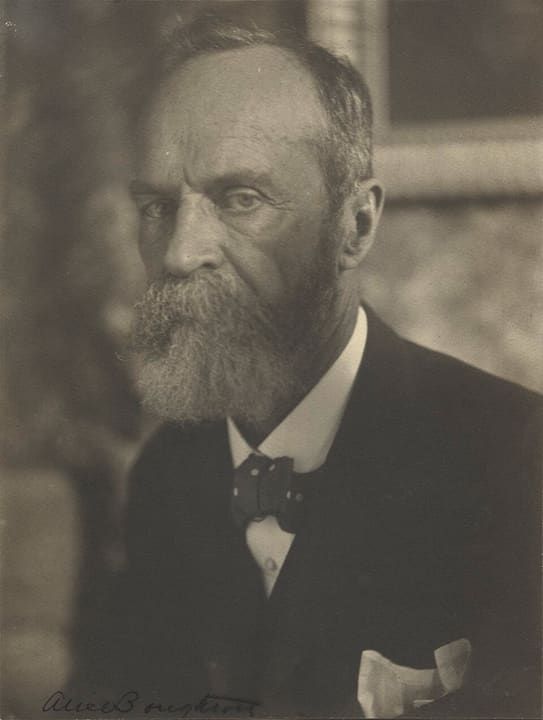
Pragmatism collects eight popular lectures that William James gave at the Lowell Institute in Boston in November and December 1906 and at Columbia University in January 1907. Published that year and dedicated to the memory of John Stuart Mill, the book presents pragmatism as both a method for settling disputes and a theory of what truth is. Lecture I, The Present Dilemma in Philosophy, opens with G. K. Chesterton's remark that a person's view of the universe is the most practical thing about him. James argues that the history of philosophy is largely a clash of temperaments and sorts thinkers into the tender-minded (rationalistic, idealistic, religious, free-willist, monistic, dogmatic) and the tough-minded (empiricist, materialistic, irreligious, fatalistic, pluralistic, sceptical). Most people want both facts and religion; empiricism offers facts without religion, rationalism religion without facts. Pragmatism is offered as a mediator. Lecture II, What Pragmatism Means, begins with the squirrel. On a camping trip, friends argue whether a man circling a tree goes round a squirrel that keeps the trunk between them. James resolves it by distinguishing two practical meanings of going round. The pragmatic method, which he credits to Charles Peirce's 1878 essay How to Make Our Ideas Clear, asks of every notion what difference it would make in practice if it were true. Each word must yield its cash-value in experience; theories become instruments rather than answers in which we can rest. Borrowing an image from the Italian Giovanni Papini, James calls pragmatism a corridor in a hotel off which many rooms open. With F. C. S. Schiller and John Dewey he holds that ideas are true insofar as they help us get into satisfactory relation with other parts of experience. Lecture III applies the method to substance, materialism versus theism, design and free will, asking in each case what the alternatives promise for the future. Lecture IV examines in what ways the world is one and in what ways many. Lecture V treats the categories of common sense as ancient discoveries that have proved their worth, alongside the later stages of science and critical philosophy. Lecture VI, Pragmatism's Conception of Truth, is the centre of the book. True ideas are those we can assimilate, validate, corroborate and verify; truth happens to an idea and is made true by events. A traveller lost in the woods who thinks of a house at the end of a cow-path shows why true thoughts matter: they lead us usefully. The true is the expedient in our thinking, as the right is the expedient in our behaving, in the long run and on the whole. Lecture VII discusses Schiller's humanism and the human share in shaping truth. Lecture VIII, Pragmatism and Religion, defends meliorism, the view that the world's salvation is possible but not guaranteed, and concludes that if the hypothesis of God works satisfactorily in the widest sense, it is true.
Virtues in this work
- Prudence: James's squirrel story models settling a quarrel by first asking what each side practically means, rather than prolonging an idle dispute.
- Hope: Lecture VIII's meliorism holds that the world's salvation is genuinely possible and that each person's effort can make it more likely.
- Humility: Lecture I admits that temperament colours every philosopher's views, including James's own, and asks listeners to judge with that in mind.
Plot or Argument
- Lecture I: The Present Dilemma in Philosophy
James sorts philosophers by temperament into the tender-minded and the tough-minded and argues that ordinary people want both scientific facts and religious hope. Pragmatism is introduced as a way to keep both.
- Lecture II: What Pragmatism Means
The squirrel dispute shows the method at work: a dispute with no practical difference behind it is idle. James traces the method to Peirce, calls it a corridor of theories, and introduces the instrumental view of truth he shares with Schiller and Dewey.
- Lecture III: Some Metaphysical Problems Pragmatically Considered
Substance, the Eucharist, Berkeley on matter and Locke on personal identity are read pragmatically. Materialism and theism are compared by what each promises; design and free will are judged by the hope they give for the future.
- Lecture IV: The One and the Many
James lists ways the world is one, in space and time, by interaction, by kinds and purposes, and ways it remains many. He opposes absolute monism and urges that the degree of unity be settled by experience.
- Lecture V: Pragmatism and Common Sense
Common-sense categories such as thing, kind, cause and law are treated as very old discoveries that proved useful. Scientific and philosophical ways of thinking came later; none can claim to be simply the true copy of reality.
- Lecture VI: Pragmatism's Conception of Truth
Agreement with reality means verifiability, the ability of an idea to guide us prosperously. The cow-path example, the claim that truth happens to an idea, and the definition of the true as the expedient in thinking are developed and defended against rationalist objections.
- Lecture VII: Pragmatism and Humanism
With Schiller, James argues that the human contribution to truth is everywhere: we take account of sensations, relations and previous truths, but we also build them out. Rationalism's belief in a ready-made transempirical truth is contrasted with pragmatism's truth in the making.
- Lecture VIII: Pragmatism and Religion
Using Whitman's poem To You and an imagined choice offered before creation, James distinguishes optimism, pessimism and meliorism. Pragmatism accepts belief in God insofar as it works, and leaves people free to make their own faith-ventures.
Lessons
Ask what difference it makes
The squirrel dispute in Lecture II shows how an argument can go on endlessly because the parties mean different things by the same words. James's method is to ask what practical difference each answer would make. Where none can be found, the dispute is verbal; where one can, the dispute becomes worth having.
- Which side wins the squirrel argument, and why does James say both are right?
- Name a debate you know that might dissolve under James's question.
- Are there important questions that make no practical difference?
Temperament shapes philosophy
Lecture I argues that philosophers are moved by temperament as much as by evidence, and that most people are a mixture of tender- and tough-minded. Knowing one's own temperament can make a thinker more honest about where his reasons come from. James does not say temperament settles what is true.
- Which column in James's list fits you better, tender-minded or tough-minded?
- Is it fair to explain a philosopher's view by his temperament?
Truth as something that works
Lecture VI defines true ideas as those we can verify and calls truth the expedient in thinking. James adds that this means expedient in the long run and on the whole, and that true beliefs must fit with older truths and with facts. The definition has drawn criticism from the start, and weighing it is part of reading the book.
- What does the lost traveller on the cow-path show about why truth matters?
- Can a belief be useful and false, or true and useless?
- How does James answer the charge that he makes truth whatever we like?
Faith as a venture
Lecture VIII presents meliorism: the world's salvation is neither certain nor impossible but depends partly on us. James values religious belief for what it does in a life and invites each listener to make his own faith-venture. Christian readers can engage both his respect for faith and his reluctance to say more about God than experience shows.
- What is the difference between optimism, pessimism and meliorism in Lecture VIII?
- Is a God believed in because the belief works the same as the God of Christian creeds?
Context
Pragmatism grew in late nineteenth-century America among thinkers shaped by Darwin, laboratory science and Protestant religion. Charles Peirce had proposed the pragmatic maxim in 1878, and James had brought the word before the public in an 1898 lecture at Berkeley, California. By 1906 related movements, Dewey's instrumentalism at Chicago, Schiller's humanism at Oxford, and Papini's circle in Florence, made pragmatism a subject of international debate, against the idealism of F. H. Bradley and Josiah Royce.
Composition
James delivered the lectures at the Lowell Institute in Boston in late 1906 and repeated them at Columbia University in January 1907. He wrote in the Preface that they were printed as delivered, and the book was published by Longmans, Green in 1907. He replied to critics in The Meaning of Truth (1909).
Reception
The book sold widely and made pragmatism the best-known American philosophy. Critics such as Bertrand Russell and G. E. Moore attacked the theory of truth as confusing truth with usefulness, and Peirce had already renamed his own view pragmaticism to keep it apart from popular versions. Chesterton, quoted in the first lecture, answered pragmatism in Orthodoxy (1908). Through Dewey, and later through C. I. Lewis, W. V. Quine and Richard Rorty, pragmatism remained a lasting strand of American thought.
Comparisons
- peirce-illustrations-of-the-logic-of-science
James credits Peirce's How to Make Our Ideas Clear, one of these essays, with founding pragmatism; Peirce's maxim concerns the meaning of concepts, while James extends it to a theory of truth Peirce did not accept.
- the-varieties-of-religious-experience
James's Gifford Lectures of 1901-1902 judge religious experience by its fruits in life; Pragmatism turns that approach into a general method and ends with the religious question again.
- berkeley-principles-of-human-knowledge
In Lecture III James praises Berkeley's treatment of material substance as pragmatic, since Berkeley asks what matter means in experience and finds only sensations.
- utilitarianism
The book is dedicated to Mill, from whom James says he learned the pragmatic openness of mind; James's claim that the true is the expedient in thinking parallels Mill's appeal to consequences in ethics.
- dewey-experience-and-education
Dewey, whom James names as a founder of the instrumental theory, applied pragmatic ideas to schooling, testing ideas by their consequences in a student's growing experience.
Quotes
Frequently cited
“The history of philosophy is to a great extent that of a certain clash of human temperaments.”
Frequently cited
“"Which party is right," I said, "depends on what you PRACTICALLY MEAN by 'going round' the squirrel.”
Frequently cited
“Truth HAPPENS to an idea. It BECOMES true, is MADE true by events.”
Frequently cited
“'The true,' to put it very briefly, is only the expedient in the way of our thinking, just as 'the right' is only the expedient in the way of our behaving.”
“You must bring out of each word its practical cash-value, set it at work within the stream of your experience.”
“THEORIES THUS BECOME INSTRUMENTS, NOT ANSWERS TO ENIGMAS, IN WHICH WE CAN REST.”
“it lies in the midst of our theories, like a corridor in a hotel.”
“On pragmatistic principles, if the hypothesis of God works satisfactorily in the widest sense of the word, it is true.”
For Students
A reading companion for classical Christian high school students. See the student guide.
Reading Guide
Watch for
- The two columns of tender-minded and tough-minded traits in Lecture I, and James's claim that most people are a mixture.
- The squirrel dispute at the opening of Lecture II, and the scholastic rule James uses to settle it.
- Papini's image of pragmatism as a hotel corridor in Lecture II.
- The traveller lost in the woods who finds a cow-path in Lecture VI.
- The imagined offer of a world before creation in Lecture VIII, and the healthy and morbid replies to it.
Key terms and names
- Pragmatic method
- James's rule of interpreting each notion by tracing its practical consequences; if two views make no practical difference, they mean the same thing.
- Tender-minded and tough-minded
- Lecture I's two temperaments: the first rationalistic, idealistic and religious; the second empiricist, materialistic and sceptical.
- Cash-value
- James's metaphor in Lecture II for the concrete difference a word or idea makes in experience, as a banknote must be redeemable in coin.
- Verification
- In Lecture VI, the process by which an idea leads us successfully through experience; for James, truth is this process rather than a static property.
- Humanism
- F. C. S. Schiller's name, discussed in Lecture VII, for the view that human interests and choices enter into every truth.
- Meliorism
- Lecture VIII's view that the world's salvation is neither necessary nor impossible but becomes more probable as people act to bring it about.
- The Absolute
- The all-inclusive mind of idealist philosophers such as Royce and Bradley, which James says offers only moral holidays and contrasts with the theistic God.
Seminar Questions
- Comprehension What do the friends disagree about in the squirrel story, and how does James resolve the dispute?
- Comprehension According to Lecture I, what does empiricism offer that rationalism does not, and the reverse?
- Comprehension What does James mean by saying that truth happens to an idea?
- Interpretation James calls pragmatism a corridor and says it has no dogmas but its method. Does Lecture VI's theory of truth fit that claim, or is it a doctrine of its own?
- Interpretation How does the cow-path example support James's view of truth, and what would a critic say it leaves out?
- Interpretation Why does James think theism promises more than materialism in Lecture III, and is that a reason to believe it?
- Big Question Is a belief true because it works, or does it work because it is true?
Faith Connections
- Matthew 7:15-20 (Scripture)
Jesus teaches that false prophets are known by their fruits. James's test of beliefs by their effects in life resembles this teaching, though Jesus uses fruits to detect a truth or falsehood already there, not to make a belief true.
- John 18:37-38 (Scripture)
Jesus tells Pilate that he came to bear witness to the truth, and Pilate asks, What is truth? Lecture VI offers one modern answer; set beside this scene it raises whether truth is a process we verify or something, and someone, we encounter.
- 1 Thessalonians 5:21 (Scripture)
Paul's instruction to prove all things and hold fast what is good shares James's demand that claims be tested, while assuming a good that is there to be held fast.
- G. K. Chesterton, Orthodoxy (1908) (Great Conversation)
Chesterton, whom James quotes approvingly in Lecture I, argued in Orthodoxy that human needs include the need for real, not merely useful, truth, and so turned the pragmatic appeal to human needs back against pragmatism.
Logic and Rhetoric
Central argument: The meaning of any idea lies in the practical consequences it would have if true. Agreement with reality, the traditional mark of truth, can only mean that an idea leads us successfully through experience. Ideas that we can assimilate, validate, corroborate and verify do so, and ideas we cannot do not. Therefore truth is the process of verification, and the true is what proves expedient in thinking in the long run and on the whole. Applied to religion, belief in God is true insofar as it works satisfactorily in the widest sense.
Rhetorical device: extended metaphor. In Lecture II and Lecture VI James repeatedly speaks of ideas as currency, asking for their cash-value (quotes[2]) and describing truths as living on a credit system of unverified beliefs that pass until challenged.
Debate: Resolved: James's definition of truth as what works makes truth depend on human wishes.
Memory Work
The history of philosophy is to a great extent that of a certain clash of human temperaments.
Truth HAPPENS to an idea. It BECOMES true, is MADE true by events.
Writing Prompts
Essay: Using the squirrel dispute and Lecture VI, explain James's pragmatic method and theory of truth, then argue whether the method can be accepted without the theory.
Comparison with Illustrations of the Logic of Science: James credits Peirce with founding pragmatism. Compare Peirce's maxim in How to Make Our Ideas Clear with James's use of it in Lecture II and Lecture VI, and argue whether James develops Peirce's idea or changes it.
Medical Lens
James trained as a physician and wrote The Principles of Psychology before turning to philosophy, and Pragmatism keeps a clinician's interest in how beliefs function in a life. Lecture VI likens truth to health and wealth as goods made in the course of experience, and Lecture VIII contrasts healthy and morbid replies to the question of whether one would accept a world not certain to be saved, echoing the healthy-minded and sick-souled types of The Varieties of Religious Experience. James's own early depression and his account of recovering through an act of will are well documented in his letters and diaries, though not discussed in this book; links between his life and his philosophy remain interpretive.
- Lecture VI
Truth compared with health, wealth and strength as names for processes that are made in the course of experience.
- Lecture VIII
The healthy and the morbid responses to an offered world whose salvation is possible but not guaranteed.
Creative Prompts
- Dialogue
Write the camping-trip argument about the squirrel as a scene, then add a second dispute of your own invention that James's distinction does not dissolve.
- Essay
Defend or attack James's claim in Lecture VI that the true is the expedient in our thinking, using the cow-path example and one case of your own.
- Classroom
Have students fill in James's two columns of tender-minded and tough-minded traits for themselves and for three thinkers they have read, then discuss whether the columns hold together.
Further Reading
- The Will to Believe and Other Essays in Popular Philosophy, William James
- The Meaning of Truth, William James
James's 1909 sequel answering critics of Pragmatism.
- The Metaphysical Club, Louis Menand
- William James: In the Maelstrom of American Modernism, Robert D. Richardson
- Orthodoxy, G. K. Chesterton
Chapter III answers pragmatism from a Christian standpoint.
Verification notes
Delivery dates (Lowell Institute, November-December 1906; Columbia, January 1907), the dedication to Mill, and the lecture titles are taken from the stored text. All eight quotations were found by search in the stored Project Gutenberg text; capitals reproduce the edition's emphasis. The 1898 Berkeley lecture (Philosophical Conceptions and Practical Results), Peirce's renaming of his view as pragmaticism (1905), and the criticisms by Russell and Moore are standard history and are paraphrased.
- Whether Chesterton's discussion of pragmatism in Orthodoxy falls in Chapter III, The Suicide of Thought.
- First publisher and month of publication of Pragmatism in 1907 (Longmans, Green is standard).