Work record
Man's Search for Meaning
1946 (German, as Ein Psychologe erlebt das Konzentrationslager); English trans. Ilse Lasch 1959; enlarged 1962 · Early 20th Century · Memoir · German
Abstract
Background. A Jewish neurologist who had led suicide-prevention counselling for Viennese students spent two and a half years as a prisoner, losing parents, brother and wife. Back in Vienna he set down what the camps had taught him about the human mind.
Content. The memoir traces how inmates reacted: the numb astonishment of arrival, the dulled endurance of labour and hunger, and the estrangement felt once the gates opened. It weighs which prisoners kept their humanity and why some lost the will to go on. The theoretical half, written for the first American edition of 1959, names a drive toward purpose as more basic than pleasure or power and outlines clinical methods for anxiety and obsessional symptoms.
Method. Frankl writes as participant-observer, using short anonymous vignettes from the huts, work details and sick bays as evidence for psychological generalizations, then turns to case reports from his Vienna practice.
Key Concepts. Attitude as an inalienable freedom; purpose discovered through work, love, or bearing what cannot be changed; existential emptiness; anticipatory anxiety broken by humorous self-distancing; responsibility as the core of being human; and, in the postscript, optimism held in the face of pain, guilt and death.
Significance. Among the most read books of modern psychology, it carried existential analysis far beyond the clinic and shaped later purpose-focused therapies in psychiatry and palliative care.
Key figures
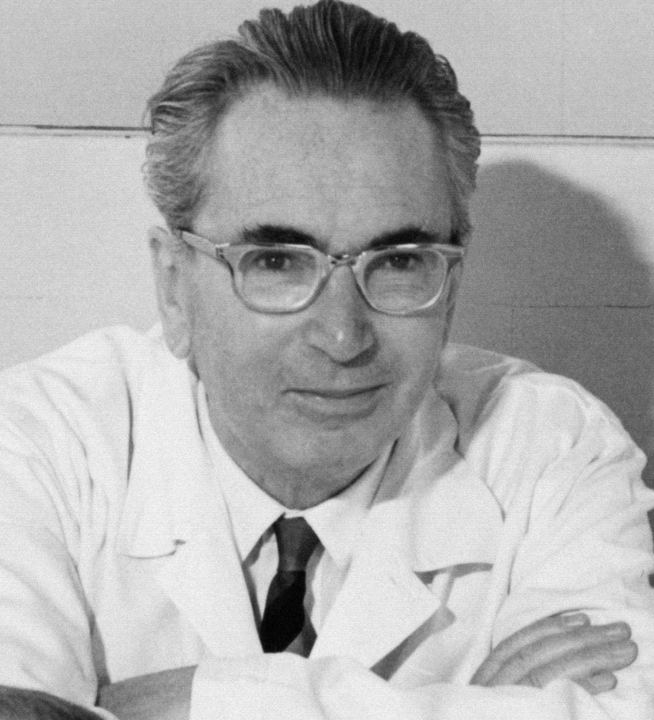
- Viktor E. Frankl: Viennese psychiatrist and neurologist, prisoner and narrator
- Tilly Frankl: His first wife, whose remembered image sustains him on the march
- Sigmund Freud: Founder of psychoanalysis, foil for the will to pleasure
- Alfred Adler: Founder of individual psychology, foil for the will to power
- Friedrich Nietzsche: Source of the maxim about a why that can bear any how
- Gordon W. Allport: American psychologist who wrote the preface to the English edition

Summary
Man's Search for Meaning has two parts. The first, Experiences in a Concentration Camp, is not a chronicle of atrocities but a psychiatrist's account of how ordinary prisoners lived, suffered and either kept or lost their inner hold on life. Frankl, writing of himself mostly as an anonymous prisoner, divides the camp experience into three psychological phases. The first is shock on admission to Auschwitz: the selection on the platform, the stripping and shaving, the loss of the manuscript he had sewn into his coat, and a strange delusion of reprieve, followed by grim humour and cold curiosity. The second is apathy, the emotional numbing that let prisoners endure the daily routine of beatings, cold, hunger and death in the work camps of Kaufering and Türkheim. Here Frankl describes what still moved within: the inner life that made some sensitive prisoners outlast tougher ones, his loving contemplation of his wife on a freezing march at dawn, flashes of beauty and humour, the provisional existence of men who cannot see an end, the dying young woman who spoke of a chestnut tree outside her window, and a fellow prisoner whose loss of hope after a prophetic dream was followed by death from typhus. On a day when the camp was punished with fasting, he spoke to his fellow prisoners in the dark hut about the meaning that still lay in their suffering, their love, and the people who were waiting for them. The third phase, after liberation, brings depersonalization, bitterness and disillusionment, before a slow return to life. Part Two, first printed in the English edition of 1959 as Basic Concepts of Logotherapy and later titled Logotherapy in a Nutshell, sets out the school of therapy he built on these experiences. Against Freud's will to pleasure and Adler's will to power it places a primary will to meaning. Frustration of that will produces an existential vacuum and sometimes noögenic neurosis. Meaning is discovered, not invented, in three ways: by creating a work or doing a deed, by experiencing something or encountering someone in love, and by the attitude one takes toward unavoidable suffering. Frankl illustrates the techniques of paradoxical intention and dereflection with clinical cases and stresses responsibility as the essence of human existence. The 1984 postscript, The Case for a Tragic Optimism, applies these ideas to the tragic triad of pain, guilt and death. The book first appeared in Vienna in 1946 as Ein Psychologe erlebt das Konzentrationslager. Ilse Lasch's translation of the camp account, with a preface by Gordon W. Allport, was published by Beacon Press in 1959 as From Death-Camp to Existentialism; the revised and enlarged edition of 1962 took the present title.
Virtues in this work
- Fortitude: Frankl endures hunger, typhus and the loss of his family while continuing to serve as a doctor and reconstruct his lost manuscript.
- Hope: On the camp fasting day he tells his despairing fellow prisoners that the future may still hold meaning and that someone is looking down on each of them.
- Charity: He describes prisoners who walked through the huts comforting others and giving away their last piece of bread.
- Magnanimity: He refuses collective blame, recording the decency of an SS camp commander who bought medicines for prisoners and the cruelty of some prisoner foremen.
Plot or Argument
- Part One: Admission (first phase)
Arrival at Auschwitz, selection, disinfection and shaving, the loss of his manuscript and of all former life; the delusion of reprieve, grim humour and detached curiosity as first reactions.
- Part One: Life in camp (second phase)
Apathy as protective numbing; hunger, cold, beatings and the sight of death; the retreat into an inner life, contemplation of his wife, art, humour and nature; the provisional existence of prisoners with no foreseeable end.
- Part One: Inner freedom and meaning in suffering
Even in the camp a man can choose his attitude; the dying young woman and the chestnut tree; the loss of hope and fatal collapse; Frankl's talk to his hut on the fasting day; persuading despairing prisoners that someone or some work still awaits them.
- Part One: After liberation (third phase)
Depersonalization and the inability to feel joy; bitterness and disillusionment on returning home to find loved ones dead; the gradual recovery of feeling and a sense that, after such suffering, there is nothing left to fear except God.
- Part Two: Logotherapy in a Nutshell (1962)
The will to meaning, existential frustration, the existential vacuum and noögenic neurosis; the meaning of life as concrete and personal; meaning through deeds, through love, and through suffering; the transitoriness of life; paradoxical intention and dereflection with case examples; responsibility.
- Postscript 1984: The Case for a Tragic Optimism
How a person can say yes to life in spite of the tragic triad of pain, guilt and death, turning suffering into achievement, guilt into change, and transitoriness into an incentive to responsible action.
Characters
- Viktor E. Frankl, author and narrator
Viennese psychiatrist, prisoner number 119104, who observes camp life as both sufferer and clinician.
- Tilly Frankl, his wife
Separated from him at Auschwitz; the object of his loving contemplation in the camp. He later learns she died at Bergen-Belsen.
- Fellow prisoners, subjects of observation
Including the man whose dream predicted liberation on 30 March, the young woman by the chestnut tree, and the senior block warden who asks Frankl to speak.
- The camp commander at the end, SS officer
Commander of Frankl's last camp, who, Frankl reports, secretly bought medicines for prisoners with his own money.
- Gordon W. Allport, preface writer
Harvard psychologist whose preface introduced the 1962 edition to American readers.
Lessons
The last freedom
Frankl argues that circumstances can strip a person of possessions, rank, health and even name, but not of the freedom to choose an attitude toward them. The camp did not make that choice easy, and he does not blame those who broke, but he saw prisoners who kept their dignity and gave away their bread.
- Is inner freedom real if a person cannot change any outward fact of their situation?
- How does Frankl avoid blaming prisoners who did not survive or who lost hope?
- What examples of inner freedom does he give, and which is most persuasive?
Meaning is found, not made
Logotherapy holds that meaning is not something we invent for ourselves but something that calls to us from outside, in a task, a person, or a situation that must be faced. Frankl turns the question around: life is asking us what we will make of it, and we answer by responsible action.
- What is the difference between asking what we expect from life and asking what life expects from us?
- Why does Frankl insist meaning must be concrete and personal rather than general?
- Can a person's meaning change from one hour to the next?
Love as a source of meaning
On a dark march to a work site, Frankl talks inwardly with the image of his wife, not knowing whether she is alive, and discovers that love reaches beyond the physical presence of the beloved. Love is one of the three main ways he says meaning is found.
- Why does it not matter to Frankl, in that moment, whether his wife is still alive?
- How does this episode support his later claim about the three sources of meaning?
Suffering that is not wasted
Frankl does not praise suffering and says avoidable suffering should be removed. But where it cannot be avoided, the way one bears it can become an achievement. His case of the elderly physician grieving his wife, who finds meaning in having spared her the pain of surviving him, shows the idea in a clinical setting.
- Why is it important that Frankl limits his claim to unavoidable suffering?
- How did changing the meaning of the physician's grief change the grief itself?
- How is this view similar to and different from Stoic endurance?
Context
Frankl belonged to the extraordinarily productive world of Viennese psychiatry. As a student he corresponded with Freud, and for a time he moved in Alfred Adler's circle of individual psychology before breaking with it. Logotherapy, which he was developing before the war, became known as the Third Viennese School of Psychotherapy after Freud's psychoanalysis and Adler's individual psychology. The book's first part rests on his imprisonment from 1942 to 1945 at Theresienstadt, Auschwitz, Kaufering III and Türkheim, where his parents, brother and wife were among those who died.
Composition
Frankl wrote the camp account soon after returning to Vienna, and it was published there in 1946 as Ein Psychologe erlebt das Konzentrationslager; later German editions carried the phrase trotzdem Ja zum Leben sagen (saying yes to life in spite of everything). Ilse Lasch's English translation appeared from Beacon Press in 1959 as From Death-Camp to Existentialism. That edition, with a preface by Gordon W. Allport, joined to Lasch's Part One a second part by Frankl, Basic Concepts of Logotherapy. The revised and enlarged edition of 1962 was retitled Man's Search for Meaning: An Introduction to Logotherapy, and in later editions Part Two carries the title Logotherapy in a Nutshell. The 1984 edition added the postscript The Case for a Tragic Optimism. Frankl also tells how, in the camp, he lost the manuscript that later became The Doctor and the Soul.
Reception
The book became one of the most widely read works of twentieth-century psychology and has sold many millions of copies in numerous languages. A 1991 Library of Congress and Book-of-the-Month Club survey named it one of the ten most influential books in the United States. It brought logotherapy and existential analysis to a broad audience and influenced later meaning-centred psychotherapies and existential psychiatry.
Comparisons
- twilight-of-the-idols
Frankl repeatedly cites Nietzsche's maxim from Maxims and Arrows 12, that one who has a why to live for can bear almost any how, and makes it a principle of psychotherapy in the camp.
- studies-on-hysteria
Breuer and Freud's case histories found the roots of symptoms in buried memories and affects; Frankl's school, the third in Vienna, looks instead for an unfulfilled meaning and appeals to the patient's freedom and responsibility.
- civilization-and-its-discontents
Freud explains human unhappiness through the conflict of instinct and culture and the pleasure principle; Frankl replies that a will to meaning, not to pleasure, is primary, and that pleasure is a by-product of fulfilled meaning.
- letters-and-papers-from-prison
Bonhoeffer in a Nazi prison and Frankl in the camps both reflect, while confined, on freedom, responsibility and suffering, Bonhoeffer as a Lutheran theologian and Frankl as a Jewish psychiatrist.
- the-sickness-unto-death
Kierkegaard's analysis of despair as a sickness of the self is an ancestor of existential psychiatry; Frankl's existential vacuum and noögenic neurosis describe a related condition in clinical terms.
- meditations
Marcus Aurelius's insistence that judgments, not events, disturb us anticipates Frankl's last of the human freedoms, the choice of one's attitude to what cannot be changed.
Quotes
“Everything can be taken from a man but one thing: the last of the human freedoms—to choose one's attitude in any given set of circumstances, to choose one's own way.”
“The salvation of man is through love and in love.”
For Students
A reading companion for classical Christian high school students. See the student guide.
Reading Guide
Watch for
- The three phases Frankl names in Part One: shock on admission, apathy during camp life, and depersonalization and bitterness after liberation.
- The freezing march at dawn when Frankl talks inwardly with his wife, and what he concludes about love.
- The fasting day when Frankl speaks to his fellow prisoners in the dark hut, and the reasons he gives them not to despair.
- Frankl's use of Nietzsche's maxim about having a why to live for, and how he applies it to prisoners who had lost hope.
- In Part Two, the clinical cases of paradoxical intention and the elderly doctor grieving his wife.
Key terms and names
- Logotherapy
- Frankl's school of psychotherapy, from the Greek logos taken as meaning. It holds that the search for meaning is the primary motive in human life and helps patients find meaning rather than only analysing their past.
- Will to meaning
- Frankl's name for the basic human striving to find and fulfil meaning, set against Freud's will to pleasure and Adler's will to power.
- Existential vacuum
- The inner emptiness and boredom of people who feel their lives have no meaning. Frankl thought it widespread in modern society and saw its signs in the Sunday neurosis.
- Noögenic neurosis
- A neurosis arising not from inner conflict between drives but from frustration of the will to meaning, from the spiritual dimension of the person in Frankl's sense.
- Provisional existence
- Frankl's phrase for the life of camp prisoners who could not know when, or whether, their imprisonment would end, and so could not plan or live toward a future.
- Paradoxical intention
- A technique in which a patient deliberately wishes for, often with humour, the very thing he fears, such as sweating or trembling, which can break the cycle of anticipatory anxiety.
- Dereflection
- A technique that turns a patient's excessive attention away from himself and his symptom toward a task or another person.
- Tragic triad
- Pain, guilt and death, the three inescapable aspects of human life addressed in the 1984 postscript on tragic optimism.
Seminar Questions
- Comprehension What are the three phases of the prisoner's mental reaction that Frankl describes in Part One, and what marks each one?
- Comprehension What happened to the prisoner who dreamed that the camp would be liberated on 30 March, and what does Frankl conclude from his case?
- Comprehension What are the three ways of discovering meaning that Frankl names in Part Two?
- Interpretation Frankl says the best of the prisoners did not return. How does he hold that sober fact together with his claim that people remain free to choose their attitude?
- Interpretation Why does Frankl think it matters so much that a prisoner had someone or something waiting for him after the war? How did he use this with men who spoke of suicide?
- Interpretation Frankl turns the question of the meaning of life around, saying that life asks us. What does he mean, and how does it change the way a person faces suffering?
- Interpretation In Part Two, how does the case of the elderly doctor grieving his wife show the difference between changing a fact and changing its meaning?
- Big Question Can suffering ever have meaning, and if so, is that meaning found in the suffering itself, in how it is borne, or in something beyond the sufferer?
Faith Connections
- Psalm 118:5 (Scripture)
After liberation Frankl kneels in a field and repeats one sentence, that he called to the Lord from his narrow prison and was answered in the freedom of space, an echo of this psalm of deliverance from distress into a broad place.
- Romans 5:3-5 (Scripture)
Paul writes that suffering produces endurance, character and hope. Frankl's account of prisoners who bore unavoidable suffering with dignity gives a concrete picture of how suffering can shape a person rather than only destroy him.
- Song of Songs 8:6 (Scripture)
Love is strong as death. On the dawn march Frankl finds that his love for his wife reaches her image whether she is living or dead, a conviction close to the Song's claim.
- Boethius, The Consolation of Philosophy (Great Conversation)
Boethius, imprisoned and awaiting execution, is taught by Lady Philosophy that fortune can take only what was never truly his. Frankl's inner freedom in the camp converses with that ancient prison book, though he grounds it in clinical observation rather than Platonic philosophy.
Logic and Rhetoric
Central argument: Every external freedom can be taken from a person, but the freedom to choose one's attitude toward circumstances remains. The primary human motive is not pleasure or power but the search for meaning, which can be found in deeds, in love, and in the stance taken toward unavoidable suffering. Since even the camp could not abolish the last of these, no human situation is wholly without meaning. Therefore a person is never merely a product of conditions, and the task of therapy is to help him discover the meaning that life is asking of him.
Rhetorical device: exemplum. Part One builds its case through brief, concrete stories, such as the dying young woman and the chestnut tree, the prisoner's prophetic dream, and Frankl's march with the image of his wife, each serving as evidence for a general psychological claim.
Debate: Resolved: The will to meaning, rather than the will to pleasure, is the primary human motive.
Writing Prompts
Essay: Using at least three episodes from Part One, evaluate Frankl's claim that a prisoner's inner decision, not only the camp's conditions, determined what kind of person he became.
Comparison with Letters and Papers from Prison: Compare how Frankl in the camps and Bonhoeffer in Tegel prison understand freedom and responsibility under Nazi imprisonment. Where do a Jewish psychiatrist and a Lutheran pastor agree, and where does Bonhoeffer's explicit theology lead him beyond Frankl?
Medical Lens
This is a primary document in the history of psychotherapy. Logotherapy, Frankl's Third Viennese School after Freud's psychoanalysis and Adler's individual psychology, treats the will to meaning as a basic human motive and locates some neuroses (which Frankl calls noögenic) in existential frustration rather than in instinctual conflict. Part Two introduces its two signature techniques: paradoxical intention, in which a phobic or obsessive patient is invited to wish for, with humour, the very thing feared (an approach later compared with exposure-based and symptom-prescription methods in behavioural and family therapy), and dereflection, which turns a patient's hyper-reflection away from the symptom, as in some sexual dysfunctions and insomnia. Part One is also a first-hand clinical record of camp medicine: hunger and edema, frostbitten and suppurating feet, the typhus epidemic in which Frankl served as a prisoner-doctor and fell ill himself, and his observations on apathy, irritability, and the collapse of resistance that followed loss of hope, which he connects (as a clinician's impression, not a controlled finding) with the death rate around Christmas 1944 and New Year 1945. His prewar suicide-prevention work reappears in the camp, where he and a colleague dissuade two despairing men by pointing each to a person or task awaiting him. The three phases of the prisoner's psychology, especially the depersonalization and bitterness after liberation, are often read alongside later trauma literature, though Frankl wrote before modern diagnostic categories and his descriptions should not be translated too quickly into them. Logotherapy influenced later meaning-centred psychotherapy, including work in palliative and cancer care.
- Part One, first phase
Admission to Auschwitz: the selection, shaving and disinfection, the delusion of reprieve, and the first emotional reactions, including grim humour and curiosity.
- Part One, second phase
Apathy as emotional protection; hunger, edema and cold; prisoners' fantasies about food; the provisional existence with no foreseeable end.
- Part One, second phase
Frankl works as a doctor in a typhus camp, falls ill with fever, and keeps himself awake at night reconstructing his lost manuscript.
- Part One, second phase
A fellow prisoner's dream foretells liberation on 30 March; when the date approaches without rescue he falls ill and dies, which Frankl links to the loss of hope.
- Part One, second phase
Frankl's talk to his hut on the fasting day, and his work with two men who had spoken of suicide, each reminded of a child or a scientific work waiting for him.
- Part One, third phase
Depersonalization, the inability to feel pleasure after liberation, and bitterness and disillusionment on finding loved ones dead.
- Part Two
Clinical cases of paradoxical intention and dereflection, and the elderly physician whose grief for his wife is reframed as a sacrifice that spared her.
Creative Prompts
- Essay
Compare Frankl's three phases of the prisoner's psychology with a modern account of acute stress and recovery, noting where the categories fit and where they do not.
- Classroom
List the three sources of meaning from Part Two and find at least one example of each in Frankl's own account in Part One.
- Dialogue
Write a conversation between Frankl and Freud, years after their student correspondence, about whether the deepest human drive is toward pleasure or toward meaning.
Further Reading
- The Doctor and the Soul, Viktor E. Frankl
The fuller statement of logotherapy whose manuscript Frankl lost in Auschwitz and reconstructed.
- The Will to Meaning, Viktor E. Frankl
- Recollections: An Autobiography, Viktor E. Frankl
- Survival in Auschwitz, Primo Levi
A chemist's account of the same camp complex, more documentary and less therapeutic.
- Night, Elie Wiesel
Verification notes
Publication history, structure and biographical facts follow the verified details in K12_GAP_TASK.md. The two quotes are the only ones used; their wording in the Ilse Lasch translation is as specified in the task notes (checked against Beacon Press editions) and was cross-checked by web search, which attributed the first to the 1962 Beacon Press edition (e.g. https://historicalsnaps.com/2018/03/17/viktor-frankl-quote-choose-own-way/) and found the second in the march-at-dawn passage (e.g. https://fs.blog/2014/01/frankl-human-search-for-meaning/). Nietzsche's why/how maxim is described, not quoted, since Frankl quotes it from Twilight of the Idols. Remarks on the influence of logotherapy on later therapies are general and hedged. Publication history re-checked 2026-10-20: the 1959 Beacon edition already contains Part Two, Basic Concepts of Logotherapy (Open Library OL6269952M contents), and the 1963 printing of the revised edition still uses that title; both quotes were confirmed verbatim in Part One of the 1963 printing (archive.org).
- Text is under copyright; check quotations against an authorized edition before publication.
- Frankl's prisoner number 119104 as given in later editions.
- Wording and placement of the account of the camp commander who bought medicines (usually located near the end of Part One).
- Exact sections of Part Two in which paradoxical intention and the grieving physician appear, which vary slightly between editions.