Work record
Sarah, Plain and Tall
1985 · Postwar Contemporary · Novella · English
Abstract
Background. MacLachlan drew on a family memory her mother passed down, of an ancestor's bride who traveled from Maine to the plains, and wrote the book while homesick in New England for the open country of her Wyoming birth.
Plot. A motherless farm household answers a newspaper notice with letters, and a seaside woman arrives with her cat for a trial stay. Over weeks of haircuts, pond swims, hay slides and lessons with the team, the children watch her for signs of leaving. A storm drives everyone into the barn. When she takes the wagon alone to town, they are sure she has gone for good, but she comes home bearing pencils in shades of ocean and chooses to marry their father.
Form. Spare, plain sentences in Anna's voice; much of the feeling sits in small objects such as a shell, a stone and a drawing.
Themes. Grief eased but not erased, the cost of leaving one's native landscape, and a family formed by deliberate choice, with song marking the return of joy.
Significance. Honored with the Newbery Medal in 1986 and with the O'Dell prize for historical fiction, it was adapted for television with Glenn Close as Sarah and became the first of five Witting family books, a staple read-aloud for families and early elementary classrooms.
Main characters
- Anna Witting: Elder daughter and narrator, guarded in her hopes
- Caleb Witting: Her small brother, who never knew their mother
- Jacob Witting: Widowed farmer who has fallen silent since his loss
- Sarah Wheaton: Maine woman who answers his notice and comes for a month
- Maggie: Neighbor who once came west from Tennessee herself

Summary
Sarah, Plain and Tall is a short chapter book narrated by Anna Witting, who lives on a prairie farm in the late nineteenth century with her father, Jacob, and her little brother, Caleb. Their mother died the day after Caleb was born, and since then Papa has stopped singing. Caleb keeps asking Anna to tell him what Mama was like and whether she sang. One evening Papa reveals that he has placed an advertisement in the newspapers for a wife, and a woman named Sarah Wheaton has answered from Maine. Each child writes to her, and Sarah writes back about her cat, Seal, her brother William, a fisherman, and her love of the sea. Her last letter says she will come by train, wear a yellow bonnet, and stay for a month to see whether they suit. Sarah arrives in spring with Seal and gifts from the shore: a moon snail shell for Caleb and a smooth sea stone for Anna. Through the following weeks she sings with the children, swims in the cow pond, slides down a haystack as if it were a sand dune, draws the fields, cuts Papa's hair, and asks to be taught to drive the wagon and plow. The neighbors Matthew and Maggie visit, and Maggie, who left Tennessee to come west, tells Sarah that there are always things to miss. Anna and Caleb fear that Sarah's homesickness for the sea will take her away. When a squall blows up, Sarah helps bring the animals into the barn, and the family waits out the storm together. Then Sarah drives the wagon into town alone, and the children spend an anxious day sure she has gone to the train. She returns with colored pencils, blue, gray and green, so that her drawing of the prairie can hold the colors of the sea. She tells them she will always miss her old home but would miss them more, and the book closes with plans for a wedding at summer's end. Harper & Row published it in 1985; it won the 1986 Newbery Medal and the Scott O'Dell Award for Historical Fiction.
Virtues in this work
- Fortitude: Sarah leaves her brother and the sea she loves to travel alone to a strange prairie farm and try a new life.
- Charity: Sarah gives herself to the motherless children, bringing them gifts from the sea, singing with them and staying because she would miss them more than her old home.
- Hope: Caleb keeps asking whether Sarah will stay and keeps hoping, even on the day she drives to town alone.
- Industry: Sarah asks to learn to drive the wagon and work the farm, and puts on overalls to help mend the roof.
Plot or Argument
- Chapter 1: Did Mama sing every day?
By the fire, Caleb asks Anna about their mother; Papa reveals his newspaper advertisement and reads Sarah's first letter.
- Chapter 2: Letters from Maine
Anna, Caleb and Papa write to Sarah, who answers about Seal, her brother William and the sea, and says she will come by train in a yellow bonnet.
- Chapters 3-4: Sarah arrives
Papa drives to fetch her; Sarah brings Seal, a moon snail shell and a sea stone, and the children watch to see whether she likes them and the land.
- Chapters 5-6: Learning the prairie
Sarah swims in the cow pond, slides down the hay like a dune, cuts Papa's hair, and hears Maggie speak of missing Tennessee.
- Chapters 7-8: Overalls and the squall
Sarah learns the wagon and helps on the roof, and a sudden storm sends the family and animals into the barn.
- Chapter 9: The colors of the sea
Sarah drives alone to town; the children fear she is leaving, but she comes back with colored pencils and decides to stay.
Characters
- Anna Witting, narrator
The older child, who remembers her mother and is cautious about hoping Sarah will stay.
- Caleb Witting, Anna's little brother
Eager, talkative boy who never knew his mother and asks again and again whether Sarah will stay.
- Jacob Witting, Papa
Quiet widowed farmer who advertises for a wife and slowly begins to sing again.
- Sarah Wheaton, the newcomer
Plain-spoken, independent woman from the coast of Maine who comes west on a month's trial.
- Seal, Sarah's cat
The gray cat who travels with Sarah from Maine.
- Matthew and Maggie, neighbors
Nearby farmers; Maggie, once a newcomer from Tennessee, befriends Sarah.
Lessons
Love can be chosen
Sarah is not the children's mother and owes them nothing, yet she chooses to come and finally chooses to stay. The book shows a family built by choice and patience rather than by blood alone.
- Why did Sarah come all the way from Maine?
- What did Sarah do that showed she cared about Anna and Caleb?
- How do people in a family choose to love each other?
Missing a place you love
Sarah misses the sea, and Maggie misses the hills of Tennessee. Neither pretends the longing goes away. Sarah's colored pencils show a way to carry what you miss into a new home instead of running back to the old one.
- What did Sarah miss about Maine?
- Why did Sarah buy blue, gray and green pencils?
- Have you ever missed a place? What helped?
Waiting with hope
Anna tries not to hope too much, and Caleb hopes out loud. On the day Sarah drives to town, both of them must wait without knowing. The story shows how hard and how brave it is to hope after a loss.
- Why was Anna more careful about hoping than Caleb?
- What did the children think when Sarah drove away alone?
Context
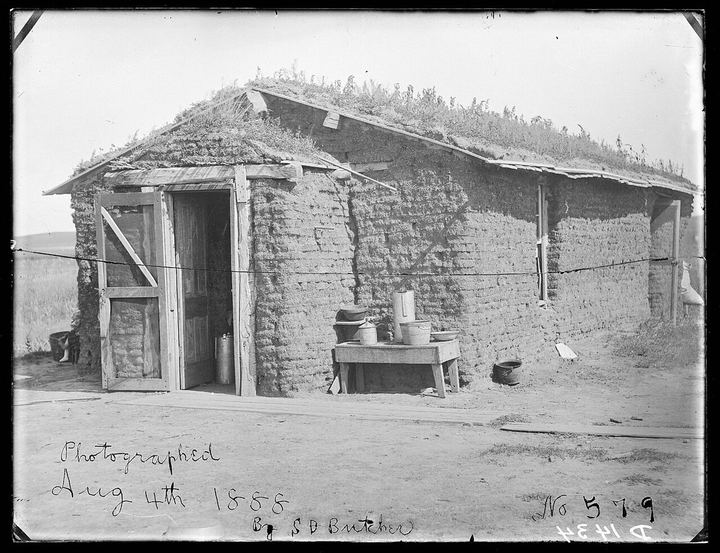
The story is set on a farm on the American prairie in the late nineteenth century, when settlers sometimes found spouses through letters and newspaper advertisements, and women from the East traveled west by train to marry. Farm work, the threat of sudden storms and the distance to town shape the family's days.
Composition
MacLachlan based the book on a story her mother told her about a real woman who came from Maine to the prairie to marry into their family. She wrote it while living in New England and missing the open land of her birthplace in Wyoming. Harper & Row published it in April 1985.
Reception
It won the 1986 Newbery Medal, the Scott O'Dell Award for Historical Fiction and the Golden Kite Award. A 1991 Hallmark Hall of Fame television film starred Glenn Close and Christopher Walken, and MacLachlan continued the story in Skylark (1994), Caleb's Story (2001), More Perfect than the Moon (2004) and Grandfather's Dance (2006).
Comparisons
- little-house-on-the-prairie
Both show a family making a home on the open prairie; Wilder's Ingalls family travels west together, while the Wittings must take in a newcomer who comes alone.
- the-courage-of-sarah-noble
Two Sarahs who leave home for a wild new place; Sarah Noble is a child keeping up her courage in Connecticut, Sarah Wheaton a grown woman deciding where she belongs.
- anne-of-green-gables
In each book a newcomer arrives on trial to a household that has asked for someone, and wins the family over until they cannot imagine her leaving.
- heidi
Heidi pines for the mountains in Frankfurt as Sarah longs for the sea on the prairie; both books treat homesickness tenderly and resolve it through love.
- keep-the-lights-burning-abbie
Abbie Burgess's Maine lighthouse is the coastal world Sarah leaves behind; reading them together lets children picture the sea Sarah misses.
Quotes
“I will come by train. I will wear a yellow bonnet. I am plain and tall.”
For Students
A reading companion for classical Christian high school students. See the student guide.
Reading Guide
Watch for
- What Caleb keeps asking Anna about Mama at the very beginning.
- The things Sarah tells about herself in her letters, and how the family knows her at the station.
- Every time someone sings, and when Papa starts singing again.
- The presents Sarah brings from the sea and the colors she says the prairie is missing.
- How Anna and Caleb feel on the day Sarah drives to town by herself.
Key terms and names
- Prairie
- Wide, flat grassland with few trees, where the Wittings have their farm. Sarah says its long grass rolls like the sea.
- Maine
- The state on the northeastern coast where Sarah grew up beside the ocean with her brother William.
- Advertisement
- A notice in the newspaper. Papa uses one to ask for a wife, and Sarah answers it with a letter.
- Bonnet
- A hat tied under the chin. Sarah says she will wear a yellow one so the family will know her.
- Squall
- A sudden, strong storm with wind and rain. One sends the whole family into the barn with the animals.
- Dune
- A hill of sand by the sea. Sarah has none on the prairie, so she slides down the hay instead.
Seminar Questions
- Comprehension How did Papa find Sarah, and how did the family know her when she got off the train?
- Comprehension What presents did Sarah bring for Anna and Caleb?
- Comprehension What did Sarah bring back from town at the end of the story?
- Interpretation Caleb asks over and over whether Sarah will stay, but Anna does not ask. Why do you think Anna stays quiet?
- Interpretation Why does it matter so much to the children when Papa sings again?
- Interpretation Sarah says she will always miss her old home. Why do you think she stays anyway?
- Big Question Can someone become part of your family even if they were not born into it? How?
Faith Connections
- Ruth 1:16 (Scripture)
Ruth leaves her own country and tells Naomi that her people will be Ruth's people. Sarah also leaves her home and her brother and chooses the Wittings as her family.
- Psalm 68:6 (Scripture)
God setteth the solitary in families. The lonely farmhouse, where no one sings, becomes a full home when Sarah comes.
- Psalm 30:5 (Scripture)
Weeping may endure for a night, but joy cometh in the morning. The family's long sadness after Mama's death gives way to singing again.
- Hebrews 11:13-16 (Scripture)
The faithful are called strangers and pilgrims looking for a better country. Sarah, a stranger on the prairie, finds a home there while still remembering the sea.
Logic and Rhetoric
Central argument: The Wittings have lost their mother, and their house is quiet. Sarah comes from the sea to see whether she can love them and the prairie. She misses the sea, but she learns that she would miss the family more. So she stays, and the family learns that a new person can be loved without forgetting the one who is gone.
Rhetorical device: repetition. Caleb asks again and again whether Mama sang and whether Sarah will stay, and the answers to those questions change as the book goes on, until singing and staying come together at the end.
Debate: Resolved: that Anna was wiser than Caleb to be careful about hoping Sarah would stay.
Writing Prompts
Essay: Tell three things Sarah did on the farm that showed she was becoming part of the family. Then tell why you think she decided to stay.
Comparison with Little House on the Prairie: Laura and Anna both live on the prairie. Tell one way their families are alike and one way they are different, and which home you would like to visit.
Medical Lens
The book has no illness or medicine in it, but it is built on a family's grief: the children's mother died the day after Caleb's birth, a common enough end in nineteenth-century farm country far from doctors. Papa's silence and his having stopped singing, Anna's guarded memory and Caleb's repeated questions about a mother he never knew give a gentle picture of bereavement in a household, and the book is sometimes used with children who have lost a parent. Any clinical reading is the reader's own; the story itself speaks only of missing and remembering.
- Chapter 1
Anna recalls her mother's death the morning after Caleb was born and the quiet that followed; Caleb asks whether Mama sang.
- Chapters 5-9
Papa begins to sing again as Sarah settles in, a sign of the household slowly coming out of mourning.
Creative Prompts
- Classroom
Write a letter to Sarah in Maine, as Anna or Caleb did, asking her three questions about herself and the sea.
- Classroom
Draw the prairie the way Sarah wanted to draw it, then add the colors of the sea she brought back from town.
- Dialogue
Act out the day Sarah drives to town alone, with one child as Anna and one as Caleb, waiting and wondering if she will come back.
- Fiction
Write a short letter from Sarah to her brother William, telling him about her first week on the farm.
Further Reading
- Skylark, Patricia MacLachlan
The 1994 sequel, in which drought threatens the farm.
- Caleb's Story, Patricia MacLachlan
- Sarah, Plain and Tall (1991 television film), Glenn Jordan (director)
Verification notes
Publication by Harper & Row in April 1985, the 1986 Newbery Medal, Scott O'Dell Award and Golden Kite Award, the characters' names, the sequels and their years, the 1991 television film, and MacLachlan's account of the book's origin were checked at en.wikipedia.org/wiki/Sarah,_Plain_and_Tall. The quotation from Sarah's letter and the facts of MacLachlan's life (born 1938 in Cheyenne, died 2022 in Williamsburg, Massachusetts; the family story of a woman from Maine) were checked in the Boston Globe obituary, bostonglobe.com/2022/04/08/metro/patricia-maclachlan-bestselling-author-sarah-plain-tall-childrens-book-dies-84. Episode details (the shell and stone, the haystack dune, the haircut, the squall, the colored pencils) are from memory of the book and agree with published summaries, but the chapter divisions used in plotOrArgument are approximate.
- Text is under copyright; check quotations against an authorized edition before publication.
- Exact chapter boundaries for the episodes grouped in plotOrArgument (the book has nine short chapters).
- Whether Sarah's letter with the yellow bonnet line falls at the end of Chapter 2 or the start of Chapter 3.
- That Maggie's homesickness is specifically for the hills of Tennessee, and the exact gifts (moon snail shell, sea stone) Sarah brings.