Work record
The Story of a Soul
1898 · 19th Century · Memoir · French
Abstract
Background. Asked by her prioress-sister to record her childhood memories, a young nun in a Norman convent wrote three notebooks in the last years of her life, the final one while she was dying of tuberculosis.
Scope. The narrative runs from her birth in 1873 through a sheltered girlhood, family losses, a determined campaign to enter the cloister at fifteen and nine years of convent life.
Content. Episodes include a mother's early death, a frightening childhood illness ended by a smiling statue, scruples, a Christmas turning point, prayers for a condemned criminal, a bold petition in the Vatican, a father's long infirmity, patient charity toward trying sisters and a final darkness of faith.
Teaching. Holiness is open to the smallest souls through trust and love in ordinary duties; God lifts those who cannot climb; and love is the vocation that contains all others.
Form. Intimate and conversational, the chapters mix family memories, prayers addressed directly to Jesus, Scripture and homely images such as a ball, a lift and a garden, and the edition adds sayings recorded by her sisters.
Significance. Edited by her sisters for other Carmels, the book became one of the most widely read Christian works of the twentieth century and led within three decades to its author's canonization and, in 1997, to her title as Doctor of the Church.
Key figures
- Thérèse Martin: Narrator, Carmelite nun of Lisieux
- Louis Martin: Her father, a retired watchmaker
- Zélie Guérin Martin: Her mother, who died in 1877
- Pauline (Mother Agnes of Jesus): Sister, prioress and first editor
- Marie (Sister Marie of the Sacred Heart): Eldest sister and godmother
- Céline: Sister and fellow pilgrim to Rome
- Leo XIII: Pope who heard her plea in 1887

Summary
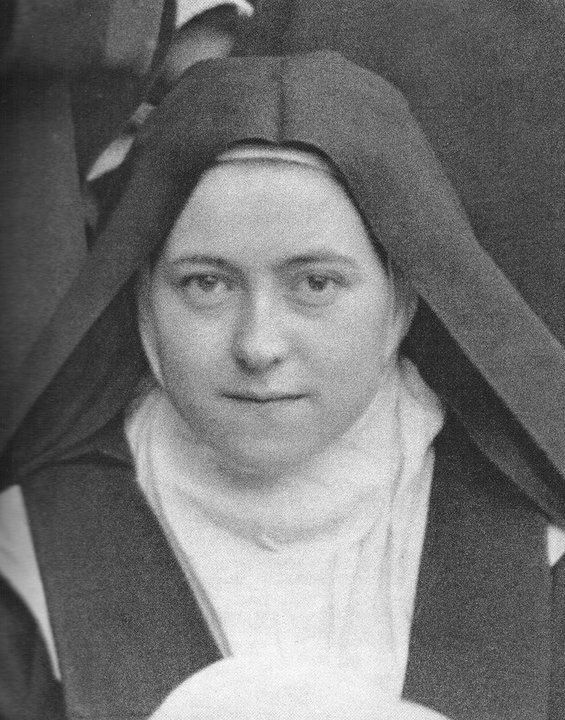
The Story of a Soul is the autobiography of Thérèse Martin, a young Carmelite nun of Lisieux in Normandy, written at the request of her superiors in the last years of her short life and published a year after her death. In the library text, Thomas N. Taylor's 1912 translation, it is arranged in eleven chapters addressed to her sister Pauline, by then Mother Agnes of Jesus, and framed by a prologue on her parents and birth and an epilogue on her final illness. Thérèse explains at the outset that she is writing the story of the little flower gathered by Jesus, and that God has made great saints like lilies and roses and lesser ones like violets and daisies, each beautiful in its place. She recalls a happy early childhood at Alençon as the youngest of nine children, five of whom lived, and her cry as a small girl that she chose everything God willed. Her mother dies of illness in August 1877, when Thérèse is four, and her father Louis moves the family to Les Buissonnets in Lisieux. When her sister Pauline, whom she had chosen as a second mother, enters the Carmel in 1882, Thérèse falls into a strange illness of tremors, fears and frightening visions, from which she is cured in May 1883 when, she writes, a statue of the Virgin smiled at her. She makes her First Communion, suffers a long period of scruples, and on Christmas Eve 1886 receives what she calls her conversion, the grace to master her excessive sensitivity. She prays for the condemned murderer Pranzini and rejoices when he kisses the crucifix before his execution. Determined to enter Carmel at fifteen, she travels with her father and sister Céline on a pilgrimage to Rome in 1887 and, against instructions, asks Pope Leo XIII for permission; he tells her she will enter if it is God's will. She enters on 9 April 1888 and makes her profession on 8 September 1890. Later chapters describe the trial of her father's long illness, her work with the novices, her small daily acts of patience with difficult sisters, and her discovery of the little way: since she is too small to climb the stairway of perfection, she will let the arms of Jesus be the lift that raises her. In the final chapter she finds her vocation in the heart of the Church: to be love. The epilogue tells of the hemorrhage on Good Friday 1896, her trial of faith, her suffering from tuberculosis and her death on 30 September 1897, with her last words of love. Mother Agnes edited the manuscripts for the first edition, Histoire d'une âme, printed in 1898; Taylor's volume adds counsels and reminiscences, letters, poems and prayers.
Virtues in this work
- Humility: Thérèse calls herself a little flower and seeks a way to Heaven fit for those too small to climb the stairs of perfection.
- Fortitude: At the papal audience she speaks to Leo XIII despite being told to keep silent, and she later bears tuberculosis with patience.
- Charity: She prays for the condemned murderer Pranzini and discovers in Chapter XI that her vocation is love.
- Hope: She receives her first hemorrhage on Good Friday 1896 with joy as a sign that she will soon be with Christ.
Plot or Argument
- Prologue and Chapter I: Earliest memories
Her parents Louis Martin and Zélie Guérin, her birth at Alençon in 1873, the image of the flowers of God's garden, and her childish choosing of everything.
- Chapters II-III: A Catholic household and Pauline's departure
Her mother's death in 1877, the move to Les Buissonnets, school at the Benedictine abbey, Pauline's entry into Carmel, the strange illness and the smile of the Virgin in 1883.
- Chapters IV-V: First Communion and vocation
First Communion and Confirmation, the years of scruples, the Christmas grace of 1886, prayers for Pranzini, and her resolve to enter Carmel at fifteen.
- Chapter VI: A pilgrimage to Rome
The journey through Switzerland and Italy with her father and Céline, the Colosseum and the catacombs, and her plea to Leo XIII at the papal audience.
- Chapters VII-VIII: Entry and profession
Entry into the Lisieux Carmel in April 1888, the first trials of convent life, her father's illness, and her profession in September 1890.
- Chapters IX-X: The night of the soul and the new commandment
The little way and the image of the lift, her offering to merciful love, the beginning of her illness and trial of faith, and her teaching on charity toward the sisters who try her patience.
- Chapter XI: A canticle of love
Her longing for every vocation, priest, apostle, martyr and missionary, resolved in the discovery that her vocation is love in the heart of the Church.
- Epilogue and additional writings
Her last illness and death in 1897, followed by counsels to novices recorded by her sisters, letters to Céline, Mother Agnes, Marie and missionary priests, poems and prayers.
Characters
- Thérèse Martin (Sister Thérèse of the Child Jesus), author and narrator
Youngest daughter of a devout Norman family who enters Carmel at fifteen and dies at twenty-four.
- Louis Martin, father
Gentle, devout watchmaker who calls her his little queen and gives her to Carmel.
- Zélie Guérin Martin, mother
Lacemaker of Alençon who dies when Thérèse is four.
- Pauline (Mother Agnes of Jesus), sister and prioress
The sister Thérèse chose as her second mother, later prioress; the story is written at her request.
- Marie (Sister Marie of the Sacred Heart), eldest sister and godmother
Nurses Thérèse through her childhood illness and later enters the same Carmel.
- Céline, sister
Closest in age, her companion on the Rome pilgrimage, and finally a nun beside her.
- Léonie, sister
The middle sister, whose difficult path leads her to the Visitation at Caen.
- Leo XIII, pope
Receives her plea at the 1887 audience and tells her she will enter if God wills.
Lessons
The little way
Thérèse feels too small to climb the stairway of perfection, so she seeks a lift: the arms of Jesus, who invites the little ones to come to Him. Holiness, for her, lies not in great deeds but in trusting God like a child and doing small things with great love.
- Why does Thérèse compare the way to God with a lift in a modern building?
- Which two verses of Scripture does she find that answer her search?
- What small act of patience or kindness could you offer today in the spirit of the little way?
Every flower in its place
At the start of her story Thérèse explains that God makes some souls like lilies and roses and others like violets and daisies, and that the garden would lose its beauty if all wished to be roses. Each person's call is beautiful because God chose it.
- Why does Thérèse say the lowly flowers do not lessen the beauty of the rose?
- How does this image help her accept that she will not be a great saint in the usual sense?
- Is it hard to be content with a small place? Why?
Growing out of over-sensitivity
Thérèse admits that after her mother's death she cried at the smallest thing and was tormented by scruples. On Christmas Eve 1886 she receives the grace to hold back her tears and think of others first, and she calls this her conversion. Maturity, in her story, is a gift received and a habit practiced.
- What happened on Christmas Eve 1886, and why did it matter so much to her?
- How did her scruples affect her, and who helped her through them?
- What does her story suggest about how a young person grows stronger?
Love as a vocation
In Chapter XI Thérèse longs to be a priest, apostle, missionary and martyr all at once. Reading St. Paul on the body of Christ and the greater gift of charity, she discovers that love holds every vocation together and that her place is to be love in the heart of the Church.
- Why can Thérèse not be satisfied with any single vocation?
- How does 1 Corinthians 12-13 resolve her longing?
- Can a hidden life in a convent help the work of missionaries far away?
Context
Thérèse grew up in the provincial Catholic France of the Third Republic, a time of strong devotional life in families and parishes alongside growing tension between the Church and the anticlerical state. Lisieux, a small Norman town, had a Carmel founded in 1838 that lived the strict enclosed rule of Teresa of Avila's reform, with fasting, silence and long hours of prayer. Her family's piety, with its devotion to the Sacred Heart, the Virgin and the saints, was typical of the age, and her pilgrimage to Rome in 1887 was organized for the priestly jubilee of Leo XIII. Tuberculosis was then one of the leading causes of death among young adults in France.
Composition
Thérèse wrote three manuscripts: an account of her childhood and early religious life for Mother Agnes in 1895, a letter to her sister Marie in September 1896 that became Chapter XI, and a continuation for the prioress Mother Marie de Gonzague in June 1897. After her death Mother Agnes edited and joined them as if all were addressed to one prioress, and the Lisieux Carmel printed Histoire d'une âme in 1898 for circulation to other Carmels. Thomas N. Taylor's English translation, part of the volume Soeur Thérèse of Lisieux (London, 1912), follows that edited text; the original manuscripts were published in facsimile in 1956.
Reception
The book spread rapidly across France and then the world, with many editions and translations within a decade, and reports of favors attributed to Thérèse's intercession led to her canonization by Pius XI in 1925, only twenty-eight years after her death. She was named co-patron of the missions with Francis Xavier in 1927 and declared a Doctor of the Church in 1997. The little way has shaped Catholic spirituality and devotion to her is worldwide; the basilica built in her honor at Lisieux became a major place of pilgrimage.
Comparisons
- life-of-st-teresa-of-jesus
Thérèse belonged to the Carmelite reform that Teresa of Avila began, and both wrote their lives at their superiors' command; Teresa describes visions and a great reform, Thérèse a way of littleness open to anyone.
- confessions
Augustine and Thérèse both tell their lives as prayer and praise, recalling childhood faults with great seriousness and tracing grace through ordinary events.
- practice-of-the-presence-of-god
Brother Lawrence, like Thérèse, finds holiness in small tasks done for love of God rather than in extraordinary penances.
- the-story-of-my-boyhood-and-youth
Muir and Thérèse both recall nineteenth-century childhoods with devout parents and find God's hand in flowers; Muir studies them as a botanist, Thérèse takes them as an image of souls.
- golden-legend-popular-saints
The medieval Golden Legend tells of saints known for miracles and martyrdom; Thérèse sets beside them a saint whose greatness lies in small hidden acts.
Quotes
Frequently cited
“I understood that if all the lowly flowers wished to be roses, nature would lose its springtide beauty, and the fields would no longer be enamelled with lovely hues.”
Frequently cited
“My God, I choose everything, I will not be a Saint by halves, I am not afraid of suffering for Thee, I only fear one thing, and that is to do my own will.”
Frequently cited
“I will seek out a means of getting to Heaven by a little way--very short and very straight, a little way that is wholly new.”
Frequently cited
“With me prayer is an uplifting of the heart; a glance towards heaven; a cry of gratitude and love, uttered equally in sorrow and in joy.”
Frequently cited
“O Jesus, my Love, at last I have found my vocation. My vocation is love!”
“Well, well! You will enter if it is God's Will.”
“Thine Arms, then, O Jesus, are the lift which must raise me up even unto Heaven.”
For Students
A reading companion for classical Christian high school students. See the student guide.
Reading Guide
Watch for
- The image of the garden of flowers at the start of Chapter I and how it returns throughout the book.
- The losses of Chapters II-III, her mother's death and Pauline's departure, and how they affect her.
- The Christmas Eve of 1886 in Chapter V, which Thérèse calls her conversion.
- The audience with Leo XIII in Chapter VI and what she does when told not to speak.
- The image of the lift in Chapter IX and the discovery of her vocation in Chapter XI.
Key terms and names
- Carmel
- The enclosed convent of the Carmelite nuns at Lisieux, following the reformed rule of Teresa of Avila.
- The little way
- Thérèse's path to holiness through childlike trust in God and small acts done with love.
- Les Buissonnets
- The family's house in Lisieux after the move from Alençon in 1877.
- Profession
- The ceremony in which a nun makes her vows; Thérèse made hers on 8 September 1890.
- Scruples
- Constant, anxious fear of having sinned when one has not, which troubled Thérèse after her First Communion.
- Mother Agnes of Jesus
- Thérèse's sister Pauline, prioress of the Lisieux Carmel, at whose request the story was begun.
- Offering to merciful love
- Thérèse's act of 9 June 1895 giving herself to God's love as a victim, described in Chapter VIII.
Seminar Questions
- Comprehension What did Thérèse say as a small girl when her sister Léonie offered a basket of doll's things to choose from, and how does she apply it later?
- Comprehension What did Thérèse ask the Pope, and what did he answer?
- Comprehension What is the lift that Thérèse says will raise her to Heaven?
- Interpretation Why does Thérèse call the Christmas Eve of 1886 her conversion, when she had always been devout?
- Interpretation Why does Thérèse describe herself as a little flower rather than a great saint?
- Interpretation How does reading St. Paul help Thérèse find her vocation in Chapter XI?
- Big Question Can small, hidden acts of love matter as much as great public deeds?
- Big Question How should a Christian face suffering and death, if Thérèse's example is a guide?
Faith Connections
- Matthew 18:1-4 (Scripture)
Jesus says the one who becomes like a little child is greatest in the kingdom. Thérèse's little way is built on this teaching.
- Isaiah 66:12-13 (Scripture)
God promises to carry His people and comfort them as a mother comforts her child. Thérèse quotes this passage in Chapter IX when she finds her lift.
- 1 Corinthians 12:31-13:13 (Scripture)
Paul shows the more excellent way of love. Reading these chapters, Thérèse discovers in Chapter XI that her vocation is love.
- Teresa of Avila, The Life, Chapter VIII (Great Conversation)
Teresa defines prayer as friendship with God. Thérèse, her spiritual daughter in Carmel, describes prayer in Chapter X as a simple glance toward heaven, continuing that teaching in a childlike key.
Logic and Rhetoric
Central argument: God would not inspire a desire for holiness that could not be fulfilled. Thérèse is too small to reach holiness by great efforts. Therefore there must be another way, and Scripture shows it: God Himself carries the little ones who trust Him, so she must stay little and let Him lift her.
Rhetorical device: analogy. In Chapter IX Thérèse compares the stairs of perfection with the new lifts in rich people's houses, and Jesus' arms with the lift that raises her to Heaven.
Debate: Resolved: that the little way asks more of a person than heroic deeds do.
Memory Work
O Jesus, my Love, at last I have found my vocation. My vocation is love!
With me prayer is an uplifting of the heart; a glance towards heaven; a cry of gratitude and love, uttered equally in sorrow and in joy.
Writing Prompts
Essay: Thérèse calls herself a little flower. Using the garden image of Chapter I and the lift of Chapter IX, explain what she means by littleness and why she thinks it is a strength.
Comparison with The Life of St. Teresa of Jesus: Compare how Teresa of Avila and Thérèse of Lisieux describe prayer. What does each say a person should do when prayer is dry or difficult?
Medical Lens
The book contains a careful patient's account of two illnesses. In 1883, after her sister Pauline left for Carmel, the ten-year-old Thérèse suffered a weeks-long illness that she describes as tremors, seeming delirium with retained awareness, torpor in which she could still hear the least whisper, and terrors in which nails in the wall looked like blackened fingers and her father's hat took a horrible shape; she attributes her sudden cure on 13 May 1883 to the smile of a statue of the Virgin. Retrospective readings have ranged from a nervous illness provoked by grief and separation to an infection; these are speculative, and the text presents the episode in religious terms. She also describes about two years of scruples after her First Communion, which she calls a terrible disease, and her sensitivity after her mother's death at four. The epilogue and Chapter IX record pulmonary tuberculosis: a first hemoptysis on the night of Holy Thursday to Good Friday 1896, received with joy as a call from Christ, continued austerities, progressive weakness, the doctor's remark that he had never seen anyone suffer so intensely with such joy, and her death on 30 September 1897. Her trial of faith in the last eighteen months, a darkness about heaven that she endured while continuing to act in faith, is a spiritual rather than a medical category and should be read as she presents it.
- Chapter II
Her mother's death in August 1877, the Extreme Unction she witnessed, and the change in her temperament afterward.
- Chapter III
The illness of 1883 with terrors, apparent delirium and torpor, Marie's nursing, and the cure she attributes to the smile of the Virgin.
- Chapter IV
The years of scruples after her First Communion, which she calls a terrible disease.
- Chapter IX
The first hemorrhage from the lungs on the night before Good Friday 1896, which she receives as the first call of her Beloved.
- Epilogue
The final months in the infirmary, the doctor's visits and remedies, her suffering and her death on 30 September 1897.
Creative Prompts
- Classroom
Draw a garden of flowers as Thérèse describes it in Chapter I, labeling each flower with the kind of soul or saint it might stand for.
- Essay
Explain the little way in your own words, using the image of the lift in Chapter IX and one example of her small acts of charity in Chapter X.
- Fiction
Tell the story of the papal audience in Chapter VI from the point of view of Céline, who stood behind her sister.
Further Reading
- Story of a Soul: The Autobiography of St. Thérèse of Lisieux, Thérèse of Lisieux, trans. John Clarke
A translation from the original manuscripts rather than the 1898 edited text.
- The Hidden Face: A Study of St. Thérèse of Lisieux, Ida Friederike Görres
- Thérèse of Lisieux: God's Gentle Warrior, Thomas R. Nevin
- The Life of St. Teresa of Jesus, Teresa of Avila
The autobiography of the founder of the Carmelite reform.
Verification notes
Chapter titles, dates given in the text (her mother's death on 28 August 1877, the cure of 1883, entry on 9 April 1888, profession on 8 September 1890, the oblation of 9 June 1895, death on 30 September 1897), episodes and quotes were checked against the attached Gutenberg text, which reproduces most of Taylor's Soeur Thérèse of Lisieux (1912; 8th ed. 1922) but omits illustrations, the accounts of favors and beatification documents. The history of the three manuscripts, Mother Agnes's editing, the 1898 printing, the 1956 facsimile edition, canonization in 1925, the missions patronage of 1927 and the Doctor of the Church declaration of 1997 are stated from standard accounts. Taylor's chapter order follows the edited text, not the original manuscripts. The year of the first English translation of the book is not certain from the text and is not stated.
- Exact dates of composition of Manuscripts A, B and C (usually given as January 1895-January 1896, September 1896, and June-July 1897).
- The print run of the 1898 first edition (often given as 2,000 copies).
- Whether the 1883 cure took place on 13 May, Pentecost Sunday, as is usually stated.