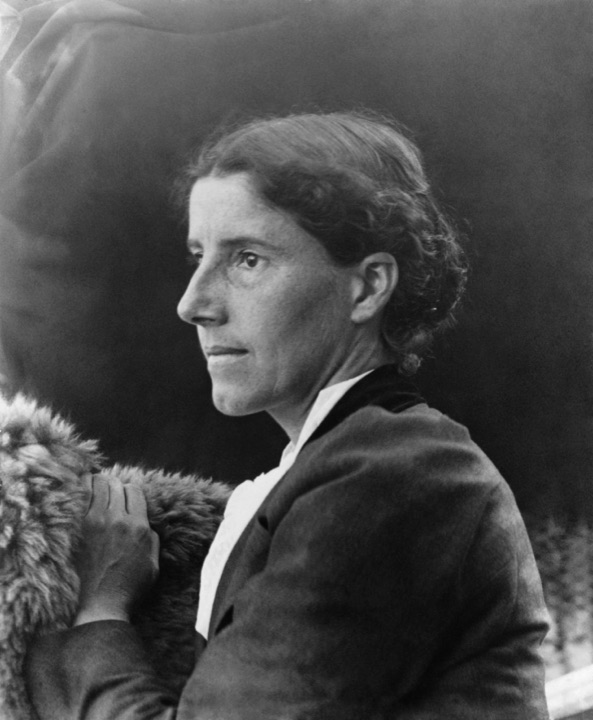
Charlotte Perkins Gilman (1860–1935), born Charlotte Anna Perkins in Hartford, Connecticut, was a grandniece of Harriet Beecher Stowe. She studied at the Rhode Island School of Design, married the artist Charles Walter Stetson in 1884 and, after the birth of their daughter Katharine in 1885, suffered a long depression for which she was treated in 1887 by the Philadelphia neurologist S. Weir Mitchell. She moved to Pasadena, California, in 1888, divorced in 1894 and became a lecturer and writer on women's economic independence, most famously in Women and Economics (1898). In 1900 she married her cousin George Houghton Gilman. From 1909 to 1916 she wrote and published the monthly magazine The Forerunner, which serialized her utopian novel Herland (1915). She died in Pasadena in 1935.
"The Yellow Wallpaper" is a short story by Charlotte Perkins Gilman, first published in The New England Magazine in January 1892 and issued as a small book in 1899. It takes the form of a secret journal kept by an unnamed young wife and mother whose husband, John, a physician, has diagnosed her with "temporary nervous depression" after the birth of their baby.
Herland is a utopian novel by Charlotte Perkins Gilman, published in twelve monthly installments in her magazine The Forerunner in 1915. It did not appear as a book until 1979, when Pantheon published it with an introduction by the historian Ann J. Lane.