Work record
The Yellow Wallpaper
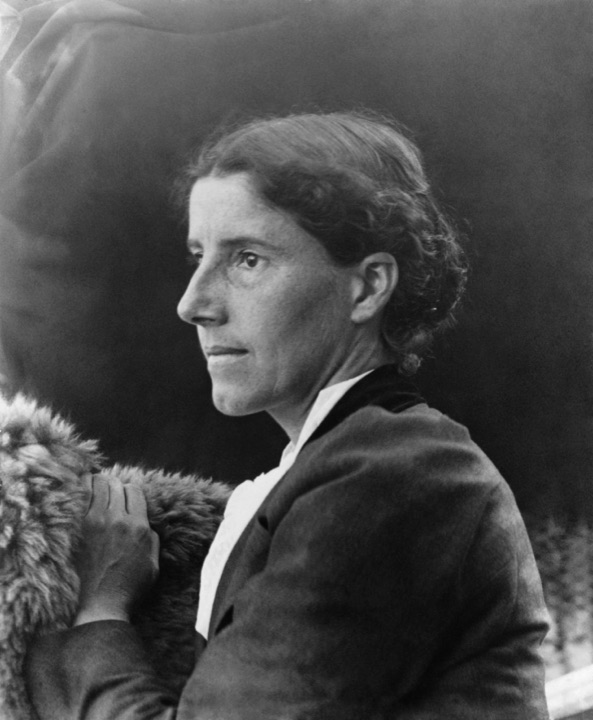
Charlotte Perkins GilmanThe Yellow Wallpaper by Charlotte Perkins Gilman (1892)"The Yellow Wallpaper" is a short story by Charlotte Perkins Gilman, first published in The New England Magazine in January 1892 and issued as a small book in 1899.1892 · 19th Century · Short Stories · English
Abstract
Background. After the birth of her daughter, Gilman fell into a long depression and in 1887 underwent the rest cure of the neurologist S. Weir Mitchell, who advised her to live domestically and give up writing. In a 1913 essay she explained that she wrote the story, with invented embellishments, to warn others against that treatment.
Plot. A new mother, diagnosed by her physician husband with a nervous condition, is confined for the summer to an upstairs room in a rented mansion and forbidden to work or write. She keeps a secret journal and becomes fixated on the room's torn yellow wallpaper, in which she begins to see a trapped woman creeping behind the pattern. On the last day she locks herself in, strips the paper and creeps around the walls, and her husband faints at the sight.
Ideas. The tale examines medical authority over women, the effects of isolation and enforced idleness, and the patient's voice. Its unreliable journal form lets readers watch a mind come apart while seeing what the doctors miss.
Reception. Some early readers took it as a horror story. Rediscovered in 1973, it became a central work of American women's writing and is widely taught in literature and medical humanities courses.
Main characters
- The narrator: Young wife and new mother
- John: Her physician husband
- Jennie: John's sister
- The woman in the wallpaper: Figure the narrator sees

Summary
"The Yellow Wallpaper" is a short story by Charlotte Perkins Gilman, first published in The New England Magazine in January 1892 and issued as a small book in 1899. It takes the form of a secret journal kept by an unnamed young wife and mother whose husband, John, a physician, has diagnosed her with "temporary nervous depression" after the birth of their baby. For the summer John rents an old country mansion and installs his wife in a large upstairs room that she believes was once a nursery, with barred windows, rings in the walls, a bed nailed to the floor and torn, sickly yellow wallpaper. She is to rest, take tonics and avoid all "work", including writing, and is kept from company and from her baby, who is cared for by a nurse. She writes in secret and comes to hate the wallpaper's sprawling pattern. Confined and idle, she studies the paper for hours and begins to see a woman trapped behind its pattern, shaking it and creeping about by moonlight. Her husband, his sister Jennie and her own brother, also a physician, treat her concerns as fancies, and John warns that if she does not improve he will send her to Weir Mitchell in the fall. In the final entries she locks herself in and tears the paper from the walls to free the woman, whom she now identifies with herself. When John gets the locked door open he finds her creeping around the room, and he faints; she must creep over him as she goes. Gilman drew on her own treatment with the rest cure in 1887. The story was little read for decades, but its 1973 reissue by the Feminist Press made it one of the most widely taught American short stories, read both as a Gothic tale of madness and as a criticism of nineteenth-century medicine and marriage.
Plot or Argument
- The rented mansion
The narrator explains that John, her physician husband, believes she is not seriously ill and has forbidden her to work; she describes the house and the yellow-papered room.
- Rest and the forbidden journal
Kept from writing, visitors and her baby, she writes in secret, while her repugnance for the wallpaper grows and John dismisses her requests to change rooms.
- The woman behind the pattern
She begins to see a sub-pattern and then a woman crouching and creeping behind the paper, especially by moonlight; John threatens to send her to Weir Mitchell.
- Obsession
She becomes secretive and watchful, suspects John and Jennie of studying the paper, and believes she sees creeping women outside in the garden and along the road.
- The last day
Locked in on the last day in the house, she tears off the paper, creeps around the walls and tells the fainting John that she has got out at last.
Characters
- The narrator, protagonist
Unnamed young wife and mother suffering from what her husband calls a nervous condition, who records her thoughts in a secret journal.
- John, major
Her husband, a physician, affectionate but controlling, who prescribes rest and forbids work.
- Jennie, minor
John's sister, who keeps house and watches over the narrator.
- Mary, minor
The nurse who looks after the baby.
- The woman in the wallpaper, major
Figure the narrator sees trapped behind the pattern and finally identifies with herself.
Lessons
Medical authority and the patient's voice
The narrator's husband and brother, both physicians, overrule her own sense of what would help her. The story asks how illness should be understood and who gets to decide.
- What does the narrator believe would do her good, and why is she not allowed it?
- How does John speak to her, and what does that reveal?
The unreliable narrator
Everything is filtered through a mind in crisis. Readers must judge what is real and what the narrator imagines.
- At what point did you begin to doubt the narrator's account?
- Why might Gilman tell the story as a journal?
Confinement as symbol
The barred room, the nailed-down bed and the trapped woman in the paper all suggest the narrator's situation. Students can trace how setting becomes meaning.
- What details suggest that the room is a kind of prison?
- Who is the woman behind the wallpaper?
Context
In the late nineteenth century, many physicians attributed women's depression and anxiety to "nerves", neurasthenia or hysteria. The rest cure, developed in the 1870s by the Philadelphia neurologist Silas Weir Mitchell (1829–1914), who was also known for his studies of nerve injuries in Civil War soldiers, prescribed weeks of bed rest, isolation, a rich diet and massage, and was widely used for women patients.
Composition
Gilman suffered a severe depression after the birth of her daughter and in 1887 was treated by Mitchell, who sent her home with advice to lead a domestic life and to give up writing and painting. In her 1913 essay "Why I Wrote The Yellow Wallpaper", published in her magazine The Forerunner, she wrote that following this advice for some three months brought her near to mental ruin, that she recovered by returning to work, and that she wrote the story, with additions of her own, to save other people from being driven mad. She also wrote that she sent a copy to the physician, who never acknowledged it.
Reception
Horace Scudder of The Atlantic Monthly declined the story; it appeared in The New England Magazine, where some readers took it as a horror tale and a Boston physician protested that it could drive readers mad. William Dean Howells included it in The Great Modern American Stories (1920). The Feminist Press reissued it in 1973 with an afterword by Elaine Hedges, and it has since become a central text of American women's writing and of literature and medicine courses.
Comparisons
- The Turn of the Screw and The Aspern Papers
James's governess, like Gilman's narrator, is an isolated woman whose account of what she sees may be the product of her own mind.
- The Death of Ivan Ilyich
Tolstoy also portrays a patient whose physicians speak past her or him, and the loneliness of illness inside a family.
- Jane Eyre
Brontë's Bertha Mason, confined to an attic, is a famous earlier image of a woman shut away as mad.
- Mrs. Dalloway
Woolf, herself prescribed rest cures, shows Septimus Smith ordered to rest by Sir William Bradshaw, a satirical portrait of nerve doctors.
- Studies on Hysteria
Breuer and Freud's case histories, published in 1895, show physicians of Gilman's era interpreting women's nervous symptoms.
- Tales (Selection)
Poe's first-person tales of obsession and madness are Gothic ancestors of Gilman's narrator.
- Herland
Gilman's utopian novel imagines the opposite of the narrator's confinement: a society run entirely by women.
Quotes
“If a physician of high standing, and one’s own husband, assures friends and relatives that there is really nothing the matter with one but temporary nervous depression—a slight hysterical tendency—what is one to do?”
“Personally, I believe that congenial work, with excitement and change, would do me good.”
“John says if I don’t pick up faster he shall send me to Weir Mitchell in the fall.”
“There are things in that paper that nobody knows but me, or ever will.”
““I’ve got out at last,” said I, “in spite of you and Jane! And I’ve pulled off most of the paper, so you can’t put me back!””
For Students
A reading companion for classical Christian high school students. See the student guide.
Reading Guide
Watch for
- How the narrator describes John and his treatment.
- Each new description of the wallpaper.
- Moments when she hides her writing or her thoughts.
- The final scene and who is 'Jane'.
Key terms and names
- Rest cure
- A nineteenth-century treatment for nervous illness: bed rest, isolation, feeding and a ban on mental work.
- Neurasthenia
- A nineteenth-century diagnosis of nervous exhaustion.
- Postpartum depression
- Depression after childbirth, now recognized as a common and treatable illness.
- Unreliable narrator
- A narrator whose account the reader cannot fully trust.
- Gothic
- Fiction of dark houses, confinement, fear and the uncanny.
Seminar Questions
- Comprehension What treatment does John prescribe, and what is the narrator forbidden to do?
- Comprehension What does the narrator see behind the pattern of the paper?
- Interpretation Why does she identify with the woman in the wallpaper?
- Interpretation Is the ending a breakdown, a liberation, or both?
- Big Question How should doctors balance their expertise with a patient's own understanding of her illness?
- Big Question Can creative work be part of healing?
Faith Connections
- Proverbs 17:22 (Scripture)
'A merry heart doeth good like a medicine: but a broken spirit drieth the bones': the story raises the question of what truly restores a broken spirit.
- Charlotte Brontë, Jane Eyre (Great Conversation)
The confined Bertha Mason and Gilman's narrator are often read together as images of women shut away from the world.
Logic and Rhetoric
Central argument: Through a woman driven to madness by a treatment meant to cure her, the story argues that enforced idleness and the silencing of a patient's own judgment can do great harm.
Rhetorical device: symbolism. The woman trapped behind the barred pattern of the paper stands for the narrator's own confinement.
Debate: Resolved: John is more responsible than the illness for the narrator's breakdown.
Memory Work
Personally, I believe that congenial work, with excitement and change, would do me good.
Writing Prompts
Essay: Explain how Gilman uses the journal form to show the narrator's decline.
Comparison with The Turn of the Screw and The Aspern Papers: Compare the reliability of the narrators in Gilman's story and in James's The Turn of the Screw.
Medical Lens
The story is a fictional case of what is now usually described as postpartum depression progressing to psychosis under the rest cure. The narrator's physician husband diagnoses "temporary nervous depression" and "a slight hysterical tendency", forbids work and writing, and isolates her; S. Weir Mitchell is named as the next resort. Gilman based it on her own 1887 treatment by Mitchell and explained her purpose in "Why I Wrote The Yellow Wallpaper" (The Forerunner, October 1913). It is widely used in teaching on women and medicine, the doctor-patient relationship and the history of psychiatry.
- Opening entries
John's diagnosis of nervous depression and hysterical tendency; tonics, air and a ban on work.
- Opening entries
The narrator cannot be with her baby because it makes her so nervous.
- Middle entries
John threatens to send her to Weir Mitchell in the fall.
- Final entries
She tears the paper, creeps around the room and identifies with the woman behind the pattern.
- Throughout
Her own judgment about her treatment is overruled by her husband and brother.
Creative Prompts
- Fiction
Write John's private notes on his wife's case for the same summer, and show what he notices and misses.
- Essay
Explain how the wallpaper changes in the narrator's descriptions and what those changes reveal about her condition.
- Classroom
Read Gilman's 1913 essay "Why I Wrote The Yellow Wallpaper" alongside the story and discuss how far fiction can serve as a case history.
Further Reading
- Why I Wrote The Yellow Wallpaper, Charlotte Perkins Gilman
Short essay in The Forerunner, October 1913, explaining the story's origin in her treatment.
- Herland, Charlotte Perkins Gilman
- Women and Economics, Charlotte Perkins Gilman
- The Living of Charlotte Perkins Gilman, Charlotte Perkins Gilman
- Fat and Blood, S. Weir Mitchell
Mitchell's 1877 account of the rest cure.
- The Madwoman in the Attic, Sandra M. Gilbert and Susan Gubar
Verification notes
Full text from Project Gutenberg #1952. All quotations are exact substrings of the stored text. The account of Gilman's 1913 essay follows its text as reprinted in Advances in Psychiatric Treatment 17 (2011), doi:10.1192/apt.17.4.265.
No verification flags recorded.