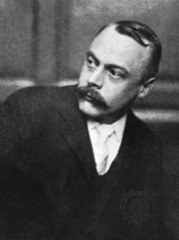
Kenneth Grahame
1859–1932 · Scottish-born writer, author of The Wind in the Willows.
Kenneth Grahame was born in Edinburgh in 1859. After his mother died when he was five, he and his siblings were sent to live with their grandmother in the village of Cookham Dean, on the River Thames in Berkshire, where he grew to love the river and the countryside. He attended St Edward's School in Oxford and hoped to go to Oxford University, but his family would not pay for it, and instead he went to work at the Bank of England in 1879. He rose to become its Secretary and retired in 1908. In his spare time he wrote essays and stories; The Golden Age (1895) and Dream Days (1898), about a group of children, were very successful. He married Elspeth Thomson in 1899, and their only child, Alastair, was born the next year. The bedtime stories and letters Grahame wrote for Alastair developed into The Wind in the Willows (1908), about Mole, Ratty, Badger and the boastful Mr. Toad, who live along a river. Alastair died in 1920 while a student at Oxford. Grahame died at Pangbourne in 1932.
Kenneth Grahame is also an author in the library: author page and works.
Faith: Faith not well documented. Source: Wikipedia

Key dates
- 1859 Born in Edinburgh
- 1879 Joins the Bank of England
- 1895 The Golden Age published
- 1899 Marries Elspeth Thomson
- 1908 The Wind in the Willows published
- 1932 Dies at Pangbourne
Fun facts
- The Wind in the Willows grew out of bedtime stories and letters he made up for his only son, Alastair, nicknamed 'Mouse'. (Source: Kenneth Grahame (Wikipedia))
Record-breaker
Firsts and records, worded as the sources give them ("first known", "at the time").
- In the Bank of England's entrance exam he was the only candidate to score 100 per cent in the English essay, and he later became the Bank's youngest Secretary, at 39. (Source: Kenneth Grahame (Wikipedia))
Read about them
Grades 3–5
- The Wind in the Willows · In the library
More lives
Edwin A. Abbott · Jane Addams · Louisa May Alcott · Hans Christian Andersen · Jane Austen · Honoré de Balzac