Work record
The Wind in the Willows
1908 · Early 20th Century · Novel · English
Abstract
Background. Grahame, Secretary of the Bank of England, began these episodes as bedtime tales and letters for his son Alastair. Publishers who expected another book like his essays of childhood were puzzled, and Methuen issued it without illustrations.
Narrative. Mole leaves his burrow, meets Water Rat and learns the river. Lost in the snowy Wild Wood, the two shelter with Badger, and later Mole weeps on catching the scent of his neglected home in "Dulce Domum." Toad, meanwhile, crashes caravan and motor-car, is gaoled for twenty years for stealing one, escapes in a washerwoman's dress, and returns to find weasels and stoats in his house. Badger leads the friends through a secret tunnel to clear Toad Hall, and a chastened Toad gives a modest banquet.
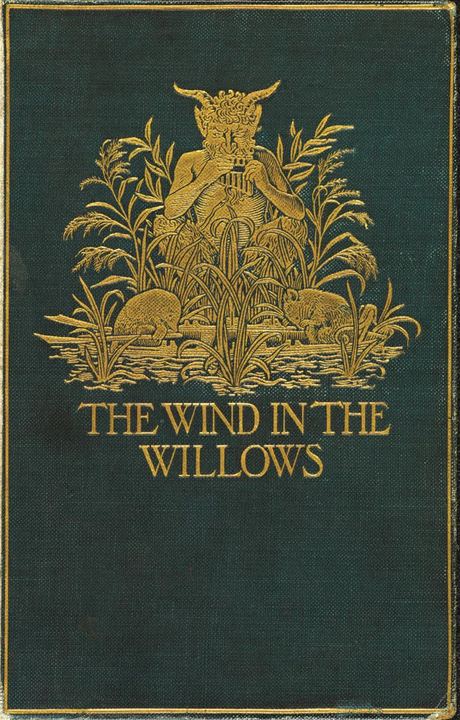
Structure. Comic Toad chapters alternate with quieter river chapters, including the mystical "Piper at the Gates of Dawn," in which Rat and Mole find Portly beside Pan, and "Wayfarers All," in which the Sea Rat stirs Rat's wanderlust.
Themes. Home and the pull of the road, friendship that corrects as well as comforts, hospitality, and seasonal reverence for nature.
Significance. Slow to win critics, it became a staple of English children's literature, adapted for stage by A. A. Milne as Toad of Toad Hall.
Main characters
- Mole: Earnest homebody who abandons spring-cleaning for the river
- Rat: Water Rat, poet and boatman, loyal guide to river life
- Mr. Toad: Wealthy, boastful owner of Toad Hall, mad for motor-cars
- Badger: Gruff, hospitable elder of the Wild Wood
- Otter: Sociable river friend whose son goes missing
- Portly: Otter's little son, found under the protection of Pan
- The gaoler's daughter: Kind girl who helps Toad escape disguised as a washerwoman
- The Sea Rat: Seafaring wanderer who tempts Rat toward the south
- The weasels and stoats: Wild Wood rabble who seize Toad Hall

Summary
The Wind in the Willows (1908) follows Mole’s break into the sunlight, Rat’s river manners, Badger’s solid hospitality, and Toad’s reckless motorcar mania among the English riverbank and Wild Wood. Kenneth Grahame writes animal characters who keep human foibles without losing the feel of water, willow, and snow. Friendship, home, and the temptation of novelty structure the book more than a single quest: Mole learns the river; Rat practices loyalty; Badger steadies; Toad crashes and, after humiliation, is helped to reclaim Toad Hall. Lyrical chapters such as the Piper at the Gates of Dawn sit beside broad comedy, so the book rewards both quiet listening and lively classroom talk. For School Launch’s 3–5 band it is a bridge from short nursery fantasy to longer chapter fiction, still warm enough for reading aloud. Themes of home and exile appear when Mole longs for his burrow and when Toad’s pride drives him from safety into scrapes. Nature is not scenery only; it shapes mood and duty. Teachers can ask how hospitality differs from indulgence, how fear of the Wild Wood is faced, and how friends confront a companion who will not listen. Compared with Pooh’s nursery wood, Grahame’s river feels older and more elegiac, yet still comic. The full public-domain text supports verified quotation and lets families linger in chapters that anthologies skip. Students leave with a lasting sense that friendship can reclaim a house and that the river’s quiet gifts outlast the motorcar’s roar. A good seminar maps Toad’s boasts against Badger’s firmness and asks which friend shows true help. Memory work can take a picnic passage or the retaking of the Hall, always matched to the Gutenberg file. The book’s affection for place trains attention: to know a river is already to begin loving what is given rather than what is merely fast.
Virtues in this work
- Friendship: Rat, Mole, and Badger rescue and reform Toad together.
- Temperance: Toad’s mania shows appetite without measure; friends urge restraint.
- Piety: Awe before the river’s mystery treats creation with reverence.
Plot or Argument
- River friends
Mole meets Rat; boating and picnics teach the river’s joys and manners.
- Wild Wood and Badger
Danger and hospitality deepen the fellowship beyond the water’s edge.
- Toad’s fall and return
Pride, prison, escape, and the retaking of Toad Hall test loyalty.
Characters
- Mole, protagonist
Earnest newcomer to the river who learns friendship and home.
- Rat, friend
Water Rat who loves boats and messes about with Mole.
- Mr. Toad, comic antihero
Wealthy, boastful lover of fads and motorcars.
- Badger, mentor
Stern, hospitable figure of the Wild Wood.
Lessons
Home as a virtue
Dulce Domum and related chapters treat homecoming as moral music, not mere setting.
- What makes Mole homesick?
- How do friends answer longing?
Pride goes motorcar-ing
Toad’s boasts and machines show folly; friends restrain and restore him.
- What does Toad love more than friends at first?
- How do Rat and Badger show loyalty?
Adventure and awe
The book holds both scrapes and sacred river hush; children need both tempos.
- Which chapter is most quiet?
- Why include awe in an adventure book?
Context
Edwardian animal fantasy blending adventure with pastoral lyric for family reading. It remains a formative English-language classic for school and home in the public domain.
Composition
Published 1908; grew partly from bedtime letters.
Reception
Enduring classic of English children’s literature.
Comparisons
- winnie-the-pooh
Animal friends; Grahame denser and more lyrical.
- the-secret-garden
Home, healing, and outdoor life for a similar band.
Quotes
“The Mole had been working very hard all the morning, spring-cleaning his little home.”
“Believe me, my young friend, there is _nothing_—absolute nothing—half so much worth doing as simply messing about in boats.”
“Poop-poop!”
For Students
A reading companion for classical Christian high school students. See the student guide.
Reading Guide
Watch for
- Mole’s first break into sunlight.
- Rat’s boat manners and picnic talk.
- Wild Wood fear and Badger’s house.
- Toad’s boasts and crashes.
- The retaking of Toad Hall.
Key terms and names
- River Bank
- The friendly waterside world opposite the Wild Wood.
- Dulce Domum
- Chapter of home-longing; Latin for “sweet home.”
- Motorcar mania
- Toad’s reckless passion for automobiles.
- Hospitality
- Shelter and food offered as friendship’s duty, as in Badger’s house.
Seminar Questions
- Comprehension Why does Mole leave his home at first?
- Comprehension What does Rat say is worth doing in boats?
- Comprehension How do the friends deal with Toad’s pride?
- Interpretation Is Toad reformed, or only temporarily checked?
- Interpretation Why does the book need quiet chapters amid adventure?
- Interpretation What does Badger teach about strength and manners?
- Big Question What should friends do when one of them loves a dangerous folly?
Faith Connections
- Psalm 84:3 (Scripture)
Even the sparrow finds a home—home-longing chapters resonate with psalmic desire for dwelling.
- Proverbs 16:18 (Scripture)
Pride goeth before destruction—Toad’s crashes.
- Pastoral tradition (Great Conversation)
River lyric continues English pastoral love of place.
Logic and Rhetoric
Central argument: Friendship and home order a life that adventure alone would scatter, especially when pride runs wild.
Rhetorical device: lyric interlude. Quiet river chapters slow the reader into awe between comic crises.
Debate: Resolved: that Toad’s friends are right to restrain him for his own good.
Memory Work
Believe me, my young friend, there is _nothing_—absolute nothing—half so much worth doing as simply messing about in boats.
Writing Prompts
Essay: Trace how Mole’s idea of home changes from chapter 1 to Dulce Domum.
Comparison with Winnie-the-Pooh: Compare Toad’s pride with a proud figure in Aesop or a fairy tale.
Medical Lens
Toad’s excesses are comic mania for machines more than drink; medical tags are sparse.
Listen to the book
Public-domain audiobook from LibriVox, read by Cori Samuel. Recording: Wind in the Willows (version 5) on LibriVox (Internet Archive).
LibriVox recordings are volunteer readings released into the public domain. The reading may follow a different edition from the text in this library.
Creative Prompts
- Classroom
Map River Bank vs Wild Wood and place three scenes.
- Fiction
A new scrap for Toad that friends must answer without cruelty.
- Essay
Why does Grahame slow the book with quiet chapters?
Further Reading
- Winnie-the-Pooh, A. A. Milne
Earlier-band animal friendship.
Verification notes
Quotes verified against PG #289.
No verification flags recorded.