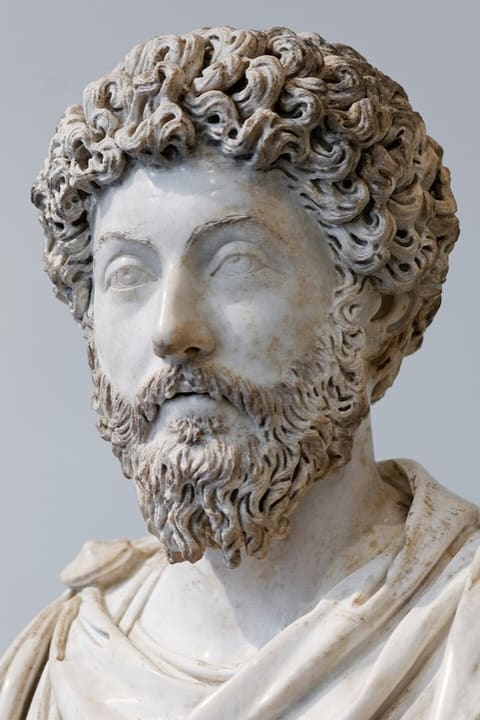
Marcus Aurelius
121–180 · Roman emperor and Stoic philosopher, author of the Meditations.
Marcus Aurelius was adopted into the imperial family as a boy and carefully educated in Greek and Latin literature, rhetoric and philosophy. He became emperor in 161, at first sharing power with his adopted brother Lucius Verus, and is counted as the last of the so-called Five Good Emperors. His reign was hard. A plague brought back by soldiers from the East killed huge numbers across the empire, and much of his later life was spent on the Danube frontier fighting Germanic peoples such as the Marcomanni. In his tent during these campaigns he wrote private notes to himself in Greek, now known as the Meditations. They record his effort to live by Stoic philosophy: to do his duty, accept what he could not control, and treat others with patience and justice. Christians were persecuted in some cities during his reign. He died in 180, probably at Vindobona, modern Vienna, and his son Commodus, a far less able ruler, succeeded him.
Marcus Aurelius is also an author in the library: author page and works.
Faith: A Roman emperor who was also a Stoic philosopher. Source: Stanford Encyclopedia of Philosophy

Key dates
- 121 Born in Rome
- 161 Becomes emperor
- c. 165 Antonine Plague spreads
- 170s Campaigns on the Danube and writes the Meditations
- 180 Dies on campaign
Read about them
As an Amazon Associate I earn from qualifying purchases. As a Bookshop.org affiliate I earn from qualifying purchases, which also support independent bookstores.
Grades 9–12
- Meditations · In the library
- How to Think Like a Roman Emperor by Donald Robertson (St. Martin's Griffin, 2020; ISBN 9781250621436)
Bookshop.org · Amazon
More lives
Alexander the Great · Aristotle · Ashoka · Augustus · Cicero · Cleopatra VII