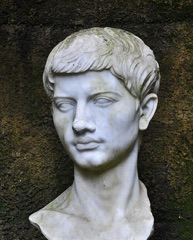
Virgil
c. 70–19 BC · Roman poet, author of the Aeneid, the Eclogues and the Georgics.
Publius Vergilius Maro, known as Virgil, was born in 70 BC near Mantua, in northern Italy, where his family owned a farm. He was educated in Cremona, Milan and Rome, and is said to have begun writing poetry at the Epicurean school of Siro in Naples. He became one of the poets supported by Maecenas, adviser to Octavian, the future emperor Augustus. His first major work, the Eclogues, a collection of pastoral poems about shepherds,, appeared around 39–38 BC. The Georgics, completed around 29 BC, is a long poem about farming, trees, livestock and bee-keeping. He spent his last eleven years writing the Aeneid, an epic in twelve books about the Trojan hero Aeneas, who escapes the fall of Troy and, after many trials, travels to Italy, where his descendants will found Rome. In 19 BC he fell ill while travelling in Greece and died soon after reaching Italy, before he had finished revising the poem. He is said to have wanted it burned, but Augustus ordered it published. The Aeneid became a central text of Latin literature and education for centuries.
Virgil is also an author in the library: author page and works.
Faith: Faith not well documented; Christians later read his fourth Eclogue as prophetic. Source: Wikipedia
Key dates
- 70 BC Born near Mantua
- c. 39 BC Eclogues published
- 29 BC Georgics completed
- 29 BC Begins the Aeneid
- 19 BC Dies in Apulia, Italy
Fun facts
- His schoolmates found him shy and reserved and nicknamed him 'Parthenias'. (Source: Virgil (Wikipedia))
Watch


Videos load from YouTube in privacy-enhanced mode only when you press play.
Read about them
Grades 9–12
- The Aeneid · In the library
- Eclogues and Georgics · In the library
More lives
Aeschylus · Aesop · Apollodorus · Apollonius of Rhodes · Apuleius · Aristophanes