Key ideas · Grades 10–12
The Republic
The PDF is one letter-size page (8.5 × 11 in).
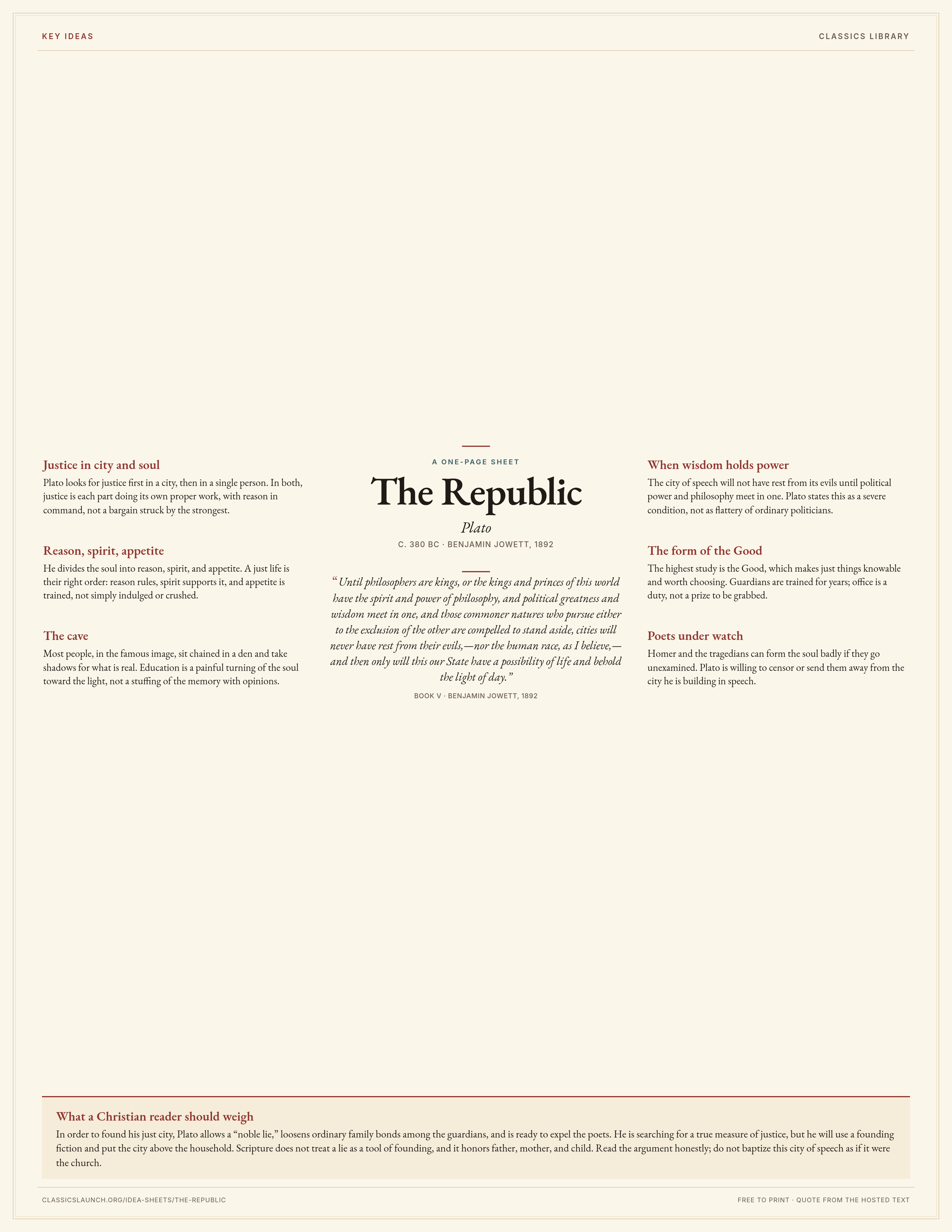
The ideas on the sheet
Justice in city and soul
Plato looks for justice first in a city, then in a single person. In both, justice is each part doing its own proper work, with reason in command, not a bargain struck by the strongest.
Reason, spirit, appetite
He divides the soul into reason, spirit, and appetite. A just life is their right order: reason rules, spirit supports it, and appetite is trained, not simply indulged or crushed.
The cave
Most people, in the famous image, sit chained in a den and take shadows for what is real. Education is a painful turning of the soul toward the light, not a stuffing of the memory with opinions.
When wisdom holds power
The city of speech will not have rest from its evils until political power and philosophy meet in one. Plato states this as a severe condition, not as flattery of ordinary politicians.
The form of the Good
The highest study is the Good, which makes just things knowable and worth choosing. Guardians are trained for years; office is a duty, not a prize to be grabbed.
Poets under watch
Homer and the tragedians can form the soul badly if they go unexamined. Plato is willing to censor or send them away from the city he is building in speech.
What a Christian reader should weigh
In order to found his just city, Plato allows a “noble lie,” loosens ordinary family bonds among the guardians, and is ready to expel the poets. He is searching for a true measure of justice, but he will use a founding fiction and put the city above the household. Scripture does not treat a lie as a tool of founding, and it honors father, mother, and child. Read the argument honestly; do not baptize this city of speech as if it were the church.
“Until philosophers are kings, or the kings and princes of this world have the spirit and power of philosophy, and political greatness and wisdom meet in one, and those commoner natures who pursue either to the exclusion of the other are compelled to stand aside, cities will never have rest from their evils,—nor the human race, as I believe,—and then only will this our State have a possibility of life and behold the light of day.”
The quotation is word for word from the Benjamin Jowett, 1892 text hosted in this library and is checked against that text each time the site is built.