Wonders & Monuments
The Seven Wonders of the Ancient World, a Greek and Roman list of costly works that seemed to outdo ordinary building. Only the Great Pyramid still stands. The others survive as ruins, as later engravings, or, in one case, as a story whose very existence is debated. Below them are later monuments, still standing or in ruin, from Stonehenge to Mount Rushmore.
Look slowly, and tell the difference between a photograph of what remains and a picture of what later ages imagined. These works were raised at real cost, for kings, gods, the dead and the living. Ask what skill and perseverance went into the stone, what was meant to be honored, and what time has taken away.
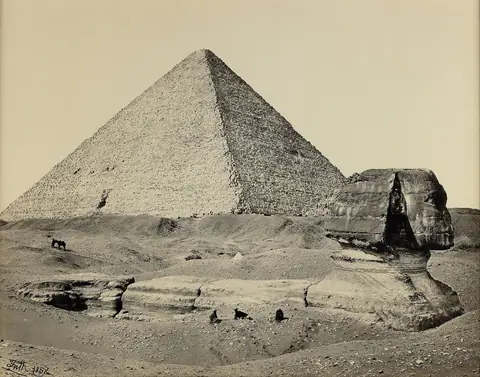 The Great Pyramidc. 2580–2560 BC · Still standingThe tomb of the pharaoh Khufu, and the only ancient wonder you can still stand before.
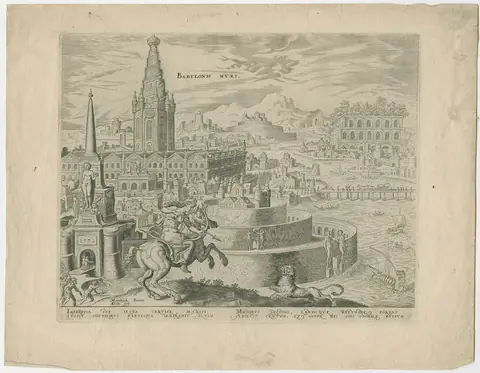 The Hanging GardensTraditionally 6th century BC · Existence debatedThe wonder whose very existence is still argued, and which survives only in later descriptions and pictures.
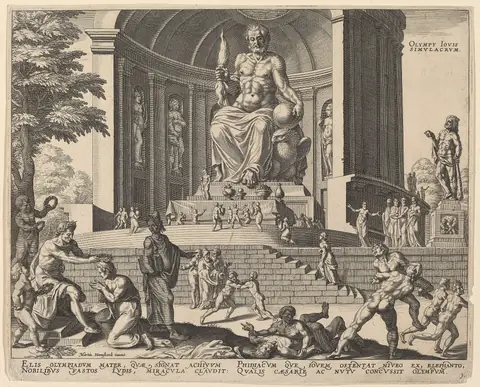 The Statue of Zeus at Olympiac. 435 BC · LostPhidias’s colossal Zeus, seated in gold and ivory, once filling the temple at Olympia.
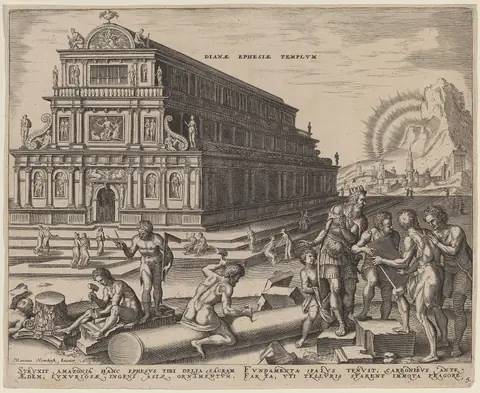 The Temple of ArtemisGreat marble temples from the 6th century BC; rebuilt after 356 BC · In ruinsThe vast temple at Ephesus, famous through the Greek world and remembered in the Book of Acts.
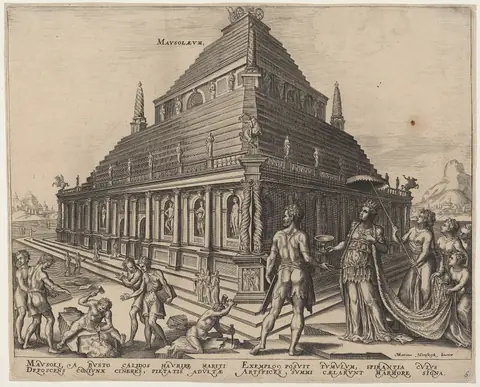 The Mausoleum at Halicarnassusc. 353–350 BC · In ruinsThe tomb of Mausolus, so famous that it gave later languages the word mausoleum.
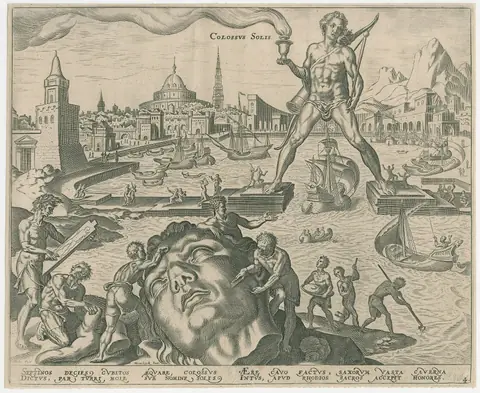 The Colossus of RhodesCompleted c. 280 BC; toppled by earthquake c. 226 BC · LostThe bronze Helios of Rhodes, a short-lived wonder whose harbour-striding pose is a later myth.
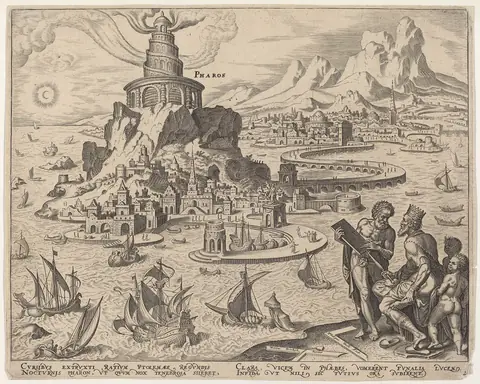 The Pharos of AlexandriaCompleted c. 280–247 BC · LostThe great lighthouse of Alexandria, which gave later languages a word for a pharos, and which now lives only in pictures and in the fort on its site.
Great monuments
24 monuments, from Stonehenge to Mount Rushmore. Each page tells where it stands, who built it, why it still matters, and how to look at it closely, with links to the books in this library that describe it.
Some of these places were raised to the glory of God, some to civic liberty, some to memory and mourning. Walk around them in the pictures. Notice the plan, the light, and the human scale of the work.
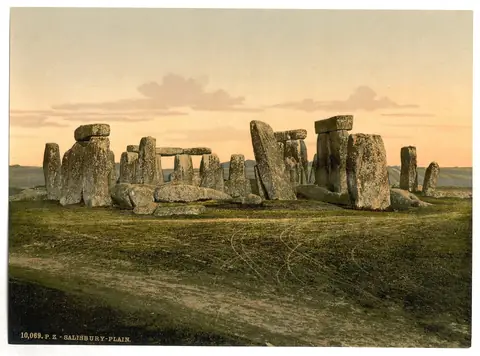 StonehengeMain stone circle c. 2500 BC; the site was used earlier and later · Wiltshire, EnglandThe stone circle on Salisbury Plain, raised in the late Neolithic and still standing in open country.
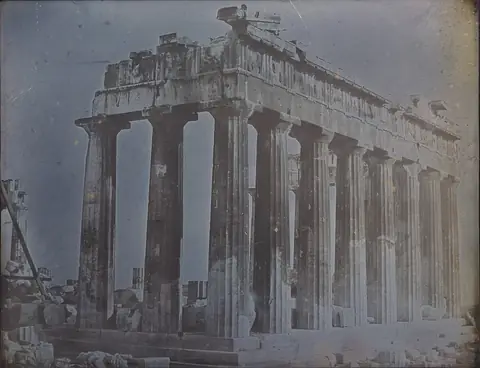 The Parthenon447–432 BC · Athens, GreeceThe great temple of Athena on the Acropolis, ruined but still the measure of Greek sacred building.
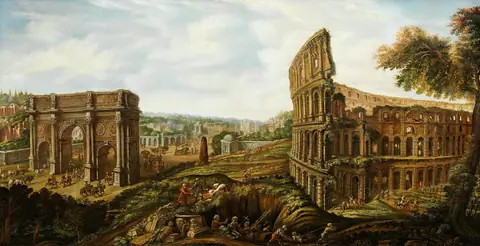 The ColosseumDedicated AD 80 · Rome, ItalyRome’s great amphitheatre, built under the Flavians, ruined but still immense.
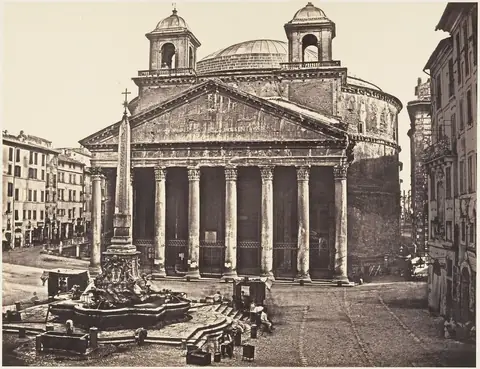 The PantheonRebuilt under Hadrian, c. AD 118–125; later a church · Rome, ItalyHadrian’s Roman temple-rotunda, with its concrete dome and open oculus still intact.
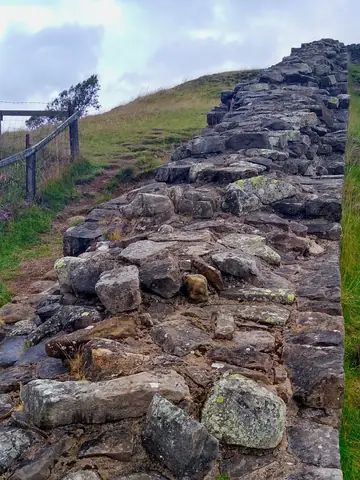 Hadrian’s WallBegun c. AD 122 · Northern England, from the Tyne to the SolwayThe Roman frontier wall across northern Britain, begun under Hadrian, now a ruin in open country.
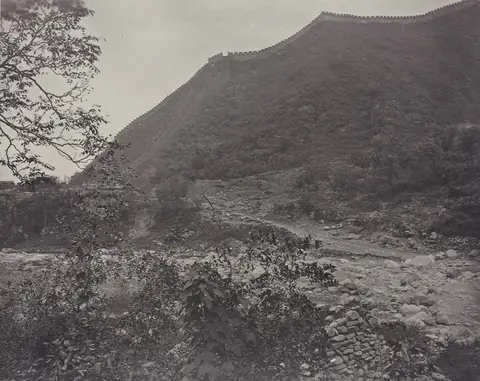 The Great WallMany periods; much of what visitors see is Ming (14th–17th centuries) · Northern ChinaThe long frontier walls of China, of many ages, still running over the northern mountains.
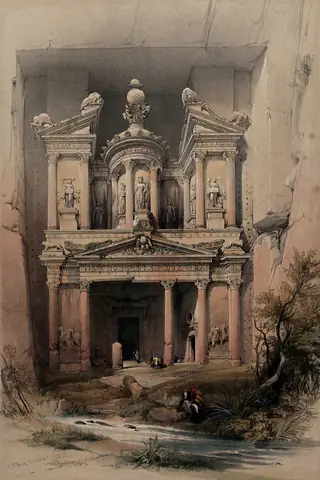 PetraFlourished from the 4th century BC; most famous façades Hellenistic–Roman period · Southern JordanThe Nabataean city cut into the red cliffs of southern Jordan, famous for its tomb façades.
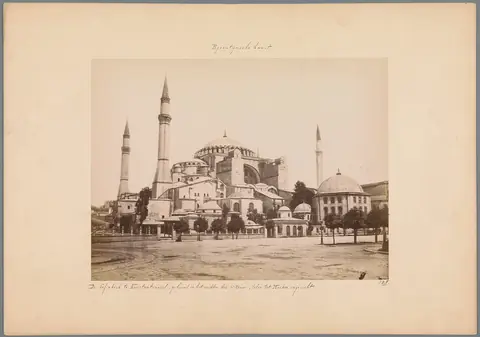 Hagia SophiaThe present building, AD 532–537, under Justinian I · Istanbul, TurkeyJustinian’s great church in Constantinople, famous for its dome, still standing above the city.
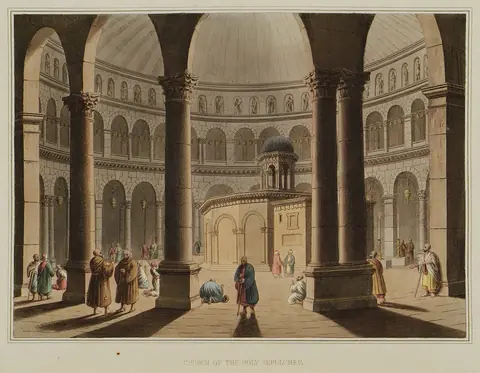 The Church of the Holy SepulchreFirst church in the 4th century under Constantine; rebuilt many times; much of the present fabric is Crusader and later · JerusalemThe church in Jerusalem that marks, in Christian tradition, the tomb and the site of the Crucifixion.
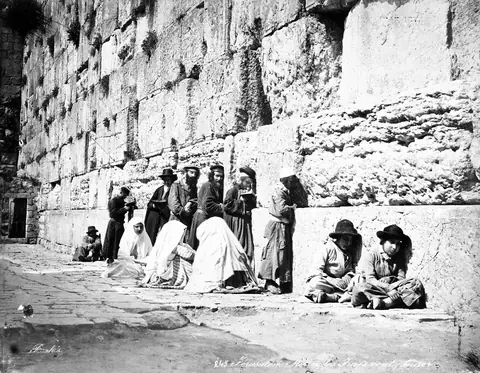 The Western WallThe Temple Mount is an ancient holy site; the visible Western Wall is a retaining wall of Herod’s expansion, 1st century BC · JerusalemThe surviving western retaining wall of the Temple Mount, and the ancient holy platform it supports.
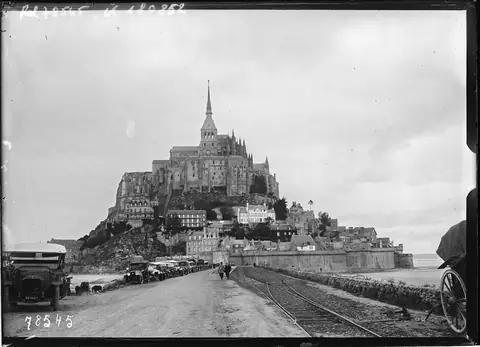 Mont-Saint-MichelAbbey from the 8th century; the great Gothic church and halls mainly 11th–13th centuries · Normandy, FranceThe island-abbey in the Norman bay, a church and fortress rising from the tidal flats.
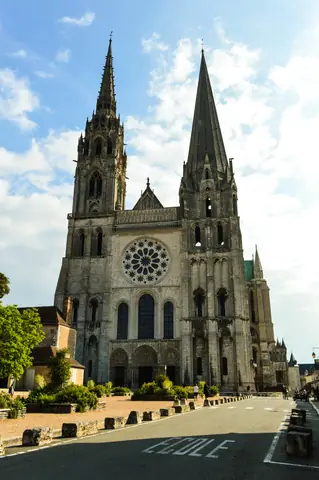 Chartres CathedralThe present church mainly 1194–c. 1220; earlier work remains, including the west portals and the south tower · Chartres, FranceThe great Gothic cathedral at Chartres, famous for its west portals, its glass and its mismatched spires.
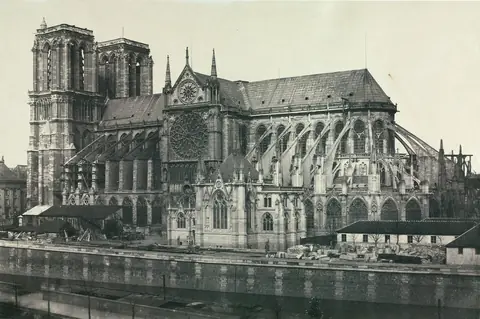 Notre-Dame de ParisBegun 1163; largely 12th–14th centuries; the 19th-century spire by Viollet-le-Duc was lost in the fire of 2019 · Paris, FranceThe cathedral of Paris, a Gothic church on the Île de la Cité, shown here as it stood before the fire of 2019.
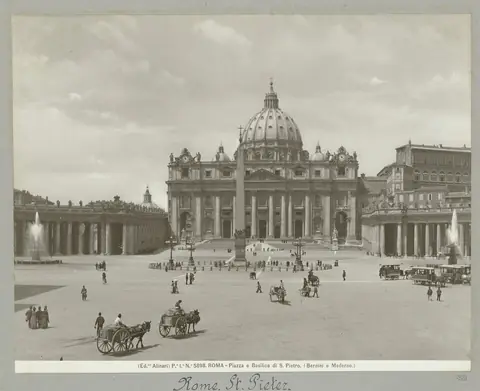 St Peter’s BasilicaThe present church, 1506–1626; the piazza by Bernini, 1656–1667 · Vatican CityThe great Renaissance and Baroque church over the tomb of the Apostle, with Bernini’s piazza before it.
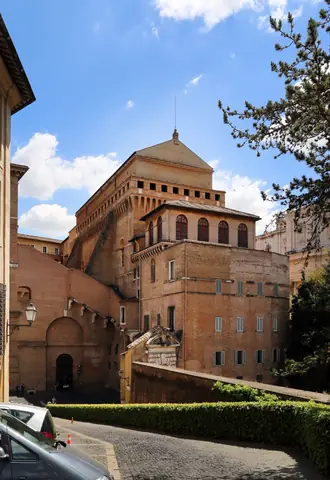 The Sistine ChapelThe chapel, 1473–1481, for Pope Sixtus IV; Michelangelo’s ceiling, 1508–1512; the Last Judgment, 1536–1541 · Vatican CityThe pope’s chapel at the Vatican, whose ceiling by Michelangelo is named here and shown in Great Art.
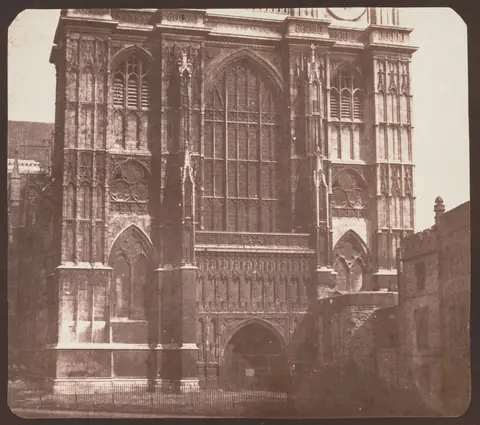 Westminster AbbeyRebuilt under Henry III from 1245; the west towers completed in the 18th century; Henry VII’s Chapel, early 16th century · London, EnglandThe Gothic abbey church in London where English and British monarchs are crowned, and many are buried.
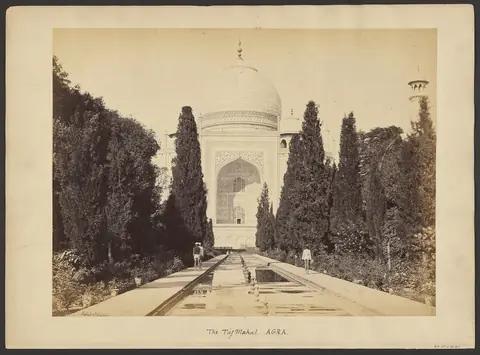 The Taj MahalBegun 1631; completed in the 1640s, under the Mughal emperor Shah Jahan · Agra, IndiaThe white marble mausoleum at Agra, built by Shah Jahan for his wife Mumtaz Mahal.
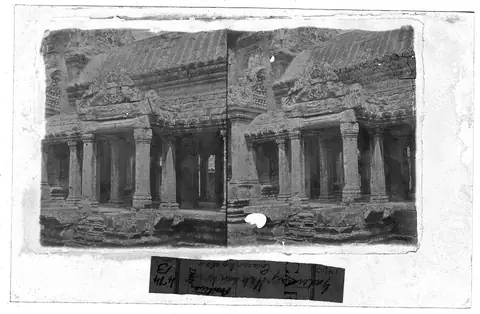 Angkor WatFirst half of the 12th century, under the Khmer king Suryavarman II · Siem Reap province, CambodiaThe great Khmer temple-mountain at Angkor, built in the twelfth century and still standing in the forest.
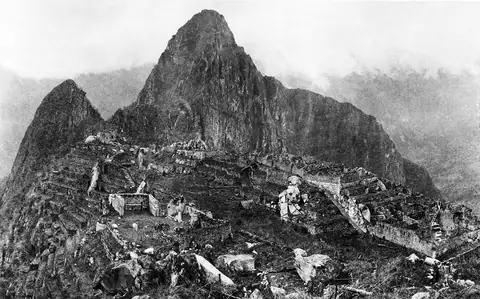 Machu PicchuBuilt in the 15th century, in the time of the Inca; abandoned in the 16th century · Cusco region, PeruThe Inca royal estate on a mountain ridge, abandoned in the sixteenth century and still a ruin in the Andes.
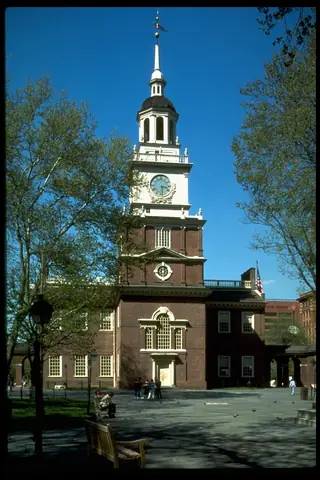 Independence HallBuilt 1732–1753 as the Pennsylvania State House; the tower and later restorations are later work · Philadelphia, PennsylvaniaThe old Pennsylvania State House, where the Declaration of Independence was adopted and the Constitution debated.
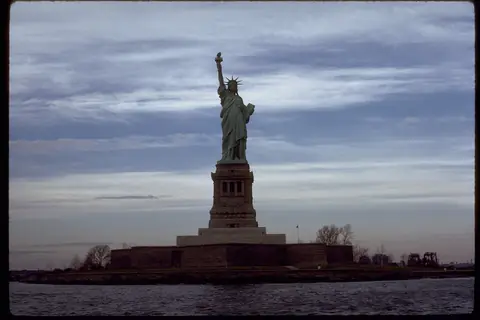 The Statue of LibertyDedicated 1886; statue by Frédéric Auguste Bartholdi, with an internal frame by Gustave Eiffel · Liberty Island, New York HarborBartholdi’s copper statue in New York Harbor, a gift from France, still raising its torch above the water.
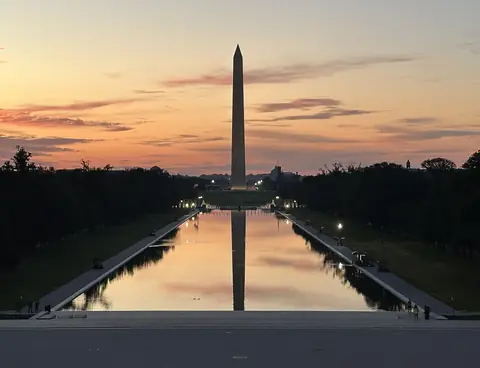 The Washington MonumentBegun 1848; completed 1884; dedicated 1885 · Washington, D.C.The marble obelisk on the National Mall, completed in 1884 as a monument to George Washington.
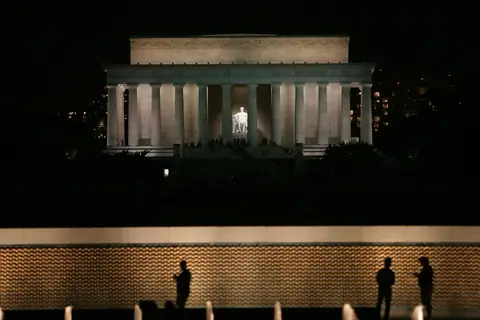 The Lincoln MemorialDedicated 1922; statue by Daniel Chester French; architect Henry Bacon · Washington, D.C.The memorial to Abraham Lincoln on the National Mall, with French’s seated statue in a classical chamber.
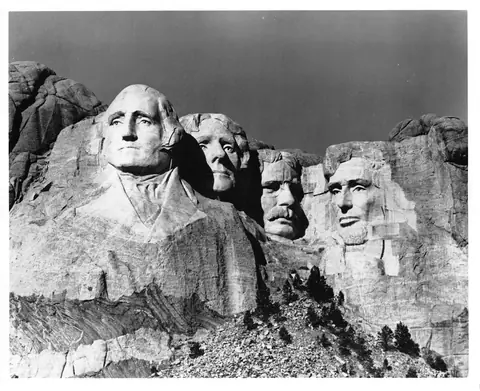 Mount RushmoreCarved 1927–1941, under the sculptor Gutzon Borglum · Black Hills, South DakotaThe colossal heads of four presidents, carved by Gutzon Borglum on a mountain in the Black Hills.
Photographs of buildings and sculpture are used only when the photograph itself is marked Public domain or CC0, or CC BY with the photographer named in the credit line under the picture. Lost wonders are shown in public-domain engravings and later reconstructions, which are imaginings, not photographs of the original work. Every picture shown is suitable for all ages.