Work record
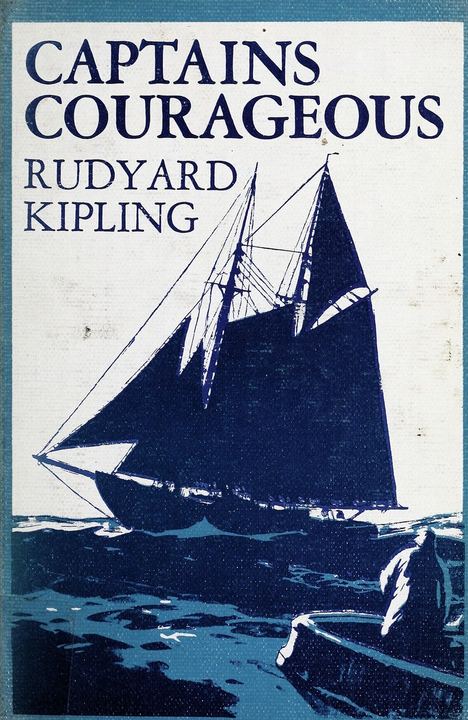
Captains Courageous
1897 · 19th Century · Novel · English
Abstract
Background. Kipling learned the Gloucester cod fishery with his Vermont physician, James Conland, who had fished the Banks as a boy and to whom the book is dedicated. Railway officials helped him time the Cheynes' cross-country run.
Narrative. Harvey Cheyne, heir to a railroad fortune, is pitched off a liner in fog and hauled into Manuel's dory. Disko Troop will not sacrifice the season's catch to land him, doubts his talk of money, and knocks him down for calling him a thief. Harvey apologizes, joins the crew as a boy for ten and a half dollars a month, and with Dan learns to bait trawls, dress cod and stand watch. Fog, icebergs and the sinking of the Jennie Cushman test the crew; in that disaster Penn briefly recovers his memory and his calling.
Resolution. Back in Gloucester Harvey wires his parents, whose special train crosses the continent in record time. His father, finding him changed, urges college, Harvey bargains to run the family's sailing ships, and Dan gains a berth in the Cheyne line.
Themes. Character made by skilled, paid work; the dignity of working men; and fathers who teach by expecting much.
Significance. Praised from the start for its exact picture of the fishery and its speech, the book reached a still wider public through the 1937 film.
Main characters
- Harvey Cheyne: Spoiled fifteen-year-old millionaire's son who falls overboard
- Disko Troop: Shrewd, stern skipper of the We're Here
- Dan Troop: Disko's son, Harvey's teacher and lifelong friend
- Manuel: Portuguese dory-man who pulls Harvey from the sea
- Long Jack: Talkative Galway Irishman and able seaman
- Tom Platt: Old navy man who teaches Harvey seamanship and naval lore
- Uncle Salters: Disko's grumbling, farm-minded brother, who watches over Penn
- Penn: Gentle former Moravian preacher who lost family and memory at Johnstown
- Harvey Cheyne Senior: Self-made Western railroad and shipping magnate
- Mrs. Cheyne: Harvey's nervous, indulgent mother

Summary
Captains Courageous begins in the smoking-room of a transatlantic liner in fog, where fifteen-year-old Harvey Cheyne, the spoiled only son of an American railroad and shipping millionaire, brags about his pocket money and annoys the grown men. Sick from a strong cigar, he goes out on deck, is pitched overboard by a roll of the ship, and is pulled out of the sea by Manuel, a Portuguese fisherman in a dory from the Gloucester schooner We're Here. The skipper, Disko Troop, will not lose a season's catch, which is his crew's bread, to take a boy back to New York; he does not believe Harvey's stories of wealth and suspects he struck his head when he fell. When Harvey calls him a thief over his missing money, Disko knocks him down. Harvey, after a talk with Disko's son Dan, returns to say he is sorry, and Disko signs him on as a boy at ten and a half dollars a month. Through the summer on the Grand Banks of Newfoundland, Harvey learns to bait trawls, row a dory, clean and salt cod, take his turn at the wheel and keep watch. The crew teaches him in its own ways: the Irishman Long Jack, the former navy man Tom Platt, the grumbling farmer Uncle Salters, the cook with second sight, Manuel, and Penn, a gentle man who lost his memory when his wife and children were swept away in the Johnstown flood. The book is full of the fleet's dangers: fog, icebergs, liners cutting through the fishing grounds, a drunken schooner that founders in a gale, and the Jennie Cushman, run down in the fog, whose skipper is pulled aboard after losing his son. In that hour Penn's memory and calling as a minister briefly return. The We're Here fills its hold first and sails home to Gloucester. Harvey telegraphs his parents, and his father crosses the continent by special train in record time. Harvey Cheyne Senior finds his son changed, and in a long talk tells the boy how he built his fortune and urges him to go to college. Harvey bargains to take over his father's sailing ships, and Dan is offered a berth in the Cheyne line. The book closes years later as the cook's prophecy that Dan would serve Harvey as master and man is coming true.
Virtues in this work
- Industry: Harvey learns to bait, haul, clean and salt fish and stand his watch, earning ten and a half dollars a month.
- Humility: Harvey returns to Disko after being knocked down and apologizes for calling him a thief.
- Justice: Disko refuses to sacrifice eight men's season's bread for one rich passenger and pays Harvey a fair wage.
- Fortitude: The crew works on through fog, bergs, gales and the loss of nearby schooners.
- Friendship: Harvey and Dan, a millionaire's son and a skipper's son, become friends for life.
Plot or Argument
- Overboard (Ch. I)
Harvey shows off on the liner, falls into the sea, is saved by Manuel, calls Disko Troop a thief and is knocked down.
- Learning the work (Ch. II-III)
Harvey apologizes to Disko and is taken on as a boy; Dan teaches him the ship and the work, and Harvey catches his first fish, learns the crew's stories, including Penn's loss at Johnstown, and earns his place.
- The Banks and the fleet (Ch. IV-V)
The schooner meets the fishing fleet; Harvey sees a drunken crew founder in a gale, works through fog and summer bergs, and grows strong and competent.
- The Jennie Cushman (Ch. VI-VII)
A schooner is cut in two in the fog; her skipper loses his son, and Penn briefly remembers himself and prays like the minister he once was.
- Home to Gloucester (Ch. VIII)
The We're Here completes her catch and sails home, and Harvey sends word to his parents.
- The Cheynes' ride (Ch. IX)
Harvey's father and mother cross the continent in their private car by special train in record time to reach Boston.
- Father and son (Ch. X)
The Cheynes meet the crew and Gloucester's memorial service for its lost fishermen; father and son talk business and college, and Dan's future in the Cheyne line is settled.
Characters
- Harvey Cheyne, protagonist
A pampered, rude fifteen-year-old heir who becomes a capable, modest young man through a summer's work at sea.
- Disko Troop, skipper of the We're Here
A stern, shrewd and just Gloucester captain, proud of his judgment and devoted to his crew's living.
- Dan Troop, Disko's son
Harvey's age, who befriends him, teaches him the ship and becomes his close friend.
- Manuel, Portuguese fisherman
A cheerful, devout dory-man who rescues Harvey and treats him with kindness.
- Long Jack, Irish crewman
A humorous Galway man full of talk and practical seamanship.
- Tom Platt, former navy sailor
A veteran of the old warship Ohio who teaches Harvey sail-making and naval lore.
- Uncle Salters, Disko's brother
A former farmer who grumbles about the sea and watches over Penn.
- Penn, gentle crewman
Once a Moravian preacher named Jacob Boller, who lost his family and his memory in the Johnstown flood.
- Harvey Cheyne Senior, Harvey's father
A self-made Western millionaire who rejoices to find his son made into a man.
- Mrs. Cheyne, Harvey's mother
A nervous, doting mother whose indulgence helped spoil Harvey.
Lessons
Work makes a man
Harvey's riches mean nothing on the Banks; he becomes worth something only by learning skilled, hard work. Kipling shows character being formed by discipline and responsibility rather than by comfort.
- What does Harvey learn to do in his first weeks?
- Why does Disko refuse to turn back to New York?
- How does Harvey's view of money change?
Humility before an apology
Harvey's first act of growth is to go back to Disko and say he is sorry. Kipling makes this small, hard humility the door to everything else Harvey learns.
- Why does Dan say Harvey earned the blow?
- What does Disko say about hasty judgments?
A community of the sea
The crew is Portuguese, Irish, Yankee and a broken Pennsylvania preacher, bound together by common danger and common bread. The book honors working men who risk their lives for their families.
- How do the different crewmen each teach Harvey?
- What does Gloucester's memorial service show about the cost of fishing?
Fathers and sons
Disko and Dan, and later Cheyne and Harvey, show two fathers who love their sons by teaching and expecting much of them. Harvey's talk with his father completes the education begun on the schooner.
- What does Cheyne say he lacked, and what does he want for Harvey?
- How does Harvey's bargain with his father show what he learned at sea?
Context
The novel depicts the Gloucester, Massachusetts, cod fishery on the Grand Banks in the 1890s, when schooners sent men out in dories to hand-line and trawl, and the fleet lost many men every year to fog, gales and collisions with steamships. Penn's story draws on the Johnstown flood of 1889, and Cheyne's run across the continent celebrates the railroads and the new American fortunes of the Gilded Age.
Composition
Kipling researched the novel in Gloucester and Boston in 1896 with Dr. James Conland, studying charts, fishing records and dialects, and timed the Cheynes' journey with railway officials. It was serialized in McClure's Magazine from November 1896 to May 1897 and published as a book by Macmillan in 1897. The title comes from the old ballad of Mary Ambree.
Reception
The book was popular at once and praised for its exact picture of the fishery and its dialect. The 1937 film with Spencer Tracy as Manuel made it widely known, and Gloucester honors its fishermen with the memorial service the book describes.
Comparisons
- treasure-island
Both turn a boy into a man at sea, but Stevenson's adventure is greed and mutiny, while Kipling's is honest labor.
- billy-budd-and-other-stories
Melville also writes about the moral world of a ship's crew, though his navy tale ends tragically.
- robinson-crusoe
Crusoe and Harvey both learn industry after reckless choices at sea; Harvey learns it among men rather than alone.
Quotes
“Never you be led astray by hasty jedgments, Dan”
“So I'm here to say I'm sorry”
“The Lord gave, and the Lord hath taken away; blessed be the name of the Lord! I was--I am a minister of the Gospel. Leave him to me”
“The boys they make believe all the time till they've cheated 'emselves into bein' men, an' so till they die--pretendin' an' pretendin”
“I can handle men, of course, and I'm no fool along my own lines, but--but--I can't compete with the man who has been taught”
“Master--man. Man--master," said he. "You remember, Dan Troop, what I said? On the _We're Here”
For Students
A reading companion for classical Christian high school students. See the student guide.
Reading Guide
Watch for
- Harvey's behavior in the liner's smoking-room before he falls overboard, as a baseline for how he changes.
- Disko's refusal to turn back and his reason: a season's catch is eight men's bread.
- Harvey's apology and the handshake that follows.
- Penn's story of Johnstown and what happens to him during the Jennie Cushman disaster.
- The talk between Harvey and his father in Chapter X, and the bargain Harvey makes.
Key terms and names
- Grand Banks
- Shallow, foggy fishing grounds off Newfoundland, rich in cod and dangerous to small boats.
- Dory
- A small flat-bottomed rowing boat from which the men fish with hand-lines and trawls.
- Trawl
- A long line set with many baited hooks, anchored and buoyed, and hauled from a dory.
- Schooner
- A fore-and-aft rigged sailing vessel like the We're Here, the workhorse of the Gloucester fleet.
- Quintal
- A measure of dried fish, about a hundredweight, used to count the catch.
- Johnstown flood
- The 1889 dam failure in Pennsylvania that killed over two thousand people, including Penn's family.
Seminar Questions
- Comprehension How does Harvey come to be aboard the We're Here, and why will Disko not take him home?
- Comprehension What jobs does Harvey learn during the summer, and who teaches him?
- Comprehension What happens to the Jennie Cushman, and how does Penn respond?
- Interpretation Disko warns Dan against hasty judgments while misjudging Harvey. Is Disko a wise man who made one mistake, or does the book gently laugh at his pride?
- Interpretation Why does Kipling make Harvey's first step of growth an apology rather than a brave deed?
- Interpretation Harvey's father says he cannot compete with the man who has been taught. What kind of education did Harvey get at sea, and why does he still need college?
- Big Question Can comfort and wealth harm a young person, and what is the best remedy?
Faith Connections
- Job 1:21 (Scripture)
Penn speaks Job's words, "The Lord gave, and the Lord hath taken away; blessed be the name of the Lord," over the grieving skipper, recovering his calling in another man's grief.
- 2 Thessalonians 3:10-12 (Scripture)
Paul tells the idle to work quietly and eat their own bread. Harvey earns his food and wages for the first time and is the better for it.
- Psalm 107:23-24 (Scripture)
They that go down to the sea in ships see the works of the Lord in the deep. Harvey sees fog, bergs and storms and learns reverence for the sea and its dangers.
Logic and Rhetoric
Central argument: Harvey begins as a spoiled boy whose money buys him nothing at sea. Disko's firmness, the crew's teaching and the summer's hard work give him skill, humility and judgment. His father, seeing the change, completes his education with honest counsel. Therefore Kipling argues that character is made by discipline, work and responsibility shared with others, not by wealth.
Rhetorical device: dialect as characterization. Disko's Yankee speech ("Never you be led astray by hasty jedgments"), Long Jack's Irish and Manuel's Portuguese English give each teacher a distinct voice and show the variety of the crew.
Debate: Resolved: that Disko Troop was right to refuse to take Harvey back to New York.
Memory Work
So I'm here to say I'm sorry
The Lord gave, and the Lord hath taken away; blessed be the name of the Lord! I was--I am a minister of the Gospel. Leave him to me
Writing Prompts
Essay: Trace Harvey's transformation through three scenes: the smoking-room, the apology to Disko, and the talk with his father. Argue which teacher did the most to change him.
Comparison with Treasure Island: Jim Hawkins and Harvey Cheyne both grow up at sea in the company of rough men. Compare the men who teach them and argue which boy learns better lessons.
Medical Lens
Penn's case is the book's most notable medical interest: a man who lost his wife and children in the Johnstown flood and with them his memory and identity, living placidly under Salters's care until a fresh disaster briefly restores him. Kipling dedicates the novel to the physician James Conland. Seasickness, a suspected head injury, Disko's view that a bloody nose clears the head, and the constant deaths of the fleet complete the picture.
- Chapter I
Harvey, seasick from a cigar, falls overboard; Disko suspects his wild talk comes from striking his head and recalls a skipper who went mad after a blow to the head.
- Chapter III
Salters tells Harvey that Penn was a Moravian preacher who lost his family in the Johnstown flood and his memory with them.
- Chapter VII
The sight of the Jennie Cushman's dead briefly restores Penn's memory; afterward Disko explains how the shock lifted him out of forgetfulness and how he slid back.
- Chapter X
Gloucester's memorial service reads the names of the fishermen lost that year.
Listen to the book
Public-domain audiobook from LibriVox, read by Mark F. Smith. Recording: Captains Courageous on LibriVox (Internet Archive).
LibriVox recordings are volunteer readings released into the public domain. The reading may follow a different edition from the text in this library.
Creative Prompts
- Classroom
Have students list each task Harvey learns aboard the We're Here, from baiting to steering, and who teaches him each one.
- Essay
Compare Disko Troop and Harvey Cheyne Senior as fathers and argue which has more influence on Harvey.
- Fiction
Write the letter Harvey might have sent his mother in July if he could have mailed it from the Banks.
- Dialogue
Write a conversation between Penn and Jason Olley the morning after the Jennie Cushman was lost.
Further Reading
- Kim, Rudyard Kipling
- The Jungle Book, Rudyard Kipling
- Two Years Before the Mast, Richard Henry Dana Jr.
An American account of learning the sea as a young man.
- The Perfect Storm, Sebastian Junger
A modern account of the Gloucester fishery and its losses.
Verification notes
Plot, chapter ranges and composition history are standard and checked against the attached text. Quotes are verified against the attached Gutenberg text; one closing passage contains a period slur in dialogue, which is not quoted here.
No verification flags recorded.