Work record
Address to the Nation on the Challenger Disaster
1986 · Postwar Contemporary · Oratory · English
Abstract
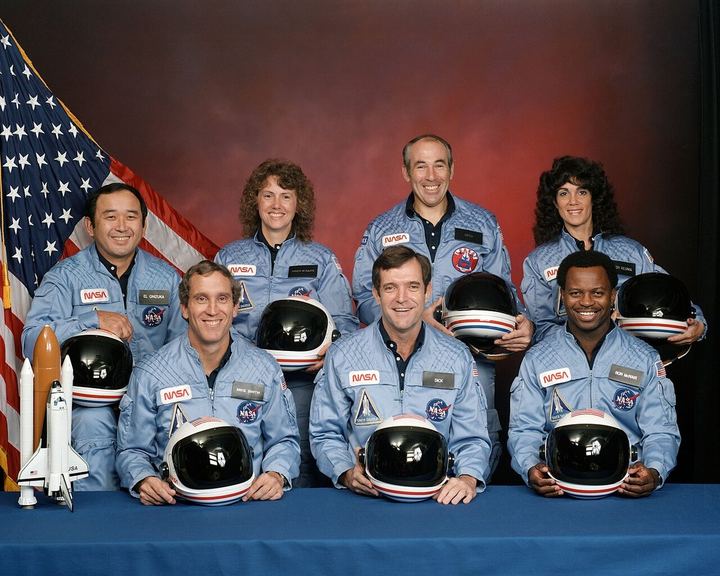
Occasion. A shuttle carrying a civilian schoolteacher disintegrated over the Atlantic just over a minute into its climb, before an audience that included pupils across the country. The president cancelled his annual report to Congress and went on television that evening.
Content. Reagan frames the evening as one of shared sorrow, sets the accident beside the 1967 launch-pad fire, and lists the seven by name. He honors their eagerness for hard tasks, then explains to young viewers that hurt and risk accompany discovery. Defending an open civilian space effort, he vows further missions and thanks NASA's workers. A parallel with an Elizabethan circumnavigator and a borrowed pilot's verse end the speech.
Themes. Courage as chosen risk, exploration as a national calling, consolation fitted to each listener, and death received as a passage toward God. Openness in public science appears as a mark of a free society, set against secrecy.
Form. Plain sentences, direct address to separate audiences, and a final allusion to a 1941 sonnet keep the tone personal rather than ceremonial.
Significance. Drafted within hours by Noonan, the address won praise from across the political spectrum. Investigators later traced the failure to a booster seal stiffened by cold, and flights stopped for more than two years.
Key figures
- Ronald Reagan: Fortieth president, speaking in place of the State of the Union
- Peggy Noonan: White House speechwriter who drafted the address
- Christa McAuliffe: New Hampshire teacher chosen as the first Teacher in Space
- Dick Scobee: Mission commander and former Air Force test pilot
- Michael Smith: Shuttle pilot and Navy commander on his first flight
- Judith Resnik: Mission specialist and electrical engineer
- Ronald McNair: Mission specialist and laser physicist
- Ellison Onizuka: Mission specialist, the first Asian American in space
- Gregory Jarvis: Payload specialist from Hughes Aircraft
- Sir Francis Drake: Elizabethan navigator who died at sea on the same date in 1596
- John Gillespie Magee Jr.: Pilot-poet whose sonnet supplies the final phrases

Summary
On the morning of 28 January 1986 the space shuttle Challenger broke apart 73 seconds after lifting off from Cape Canaveral, killing all seven of its crew. Among them was Christa McAuliffe, a New Hampshire high school teacher chosen as the first Teacher in Space, and because of her, millions of schoolchildren were watching in their classrooms. Reagan had been due to deliver the State of the Union address that evening. He postponed it and instead spoke for about four minutes from the Oval Office, in a text drafted by the speechwriter Peggy Noonan. The address has seven short paragraphs. Reagan explains why he has set aside his planned report and calls the day one for mourning and remembering. He recalls the three astronauts lost in the Apollo 1 fire nineteen years earlier, observes that no American had ever died in flight, and names the seven: Michael Smith, Dick Scobee, Judith Resnik, Ronald McNair, Ellison Onizuka, Gregory Jarvis, and Christa McAuliffe. He speaks first to the families, praising the crew's daring and their wish to serve, and calls them pioneers in a country grown used to wonders. Then he turns to the schoolchildren directly, in the most remembered passage: painful things happen, they are part of exploration and discovery, and the future belongs to the brave. He affirms the space program, points out that it is conducted openly in a free country, promises more shuttle flights and more teachers in space, and thanks the people of NASA. The close is an elegy. Reagan notes that on the same date in 1596 Sir Francis Drake died at sea off Panama, and says that the crew's dedication, like Drake's, was complete. The final sentence recalls the crew waving goodbye that morning and ends with two phrases from John Gillespie Magee Jr.'s sonnet High Flight: they slipped the surly bonds of earth to touch the face of God. The speech was widely praised at once and is often ranked among the finest presidential addresses of the century.
Virtues in this work
- Fortitude: Reagan honors a crew who knew the dangers and overcame them, and tells children that the future belongs to the brave.
- Charity: He speaks tenderly to the families and to the anguished workers of NASA, telling them that the nation shares their pain.
- Hope: He insists that nothing ends here and closes with the image of the crew touching the face of God.
- Honor: He names each of the seven and ranks their complete dedication with that of Drake, who lived and died at sea.
Plot or Argument
- A day for mourning (Paragraph 1)
Reagan sets aside the State of the Union report he had planned, says that he and Nancy Reagan are pained to the core, and calls the loss a national one.
- Seven heroes named (Paragraph 2)
He recalls the Apollo 1 fire of 1967, notes that no astronaut had been lost in flight before, praises the crew's courage, and names each of the seven.
- To the families: pioneers (Paragraph 3)
Addressing the families, he admits no one else can bear the full weight of their loss, describes the crew's joy in challenge and wish to serve, and calls them pioneers of a program only just begun.
- To the schoolchildren (Paragraph 4)
Reagan speaks directly to the children who watched the launch: painful things happen as part of exploration, the future belongs to the brave, and the crew was pulling the nation forward.
- The program continues (Paragraph 5)
He affirms faith in the space program, its openness as a mark of freedom, and its continuation with more flights, crews, and teachers in space, and thanks the people of NASA.
- Drake and the face of God (Paragraphs 6-7)
Noting that Drake died at sea on the same date in 1596, he likens the crew's dedication to Drake's, and closes with their last wave and the words of High Flight.
Key claims
The main steps of the argument, in order, and how they fit together.
- The loss of the seven astronauts is a national tragedy that calls for a day of mourning and remembering.How it is supported: Reagan sets aside the State of the Union, recalls the Apollo 1 fire, and names each crew member.
- The crew knew the dangers and chose to face them out of courage and a desire to serve.How it is supported: Praise of their daring and joy in challenge, addressed to the families.
- Painful losses like this one are part of the process of exploration and discovery.How it is supported: Direct address to the schoolchildren who watched the launch.
- The future belongs to the brave, and the crew were pioneers pulling the nation forward.How it is supported: Appeal to the children and the image of pioneers in a program only just begun.
- The space program is carried out openly, as a free society should, and it will continue.How it is supported: A promise of more flights, crews, and teachers in space, with thanks to the people of NASA.
- The crew's dedication matches that of explorers like Francis Drake, who also died at sea on that date.How it is supported: A historical parallel to Drake's death in 1596.
- The crew's journey ended not in defeat but in the presence of God.How it is supported: Their final wave and an allusion to the 1941 sonnet High Flight.
Argument map
Supported by
- 1The loss of the seven astronauts is a national tragedy that calls for a day of mourning and remembering.
- 2The crew knew the dangers and chose to face them out of courage and a desire to serve.
which rests on
- 6The crew's dedication matches that of explorers like Francis Drake, who also died at sea on that date.
- 5The space program is carried out openly, as a free society should, and it will continue.
which rests on
- 3Painful losses like this one are part of the process of exploration and discovery.
- 4The future belongs to the brave, and the crew were pioneers pulling the nation forward.
- 7The crew's journey ended not in defeat but in the presence of God.
Therefore
Plain-language summaries of the author's argument, not quotations.
Lessons
Speaking to the grieving
Reagan addresses three audiences in turn: the nation, the families, and the schoolchildren, and he changes his words for each. To the families he admits that no one else can bear the full impact of their loss; to the children he offers a plain explanation suited to their age. Consolation, the speech shows, begins by knowing whom one is speaking to.
- What does Reagan say to the families that he does not say to the nation as a whole?
- Why might the passage to the schoolchildren be the most remembered part of the speech?
- What makes words of comfort ring true or false to someone who is grieving?
Courage in exploration
Reagan insists that the crew knew the dangers and overcame them, and that loss is part of the process of exploration and discovery. By linking the astronauts to Drake and the explorers of the oceans, he places them in a long line of people who risked their lives to extend human knowledge.
- What does Reagan mean when he says the future belongs to the brave?
- Why does he mention that the nation had grown used to wonders and that it is hard to dazzle us?
- Is the advancement of knowledge worth the risk of human life? Who should decide what risk is acceptable?
Ending with hope
The final sentence moves from the crew's last wave to an image of them touching the face of God. Reagan borrows a fighter pilot's poem to end a national tragedy with an affirmation that the crew's journey did not end in nothing, a consolation offered in religious language to a whole nation.
- Why does Reagan borrow the words of a poem for his final sentence instead of writing his own?
- How do the details of the crew preparing and waving goodbye make the ending more moving?
- Is it fitting for a president to speak of God when consoling the whole nation?
Context
The space shuttle had flown twenty-four missions since 1981, and by 1986 launches had become routine enough that television networks often did not carry them live. The Teacher in Space Project, announced by Reagan in 1984, made Christa McAuliffe a public figure, and NASA prepared lessons she would teach from orbit. After several delays, Challenger launched on an unusually cold morning. The Rogers Commission later found that an O-ring seal in the right solid rocket booster had failed, made worse by the cold, and that NASA's decision-making had overlooked engineers' warnings.
Composition
Peggy Noonan wrote the address in the hours after the accident, working from the president's wish to speak to the children who had watched. She drew the closing phrases from High Flight, the sonnet by John Gillespie Magee Jr., an American pilot in the Royal Canadian Air Force killed in 1941 at the age of nineteen; Reagan knew the poem well. The stored text is the Public Papers version from the Reagan Library.
Reception
The address was broadcast at five o'clock that afternoon and drew immediate praise across party lines. Reagan spoke again at a memorial service in Houston on 31 January, and delivered the postponed State of the Union on 4 February. Shuttle flights were suspended until September 1988. In surveys of scholars of public address the speech has ranked among the best American speeches of the twentieth century, and its closing words are often recited at memorials for aviators and astronauts.
Comparisons
- tennyson-ulysses
Tennyson's Ulysses resolves to sail beyond the sunset though death may come; Reagan's address honors explorers who accepted that risk and insists that the journey continues.
- gettysburg-address
Both brief speeches honor the dead by asking the living to continue their work, though Lincoln's dead fell in battle and Reagan's in an accident of exploration.
- o-captain-my-captain
Whitman's elegy mourns a captain fallen just as his voyage succeeds; Reagan's mourns a crew lost at the start of theirs, and both set national grief in the language of a voyage.
Quotes
Frequently cited
“The future doesn't belong to the fainthearted; it belongs to the brave.”
Frequently cited
“We will never forget them, nor the last time we saw them, this morning, as they prepared for their journey and waved goodbye and "slipped the surly bonds of earth" to "touch the face of God."”
“Today is a day for mourning and remembering.”
“But they, the Challenger Seven, were aware of the dangers, but overcame them and did their jobs brilliantly.”
“We've grown used to wonders in this century. It's hard to dazzle us.”
“I know it is hard to understand, but sometimes painful things like this happen. It's all part of the process of exploration and discovery.”
“Nothing ends here; our hopes and our journeys continue.”
“Well, today we can say of the Challenger crew: Their dedication was, like Drake's, complete.”
For Students
A reading companion for classical Christian high school students. See the student guide.
Reading Guide
Watch for
- The first sentence, which tells the audience why the planned State of the Union report has been set aside.
- The naming of all seven crew members in Paragraph 2, and the phrase the Challenger Seven.
- The turn to the schoolchildren in Paragraph 4, where the sentences become shorter and simpler.
- The claim in Paragraph 5 that the program is conducted up front and in public, tied to freedom.
- The Drake coincidence and the final sentence that moves from the crew's wave to the words of High Flight.
Key terms and names
- Space shuttle
- NASA's reusable spacecraft, launched like a rocket and landed like a glider; Challenger was flying its tenth mission.
- Teacher in Space
- The NASA program that chose Christa McAuliffe to fly and teach lessons from orbit, the reason so many schoolchildren were watching.
- Apollo 1
- The 1967 launch-pad fire that killed astronauts Gus Grissom, Ed White, and Roger Chaffee; Reagan's three astronauts lost on the ground.
- Sir Francis Drake
- The Elizabethan seaman who sailed around the world in 1577-1580 and died at sea off Panama in 1596, on the same calendar date as the disaster.
- High Flight
- A sonnet by John Gillespie Magee Jr., a young pilot killed in 1941, from which Reagan takes his closing phrases.
- Pioneers
- Those who go first into new territory; Reagan's word for the crew and for a nation that has only just begun in space.
Seminar Questions
- Comprehension What had Reagan planned to do on the evening of 28 January, and why did he change his plans?
- Comprehension What earlier loss does Reagan recall in Paragraph 2, and how does he say this one is different?
- Interpretation Why does Reagan say perhaps we've forgotten the courage it took for the crew? Whom is he gently correcting?
- Interpretation How does the comparison with Sir Francis Drake change the way the listener sees the crew's deaths?
- Interpretation Why does Reagan insist in Paragraph 5 that the program has no secrets and will continue? What fear might he be answering?
- Big Question Reagan tells children that painful things are part of exploration. Is that an adequate answer to suffering, and what more might a Christian say?
- Big Question What do we owe to those who die in the service of others, whether in war, exploration, or rescue?
Faith Connections
- Romans 12:15 (Scripture)
Paul tells believers to weep with those who weep. Reagan's words to the families and to NASA, We share it, enact that command at the level of a nation.
- Psalm 8:3-4 (Scripture)
When I consider thy heavens, the work of thy fingers, what is man, that thou art mindful of him? The psalm sets human exploration of the heavens within wonder at God's creation and his care for frail human beings.
- Psalm 139:8-10 (Scripture)
If I ascend up into heaven, thou art there; if I dwell in the uttermost parts of the sea, even there shall thy hand lead me. The psalm joins the two frontiers of the speech, sky and ocean, under God's presence.
- C. S. Lewis, A Grief Observed (Great Conversation)
Lewis records grief from the inside and refuses easy comfort. Reading it beside the address shows the difference between public consolation offered to millions and private mourning.
Logic and Rhetoric
Central argument: The crew knew the dangers and chose to face them in service of all; loss is part of exploration and does not discredit it; a free nation explores openly and will continue; therefore the right response is to mourn and honor the crew by following them into the future, trusting that their journey ended in the presence of God.
Rhetorical device: Apostrophe. In Paragraph 4 Reagan turns from the national audience to address the schoolchildren of America directly, and in Paragraph 3 he speaks to the families of the seven.
Debate: Resolved: Reagan was right to promise on the day of the disaster that there would be more shuttle flights and more teachers in space.
Memory Work
We will never forget them, nor the last time we saw them, this morning, as they prepared for their journey and waved goodbye and "slipped the surly bonds of earth" to "touch the face of God."
The future doesn't belong to the fainthearted; it belongs to the brave.
Writing Prompts
Essay: The Challenger address is only about 650 words long. Analyze how Reagan moves from mourning to explanation to resolve to elegy, and argue which paragraph does the most to console the nation.
Comparison with Ulysses: Compare Tennyson's Ulysses with Reagan's Challenger address. How does each portray the explorer's choice to face death for the sake of discovery, and how does each answer the question of whether the journey was worth it?
Medical Lens
The address is an example of public consolation after a sudden, collectively witnessed death. Its passage to the schoolchildren, many of whom saw the breakup live in class, offers a simple, age-suited explanation of loss, and the Challenger accident was later the subject of studies of children's responses to a traumatic event seen on television. The speech is a reference point for how leaders address grief rather than a medical text.
- Paragraph 4
Reagan's words to the schoolchildren who watched the launch, explaining that painful things happen as part of exploration.
- Paragraph 3
The address to the families, acknowledging that others cannot bear the full impact of their loss.
Creative Prompts
- Poetry
Read John Gillespie Magee Jr.'s High Flight in full, then write a sonnet of your own about an explorer or pioneer, ending, as the poem does, with an image of reaching beyond the earth.
- Essay
Reagan speaks in turn to the nation, the families, the schoolchildren, and NASA. Show how the words, sentence length, and tone change for each audience, and explain why the order of audiences matters.
- Classroom
Imagine you are a teacher in a classroom that watched the launch. Write and deliver a short explanation for your students the next morning, then compare your approach with Reagan's Paragraph 4.
Further Reading
- What I Saw at the Revolution: A Political Life in the Reagan Era, Peggy Noonan
The speechwriter's memoir, including her account of writing the Challenger address.
- Report of the Presidential Commission on the Space Shuttle Challenger Accident, Presidential Commission (William P. Rogers, chair)
The official 1986 investigation into the O-ring failure and NASA's launch decision.
- The Challenger Launch Decision: Risky Technology, Culture, and Deviance at NASA, Diane Vaughan
A sociological study of how warning signs came to be accepted as normal before the launch.
- What Do You Care What Other People Think?, Richard P. Feynman
The physicist's account of his work on the Rogers Commission, including the O-ring demonstration in ice water.
Verification notes
The date, timing of the breakup, crew, and the postponement of the State of the Union are well documented, as is Noonan's authorship of the draft and the source of the closing phrases in High Flight. Drake's death off Portobelo, Panama, on 28 January 1596 is the standard dating. The ranking of the speech among the century's best refers to the 1999 Lucas and Medhurst survey of 137 scholars of public address, which placed it eighth. The stored text is the Public Papers version; quotations follow it, including its straight apostrophes and the quotation marks around the High Flight phrases.
No verification flags recorded.