Work record
Freedom and the Law
1961 · Postwar Contemporary · Political Theory · English
Abstract
Background. An Italian jurist trained in the civil-law tradition delivered these lectures at a California college during a decade of expanding welfare-state regulation, and the Volker Fund series brought them into print three years later with a Princeton publisher.
Thesis. Freedom from coercion is best secured by rules that stay stable over generations, and such rules are more often found by courts and legal experts than produced by parliaments, which can rewrite statutes at any session.
Method. Leoni reasons comparatively, setting Roman jurisprudence and English judicial practice beside modern statute and continental codes, then answering objections such as the danger that supreme courts may themselves begin to act like legislators. He borrows from economists the argument that no central authority can gather the dispersed knowledge on which millions of people act.
Key Concepts. Two meanings of legal certainty, precise wording against durable expectation; law as discovery; parliamentary lawmaking compared with a planned economy; the shrinking of genuine representation as majority decisions multiply; a shared will arising, like speech or prices, from converging individual claims.
Significance. Slow to find readers, the book became a reference point for law-and-economics scholars, public-choice theorists and later writers on spontaneous order, while critics doubt that courts are freer of arbitrary will than legislatures.
Key figures
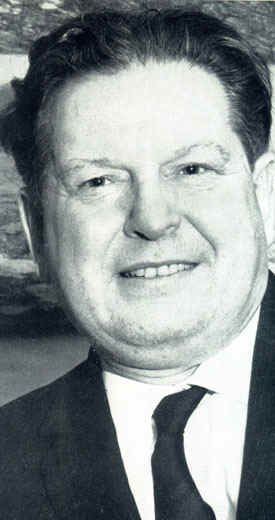
- Bruno Leoni: Pavia professor of legal philosophy and lecturer at Claremont
- The Roman jurisconsults: Jurists whose case opinions built Roman private law
- English common-law judges: Judges who developed law by deciding particular disputes

Summary
Freedom and the Law is a short book of legal and political philosophy by the Italian jurist Bruno Leoni, based on lectures he gave at Claremont Men's College in California in 1958 at a summer institute on freedom and competitive enterprise. It was published in English in 1961 by D. Van Nostrand in the William Volker Fund series in the humane studies. Leoni's question is how individual freedom depends on the way law is made. He begins by noting that freedom is a word with many meanings and asks what kind of freedom the classical tradition of the rule of law protected: chiefly freedom from constraint by other people, including the authorities. The heart of the book distinguishes two senses of the certainty of the law. In the first, law is certain when it is a precise written text, such as a statute or code, that anyone can consult. In the second, law is certain when people can rely over long periods on the rules that govern their dealings without fearing that a legislature will change them tomorrow. Leoni argues that modern legislation offers the first kind of certainty at the cost of the second, since statutes can be rewritten at any session. He contrasts this with law that is found rather than made: the private law of the Romans, developed by jurisconsults who described and discovered rules already present in the practice and expectations of citizens, and the English common law, developed by judges deciding particular cases. In such systems no single body can impose its will on everyone at once, and lawmaking resembles the spontaneous order of a market. Leoni then compares centralized legislation with centralized economic planning: just as a planner cannot know the prices and preferences of millions of people, a legislature cannot know the rules that millions would agree to. He questions whether representation can make legislation express the will of the people, since the more decisions are taken by majority vote, the more people are bound by decisions they opposed. He suggests that a common will can emerge only where individuals' claims and expectations converge, as in language or the market, rather than through majority decision. A chapter answers objections, including the worry that judges may themselves act as legislators. Leoni does not reject legislation entirely, but argues that its range should be kept much narrower than in the welfare states of his day. Later editions, from 1972 and in an expanded Liberty Fund edition of 1991, added essays and lectures from his later work.
Virtues in this work
- Prudence: Leoni prefers rules tested over generations, like Roman private law, to statutes that can be rewritten at every session.
- Justice: He describes the Roman jurisconsults and English judges as discovering what each party could rightly claim in a particular case rather than imposing a new rule.
- Humility: His comparison of legislation with central planning rests on the limits of any lawmaker's knowledge of the lives of millions.
Plot or Argument
- Introduction
Leoni sets out his aim: to examine how far individual freedom is compatible with the growth of legislation, and to compare legal systems as one might compare economic ones.
- Chapter I: Which Freedom?
Freedom has many meanings; Leoni identifies the classical sense of freedom from constraint by others, including the authorities, as the one the rule of law was meant to secure.
- Chapter II: 'Freedom' and 'Constraint'
An analysis of what counts as constraint, distinguishing coercion by others from the ordinary limits of circumstance and bargaining.
- Chapter III: Freedom and the Rule of Law
The English and continental traditions of the rule of law and the ways in which administrative and legislative power have reshaped it in the twentieth century.
- Chapter IV: Freedom and the Certainty of the Law
The book's central chapter: certainty as a precise written text versus certainty as long-run stability; Roman private law, made by jurisconsults who described rather than enacted, as the model of the second.
- Chapter V: Freedom and Legislation
Legislation compared with central economic planning: a legislature cannot know the rules millions of people would accept, any more than a planner can know their preferences.
- Chapter VI: Freedom and Representation
Representation cannot make majority legislation equal to the will of each person, and the problem grows as more matters are decided by vote.
- Chapter VII: Freedom and the Common Will
A truly common will appears where individual claims converge spontaneously, as in language, custom and the market, rather than in a majority's decision.
- Chapter VIII and Conclusion
Leoni answers objections, including the risk that judges or high courts may become legislators themselves, and concludes that legislation should be restricted to a narrower field so that most law can again be discovered rather than enacted.
Characters
- Bruno Leoni, author
Italian jurist who compares legal systems as an economist compares markets and plans.
- The Roman jurisconsults, historical example
Legal experts of the Roman Republic and early Empire whose opinions developed private law case by case.
- English common-law judges, historical example
Judges whose decisions in particular cases built up law over centuries.
Lessons
Two kinds of legal certainty
Leoni separates the certainty of a clear written rule from the certainty of a rule that will still be there in twenty years. A statute can be perfectly precise and still unpredictable if the legislature may change it at any session. The distinction gives students a precise tool for thinking about what citizens need from law.
- Which kind of certainty matters more to a farmer planting an orchard or a family buying a house?
- Can a legal system offer both kinds at once?
- Why does Leoni think modern legislation tends to trade one kind for the other?
Law discovered, not made
Leoni draws on Roman private law and the English common law to argue that much law can be found in the settled expectations of a people and stated by judges and jurists, rather than invented by a legislature. The idea has deep roots in the medieval belief that the king must keep the law of the land, not create it.
- What does it mean for a judge to discover the law?
- How did the Roman jurisconsults work, according to Leoni?
- Are there rules in your own community that no one enacted but everyone knows?
Legislation and planning
Leoni applies to lawmaking the economists' argument that a central planner lacks the knowledge spread among millions of people. A legislature, he argues, faces the same limit when it tries to set the rules of private life for an entire nation. The comparison links legal philosophy with economics in an original way.
- What knowledge does a legislature lack, in Leoni's view?
- Is the comparison between a statute book and an economic plan a fair one?
Context
Leoni wrote in the years after the Second World War, when European and American governments were expanding legislation and administrative regulation, and when debates over economic planning were prominent among economists and legal scholars. He belonged to the circle of the Mont Pelerin Society, founded in 1947, and the book is often read alongside the work of other members on the rule of law. As an Italian trained in the civil-law tradition of codes and statutes, he brought an unusual comparative perspective to the English common law.
Composition
The book grew from lectures delivered at Claremont Men's College in 1958, at one of the summer Institutes on Freedom and Competitive Enterprise organized there. It was published in 1961 by D. Van Nostrand of Princeton, New Jersey, in the William Volker Fund series in the humane studies. A second edition followed in 1972 (Nash Publishing), and Liberty Fund issued an expanded edition in 1991 that adds later lectures and essays, including The Law as Individual Claim; an Italian translation appeared only in 1995.
Reception
Little discussed for some years, Freedom and the Law influenced economists and legal scholars interested in the economic analysis of law and in spontaneous order, among them F. A. Hayek, who later wrote on the distinction between law and legislation, and members of the public-choice school. It is now regarded as a classic of liberal legal theory. Critics have questioned whether judge-made law is as free of arbitrary will as Leoni suggests and whether modern societies can do without extensive legislation.
Comparisons
- commentaries-on-the-laws-of-england
Blackstone describes the common law as immemorial custom declared by judges, the model of discovered law that Leoni contrasts with modern statute; both treat the judge as the oracle rather than the maker of law.
- magna-carta
The charter's promise that no free man shall be punished except by the lawful judgment of his peers or by the law of the land expresses the older idea, central to Leoni, that rulers are bound by law they did not make.
- the-spirit-of-the-laws
Montesquieu, like Leoni, studies law comparatively and argues that liberty depends on the security of the citizen under settled rules rather than on the will of a single power.
- the-wealth-of-nations
Smith's account of the division of labour and of the knowledge spread through a market underlies the comparison Leoni draws between legislation and central planning.
- the-federalist-papers
Madison in Federalist No. 62 worries that laws so voluminous and so often changed cannot be known or relied on, a concern Leoni develops into his account of long-run certainty.
Quotes
“private Roman law was something to be described or to be discovered, not something to be enacted”
“Law, as a whole, was no less free from constraint than the market itself.”
For Students
A reading companion for classical Christian high school students. See the student guide.
Reading Guide
Watch for
- The distinction in Chapter IV between certainty as a precise written text and certainty as long-term stability.
- Leoni's account of the Roman jurisconsults and their way of making private law.
- The comparison in Chapter V between legislation and centralized economic planning.
- The argument in Chapter VI about what happens to representation as more matters are settled by majority vote.
- Chapter VIII's reply to the objection that judges can also behave like legislators.
Key terms and names
- Certainty of the law
- Leoni's central idea, with two senses: the precision of a written rule, and the long-run reliability of rules people can plan their lives around.
- Legislation
- Law enacted by a deliberate act of a legislature or government, which Leoni contrasts with law discovered by judges and jurists.
- Jurisconsult
- A Roman legal expert whose opinions on particular cases shaped private law without a legislature.
- Common law
- The English system of law developed by judges deciding particular cases and following earlier decisions.
- Rule of law
- The principle that people are governed by general, known rules binding on rulers as well as ruled, which Leoni examines in Chapter III.
- Individual claim
- Leoni's view that law begins in what individuals expect and claim from one another, which judges and jurists then recognize.
Seminar Questions
- Comprehension What are the two meanings of the certainty of the law that Leoni distinguishes in Chapter IV?
- Comprehension How, according to Leoni, did Roman private law grow without being enacted by a legislature?
- Comprehension What does Leoni say a legislature and a central economic planner have in common?
- Interpretation Why does Leoni think that a perfectly clear statute can still leave citizens uncertain?
- Interpretation How does Leoni answer the objection that judges, too, can impose their own will?
- Interpretation What does Leoni mean by a common will that arises the way a language does?
- Big Question Should most law be found in the customs and expectations of a people, or made by its elected representatives?
Faith Connections
- Deuteronomy 16:18-20 (Scripture)
Moses commands Israel to appoint judges who will judge with just judgment, show no partiality and take no bribe. Leoni's trust in judges to discover the law depends on exactly the qualities this passage requires.
- Jeremiah 6:16 (Scripture)
The prophet tells the people to stand in the ways and ask for the old paths, where is the good way, and walk therein. Leoni's preference for long-tested rules over constantly changing statutes echoes this counsel in the sphere of law.
- Thomas Aquinas, Summa Theologiae I-II, q. 97, a. 2 (Church Fathers)
Aquinas argues that human law should not be changed whenever something better occurs, because custom greatly helps the observance of law and frequent change weakens its binding force. This is close to Leoni's long-run sense of legal certainty.
- Isaiah 10:1-2 (Scripture)
Woe is pronounced on those who decree unrighteous decrees to turn aside the needy from judgment. Scripture recognizes that enacted law can itself be unjust, a danger Leoni discusses in his chapters on legislation.
Logic and Rhetoric
Central argument: Individual freedom requires that people be able to rely on the rules governing their lives over long periods. Legislation provides precise texts but can be changed at any moment by whatever majority controls the legislature, and no legislature can know the rules that millions of people would accept. Law discovered by judges and jurists from the settled claims and expectations of citizens, as in Roman private law and the English common law, offers greater long-run certainty and resembles the free order of a market. Therefore the sphere of legislation should be narrowed and more law left to be discovered.
Rhetorical device: analogy. In Chapters IV and V Leoni likens the growth of Roman private law to the working of a free market and likens a legislature to an economic planner, so that arguments from economics carry over to law.
Debate: Resolved: Judge-made law protects individual freedom better than legislation.
Writing Prompts
Essay: Explain Leoni's distinction between law that is enacted and law that is discovered, and argue whether the distinction holds up when judges disagree about what the law is.
Comparison with Commentaries on the Laws of England: Blackstone calls the judges the living oracles of the common law; Leoni, two centuries later, defends judge-discovered law against the growth of legislation. Compare how each understands the judge's role and argue which account better explains how good law comes to be.
Medical Lens
A work of legal and political philosophy with no medical subject matter.
Creative Prompts
- Classroom
Collect three rules from a school, club or family that no one wrote down but everyone follows, and three written rules. Discuss which kind changes more often, and why.
- Dialogue
Write a conversation between a Roman jurisconsult and a modern legislator about how each decides what the law should be.
- Essay
Explain Leoni's two meanings of the certainty of the law and apply them to one area of law you know, such as traffic rules, property or contracts.
Further Reading
- The Constitution of Liberty, F. A. Hayek
Published in 1960, the year before Leoni's book, on the rule of law and liberty.
- Law, Legislation and Liberty, F. A. Hayek
Hayek's later three-volume work on the distinction between law and legislation.
- The Common Law, Oliver Wendell Holmes Jr.
Verification notes
Copyrighted; summary and student layer are paraphrase. The two quotations are those supplied in the task, with wording checked by the task author against the 1961 Van Nostrand first edition as reproduced at https://freecapitalists.org and the Online Library of Liberty (https://oll.libertyfund.org/titles/leoni-freedom-and-the-law-1961-ed); they are marked unverified here because no copy was consulted for this record. Chapter titles were checked against https://en.wikipedia.org/wiki/Freedom_and_the_Law; birth, Pavia posts and Il Politico against https://en.wikipedia.org/wiki/Bruno_Leoni; publisher, series and later editions against the Villanova law library catalogue record and the Online Library of Liberty edition notes. The summaries of Chapters II, III and VIII are general and should be checked against the text before detailed citation.
- Text is under copyright; check quotations against an authorized edition before publication.
- Year of the Claremont lectures (1958) and the exact name of the Claremont institute.
- Detailed contents of Chapters II, III and VIII.
- Hayek's acknowledgment of Leoni's influence on Law, Legislation and Liberty.