Work record
Grasshopper on the Road
1978 · Postwar Contemporary · Novella · English
Abstract
Background. Lobel, by then the leading author of Harper's beginning-reader line, wrote and drew this volume between Mouse Soup and his fable collection of 1980. It appeared in autumn 1978.
Plot. A grasshopper resolves to walk wherever a road may take him. Along the way he is expelled from a sunrise-worshipping beetle society, accidentally ruins an apple that a worm calls home, is showered with dust by a fly bent on cleaning the planet, ferries a fussy mosquito across a puddle by lifting the little craft bodily, refuses to enlist in three butterflies' fixed timetable, and is pitied by racing dragonflies as dusk comes on.
Form. Each chapter repeats one pattern: an encounter, a creature's single obsession stated with complete seriousness, and the traveler's mild reply before he moves on. Short sentences and a controlled vocabulary suit children just beginning to read alone.
Themes. Balance against fixation, freedom against rigid habit, courtesy toward the stubborn, and the pleasure of attending to the world at a walking pace. Every creature the hero passes has taken some ordinary good, such as tidiness, punctuality or quickness, and let it swallow everything else.
Significance. Reviewers singled out its distinct, recognizably human insect types; it is often read beside the old ant-and-grasshopper fable, whose moral it quietly turns around.
Main characters
- Grasshopper: Cheerful wayfarer who keeps his own pace
- The beetles: Sunrise enthusiasts with an exclusive club
- The worm: Resident of a bitten apple
- The housefly: Relentless sweeper with world-sized ambitions
- The mosquito: Rule-bound boatman on a puddle
- The three butterflies: Prisoners of an unvarying daily schedule
- The dragonflies: Speed-proud fliers who notice nothing
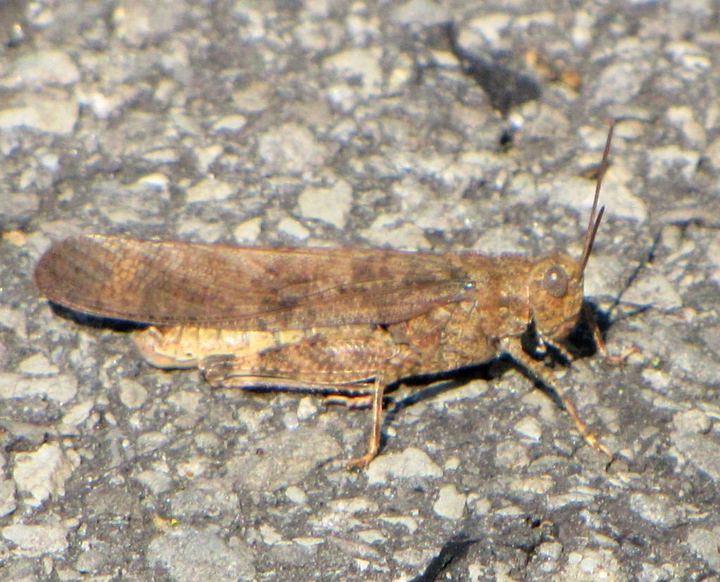

Summary
Grasshopper on the Road is an easy-reader book of six short linked stories about a grasshopper who decides one morning to follow a road wherever it leads, and about the creatures he meets on the way, each of whom has made one idea the whole of life. In "The Club," a crowd of beetles welcomes him to their We Love Morning club and chants the praises of dew and sunrise, until Grasshopper admits that he also likes afternoon and night; they throw him out, and he walks on. In "A New House," he bites into an apple for lunch and finds that a worm lives inside, angry about the hole in his roof. The apple rolls down a hill and smashes, and the worm sets off cheerfully to find a fresh one. In "The Sweeper," a housefly is cleaning his house, his porch, his path and then the road itself, raising dust into Grasshopper's eyes, and means to keep sweeping until the whole world is clean. In "The Voyage," a tiny mosquito who runs a ferry across a puddle he calls a lake insists that every traveler must ride in his boat. Grasshopper is far too big, so he picks up the boat with the mosquito in it, wades across in two steps, and sets it down on the far side. In "Always," three butterflies order him off the mushroom where they always sit at that hour, recite the unchanging routine of their days, and invite him to join it; he prefers a road with something new around each bend. In "At Evening," two dragonflies race past at sunset, pitying him for being so slow, but he answers that walking lets him see the flowers and the sky, and the day ends quietly under the moon. Harper & Row published the 64-page book in October 1978 as an I Can Read Book, with Lobel's own soft-toned illustrations on every page.
Virtues in this work
- Temperance: Grasshopper enjoys morning, afternoon and evening alike, while the beetles, the housefly and the dragonflies each let one thing take over their lives.
- Charity: Grasshopper carries the mosquito across the puddle in his own boat rather than mocking the little ferryman's rule.
- Humility: When the dragonflies pity him for being slow, Grasshopper does not boast back but simply says how much he sees along the way.
Plot or Argument
- 1. The Club
Grasshopper sets out on the road and meets the beetles of the We Love Morning club, who expel him when he says he loves the rest of the day too.
- 2. A New House
Grasshopper's lunch turns out to be a worm's apple home; the apple rolls away downhill and breaks, and the worm goes looking for another.
- 3. The Sweeper
A housefly who cannot stop sweeping moves from his own house out onto the road, determined to clean the entire world.
- 4. The Voyage
A mosquito ferryman demands that Grasshopper cross a puddle in his tiny boat, so Grasshopper carries boat and boatman across together.
- 5. Always
Three butterflies who do the same things at the same times every day want Grasshopper off their mushroom, then into their routine; he declines and walks on.
- 6. At Evening
Dragonflies boast of their speed and pity Grasshopper's slowness, but he is glad of all he sees along the way as night falls.
Characters
- Grasshopper, traveler and protagonist
Easygoing, friendly insect who follows a road for the joy of it and keeps his own mind among creatures who want him to live their way.
- The beetles, We Love Morning club
Enthusiasts who love the morning so exclusively that they cast out anyone who loves other times too.
- The worm, apple dweller
Small householder whose apple home is bitten and then lost, and who starts over without fuss.
- The housefly, the sweeper
Tireless cleaner who cannot stop until the whole world is dust-free.
- The mosquito, ferryman
Little boatman who insists on his rules even when they make no sense for a passenger as big as Grasshopper.
- The three butterflies, creatures of habit
Friends who do exactly the same things at exactly the same times every day.
- The dragonflies, speeders
Fast fliers who see nothing but their own zooming and feel sorry for a slow walker.
Lessons
A club that shuts people out
The beetles are happy together until Grasshopper says he likes afternoons and evenings too, and then they call him names and send him away. Lobel shows children that loving one good thing does not require hating everything else, and that a group can become unkind when everyone must think exactly alike.
- Why do the beetles send Grasshopper away?
- Was Grasshopper wrong to like afternoon and night as well as morning?
- How could the beetles have kept their club and still been kind?
When a good habit takes over
Keeping a house clean is good, but the housefly sweeps the road and wants to sweep the whole world. The butterflies' daily routine is pleasant, but they cannot let anything change. These stories show children that even good things need limits, and that a habit should serve us rather than rule us.
- What is good about the housefly's sweeping, and what goes too far?
- What would it be like to do the same thing at the same time every day forever?
- Can you name a good habit that could become a bad one if you never stopped?
Slow enough to see
The dragonflies are proud of their speed, but they never notice the flowers or the sunset. Grasshopper walks slowly and sees it all. The last story teaches that going fast is not the same as getting the most out of a day.
- What does Grasshopper see that the dragonflies miss?
- Which would you rather be at the end of the day, a dragonfly or Grasshopper? Why?
Kindness to the stubborn
Grasshopper never mocks the mosquito's silly rule or the butterflies' fussy routine. He carries the mosquito across the puddle gently and declines the butterflies politely. He shows that a person can keep his own way without being rude to those who see things differently.
- How does Grasshopper solve the problem of the tiny boat?
- How does Grasshopper say no to the butterflies without being unkind?
Context
The book belongs to the I Can Read series that Harper & Row began in 1957 with Else Holmelund Minarik's Little Bear, which gave beginning readers real stories in short sentences and controlled vocabulary. By 1978 Lobel was the series' best-known author, following his Frog and Toad, Owl and mouse books.
Composition
Lobel wrote and illustrated the stories; Harper & Row published the book in October 1978 as a 64-page I Can Read Book. It came between Mouse Soup (1977) and Lobel's Caldecott-winning Fables (1980), and like Fables it turns small animals into portraits of recognizable human habits.
Reception
Kirkus Reviews praised it in 1978 for giving each creature a distinct human foible rather than presenting interchangeable comic figures, and for its gentle, harmonious pictures. It has stayed in print as an I Can Read title and has been read as a quiet modern answer to Aesop's fable of the ant and the grasshopper.
Comparisons
- aesops-fables
Aesop's grasshopper idles all summer and must beg from the busy ants; Lobel's grasshopper meets one busy creature after another and is right to keep his own unhurried pace, a reversal of the old fable's moral.
- frog-and-toad-are-friends
Lobel's first Frog and Toad book uses the same form of five short easy-reader stories, but where the Frog and Toad stories turn on one friendship, Grasshopper meets a new stranger in each chapter and travels alone.
- owl-at-home
Owl, who stays at home and is muddled by the winter wind and his own tear-water tea, is the stay-at-home opposite of Grasshopper, who walks off into the world and is never muddled by it.
- mouse-soup
Published the year before, Mouse Soup also strings short stories on a frame, but Mouse tells tales to save his life while Grasshopper simply lives the episodes of his walk.
- the-pilgrims-progress
Both books send a traveler down a road where each person he meets embodies one way of life; Bunyan's figures are named for their vices and virtues, and Lobel's insects carry theirs in their habits.
Quotes
For Students
A reading companion for classical Christian high school students. See the student guide.
Reading Guide
Watch for
- The road itself, which appears at the start and end of every story as Grasshopper walks on.
- Each creature's one big idea: the beetles' mornings, the housefly's dust, the mosquito's boat, the butterflies' routine, the dragonflies' speed.
- How Grasshopper answers each one: politely, cheerfully, and without changing who he is.
- The time of day in Lobel's pictures, from the beetles' morning to the dragonflies' sunset.
Key terms and names
- Club
- A group of friends who meet because they share something they like. The beetles' club is only for those who love the morning.
- Ferry
- A boat that carries travelers across water. The mosquito runs a very small ferry across his puddle.
- Voyage
- A trip across water. Grasshopper's voyage across the puddle takes only two steps.
- Routine
- The things someone does the same way every day. The three butterflies never change theirs.
- Dragonfly
- A long, fast-flying insect with four clear wings. The two dragonflies in the last story are so fast they notice nothing.
Seminar Questions
- Comprehension What happens to the worm's apple house after Grasshopper takes a bite?
- Comprehension How does Grasshopper get across the mosquito's puddle?
- Comprehension What do the butterflies want Grasshopper to do?
- Interpretation The worm loses his home but goes off happily to find a new apple. What does that tell you about the worm?
- Interpretation The beetles, the housefly and the butterflies all like good things. Why do they still end up being silly?
- Interpretation The dragonflies feel sorry for Grasshopper. Should they? Who do you think had the better day?
- Big Question Is it better to do one thing all the time, or to enjoy many different things? Why?
Faith Connections
- Psalm 113:3 (Scripture)
The psalm praises the Lord from the rising of the sun to its going down. The beetles love only the morning, but Grasshopper enjoys the whole day, from the beetles' sunrise to the dragonflies' sunset.
- Luke 10:38-42 (Scripture)
Martha is busy and troubled about many things while Mary sits and listens to Jesus. The housefly, sweeping and sweeping, is a little like Martha; Grasshopper's unhurried walk reminds children that being busy is not always the most important thing.
- Mark 2:27 (Scripture)
Jesus says the sabbath was made for man, not man for the sabbath. The mosquito keeps his boat rule even when it cannot fit Grasshopper, and Grasshopper finds a way to honor the mosquito while ignoring the foolishness of the rule.
Logic and Rhetoric
Central argument: Each creature on the road takes one good thing, mornings, cleanliness, rules, routine or speed, and makes it the only thing. Each time, that one thing makes the creature unkind, foolish or blind to the world around it. Grasshopper enjoys many good things in their place and is the only one who is content. So a good life keeps good things in balance.
Rhetorical device: repetition with variation. Every story follows the same pattern: Grasshopper meets a creature with one fixed idea, listens, answers in his own way, and walks on down the road. Children learn to expect the pattern and enjoy each new creature fitting into it.
Debate: Resolved: The butterflies are happier than Grasshopper because they always know what will happen next.
Writing Prompts
Essay: Pick two creatures Grasshopper meets on the road. Tell what each one cares about most, and explain why Grasshopper does not want to live the way they do.
Comparison with Aesop's Fables: In Aesop's fable, the grasshopper plays and the ants work. In Lobel's book, Grasshopper walks while others rush and sweep. Which grasshopper is wiser, and why?
Medical Lens
There is no illness in the book. The housefly who must sweep until the whole world is clean, and the butterflies who cannot bear to vary their daily routine, are comic portraits of fixed habits; a clinician may enjoy them as gentle illustrations of compulsive and rigid behavior, but Lobel draws them as character types in the fable tradition, not as cases.
- The Sweeper
The housefly sweeps outward from his house to the road and resolves to go on until the entire world is free of dust.
Creative Prompts
- Fiction
Write a seventh story in which Grasshopper meets one more creature on the road who has one rule for everything, and show how he answers it.
- Classroom
Draw a map of Grasshopper's road and place the beetles, the worm's apple, the housefly's house, the mosquito's puddle, the butterflies' mushroom and the dragonflies along it in the right order.
- Dialogue
Act out the scene at the puddle with one child as the mosquito insisting on the rules and another as Grasshopper finding a kind way across.
- Poetry
Write a short chant for a club that loves the whole day, morning, afternoon and night, to answer the beetles' morning chant.
Further Reading
- Fables, Arnold Lobel
Lobel's Caldecott Medal book of original animal fables with morals.
- Frog and Toad Together, Arnold Lobel
- Owl at Home, Arnold Lobel
- Little Bear, Else Holmelund Minarik
The first I Can Read Book (1957).
Verification notes
Publisher, month and page count come from the Kirkus review (https://kirkusreviews.com/book-reviews/arnold-lobel/grasshopper-on-the-road), which also describes the beetles, housefly, mosquito, butterflies and dragonflies. Story titles come from a library catalog contents note (The club -- A new house -- The sweeper -- The voyage -- Always -- At evening). Further episode details (the worm's apple rolling downhill, Grasshopper carrying the mosquito's boat across in two strides, the butterflies' mushroom) come from published summaries such as https://inspirevirtue.com/books-worth-reading-an-introduction-to-stoicism-with-arnold-lobels-grasshopper-on-the-road/ and should be checked against the book. No quotations are included because no line could be confirmed word for word on a reliable page.
- Text is under copyright; check quotations against an authorized edition before publication.
- Whether the beetles object to Grasshopper's love of afternoon and evening or of night specifically.
- Details of A New House: that the apple rolls downhill and breaks and the worm goes off contentedly to find another apple.
- The exact stages of the housefly's sweeping (house, porch, path, road).
- How At Evening ends: whether Grasshopper lies down to sleep under the moon and stars.
- Whether the first edition's illustrations were in full color or limited color, and any honors (e.g. ALA Notable) claimed for the book.