Work record
I Will Fight No More Forever
1877 · 19th Century · Oratory · English
Abstract
Background. After four months of flight from Idaho toward Canada, the non-treaty Nez Perce were trapped by Miles's column in northern Montana, a few days' march from safety. Five days of siege in snow left their leaders dead and their families exposed.
Occasion. Joseph's reply went to Howard by messenger as terms were arranged, and an officer took it down in English from the interpreter.
Content. The message moves in a straight line from a word of trust for the general to a list of losses: fallen chiefs, vanished elders, a dead war leader. Then come the hunger and cold of camp, the scattering of families into the hills, a plea for time to search for his own children, and finally a vow spoken to his fellow leaders.
Form. Bare declarative sentences, almost no subordination, and repetition of dead and freezing give the speech its force.
Themes. Exhaustion, grief, responsibility for the defenceless, and the decision to end a war for the sake of survivors. Nothing is said of land, treaties, or blame.
Significance. Reprinted endlessly after 1877, the words made Joseph the most widely known Native leader of his era and remain a standard of plain eloquence. Two printed versions, from 1877 and 1906, survive with small differences.
Key figures
- Chief Joseph: Leader of the Wallowa band of Nez Perce and the speaker
- Oliver O. Howard: Army general who pursued the bands and receives the message
- Nelson A. Miles: Colonel whose troops besieged the camp at Bear Paw
- Looking Glass: Nez Perce chief killed in the final siege
- Toohoolhoolzote: Elder and spokesman of the non-treaty bands, also killed
- Ollokot: Joseph's brother, leader of the young warriors, killed at Bear Paw
- C. E. S. Wood: Howard's aide-de-camp who wrote the words down
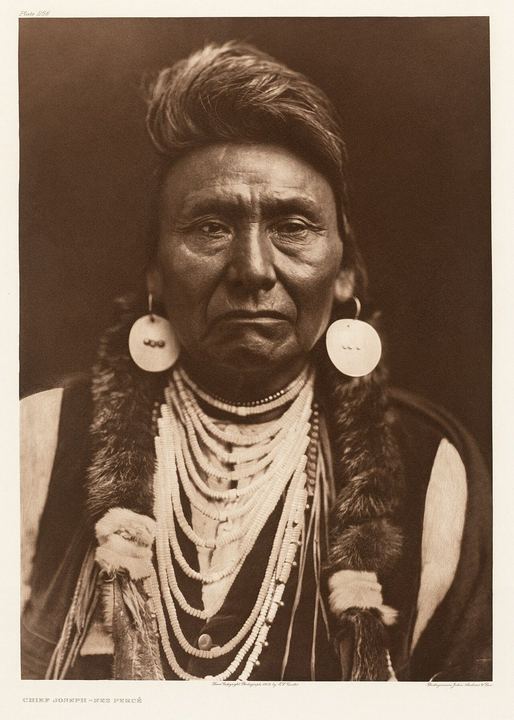

Summary
I Will Fight No More Forever is the message of surrender that Chief Joseph of the Nez Perce sent to General Oliver O. Howard and Colonel Nelson A. Miles on 5 October 1877, at the end of the siege at the Bear Paw Mountains in Montana Territory. Since June the non-treaty Nez Perce bands, some 750 people including many women, children, and elderly, had retreated more than a thousand miles from Idaho, through the Bitterroot Mountains, across Yellowstone, and north toward refuge in Canada, fighting a series of engagements with the army along the way. At Bear Paw, about forty miles short of the border, Miles's troops caught and surrounded the camp in early snow. Joseph spoke in his own language; the words were put into English through an interpreter and written down by Lieutenant Charles Erskine Scott Wood, Howard's aide. The message is only about fifteen sentences long. It opens with a gesture of trust toward Howard, then states plainly that Joseph is tired of fighting. It names the dead leaders, Looking Glass and Toohoolhoolzote, and notes that the old men are gone and that the one who led the young men is dead, a reference understood to be Joseph's brother Ollokot. It describes the cold, the lack of blankets and food, and the children freezing, and the people who have fled into the hills. Joseph asks for time to search for his children, fearing he may find them among the dead. The close turns to his own chiefs: he is tired, his heart is sick and sad, and from where the sun now stands he will fight no more forever. The speech was printed in Harper's Weekly in November 1877 and widely reprinted. The stored text gives that version and a 1906 variant from Norman B. Wood, whose last sentence adds the words against the white man.
Virtues in this work
- Fortitude: Joseph endured a retreat of more than a thousand miles and then bore the harder duty of choosing to surrender.
- Charity: His only request is time to look for the children and families who fled into the hills.
- Humility: He confesses plainly that he is tired and his heart sick and sad, without boast or reproach.
- Prudence: With the chiefs and elders dead and the camp freezing, he judges that further fighting would only destroy the survivors.
Plot or Argument
- Address to Howard
Joseph opens by sending word to General Howard that he knows his heart and holds in his own heart what Howard told him before, and then states simply that he is tired of fighting.
- The roll of the dead
He names the chiefs who have fallen, Looking Glass and Toohoolhoolzote, says the old men are all dead and only the young men now decide, and notes that the leader of the young men is dead.
- Cold, hunger, and the scattered people
He describes the cold without blankets, the children freezing, and the people who have run to the hills with no blankets or food and whose fate no one knows.
- The search for the children
Joseph asks for time to look for his children and count how many he can find, adding that he may find them among the dead.
- The vow to his chiefs
Turning to his own chiefs, he declares that he is tired, his heart sick and sad, and that from where the sun now stands he will fight no more forever.
Key claims
The main steps of the argument, in order, and how they fit together.
- Joseph trusts what General Howard told him before, and he is tired of fighting.How it is supported: The opening message sent to Howard.
- The chiefs and old men who guided the people are dead, so only the young men are left to decide.How it is supported: He names Looking Glass, Toohoolhoolzote and the fallen leader of the young men.
- The people in the camp are cold and hungry, without blankets or food, and the children are freezing.How it is supported: A description of the siege camp in early snow.
- Many people have run into the hills, and no one knows whether they are still alive.How it is supported: The scattering of families during the siege.
- More fighting can only destroy what is left of his people.How it is supported: An inference from the losses already suffered.
- He needs time to look for his children, whom he fears he may find among the dead.How it is supported: A personal plea showing his care for the living.
- From this moment on he will fight no more, because his heart is sick and sad.How it is supported: A solemn vow spoken to his own chiefs.
Argument map
Supported by
- 5More fighting can only destroy what is left of his people.
which rests on
- 2The chiefs and old men who guided the people are dead, so only the young men are left to decide.
- 3The people in the camp are cold and hungry, without blankets or food, and the children are freezing.
- 4Many people have run into the hills, and no one knows whether they are still alive.
- 1Joseph trusts what General Howard told him before, and he is tired of fighting.
- 6He needs time to look for his children, whom he fears he may find among the dead.
- 7From this moment on he will fight no more, because his heart is sick and sad.
Therefore
Plain-language summaries of the author's argument, not quotations.
Lessons
Strength in laying down arms
Joseph's speech is a surrender, yet it has been remembered for over a century as an act of dignity. He does not boast or curse; he names what has been lost and decides for the sake of the living. The speech shows that courage can take the form of ending a fight that can no longer protect the people it was meant to protect.
- What reasons does Joseph give for surrendering, and which does he put first?
- How can a speech of surrender be honourable?
- When does continuing a struggle become a failure of responsibility rather than a proof of courage?
A leader measured by the weakest
Almost every sentence after the opening concerns others: dead chiefs, old men, young men, freezing children, families lost in the hills. Joseph's authority in the speech comes from his attention to those who cannot protect themselves, and his final wish is not for terms but for time to find his children.
- Who is mentioned in the speech, and in what order?
- Why might Joseph say nothing about land, treaties, or the causes of the war here?
- What does this speech suggest a leader owes to the most vulnerable people he leads?
Words carried across languages
The speech was spoken in Nez Perce, passed through an interpreter, written down by an army officer, and printed in two slightly different versions. Readers learn to ask how a text reached them and to read with care when a famous speech exists only in translation and transcription.
- Compare the 1877 and 1906 versions in the stored text. What differences do you notice, and do any change the meaning?
- Why might an interpreter or recorder shape a speech without meaning to?
- How confident should we be about the exact wording of speeches that survive only through other hands?
Context
The Nez Perce treaty of 1855 had reserved a large homeland including the Wallowa Valley, but the treaty of 1863, signed by some Nez Perce leaders and not by others, reduced the reservation greatly. Joseph's Wallowa band and other non-treaty bands remained on their lands until 1877, when General Howard ordered them onto the Lapwai reservation in Idaho. Before the move was complete some young warriors killed several Idaho residents along the Salmon River, and the army attacked at White Bird Canyon in June. The bands then retreated east and north through Idaho, Montana, and Yellowstone National Park, fighting at the Clearwater, the Big Hole, and Canyon Creek, until Miles intercepted them at Bear Paw. The siege lasted from 30 September to 5 October 1877.
Composition
Joseph delivered the message at the surrender, and Lieutenant C. E. S. Wood, who recorded it, later said the words were translated by the interpreter Arthur Chapman. The text appeared in newspapers and in Harper's Weekly on 17 November 1877; the stored text gives that version and the variant printed by Norman B. Wood in Lives of Famous Indian Chiefs (1906). Historians have discussed how far the English wording reflects Wood's own literary hand, since he later became a poet; the substance is generally accepted as Joseph's.
Reception
The speech quickly became the best-known words of any Native American leader and was reprinted in school readers and anthologies. Joseph's people were sent first to Fort Leavenworth and then to Indian Territory; in 1879 he travelled to Washington, and his account An Indian's View of Indian Affairs appeared in the North American Review that year. In 1885 the survivors were returned to the Northwest, some to Lapwai and Joseph's group to the Colville Reservation in Washington.
Comparisons
- the-iliad
In Book 24 the old king Priam goes to Achilles to ask for his son's body; like Joseph, a defeated leader speaks plainly of his dead and wins respect by grief rather than defiance.
- lincoln-second-inaugural-address
Both speeches, delivered at the end of long wars, refuse triumph; Lincoln speaks of binding up wounds and Joseph of searching for his children among the dead.
- luckiest-man-speech
Two short American farewells by men who know their fight is over: Gehrig turns to gratitude, Joseph to the care of his people, and both win lasting regard by their plainness.
- elizabeth-speech-at-tilbury
Elizabeth speaks to her troops before a battle and pledges to live or die among them; Joseph speaks after a lost campaign and pledges to fight no more, the beginning and the end of a ruler's duty in war.
Quotes
Frequently cited
“Hear me, my chiefs! I am tired; my heart is sick and sad. From where the sun now stands I will fight no more forever.”
“Tell General Howard I know his heart.”
“I am tired of fighting. Our chiefs are killed; Looking-Glass is dead, Ta-hool-hool-shute is dead. The old men are all dead.”
“It is cold, and we have no blankets; the little children are freezing to death.”
“I want to have time to look for my children, and see how many of them I can find. Maybe I shall find them among the dead.”
For Students
A reading companion for classical Christian high school students. See the student guide.
Reading Guide
Watch for
- The first sentence, addressed to Howard through a messenger, which begins the surrender with trust rather than accusation.
- The roll of the dead in sentences 4-7, moving from named chiefs to the old men to the unnamed leader of the young men.
- The repetition of no blankets and of freezing to death, first for the children in camp and then for the people in the hills.
- The single request in the speech: time to look for his children.
- The turn in the last three sentences from Howard to my chiefs, and the image of the sun's position marking the moment of the vow.
Key terms and names
- Nez Perce
- The people of the Snake, Clearwater, and Salmon river country of Idaho, Oregon, and Washington, who call themselves Nimiipuu; Joseph led the Wallowa band.
- General Howard
- Oliver O. Howard, commander of the Department of the Columbia, who ordered the bands onto the reservation and pursued them in 1877; the speech is addressed to him.
- Looking Glass
- A Nez Perce chief who guided much of the retreat and was killed at Bear Paw; Joseph names him first among the dead.
- Toohoolhoolzote
- An elder and spiritual leader who spoke for the non-treaty bands in the 1877 councils with Howard; spelled Ta-hool-hool-shute in the stored text.
- Bear Paw Mountains
- The range in northern Montana Territory where Miles's troops besieged the Nez Perce camp, short of the Canadian border.
- Non-treaty bands
- Nez Perce bands, including Joseph's, whose leaders had not signed the 1863 treaty reducing the reservation.
Seminar Questions
- Comprehension To whom is the message sent, and to whom does Joseph turn at the end?
- Comprehension What hardships of the camp does Joseph list, and what does he ask for?
- Interpretation Why does Joseph mention that only the young men now say yes or no?
- Interpretation What is the effect of the plain, short sentences and the absence of any argument about the causes of the war?
- Interpretation What does the phrase from where the sun now stands add to the vow that follows it?
- Interpretation How does the 1906 variant's longer last sentence change the speech's ending?
- Big Question Is there honour in surrender, and what must be true of a cause or a situation for laying down arms to be the right choice?
Faith Connections
- 2 Samuel 2:26 (Scripture)
Abner calls across to Joab, Shall the sword devour for ever? and the pursuit stops. Joseph's surrender asks the same question from the side of the exhausted and answers it with his own vow.
- Jeremiah 31:15 (Scripture)
Rachel weeps for her children and refuses comfort because they are not. Joseph's fear that he will find his children among the dead gives that ancient lament a voice on the northern plains.
- Isaiah 2:4 (Scripture)
The prophet looks to a day when nations shall not learn war any more. Joseph's promise to fight no more forever is a personal and costly version of that hope, made in defeat rather than in fulfilment.
Logic and Rhetoric
Central argument: The chiefs and old men are dead, the young men now decide, the people are freezing and starving, and many are lost in the hills. Further fighting can only destroy the remnant. Therefore Joseph will surrender, asking only for time to find the living.
Rhetorical device: parataxis. Throughout the speech short clauses stand side by side without connecting words, as in I am tired of fighting followed by the bare list Looking-Glass is dead, Ta-hool-hool-shute is dead, so that the facts carry the argument without commentary.
Debate: Resolved: that Joseph's surrender at Bear Paw was an act of courage rather than of defeat.
Memory Work
Hear me, my chiefs! I am tired; my heart is sick and sad. From where the sun now stands I will fight no more forever.
Writing Prompts
Essay: Joseph's surrender contains no argument about the war's causes, only a description of its present cost. Analyze how this choice of material shapes the speech's effect and the character of the speaker.
Comparison with Second Inaugural Address: Compare Joseph's surrender with Lincoln's Second Inaugural Address. How does each speaker, at the end of a long and costly war, speak about the dead and about what the living must now do?
Medical Lens
The speech is a brief record of a besieged camp's condition: exposure in early October snow without blankets, lack of food, children dying of cold, and families scattered into the hills. Joseph's phrase that his heart is sick and sad joins exhaustion and grief in a single bodily image, as many languages do; reading it as a clinical state would go beyond the text. Army and Nez Perce accounts of the campaign record wounded on both sides, and the later removal to Fort Leavenworth and Indian Territory was followed by heavy mortality from illness among the Nez Perce, which Joseph raised in his 1879 appeals.
- Harper's Weekly text, sentences 8-10
Joseph describes cold, lack of blankets and food, and children freezing in the camp and in the hills.
- Harper's Weekly text, sentence 14
Joseph speaks of his own exhaustion and sorrow as he decides to surrender.
Creative Prompts
- Classroom
Read the 1877 and 1906 versions aloud one after the other, then list every difference in wording and discuss which changes, especially the added phrase in the final sentence, alter the sense.
- Poetry
Write a short poem in the voice of one of the families who ran to the hills at Bear Paw, hearing the next morning that the fighting has ended.
- Essay
Using a map of the 1877 route from the Wallowa and Clearwater country to the Bear Paw Mountains, write an essay explaining how the length and hardship of the retreat give weight to each sentence of the surrender.
Further Reading
- The Nez Perce Indians and the Opening of the Northwest, Alvin M. Josephy Jr.
- Nez Perce Summer, 1877: The U.S. Army and the Nee-Me-Poo Crisis, Jerome A. Greene
- Thunder in the Mountains: Chief Joseph, Oliver Otis Howard, and the Nez Perce War, Daniel J. Sharfstein
- Lives of Famous Indian Chiefs, Norman B. Wood
Verification notes
The speech was spoken in Nez Perce and survives only in English as rendered through an interpreter and written down by Lt. C. E. S. Wood; its exact wording, and how much Wood shaped it, cannot be confirmed. Two printed versions are stored and differ slightly, including the spelling of Toohoolhoolzote's name and the 1906 addition in the last sentence. The figure of the leader of the young men is generally identified as Ollokot, as the 1906 version states in a parenthesis. The National Park Service gives the 1877 retreat as about 1,170 miles over 126 days, ending some 40 miles from Canada, and the band as nearly 750 people; other historians' figures vary slightly. Quotes are from the Harper's Weekly text and are found verbatim in the stored file.
No verification flags recorded.