Work record
The Thousand and One Nights (Lane's translation, Volume I)
1838-1841 · 19th Century · Short Stories · Arabic
Abstract
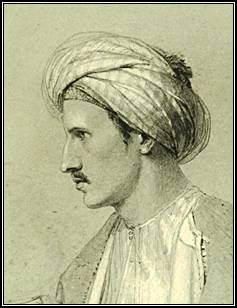
Background. Lane, who had lived for years in Cairo, rendered the Bulaq Arabic text to correct what he saw as Galland's distortions, and supplied a running commentary on religion, law, magic and daily life. His nephew E. S. Poole re-edited it in 1859 from Lane's corrected copy.
Content. Two royal brothers discover betrayal, and one turns to nightly executions until the Wezeer's daughter volunteers. The volume then carries her recitations through a merchant ransomed by three marvels, a bottled 'Efreet, a poisoned book, enchanted islands, one-eyed princes, a murder in a chest, a supposedly slain hunchback, fugitive lovers and a prince won over by embroidered gazelles.
Form. Lane replaced the nightly breaks with chapters, kept roughly half the verse, and left out episodes he thought dull or unsuitable. His notes, sometimes longer than the tales, form a small encyclopedia of Muslim belief and Egyptian custom.
Themes. Speech as rescue, gratitude betrayed and mercy rewarded, destiny alongside human cunning, the justice of a ruler who walks among his people, and love that wastes and heals.
Significance. For Victorian readers this became the standard family Nights; Payne and Burton later answered it with unabridged versions, and Arabists still consult the annotations while debating the translator's choices and his picture of the East.
Main characters
- Shahrazád: Well-read daughter of the Wezeer who tells tales to end the killings
- Shahriyár: Betrayed king who executes each new bride at dawn
- Dunyázád: Younger sister who prompts the first story
- The Fisherman: Poor man who traps an 'Efreet by a question
- The sage Doobán: Physician slain by the leprous king he healed
- Hároon Er-Rasheed: Khaleefeh who roams Baghdád in disguise
- Eṣ-Ṣámit: Garrulous barber who tells of six brothers
- Ghánim: Damascus merchant who shelters the Khaleefeh's favourite
- Táj-el-Mulook: Prince who pursues the maker of an embroidery of gazelles

Summary
This is the first of three volumes of Edward William Lane's translation of The Thousand and One Nights, made directly from the Arabic of the Cairo (Bulaq) printed edition and published in parts from 1838. The library text is the 1859 revision edited by his nephew Edward Stanley Poole, in the 1912 Chatto & Windus reissue with a preface by Stanley Lane-Poole. It contains the Introduction and Chapters I-VIII, each followed by Lane's long notes; Volumes II and III, which include the close of the frame story, are not included. The Introduction opens with praise of God and the claim that the lives of former generations are a lesson to those who follow. King Shahriyár and his brother Sháh-Zemán, King of Samarḳand, each discover a wife's infidelity; after meeting a captive woman who has deceived a Jinnee, Shahriyár resolves to marry a virgin each night and kill her at dawn. After three years the Wezeer can find no more brides, and his learned elder daughter Shahrazád insists on marrying the King, telling her father that she will either die as a ransom or deliver the daughters of the Muslims. Her sister Dunyázád asks for a story, and the King, restless, listens. Chapter I tells of a merchant condemned by a Jinnee for killing his son with a date-stone, saved by three sheykhs whose tales of a gazelle, two black hounds and a mule each buy a third of his blood. Chapter II follows a fisherman who frees an 'Efreet from a brass bottle sealed by Suleymán and tricks him back in; within it come King Yoonán and the sage Doobán, the Husband and the Parrot, and the young King of the Black Islands, half turned to stone by his wife. Chapter III gathers a porter, three ladies of Baghdád, three one-eyed royal mendicants and the disguised Khaleefeh Hároon Er-Rasheed with Jaạfar and Mesroor; the mendicants' histories include the Envier and the Envied. Chapter IV joins the Three Apples, a murder Jaạfar must solve in three days, to the tale of Noor-ed-Deen and Shems-ed-Deen and the son Ḥasan Bedr-ed-Deen, carried by Jinn from El-Baṣrah to Cairo and later recognised by his confection of pomegranate-grains. Chapter V is the Humpback, choked by a fishbone and passed from a tailor to a Jewish physician, a steward and a Christian broker, each confessing to save the next, with the barber Eṣ-Ṣámit's tales of his six brothers before he draws out the bone with forceps. Chapter VI tells of 'Alee Noor-ed-Deen and the slave Enees-el-Jelees; Chapter VII of Ghánim the son of Eiyoob, who rescues the Khaleefeh's favourite Ḳoot-el-Ḳuloob from a chest, with the comic Slave Káfoor; Chapter VIII of Táj-el-Mulook and the Lady Dunyà, enclosing the sorrowful story of 'Azeez and 'Azeezeh. Lane divided the work into chapters instead of nights and omitted tales and passages he judged uninteresting or objectionable.
Virtues in this work
- Fortitude: Shahrazád asks to be married to the King knowing that every bride before her has been killed at dawn.
- Prudence: The fisherman, given only a choice of deaths, swears the 'Efreet by the Most Great Name to show how he fitted in the bottle and seals him in.
- Magnanimity: The envied man, made king, gives the neighbour who threw him into a well a thousand pieces of gold and reproaches him for nothing.
- Temperance: Ghánim keeps his distance from Ḳoot-el-Ḳuloob once he learns she belongs to the Khaleefeh, though he loves her.
- Justice: Hároon Er-Rasheed will not let the murdered damsel of the Three Apples go unanswered and holds even his own Wezeer Jaạfar to account until the cause is traced to Jaạfar's slave.
Plot or Argument
- Prefaces and the Introduction (frame story)
Stanley Lane-Poole's 1882 advertisement and E. S. Poole's preface quote Lane on Galland's faults, his Cairo text and his omissions. The Introduction tells of Shahriyár and Sháh-Zemán, the Jinnee's captive, the nightly executions, the Wezeer's fable of the ass, the bull and the husbandman, and Shahrazád's first night.
- Chapter I: The Merchant and the Jinnee
A Jinnee demands the life of a merchant whose date-stone killed his son; three sheykhs each tell a marvellous tale of a beast that was once a person and win a third of the merchant's blood.
- Chapter II: The Fisherman and the Black Islands
The fisherman outwits the 'Efreet of the brass bottle and tells him of King Yoonán, cured of leprosy by the sage Doobán and then persuaded by an envious Wezeer to behead him; the King dies by the sage's poisoned book. The fish of four colours lead a King to the young King of the Black Islands, whose enchanted city is restored.
- Chapter III: The Porter, the Ladies and the Royal Mendicants
A porter, three ladies and three one-eyed mendicants are joined by Hároon Er-Rasheed in disguise; summoned next day, each mendicant and two of the ladies relate how they came to their state, including the Envier and the Envied and the mendicant changed into an ape.
- Chapter IV: The Three Apples; Noor-ed-Deen and Shems-ed-Deen
A murdered woman found in a chest in the Tigris leads to a confession and to Jaạfar's own slave; Jaạfar wins his pardon with the tale of two brothers, a disputed marriage, Ḥasan Bedr-ed-Deen's night journey by Jinn and his recovery years later.
- Chapter V: The Humpback and the Barber
Four men each believe they have killed the humpback and each tells a story to win a pardon; the Tailor's story brings in the garrulous barber and his six brothers, and the barber revives the humpback.
- Chapter VI: Noor-ed-Deen and Enees-el-Jelees
The spendthrift son of the Wezeer El-Faḍl and the slave girl bought for the King flee the enmity of the Wezeer Mo'een to Baghdád, where the Khaleefeh, playing a fisherman, takes up their cause.
- Chapter VII: Ghánim the Son of Eiyoob
A merchant of Damascus rescues Ḳoot-el-Ḳuloob, drugged with benj and buried in a chest by order of the jealous Zubeydeh, and keeps his distance because she belongs to the Khaleefeh; ruin and wandering end in recognition and marriages. The Slave Káfoor's tale of his yearly lie is set inside.
- Chapter VIII: Táj-el-Mulook and the Lady Dunyà
A prince falls in love with the maker of an embroidered pair of gazelles; his companion 'Azeez tells how his cousin 'Azeezeh died of love while he was ensnared elsewhere; Táj-el-Mulook overcomes Dunyà's dream-born distrust of men with a painted garden and they marry.
Characters
- Shahrazád, storyteller
The Wezeer's elder daughter, who has read histories and poets and offers herself to the King to end his nightly killings.
- Shahriyár, King
A just ruler turned cruel after his wife's betrayal, who marries and kills a bride each night until Shahrazád's tales hold him.
- Sháh-Zemán, King of Samarḳand
Shahriyár's younger brother, whose discovery of his own wife's infidelity sets the frame in motion.
- Dunyázád, sister
Shahrazád's younger sister, who asks for a story to beguile the waking hour.
- The Fisherman, hero of Chapter II
A poor fisherman who casts his net four times a day and outwits the 'Efreet sealed by Suleymán.
- The sage Doobán, physician
A learned sage who cures King Yoonán's leprosy through a drugged goff-stick and avenges his own execution with a poisoned book.
- Hároon Er-Rasheed, Khaleefeh of Baghdád
The Abbasid Khaleefeh who walks the city in disguise with his Wezeer Jaạfar and the executioner Mesroor.
- Jaạfar, Wezeer
Hároon's Wezeer, ordered to find a murderer in three days, who tells the tale of Noor-ed-Deen and Shems-ed-Deen.
- Ḥasan Bedr-ed-Deen, hero of Chapter IV
Son of Noor-ed-Deen, carried by Jinn to Cairo on his cousin's wedding night and later found as a cook in Damascus.
- Eṣ-Ṣámit (the Barber), storyteller in Chapter V
A talkative barber who calls himself the silent one, tells of his six brothers, and saves the humpback.
- Ghánim the son of Eiyoob, hero of Chapter VII
A Damascus merchant called the Distracted Slave of Love, who shelters the Khaleefeh's favourite Ḳoot-el-Ḳuloob.
- Táj-el-Mulook and the Lady Dunyà, lovers of Chapter VIII
A prince who seeks the princess behind an embroidery of gazelles, and the princess who distrusts all men after a dream of pigeons.
- 'Azeez, companion and storyteller
A young merchant who tells Táj-el-Mulook how his devoted cousin 'Azeezeh died while he pursued another woman.
Lessons
Stories as moral argument
Nearly every embedded tale here is told to persuade a listener: the sheykhs bargain for the merchant's blood, the fisherman answers the 'Efreet with King Yoonán and Doobán, the four suspects of the Humpback buy their lives with stories. Lane's own note calls eloquence lawful magic among the Arabs, and the frame turns that belief into the plot.
- What does each sheykh in Chapter I actually gain by telling his tale, and why does the Jinnee accept the bargain?
- Why does the fisherman answer the 'Efreet with a story rather than a plea?
- Is a story a fair way to change a ruler's mind, or a way of getting around his judgment?
Ingratitude and pardon
King Yoonán repays the sage who cured him with death, and dies by his poisoned book; the envied man of Chapter III repays the neighbour who threw him down a well with gold and honour. The collection sets retribution and generosity side by side and lets the listener weigh them.
- Why does the envious Wezeer succeed in turning King Yoonán against Doobán?
- The 'Efreet hears the tale of the Envier and the Envied and still enchants the mendicant. What does that suggest about the limits of stories?
- Which ending, Doobán's or the envied man's, seems closer to justice, and why?
Destiny and responsibility
Characters constantly say that what is written on the forehead must come to pass, yet they plan, lie, flee and confess. The humpback chokes because his destiny so determined, and four men still hurry to accept blame. Lane's long note on fate and destiny explains how Muslim teaching joined predestination with the duty to take medicine and act prudently.
- How do the tailor, the physician, the steward and the broker each act once they believe they have killed the humpback?
- Does belief in destiny make the characters more passive or more daring?
- How does Lane's note on fate change the way the tales read?
A translation as a window and a frame
Lane wanted his readers to see the Nights as faithful pictures of Arab life, especially of Cairo, and his notes on religion, law, magic, medicine and manners are almost as long as the tales. He also chose what to omit. Reading the notes alongside the stories shows both the learning of a careful observer and the decisions an editor makes for his audience.
- What does Lane say he omitted, and why?
- How does reading a note on the Jinn or the Ḳáḍee change your sense of a tale?
- What is gained and lost when a translator divides a work into chapters instead of nights?
Context
The Thousand and One Nights is an anonymous Arabic collection whose frame and some tales derive from an older Persian book, Hezár Afsáneh (A Thousand Tales), mentioned by tenth-century Arab writers; later tales were added over centuries in Baghdad, Syria and Egypt. Lane and his editor held that the collection in its present form reflected the manners of Mamluk Cairo, perhaps of the fifteenth century; later scholars agree that the Egyptian recension is late but date its layers in various ways. Europe first knew the Nights through Antoine Galland's French version (1704-1717), which Lane criticised for misrepresenting Arab manners.
Composition
Lane translated from the Cairo (Bulaq) printed edition of 1835, using a copy corrected and annotated by the sheykh Moḥammad 'Eiyád Eṭ-Ṭanṭáwee, and occasionally from the Calcutta and Breslau editions. The work was issued in monthly parts by Charles Knight from 1838, with engravings after William Harvey, and collected in three volumes (1839-1841). Lane's preface explains that he omitted tales and anecdotes he judged comparatively uninteresting or objectionable, slightly varied some passages, kept about half the poetry, and replaced the nightly breaks with chapters. Edward Stanley Poole edited the revised edition of 1859 from Lane's corrected copy; the library text is the 1912 Chatto & Windus reissue of that edition. Lane's notes were later collected by Stanley Lane-Poole as Arabian Society in the Middle Ages (1883).
Reception
Lane's version was the standard English Nights for Victorian families and students; Poole's preface reports that learners of Arabic used it as a textbook. John Payne (1882-1884) and Richard Burton (1885-1888) then produced complete translations, and Burton faulted Lane for his omissions, his chapter divisions and his formal diction. Later Arabists have generally valued the notes as a rich, first-hand commentary on Egyptian life and Islamic belief, while differing over his selection and his framing of the East: Edward Said's Orientalism (1978) treated Lane's Egyptian writings as an example of European scholarly representation, while studies such as Leila Ahmed's biography stress his learning, long residence and respect for his informants.
Comparisons
- the-arabian-nights
Andrew Lang's 1898 children's selection works from Galland's French, the version Lane set out to replace; reading the fisherman or the Humpback in both shows Lane's Arabic names, verse and notes against Lang's brisk retelling.
- the-koran
The Introduction opens with Qur'anic language, the 'Efreet's prison bears the seal of Suleymán, and Lane's first note summarises Muslim belief and law; the Koran is the scripture the tales and the notes constantly assume.
- the-canterbury-tales
Both are frame collections in which tellers trade stories for a purpose; Chaucer's pilgrims compete for a supper, while Shahrazád, the sheykhs and the Humpback's suspects tell for their lives.
- ibn-battuta-travels
Ibn Battuta's fourteenth-century account of Cairo, Damascus and Baghdad describes the cities, judges and hospitals of the same Islamic world that Lane believed the Nights portray.
- metamorphoses
Ovid's poem and the tales of the sheykhs, the Black Islands and the mendicant turned ape share a fascination with human beings changed into beasts or stone, and both nest stories within stories.
- galen-selected-works
The learned medicine behind Doobán, the Jewish physician and the barber's surgery descends from Galen through Arabic translation; Lane's notes on disease and the first hospitals point to that tradition.
Quotes
Frequently cited
“either I shall die, and be a ransom for one of the daughters of the Muslims, or I shall live, and be the cause of their deliverance from him.”
“The lives of former generations are a lesson to posterity; that a man may review the remarkable events which have happened to others, and be admonished”
“O my sister, relate to us a story to beguile the waking hour of our night.”
“This is a Jinnee, and I am a man; and God hath given me sound reason; therefore, I will now plot his destruction with my art and reason, like as he hath plotted with his cunning and perfidy.”
“Spare me, and so may God spare thee; and destroy me not, lest God destroy thee.”
“Consider, then, O 'Efreet, the pardon of the envied to the envier, and his kindness to him, notwithstanding the injuries he had done him.”
“Eloquence, with them, is lawful magic: it exercises over their minds an irresistible influence.”
“I have thought it right to omit such tales, anecdotes, &c., as are comparatively uninteresting or on any account objectionable.”
For Students
A reading companion for classical Christian high school students. See the student guide.
Reading Guide
Watch for
- The opening of the Introduction, where the collection presents itself as a lesson from former generations, and the moment Shahrazád's first story begins.
- The repeated plea for mercy, spare me and God will spare thee, which passes from Doobán to the fisherman and the 'Efreet.
- How many stories in Chapters I, III and V are told to buy a life, and who is listening each time.
- Hároon Er-Rasheed's night walks in disguise, and how he judges once he learns the truth.
- Lane's numbered notes after each chapter: read at least the ones on the Jinn, on eloquence and on fate and destiny.
Key terms and names
- Jinnee ('Efreet, Márid)
- A spirit created of smokeless fire, as Lane's notes explain; 'Efreet and Márid name powerful and often rebellious kinds, like the one sealed in the fisherman's bottle.
- Wezeer
- A king's chief minister; Shahrazád's father and Jaạfar are wezeers, and an envious wezeer destroys Doobán.
- Khaleefeh
- Lane's spelling of caliph, the successor of the Prophet as ruler of the Muslims; here usually Hároon Er-Rasheed of Baghdád.
- Royal Mendicant
- Lane's rendering of the wandering dervishes of Chapter III, each a king's son who lost an eye.
- Ḳáḍee
- A judge of religious and civil law, summoned for wills and marriage contracts; Lane's Note 38 to the Introduction describes the office.
- Benj
- A stupefying drug, identified by Lane with henbane or hemp, used in Chapters II and VII to put people into deep sleep.
- Frame tale
- The outer story of Shahrazád and Shahriyár that gives the reason for telling every other tale, many of which contain further tales.
Seminar Questions
- Comprehension What two experiences lead King Shahriyár to his custom of killing his bride each morning?
- Comprehension How does the fisherman get the 'Efreet back into the brass bottle, and why does he later let him out?
- Comprehension Why do four different men each confess to killing the humpback in Chapter V?
- Interpretation Shahrazád's father tries to dissuade her with the fable of the ass, the bull and the husbandman. What is he warning her about, and why does she ignore him?
- Interpretation The fisherman tells the 'Efreet about King Yoonán and Doobán. How does that story fit the fisherman's own situation, and how does it not?
- Interpretation Hároon Er-Rasheed appears in Chapters III, IV, VI and VII. What kind of ruler do these tales make him, and how does he differ from Shahriyár?
- Interpretation Lane omits some tales and adds long notes. How does his presence as translator shape what a reader notices?
- Big Question Can a story persuade where an argument fails? Use Shahrazád, the fisherman or the Second Royal Mendicant to answer.
Faith Connections
- Proverbs 25:15 (Scripture)
By long forbearing is a prince persuaded, and a soft tongue breaketh the bone. Shahrazád wins over a cruel king not by confrontation but by patient speech night after night.
- Romans 12:17-21 (Scripture)
Paul urges believers not to repay evil for evil but to overcome evil with good. The envied man who honours his envier embodies this; King Yoonán's fate and the fisherman's threats show the opposite course.
- 1 Corinthians 10:11 (Scripture)
Paul says the histories of Israel were written for our admonition. The Introduction makes a similar claim for its tales, that the lives of former generations are a lesson to posterity.
- Genesis 39 (Scripture)
The verses in the Introduction appeal to the tale of Yoosuf, the Qur'anic Joseph, and Potiphar's wife. Comparing the Genesis account shows a shared story read in two traditions.
Logic and Rhetoric
Central argument: Shahriyár reasons from two betrayals to the conclusion that no woman can be trusted, and acts on it by killing. Shahrazád cannot refute him directly without dying, so she places before him story after story of treachery, gratitude, pardon and justice, and keeps him listening. The frame thus argues that learning joined to courage and patience can turn a ruler from a cruel generalisation.
Rhetorical device: embedded narrative used as exemplum. In Chapter II the fisherman answers the 'Efreet with the story of King Yoonán and the sage Doobán, and closes by applying it: had the King spared the sage, God had spared him; the plea spare me, and so may God spare thee is repeated across both levels.
Debate: Resolved: that the envied man was wiser than King Yoonán in his treatment of an enemy.
Memory Work
either I shall die, and be a ransom for one of the daughters of the Muslims, or I shall live, and be the cause of their deliverance from him.
The lives of former generations are a lesson to posterity; that a man may review the remarkable events which have happened to others, and be admonished
Writing Prompts
Essay: Choose two tales from this volume in which a character tells a story to save a life (for example, the sheykhs of Chapter I, the fisherman, the Second Royal Mendicant or the suspects of the Humpback). Analyse what each teller hopes the story will prove, and whether it succeeds.
Comparison with The Canterbury Tales: Compare the frame of Lane's Thousand and One Nights with Chaucer's General Prologue. What reason does each give for the telling of tales, and how does that reason shape the stories told?
Medical Lens
Lane's volume is useful to the historian of medicine less for any single tale than for the combination of tales and notes. The sage Doobán is drawn as the ideal learned physician, read in Greek, Persian, Arabic and Syriac books and in the properties of plants, who cures King Yoonán's leprosy without potion or ointment by a drug hidden in the hollow handle of a goff-stick and absorbed through sweat, followed by bath and sleep; his revenge by a poisoned book is a poisoning-by-contact motif. In the Humpback a Jewish physician, eager for his quarter-dinar fee, believes he has killed a patient by stumbling over him, and the tale of a physician of Damascus who becomes superintendent of its hospital prompts Lane's note that the first hospital built by a Muslim was founded there in AD 706-7. The barber revives the humpback by anointing his neck and extracting the fishbone with an iron forceps, a small scene of practical surgery. In the Envier and the Envied a princess's madness is attributed to a Márid in love with her and cured by fumigation with seven hairs from a cat's tail, and Lane's note on Muslim saints describes how mild insanity could be revered as sanctity and how the French authorities in Cairo ordered disturbed persons confined in the Máristán, the hospital and lunatic asylum. Lane's note on benj identifies it with henbane or hemp, links hemp-eating to the name of the Assassins, and records reports of narcotics used to drug sleepers, as Zubeydeh drugs Ḳoot-el-Ḳuloob in Chapter VII. His note on fate quotes traditions that there is a medicine for every pain and a list of contagious diseases that includes melancholy and pestilence, set against the saying that disease does not pass by contagion. Lovesickness, wasting and fainting are frequent (Sháh-Zemán's sallow emaciation from grief, Ghánim reduced to a toothpick's thinness, 'Azeezeh dying of love). These are period beliefs and literary motifs, best read as evidence of how medieval Islamic and nineteenth-century observers understood illness, not as case histories.
- Chapter II, Story of King Yoonán and the Sage Doobán
Doobán cures the King's leprosy with drugs concealed in a goff-stick, is executed on the Wezeer's slander, and kills the King with a book whose leaves are poisoned.
- Chapter III, Story of the Envier and the Envied, with Note 63 (On Muslim Saints, or Devotees)
A king's daughter, possessed by a love-struck Márid, is cured by fumigation; Lane's note discusses insanity regarded as sanctity and confinement in the Máristán.
- Chapter II, Story of the Young King of the Black Islands, with Note 46 (On the Use of Hemp to induce Intoxication)
The queen drugs her husband's nightly wine with benj; Lane's note identifies benj with henbane or hemp and connects it with the Assassins.
- Chapter V, Story of the Humpback and its conclusion
A fishbone apparently kills the humpback; a Jewish physician believes he caused the death; the barber anoints the neck and removes the bone with forceps.
- Chapter V, Story told by the Jewish Physician, with Note 47
The physician takes a pulse, prescribes, and is made superintendent of the hospital of Damascus; Lane's note on the first Muslim hospital (AD 706-7).
- Notes to Chapter I, Note 5 (On Fate and Destiny)
Traditions on medicine and predestination, and a list of contagious and engendered diseases including melancholy, pestilence, leprosy, epilepsy and phthisis.
- Chapter VII, Story of Ghánim the Son of Eiyoob
Ḳoot-el-Ḳuloob is drugged with benj and buried alive in a chest; later Ghánim, wasted by grief and hunger, is spared from the Baghdád hospital by a charitable sheykh.
Creative Prompts
- Essay
Compare one tale in Lane's version with the same tale in Lang's Arabian Nights. What do Lane's names, verses and notes add, and what does Lang's brevity gain?
- Fiction
Write a story Shahrazád might tell on the second night, embedding a smaller tale told by one of its characters to persuade someone in danger.
- Classroom
Chart the nesting of Chapter II: Shahrazád tells of the fisherman, who tells of King Yoonán, in whose story the King and the Wezeer tell the Husband and the Parrot and the Envious Wezeer and the Ghooleh. Mark who tells each tale and what each teller wants.
Further Reading
- An Account of the Manners and Customs of the Modern Egyptians, Edward William Lane
Lane's 1836 study of Cairo, the companion his notes constantly cite.
- The Arabian Nights, Husain Haddawy (trans.)
Modern translation from Muhsin Mahdi's edition of the oldest Syrian manuscript.
- The Arabian Nights: A Companion, Robert Irwin
Includes a history of the European translations, Lane's among them.
- Edward W. Lane: A Study of His Life and Works and of British Ideas of the Middle East in the Nineteenth Century, Leila Ahmed
- Medieval Islamic Medicine, Peter E. Pormann and Emilie Savage-Smith
- Majnūn: The Madman in Medieval Islamic Society, Michael W. Dols
Verification notes
Contents, chapter order, the spellings of names (Shahrazád, Shahriyár, Dunyázád, Jaạfar, Eṣ-Ṣámit, Ḳoot-el-Ḳuloob and so on), Lane's statements of method, the use of the Cairo edition and the sheykh Moḥammad 'Eiyád's annotated copy, and the note numbers cited all come from the attached Project Gutenberg #34206 text; every quotation was found by search in that file and Lane's spellings are copied as printed. The text uses Shahrazád throughout, not the later spelling Sheherzád. The volume ends with Chapter VIII and its notes, so the close of the frame story and later tales (including Sindibád, mentioned in Poole's preface) are not in the library text. Publication facts (monthly parts from 1838 by Charles Knight, three volumes 1839-1841, Bulaq edition of 1835, Harvey's engravings) and Lane's life dates are from general knowledge and the title page. Burton's and Said's assessments are summarised in general terms only; no wording from them is quoted.
- Exact dates of the monthly parts (commonly given as 1838-1840) and of the three collected volumes (1839, 1840, 1841).
- Whether the Bulaq edition Lane used is correctly dated 1835 (Lane's preface calls it the Cairo edition lately printed).
- The specific terms in which Burton criticised Lane, which should be checked in Burton's foreword and Terminal Essay before being cited.
- Scholarly dating of the Egyptian recension of the Nights, which varies between authorities.