Work record
The Canterbury Tales
c. 1387-1400 · Medieval · Poetry · Middle English
Abstract
Background. Chaucer, a London customs official and royal envoy who knew the writings of Boccaccio and Boethius, began the collection around 1387, a generation after the Black Death and soon after the Peasants' Revolt of 1381. Choosing English over French or Latin, he gave the London dialect literary standing.
Frame. Some twenty-nine pilgrims bound for Becket's shrine meet at the Tabard in Southwark. The General Prologue sketches them by rank and trade, and Harry Bailly offers a free supper to whoever tells the best story along the road.
Content. The Knight begins with Palamon, Arcite and Emily, a romance closed by Theseus's Boethian consolation. The drunken Miller interrupts with a fabliau, and feuds follow, Reeve against Miller, Friar against Summoner. The Wife of Bath, the Clerk's Griselda and the Franklin carry on a debate about marriage; the Pardoner condemns avarice while confessing his own; Chanticleer and Pertelote argue whether dreams foretell or merely reflect digestion.
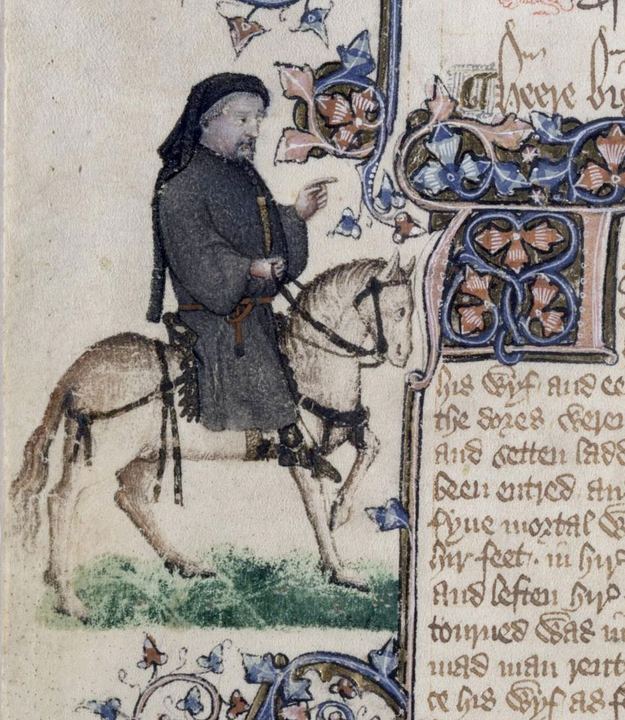
Structure. The tales survive in some eighty manuscripts, the Ellesmere and Hengwrt chief among them, and their order is partly editorial. The Parson's prose sermon on penance and Chaucer's Retraction stand at the end.
Significance. Dryden called the Prologue God's plenty, and since the fifteenth century Chaucer has been honoured as the founder of English poetry.
Main characters
- The Narrator (Chaucer): Genial pilgrim who reports the company and tells two tales himself
- Harry Bailly: Host of the Tabard who proposes and judges the storytelling contest
- The Knight: Veteran of crusading wars who tells the first tale
- The Miller: Drunken, brawling pilgrim who answers the Knight with a bawdy fabliau
- The Wife of Bath: Five times married cloth-maker who argues for wives' mastery
- The Clerk of Oxford: Poor scholar who tells of patient Griselda
- The Pardoner: Seller of false relics who preaches against the greed he practises
- The Parson: Devout country priest who closes the book with a treatise on penitence
- Palamon and Arcite: Theban cousins and rivals for Emily in the Knight's Tale
- Theseus: Duke of Athens whose speech on the First Mover ends the Knight's Tale
- Chanticleer and Pertelote: Rooster and hen who dispute dreams in the Nun's Priest's Tale

Watch the summary
The Canterbury Tales in 129 seconds · 2:09
Summary
The Canterbury Tales is a collection of stories framed by a pilgrimage. One April, the narrator, who calls himself Chaucer, is lodging at the Tabard Inn in Southwark when a company of some twenty-nine pilgrims arrives on its way to the shrine of St. Thomas Becket at Canterbury. The General Prologue describes them one by one: a Knight back from crusade, his son the Squire, a dainty Prioress, a hunting Monk, a wheedling Friar, a poor Clerk of Oxford who would gladly learn and gladly teach, a Doctor of Physic who loves gold, the much-married Wife of Bath, a devout country Parson who practiced what he preached, his brother the Ploughman, a brawling Miller, a corrupt Summoner and a Pardoner selling false relics. The Host, Harry Bailly, proposes that each pilgrim tell tales on the road and that the best teller win a supper at the others' expense. Lots are drawn and the Knight begins. His tale, set in ancient Athens, tells of the Theban cousins Palamon and Arcite, imprisoned by Duke Theseus, who both fall in love with Emily on seeing her from their tower; years of rivalry end in a great tournament, where Arcite wins but is thrown and dies, and Theseus, speaking of the First Mover who orders all things, counsels them to make a virtue of necessity and gives Emily to Palamon. The Miller answers with a bawdy farce, and the tales go on in quarrel and reply: romances, saints' legends, sermons, beast fables and fabliaux, ending with the Parson's treatise on penitence and Chaucer's prayer asking forgiveness. In the Nun's Priest's Tale, the proud rooster Chanticleer dreams of a beast in the yard; his wife Pertelote blames indigestion and prescribes laxatives, while he cites learned authorities that dreams can warn. The fox flatters him into crowing with his eyes shut and carries him off, but Chanticleer tricks the fox into opening his mouth and escapes, and both learn a moral. The work was never finished. School Launch reads selections, the General Prologue, the Knight's Tale and the Nun's Priest's Tale, while the full text of the Tales is provided for further reading.
Virtues in this work
- Piety: The Parson teaches Christ's lore and follows it himself first, a model of devout service.
- Charity: The Parson and the Ploughman give to the poor and help their neighbors without pay.
- Prudence: Theseus counsels making a virtue of necessity and governs the lovers' quarrel with judgment.
- Humility: The Knight, though worthy, is wise and meek as a maid in bearing.
Plot or Argument
- General Prologue
Spring stirs folk to pilgrimage; the narrator meets the company at the Tabard and describes each pilgrim; the Host sets the storytelling contest.
- The Knight's Tale
Palamon and Arcite, prisoners of Theseus, love Emily; after exile, escape and a duel in the grove, Theseus sets a tournament; the gods' quarrel ends with Arcite's victory and death and Palamon's marriage.
- Quarrel and reply
The Miller, Reeve and Cook tell bawdy tales against one another; the Man of Law tells of the patient Constance.
- The marriage debate
The Wife of Bath argues for the rule of wives; the Clerk answers with patient Griselda; the Merchant and Franklin continue the theme.
- Church and money
The Friar and Summoner trade insults; the Pardoner confesses his greed and preaches against it in his tale of three rioters who find Death under a tree.
- The Nun's Priest's Tale
Chanticleer's dream, Pertelote's medicine, the fox's flattery, the chase and the rooster's escape, with the moral to take the fruit and leave the chaff.
- The ending
The Parson declines to tell a fable and delivers a treatise on penitence; Chaucer's retraction asks forgiveness for his worldly works.
Characters
- The Narrator (Chaucer), pilgrim-reporter
A genial, seemingly naive observer whose praise often lets the pilgrims condemn themselves.
- Harry Bailly, the Host, master of ceremonies
Innkeeper of the Tabard who proposes and judges the contest.
- The Knight, pilgrim
A crusader who loved chivalry, truth and honor, described as a very perfect gentle knight.
- The Parson, pilgrim
A poor parish priest who taught Christ's lore and followed it himself first.
- The Wife of Bath, pilgrim
Five times married, worldly and argumentative, she claims experience over authority.
- The Pardoner, pilgrim
A seller of pardons and false relics who preaches that greed is the root of evils.
- Palamon and Arcite, Knight's Tale
Theban cousins and sworn brothers who become rivals for Emily.
- Theseus, Knight's Tale
Duke of Athens who imposes order on the lovers' strife and speaks of providence.
- Emily, Knight's Tale
Sister of Hippolyta, who prays to Diana to remain unmarried and is given to Palamon.
- Chanticleer and Pertelote, Nun's Priest's Tale
A vain, learned rooster and his practical hen-wife.
Lessons
Character known by deeds
The General Prologue judges each pilgrim by the fit between calling and conduct. The Parson and the Clerk are praised because their lives match their words; the Friar and Pardoner are exposed because theirs do not.
- Which pilgrims live up to their callings, and which do not?
- How does the narrator's praise sometimes work as criticism?
Making a virtue of necessity
Theseus closes the Knight's Tale by arguing that the First Mover has set limits on every life, and that wisdom accepts what cannot be avoided. The Knight's Tale teaches patience and order in a world of sudden loss.
- Why does Arcite die despite winning?
- Is Theseus's speech consoling or only resigned?
Beware of flattery
Chanticleer is caught because he believes the fox's praise and closes his eyes; he escapes by using the fox's own vanity. The beast fable teaches humility and watchfulness through comedy.
- How does the fox trap Chanticleer, and how does Chanticleer escape?
- What moral does each animal draw?
The road to the heavenly Jerusalem
The pilgrimage frame and the Parson's closing treatise turn the journey to Canterbury into an image of life's journey to God. Even the bawdy and quarrelsome tales are set within that larger road.
- Why might Chaucer end with the Parson and a prayer?
- How does the pilgrimage frame change the meaning of the tales?
Context
Chaucer wrote in the London of Richard II, after the Black Death of 1348-49 and during the Hundred Years' War and the Peasants' Revolt of 1381. The shrine of Thomas Becket, archbishop murdered in his cathedral in 1170, was England's most visited pilgrimage site. Chaucer's choice to write in English, rather than French or Latin, helped make the London dialect a literary language.
Composition
Chaucer began the Tales around 1387 and left them unfinished at his death in 1400; the General Prologue implies far more tales than survive. The work exists in some eighty manuscripts arranged in fragments, of which the Ellesmere and Hengwrt manuscripts are the most important. William Caxton printed it about 1476. Sources include Boccaccio, whose Teseida lies behind the Knight's Tale, Boethius, whose Consolation shapes Theseus's speech, and the beast-fable tradition of Reynard the Fox.
Reception
From the fifteenth century Chaucer was honored as the father of English poetry; Dryden in 1700 praised the General Prologue as God's plenty. Nineteenth-century editions such as Purves's brought the Tales to general readers in partly modernized spelling, and the work has remained central to English education.
Comparisons
- the-divine-comedy
Both are journeys of pilgrims through a whole society; Dante's moves through the afterlife, Chaucer's along an English road.
- the-pilgrims-progress
Bunyan's allegory makes the pilgrimage itself the story of the soul's road to heaven, which the Parson's Prologue points toward.
- sir-gawain-and-the-green-knight
A Middle English romance of the same age, testing a knight's truth and courtesy as the Knight's Tale tests its lovers.
- the-consolation-of-philosophy
Chaucer translated Boethius, whose teaching on providence and fortune underlies Theseus's final speech.
Quotes
Frequently cited
“WHEN that Aprilis, with his showers swoot”
Frequently cited
“He was a very perfect gentle knight”
Frequently cited
“Sounding in moral virtue was his speech, And gladly would he learn, and gladly teach”
Frequently cited
“To make a virtue of necessity”
Frequently cited
“Murder will out, that see we day by day”
“And specially, from every shire’s end Of Engleland, to Canterbury they wend, The holy blissful Martyr for to seek”
“And though that he was worthy he was wise”
“But Christe’s lore, and his apostles’ twelve, He taught, and first he follow’d it himselve”
“That if gold ruste, what should iron do”
“What is this world? what aske men to have? Now with his love, now in his colde grave”
“Radix malorum est cupiditas”
“Take the fruit, and let the chaff be still”
For Students
A reading companion for classical Christian high school students. See the student guide.
Reading Guide
Watch for
- School Launch reads selections: the General Prologue, the Knight's Tale and the Nun's Priest's Tale. The rest is available in the full text.
- In the General Prologue, how the narrator's admiring tone sometimes exposes a pilgrim's faults.
- Which pilgrims match their calling with their conduct, especially the Knight, the Clerk, the Parson and the Ploughman.
- In the Knight's Tale, the prayers to Venus, Mars and Diana and how Saturn settles the gods' quarrel.
- In the Nun's Priest's Tale, the mock-heroic comparisons that make a farmyard rooster sound like Hector or Caesar.
Key terms and names
- Frame narrative
- A story that contains other stories; here the pilgrimage holds the pilgrims' tales.
- Estates satire
- Medieval satire describing the duties and failings of each class or calling in society.
- Pilgrimage
- A religious journey to a holy place; here to the shrine of St. Thomas Becket at Canterbury.
- Fabliau
- A short, comic and often bawdy tale of tricks, such as the Miller's Tale.
- Beast fable
- A tale in which animals act like people to teach a moral, as in the Nun's Priest's Tale.
- Mock-heroic
- Treating a trivial subject in grand epic style for comic effect.
- Heroic couplet
- Pairs of rhymed lines of about ten syllables, the meter of most of the Tales.
Seminar Questions
- Comprehension What contest does the Host propose, and who tells the first tale?
- Comprehension How do Palamon and Arcite each fall in love with Emily, and how is their rivalry settled?
- Comprehension How does Chanticleer escape from the fox?
- Interpretation Is the narrator naive, or does he know exactly what his praise reveals?
- Interpretation Does Theseus's final speech explain Arcite's death or only teach how to bear it?
- Interpretation What do Chanticleer and Pertelote's arguments about dreams say about learning and common sense?
- Big Question Can a story told for fun also teach truth? What does the Nun's Priest mean by fruit and chaff?
Faith Connections
- 1 Timothy 6:10 (Scripture)
"The love of money is the root of all evil": the Pardoner's text, Radix malorum est cupiditas, which he preaches and does not follow.
- Romans 15:4 (Scripture)
"Whatsoever things were written aforetime were written for our learning." The Nun's Priest cites St. Paul to defend drawing a moral from a fable.
- James 1:22 (Scripture)
Be doers of the word, and not hearers only: the Parson first follows what he teaches.
- Augustine, City of God XIX.17 (Church Fathers)
Augustine describes the heavenly city as a pilgrim in this world, using earthly goods while journeying toward its true home, the idea behind the Parson's call to the pilgrimage to the heavenly Jerusalem.
Logic and Rhetoric
Central argument: Chaucer gathers every rank of English society on one road to a martyr's shrine. Each pilgrim is measured by whether conduct matches calling, and each tale reveals its teller. Comic and serious tales alike are framed by the pilgrimage and closed by penitence. Therefore the Tales argue that human life, in all its variety and folly, is a pilgrimage judged by truth and directed toward God.
Rhetorical device: irony through praise. The narrator calls the Monk a fair prelate and agrees that his scorn for the cloister is right, letting the reader see the fault the praise conceals.
Debate: Resolved: that Chanticleer's learning is of more use to him than Pertelote's common sense.
Memory Work
But Christe’s lore, and his apostles’ twelve, He taught, and first he follow’d it himselve
Sounding in moral virtue was his speech, And gladly would he learn, and gladly teach
Writing Prompts
Essay: Choose two pilgrims from the General Prologue and argue how Chaucer shows whether each is faithful to his or her calling.
Comparison with The Pilgrim's Progress: Compare Chaucer's pilgrims with Bunyan's Christian. What does each work make the pilgrimage mean?
Medical Lens
The Tales are a rich source for medieval medicine. The Doctor of Physic knows the causes of every malady, and of what humour engendered, reads astrology and the ancient authorities, profited from the plague and loved gold. In the Knight's Tale Arcite's lovesickness is described as a malady engendered of melancholic humours, and his death follows a chest wound that neither vomiting nor laxatives can purge. In the Nun's Priest's Tale Pertelote diagnoses Chanticleer's nightmare as a surplus of red choler and melancholy and prescribes digestives and herbal laxatives, while he answers with learned arguments that dreams can be warnings. In the Pardoner's Tale the youngest rioter buys poison from an apothecary to kill his companions, a reminder that the same trade sold cures and poisons.
- General Prologue, the Doctor of Physic
The portrait of the physician, his learning in humours and astrology, and his love of gold, which in physic is a cordial.
- The Knight's Tale, Arcite in exile
Arcite wastes with the lover's malady, engendered of melancholic humours.
- The Knight's Tale, Arcite's death
Arcite's crushed chest festers and neither vomit upward nor laxative downward can help him.
- The Nun's Priest's Tale
Pertelote's diagnosis of humours too abundant and her herbal prescription; Chanticleer's defense of prophetic dreams.
- The Pardoner's Tale
The youngest rioter buys rat poison from an apothecary to kill his companions.
Listen to the book
Public-domain audiobook from LibriVox, read by Various volunteers. Recording: Canterbury Tales on LibriVox (Internet Archive).
LibriVox recordings are volunteer readings released into the public domain. The reading may follow a different edition from the text in this library.
Creative Prompts
- Poetry
Write a General Prologue portrait, in rhyming couplets, of a person in a modern profession, letting your praise reveal their faults or virtues.
- Classroom
Read the opening eighteen lines aloud in Middle English pronunciation and then in the Purves spelling; discuss what changes.
- Essay
Compare the Parson and the Pardoner as preachers. What does Chaucer say makes a preacher worthy?
- Fiction
Write a beast fable in the manner of the Nun's Priest, with a clear moral at the end.
- Dialogue
Stage the argument between Chanticleer and Pertelote over whether dreams mean anything.
Further Reading
- The Riverside Chaucer, Larry D. Benson, ed.
Standard Middle English edition.
- The Consolation of Philosophy, Boethius
Behind Theseus's speech on providence.
- Chaucer and the Medieval Estates Satire, Jill Mann
- Chaucer: A European Life, Marion Turner
Verification notes
The stored full text is D. Laing Purves's nineteenth-century popular edition (Project Gutenberg #2383), not a critical Middle English text: spelling is partly modernized, verse tales are complete, and the prose Melibee and Parson's Tale are contracted with prose outlines. One transcriber's footnote was reworded to remove a vulgar gloss. Quotes are verified against this text and follow its spelling. Plot summaries cover the selected School Launch tales most fully. Dates of composition are approximate.
No verification flags recorded.