Work record
Letters from a Farmer in Pennsylvania
1767-1768 · 18th Century · Political Theory · English
Abstract
Background. Parliament had repealed the Stamp Act in 1766 while declaring its authority unlimited, then in 1767 laid new import duties and silenced New York's legislature. A Philadelphia lawyer trained at the Middle Temple answered under a rustic pen name in a provincial weekly, writing as a loyal subject of George III.
Argument. Westminster may direct imperial commerce, yet levies framed to raise money are taxes, and only the colonists' own assemblies may grant those. Whether a duty regulates or taxes is decided by the purpose its preamble declares, and a trivial impost accepted now would license unlimited ones later.
Structure. Letter I treats New York, II the Revenue Act, III the proper means of opposition. IV through VII rebut objections, VIII through X trace how the proceeds would make governors and judges independent of the people, and XI and XII call for vigilance, virtue and union.
Key Concepts. Consent to taxation, constitutional checks as the mark of freedom, the danger of precedent, and loyal, orderly resistance moving from petition to commercial boycott before arms.
Significance. Reprinted across the provinces and abroad, the series made Dickinson famous, drew formal thanks from Boston, and shaped the non-importation movement. Its author later hesitated over independence, then drafted the Articles and signed the Constitution.
Key figures
- The Farmer: Dickinson's pen name: a contented, well-read landholder on the Delaware
- Charles Townshend: Chancellor of the Exchequer behind the 1767 revenue duties
- George Grenville: Earlier minister of the Stamp Act, cited as the turn in imperial policy
- John Hampden: Seventeenth-century resister of ship-money, recalled in Letter I
- R. T. H. Halsey: Editor whose 1903 historical introduction opens the library text
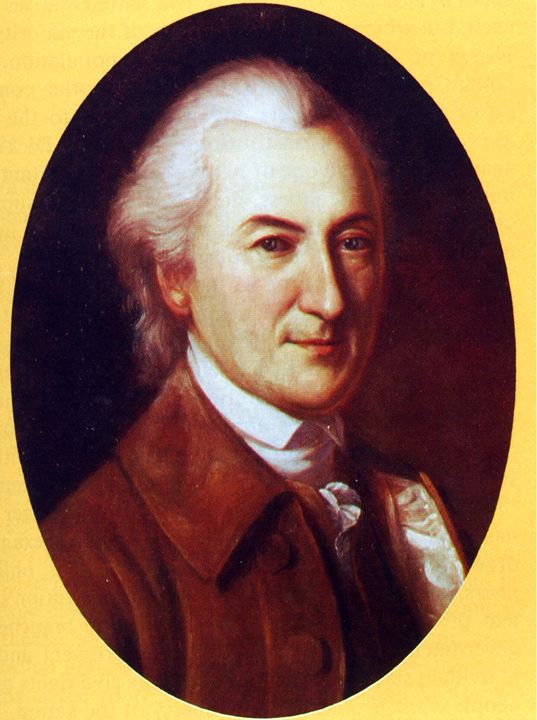

Summary
Letters from a Farmer in Pennsylvania is a series of twelve public letters that John Dickinson printed in the Pennsylvania Chronicle beginning with the issue of November 30–December 3, 1767, and continuing weekly into February 1768. Writing as a modest farmer settled near the Delaware River, a man of small estate, a good library and a contented mind, Dickinson addressed his countrymen in the British colonies about the measures Parliament had passed in 1767 under Charles Townshend. The first letter concerns the act suspending the New York assembly for failing to supply British troops as the Quartering Act required. Dickinson argues that if Parliament may punish one colony for refusing a burden, it may punish all, and he calls on the other colonies to support their sister province. The second letter turns to the duties on paper, glass, painters' colours and tea. Dickinson grants that Parliament may lawfully regulate the trade of the whole empire, but he points out that these duties were laid expressly to raise a revenue, and so are taxes in disguise. The third letter answers readers who feared his writing would inflame the public. He recommends petitions first, then economic pressure by withholding trade, and treats force as a last resort. The middle letters work through objections. Letter IV rejects the line between internal and external taxes that some had drawn after the Stamp Act. Letter V reviews more than a century and a half of imperial practice in which no statute had been passed solely to raise money from the colonies. Letter VI separates duties that regulate commerce from duties that raise revenue, and says the intention of a law decides which it is. Letter VII warns that small duties set great precedents and defines a free people by the constitutional checks under which they live. Letters VIII to X examine where the money was to go: to pay royal governors and judges, making them independent of the assemblies, and possibly to fund pensions and places as in Ireland. Letter XI urges a constant watchfulness over liberty, and Letter XII closes with a chain of principles, a plea for unity, and a verse from Deuteronomy on teaching such truths to children. The letters were reprinted in most American newspapers and as pamphlets in several American cities, in London with a preface by Benjamin Franklin, in Dublin, and in French. Boston's town meeting voted its thanks to the Farmer in March 1768. The library text is the 1903 Outlook Company reprint of the Boston edition, with R. T. H. Halsey's historical introduction and the addresses of thanks that followed.
Virtues in this work
- Prudence: Letter III sets out an ordered course of resistance, petitions first and force only at the last extremity.
- Justice: Dickinson grants Parliament its lawful power over trade while denying the power to tax, giving each authority its due.
- Fortitude: Letter XI calls for perpetual vigilance and Letter XII for firm opposition to the duties, even when submission would be easier.
- Friendship: Letter I asks Pennsylvania to stand by New York, since a wise man does not watch unconcerned while his neighbour's house burns.
Plot or Argument
- Letter I: the suspended assembly of New York
The Farmer introduces himself and his library, then turns to the act suspending New York's legislature. An order to furnish supplies is a tax with only the manner of raising it left to the colony, and punishing New York for refusing it threatens every colony. He asks Pennsylvania's assembly to petition for repeal and ends with the motto that small things grow great by concord.
- Letter II: regulation of trade versus revenue
Parliament may regulate the commerce of the empire, a power essential to the relation of mother country and colonies. But the Townshend duties on paper, glass and other British goods, which the colonies may buy only from Britain, are declared in their preamble to be for raising a revenue. That makes them taxes, and a new and dangerous precedent.
- Letter III: how to resist
Dickinson answers critics who called the first letters inflammatory. Opposition should begin with dutiful petitions, then proceed if necessary to withholding commerce; force belongs only to the last extremity. Liberty must be defended with sedate, firm and lawful conduct, and the colonists should address Britain as wronged children address a beloved parent.
- Letters IV–VI: answering the objections
Letter IV denies Parliament's power to lay any tax on the colonies and dismisses the distinction between internal and external taxes. Letter V appeals to the long record of imperial practice before George Grenville's ministry, in which no act was passed solely to raise money in America. Letter VI concedes that some regulations incidentally yield revenue, but argues that the declared purpose of a statute shows whether it is a regulation or a tax.
- Letter VII: small duties and great precedents
Written for readers too busy to follow political arguments, this letter warns that a light duty accepted now becomes a claim to unlimited taxation later. A free people is defined not by mild rule but by constitutional checks that prevent abuse, and those taxed without their consent are called slaves in the language of English liberty.
- Letters VIII–X: where the money goes
The revenue was to support the administration of justice and civil government in America. Dickinson argues that governors and judges paid by the crown, independent of the assemblies and holding office at pleasure, would supersede the colonists' own legislatures. Letter X points to Ireland, where pensions and places paid from local revenue served ministerial patronage.
- Letters XI–XII: vigilance, virtue and union
Letter XI asks for perpetual watchfulness over liberty, since encroachments advance by precedent. Letter XII traces lost liberty to the decay of public virtue, sets out a chain of principles linking happiness, freedom and property, quotes Deuteronomy 6:7 on teaching these truths to children, and calls for unanimity among the colonies, warning that slavery is ever preceded by sleep.
Characters
- The Farmer, narrator and persona
Dickinson's pseudonymous voice: a retired, contented farmer near the Delaware with a good library and a love of liberty, who writes from duty rather than ambition.
- Charles Townshend, minister responsible for the acts
Chancellor of the Exchequer whose 1767 revenue acts laid the duties that the letters oppose.
- George Grenville, earlier minister
Author of the Stamp Act of 1765, whose administration Letter V treats as the turning point in imperial taxation.
- The New York assembly, suspended legislature
The provincial legislature punished by Parliament for not fully complying with the Quartering Act, the subject of Letter I.
- John Hampden, historical example
The Englishman whose ship-money case over a few shillings Letter I recalls as a dispute in which all England took an interest.
Lessons
The purpose of a law tells you what it is
Dickinson concedes that Parliament may regulate the trade of the empire, and he does not quarrel with duties that serve that end. His argument is that the Townshend duties announce in their own preamble that they exist to raise a revenue. By reading the words of the statute closely, he shows that a measure called a duty can in fact be a tax.
- How does Letter II distinguish between regulating trade and raising a revenue?
- Why does Letter VI say the intention of a statute, rather than its effect, decides its character?
- Can you think of another case where the name of a measure differs from its real purpose?
Resistance with dignity
The Farmer is firm about rights and careful about means. Letter III sets out an order of action: petitions, then economic pressure, and force only at the very last. He believes a just cause can be harmed by turbulence and that calm, lawful conduct persuades friends abroad and keeps the colonists' own consciences clear.
- Why does Dickinson insist that liberty's cause is too dignified for tumult?
- What steps does Letter III recommend, and in what order?
- Is there a point at which patient petition becomes weakness? How would Dickinson answer?
Small precedents and the habit of vigilance
Dickinson asks readers to judge a measure by what it makes possible, not only by what it costs now. A small duty, once accepted, becomes a precedent for larger ones, so he calls for a perpetual jealousy over liberty. Letter VII's definition of a free people rests on constitutional checks rather than on the good intentions of rulers.
- Why does Dickinson think the smallness of the Townshend duties makes them more dangerous, not less?
- According to Letter VII, what makes a people free?
- How does Letter XI connect watchfulness with the structure of a mixed government?
The cause of one is the cause of all
From the first letter, Dickinson argues that the colonies stand or fall together. New York's suspended assembly matters to Pennsylvania because the same power could be turned on any province. His closing letter makes benevolence and unanimity among the colonies a condition of preserving their rights.
- What image does Letter I use to show why one colony should care about another's trouble?
- Why does Letter XII treat disunity as the greatest danger?
- How does the Farmer's appeal to union anticipate later cooperation among the colonies?
Context
After the repeal of the Stamp Act in 1766, Parliament passed the Declaratory Act affirming its authority over the colonies in all cases whatsoever. In 1767 Charles Townshend secured the Revenue Act laying duties on glass, lead, painters' colours, paper and tea imported into America, with the proceeds to support civil government and the administration of justice there, along with an act suspending the New York assembly. Dickinson, a Philadelphia lawyer trained at the Middle Temple, answered with an argument grounded in the British constitution and English history, addressed to loyal subjects of the king.
Composition
The twelve letters appeared weekly in William Goddard's Pennsylvania Chronicle from the issue of November 30–December 3, 1767, into February 1768, signed only A Farmer. They were collected in pamphlet editions in Philadelphia, New York, Boston and Williamsburg in 1768, in London with a preface by Benjamin Franklin, in Dublin, and in a French translation. The library text is the 1903 Outlook Company reprint of the Boston edition published by Mein and Fleeming, with an historical introduction by R. T. H. Halsey and the addresses of thanks from Boston and other bodies.
Reception
The letters were the most widely read American political writing before Thomas Paine's Common Sense. Town meetings and assemblies passed resolutions of thanks, and Boston's town meeting of March 22, 1768, saluted the Farmer as a friend of Americans. Their argument fed the non-importation agreements of 1768–1770, and Dickinson's Liberty Song of 1768 carried the same spirit into verse. In 1776 Dickinson judged independence premature and stood apart from the Declaration, yet he went on to draft the first version of the Articles of Confederation and to sign the Constitution. Historians have read the letters both as the classic statement of the American case on taxation and as an example of Dickinson's lifelong preference for lawful, measured opposition.
Comparisons
- the-founding-documents
The Declaration of Independence lists taxes imposed without consent and judges dependent on the king's will among its grievances; both had been argued in detail by Letters VII and IX nine years earlier, though Dickinson himself declined to sign the Declaration.
- articles-of-confederation
Dickinson chaired the committee that prepared the first draft of the Articles in 1776; the union of colonies he urged in Letters I and XII took its first written constitutional form there.
- common-sense-rights-of-man-and-other-writings
Paine in 1776 mocks the language of a parent country and calls for separation; Dickinson in 1767 addresses Britain as a beloved parent and seeks redress within the empire, the two most widely read American pamphlets taking opposite views of reconciliation.
- commentaries-on-the-laws-of-england
Blackstone, writing in 1765, places the American plantations under the control of Parliament; Dickinson, also trained at the Inns of Court, uses the same English constitutional tradition to argue that consent to taxation belongs to the provincial assemblies.
- second-treatise-of-government
Locke's teaching that the supreme power cannot take any part of a man's property without his consent lies behind Letter XII's chain of principles linking freedom, security of property and consent.
- the-wealth-of-nations
Smith in Book IV examines the system by which Britain regulated the trade of its American colonies for its own advantage; Dickinson accepts that system as lawful while denying Parliament's right to tax, a distinction Smith's economic analysis approaches from another side.
Quotes
“He certainly is not a wise man, who folds his arms and reposeth himself at home, seeing with unconcern the flames that have invaded his neighbour's house, without any endeavours to extinguish them.”
“The cause of liberty is a cause of too much dignity, to be sullied by turbulence and tumult.”
“Let us behave like dutiful children, who have received unmerited blows from a beloved parent.”
“Those who are taxed without their own consent, given by themselves, or their representatives, are slaves.”
“For who are a free people? not those over whom government is reasonably and equitably exercised”
“A perpetual jealousy respecting liberty, is absolutely requisite in all free states.”
“Some states have lost their liberty by particular accidents; but this calamity is generally owing to the decay of virtue.”
“Let these truths be indelibly impressed on our minds--that we cannot be happy without being free--that we cannot be free without being secure in our property--that we cannot be secure in our property, if, without our consent, others may, as by right, take it away”
For Students
A reading companion for classical Christian high school students. See the student guide.
Reading Guide
Watch for
- The Farmer's self-portrait at the start of Letter I, and how his modest, contented persona supports the authority of what follows.
- Letter II's concession that Parliament may regulate trade, and the exact point at which Dickinson says regulation becomes taxation.
- The order of resistance in Letter III: petition, withholding of commerce, and force only at the last.
- The definition of a free people in Letter VII and the warning about precedents in Letter XI.
- The chain of linked principles in Letter XII and the verse from Deuteronomy that follows it.
Key terms and names
- Townshend Acts
- Measures of 1767 sponsored by Charles Townshend, including duties on glass, lead, painters' colours, paper and tea and the act suspending the New York assembly; they are the occasion of all twelve letters.
- Regulation of trade
- Parliament's acknowledged power to direct the commerce of the whole empire. Dickinson accepts it and distinguishes it from laying duties for revenue.
- Internal and external taxes
- A distinction some made after the Stamp Act, treating duties on imports as permissible. Letter IV rejects it and denies Parliament any power to tax the colonies.
- Suspending act
- The 1767 act barring the New York assembly from legislating until it complied with the Quartering Act; Letter I treats it as an attack on every colony's legislature.
- Civil list
- Salaries for royal governors and judges. Letters VIII and IX argue that paying them from the new revenue would make them independent of the provincial assemblies.
- Precedent
- A first act that justifies later ones. Dickinson repeatedly warns that a small duty, once accepted, would establish a right to unlimited taxation.
Seminar Questions
- Comprehension What act of Parliament does Letter I discuss, and why does the Farmer think Pennsylvania should care about it?
- Comprehension In Letter II, what power does Dickinson grant to Parliament, and what power does he deny?
- Comprehension According to Letters VIII and IX, how was the revenue from the duties to be spent, and why did Dickinson object?
- Interpretation Why might Dickinson have chosen to write as a retired farmer rather than as a Philadelphia lawyer? What does the persona add to the argument?
- Interpretation Letter III compares the colonists to dutiful children struck by a beloved parent. What does this image allow Dickinson to say, and what does it keep him from saying?
- Interpretation Letter XII begins by tracing lost liberty to the decay of virtue. How does that opening change the meaning of the legal arguments in the earlier letters?
- Big Question Is it wiser to resist a small wrong at once because of the precedent it sets, or to wait until a wrong is large enough that everyone can see it?
- Big Question Can a government that rules mildly still leave its people unfree? What does Dickinson's answer in Letter VII suggest?
Faith Connections
- Deuteronomy 6:6-7 (Scripture)
Dickinson quotes verse 7 in Letter XII, applying the command to teach God's words diligently to children to the principles of liberty he has just listed, so that the next generation would hold them as a settled inheritance.
- Romans 13:1-7 (Scripture)
Paul tells Christians to be subject to the governing authorities and to render tribute to whom tribute is due. Dickinson writes as a loyal subject of the king and never denies the duty of obedience; his question is which body has the lawful right to lay the tribute, and readers can weigh how his argument stands beside Paul's teaching.
- Augustine, City of God IV.4 (Great Conversation)
In this chapter Augustine likens a kingdom stripped of justice to a band of robbers on a large scale. Letter XII's principle that property taken without consent is not secure rests on a similar conviction that lawful authority differs from mere power.
Logic and Rhetoric
Central argument: Parliament may regulate the trade of the empire, but taxes may be laid only with the consent of the taxed or their representatives. The Townshend duties are declared in their preamble to be for raising a revenue, so they are taxes, not regulations. The colonists are not represented in Parliament, so these taxes are laid without their consent. A people taxed without consent cannot be secure in their property, and a people insecure in property is not free. Therefore the duties must be opposed, firmly but lawfully, by all the colonies together, before they become a precedent.
Rhetorical device: climax (gradatio). Letter XII builds a chain in which each clause takes up the last word of the one before: happiness requires freedom, freedom requires security in property, security requires consent (quote 7). The linked steps make the conclusion feel inevitable.
Debate: Resolved: That a small tax laid without consent is as dangerous to liberty as a large one.
Memory Work
The cause of liberty is a cause of too much dignity, to be sullied by turbulence and tumult.
Some states have lost their liberty by particular accidents; but this calamity is generally owing to the decay of virtue.
Writing Prompts
Essay: Dickinson insists that liberty must be defended without turbulence and that force is a last resort, yet he also says those taxed without consent are slaves. Using Letters III, VII and XII, explain how he holds firmness and restraint together, and evaluate whether his plan of resistance was consistent.
Comparison with Common Sense, Rights of Man, The Age of Reason, and The American Crisis: Compare the Farmer's appeal to Britain as a beloved parent with Paine's treatment of the parent-country image in Common Sense eight years later. What had changed in the colonists' situation, and what had changed in the argument?
Medical Lens
The letters have no medical subject. Their bodily images are political metaphors: Letter IX says the ax is laid to the root of the tree and the whole body must perish, and Letter XII warns that a speck of decay on a remote limb should alarm the whole body and compares British restrictions to the spear of Telephus, which could heal the wound it made. These belong to the long tradition of the body politic rather than to the medicine of the period.
Creative Prompts
- Essay
Letter II accepts Parliament's right to regulate trade but denies its right to tax. Explain the distinction in your own words and test it against a modern duty or fee of your choosing.
- Dialogue
Write a conversation in a Philadelphia coffeehouse in January 1768 between a reader who agrees with the Farmer and a merchant who thinks a duty on paper and glass is too small to quarrel over. Let each use arguments from Letters IV and VII.
- Classroom
Map the twelve letters on a timeline beside the Townshend Acts, the Massachusetts Circular Letter and the non-importation agreements, and mark which letter each event most closely answers.
- Fiction
Imagine a young apprentice who reads the Farmer's first letter aloud to a village gathering. Tell the story of how the listeners respond and what they decide to do.
Further Reading
- Empire and Nation: Letters from a Farmer in Pennsylvania (John Dickinson); Letters from the Federal Farmer (Richard Henry Lee), Forrest McDonald (ed.)
Pairs Dickinson's letters with a later Anti-Federalist series under a similar pen name.
- John Dickinson: Conservative Revolutionary, Milton E. Flower
- Quaker Constitutionalism and the Political Thought of John Dickinson, Jane E. Calvert
Reads Dickinson's political thought in light of the Quaker tradition of his family.
- The Ideological Origins of the American Revolution, Bernard Bailyn
Places the pamphlet literature of the 1760s and 1770s, including the Farmer's letters, in its intellectual setting.
- The Stamp Act Crisis: Prologue to Revolution, Edmund S. Morgan and Helen M. Morgan
The controversy that preceded the Townshend Acts and shaped Dickinson's arguments.
Verification notes
Publication dates, the Chronicle's first issue date, the list of early editions (including Franklin's London preface and the French translation) and Boston's vote of thanks of March 22, 1768 are confirmed by Halsey's introduction and the addresses printed in the library text. Letter-by-letter contents were checked against the opening of each letter in the stored text. All eight quotations were found by search in content/texts/letters-from-a-farmer-in-pennsylvania.txt and copied exactly, including the 1768 spelling and the double hyphens of Letter XII; passages with italic markers in the transcription were avoided. Biographical facts in authorBio are standard.
- The exact issue date of the twelfth letter in the Pennsylvania Chronicle (February 1768).
- The claim that the letters were reprinted in all but a few American newspapers; Halsey says almost all.