Work record
The Jungle Book
1894 · 19th Century · Short Stories · English
Abstract
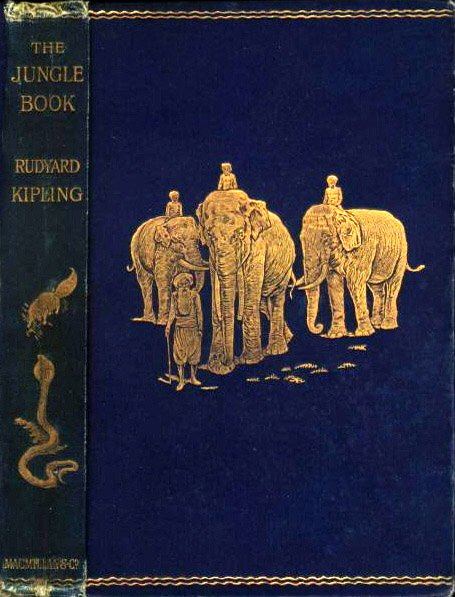
Background. Kipling, who spent his early childhood in Bombay and his first working years in the Punjab, composed these tales in a Vermont winter after his marriage. Most were printed singly in periodicals before Macmillan gathered them, with drawings by his father among others.
Content. Three linked tales trace Mowgli from foundling in a wolf den to exile from both Pack and village: his adoption at the Council Rock, his kidnapping by the Bandar-log and rescue by Kaa, and his triumph over Shere Khan in a buffalo stampede. Four further tales move outward, to a fur seal in Arctic waters, a mongoose battling cobras in a garden, a boy carried by night to an elephant gathering, and army beasts talking shop before a parade.
Form. Each story closes with a poem, a hunting-song, chant, lullaby or march, so that verse frames the prose throughout and the animals' own voices close each tale.
Themes. Law and obedience, loyalty among unlike creatures, the loneliness of one who belongs to two peoples, and courage proportioned to duty rather than size.
Significance. Among the most widely read animal books in English, the Mowgli cycle shaped the Wolf Cub movement within Scouting and has inspired many films, while the mongoose tale is a staple of school readers.
Main characters
- Mowgli: Human boy brought up by the Seeonee wolves
- Baloo: Bear who teaches the Law and the Master Words
- Bagheera: Black panther who paid a bull for Mowgli's life
- Shere Khan: Lame tiger, Mowgli's sworn enemy
- Akela: Gray leader of the wolf Pack
- Kaa: Ancient python feared by the monkey people
- Kotick: White seal seeking a refuge for his kind
- Rikki-tikki-tavi: Mongoose who guards an English bungalow
- Nagaina: Cobra queen of the garden
- Little Toomai: Mahout's son who sees the elephants dance

Summary
The Jungle Book is a collection of seven animal stories, each followed by a song or poem. The first three tell of Mowgli, a man's cub raised by wolves in the Seeonee hills of central India. In Mowgli's Brothers, a baby strays from a woodcutters' camp into the cave of Father and Mother Wolf after the lame tiger Shere Khan has bungled his attack on the camp. Mother Wolf, whom Mowgli later calls Raksha the Demon, defies the tiger and keeps the child. At the Council Rock, where the old leader Akela presides over the Pack, Baloo the brown bear speaks for the cub, and Bagheera the black panther buys his life with a freshly killed bull. Ten years on, as Akela grows old and the young wolves listen to Shere Khan, Bagheera sends Mowgli to steal fire, the Red Flower, from a village. When Akela misses his kill and the Pack turns on him, Mowgli drives off Shere Khan and the rebels with a burning branch, weeps for the first time, and goes down to live among men. Kaa's Hunting steps back to Mowgli's schooling under Baloo, who teaches him the Law of the Jungle and the Master Words of each people. The lawless Bandar-log, the monkey people, carry him off to the Cold Lairs, a ruined city; Baloo and Bagheera enlist Kaa, the great rock python, who scatters the monkeys and then holds them helpless with his hunger dance. In Tiger! Tiger! Mowgli is taken in by Messua, a village woman who believes he may be her lost son, and herds the village buffalo. Warned by Gray Brother, he traps Shere Khan in a ravine between two charging herds and kills him, but the hunter Buldeo calls him a sorcerer and the villagers drive him out with stones. He spreads the tiger's hide on the Council Rock and resolves to hunt alone with his four wolf brothers. The remaining stories leave Mowgli. The White Seal follows Kotick, a white fur seal of Novastoshnah in the Bering Sea, who sees the yearly killing of young seals and searches the oceans until the Sea Cow leads him to an untouched beach, then fights his own people to make them follow him there. Rikki-Tikki-Tavi tells how a young mongoose, adopted by an English family in Segowlee cantonment, defends the boy Teddy against the cobras Nag and Nagaina. In Toomai of the Elephants, a ten-year-old elephant driver's son rides the great elephant Kala Nag by night into the Garo hills and sees the elephants dance. Her Majesty's Servants overhears camels, mules, horses, bullocks and elephants arguing in a rain-soaked camp at Rawal Pindi before a review for the Amir of Afghanistan. The stories appeared in magazines in 1893-94 and were collected by Macmillan in 1894; The Second Jungle Book followed in 1895.
Virtues in this work
- Fortitude: Rikki-tikki goes alone into the dark bathroom and holds on to Nag's head until the cobra is killed.
- Friendship: Baloo, Bagheera and Kaa set aside their own fears and quarrels to rescue Mowgli from the Cold Lairs.
- Hope: Kotick searches the oceans for five seasons for a beach where no men come, though every seal tells him it does not exist.
- Honor: Mowgli keeps his word to the Pack by bringing Shere Khan's hide to the Council Rock.
Plot or Argument
- Mowgli's Brothers and Hunting-Song of the Seeonee Pack
Mother Wolf adopts the man-cub Mowgli; Baloo and Bagheera win him a place in the Pack; years later he brings the Red Flower to the Council Rock, rescues Akela, routs Shere Khan, and leaves the jungle in tears.
- Kaa's Hunting and Road-Song of the Bandar-Log
Baloo teaches Mowgli the Law and the Master Words; the Bandar-log kidnap him to the Cold Lairs; Chil the kite carries word, and Kaa, Baloo and Bagheera rescue him.
- Tiger! Tiger! and Mowgli's Song
Mowgli lives with Messua in the village, herds buffalo, and with Gray Brother and Akela kills Shere Khan in a stampede; cast out as a sorcerer, he lays the hide on the Council Rock and sings of his divided heart.
- The White Seal and Lukannon
Kotick, a white fur seal, witnesses the slaughter of the holluschickie, searches five seasons for a safe beach, follows the Sea Cow to a hidden island, and wins his people by combat.
- Rikki-Tikki-Tavi and Darzee's Chant
A mongoose washed out of his burrow by a flood is adopted by Teddy's family and kills Karait, Nag and finally Nagaina in her hole, keeping the garden safe.
- Toomai of the Elephants and Shiv and the Grasshopper
Little Toomai, laughed at for wanting to see the elephants dance, is carried by Kala Nag to the secret dancing-ground and earns the name Toomai of the Elephants from the hunters.
- Her Majesty's Servants and Parade Song of the Camp Animals
On a wet night in camp the troop-horse, Billy the mule, a camel, the gun bullocks and Two Tails the elephant compare their work and fears; next day they march in the review before the Viceroy and the Amir.
Characters
- Mowgli, the man-cub
A boy raised by wolves who learns the Law of the Jungle and finds himself rejected by both wolves and men.
- Baloo, brown bear, teacher of the Law
A patient, sleepy teacher who speaks for Mowgli at the Council and drills him in the Master Words.
- Bagheera, black panther
Cunning, brave and fond of Mowgli; he buys the cub into the Pack and tells him to fetch the Red Flower.
- Shere Khan, lame tiger
A boastful man-eater who claims Mowgli as his prey and stirs the young wolves to rebellion.
- Akela, Lone Wolf, leader of the Pack
The great gray leader who loses his place when he misses his kill and is saved by Mowgli.
- Kaa, rock python
An ancient, enormous snake whom even Baloo and Bagheera fear; he rescues Mowgli from the Bandar-log.
- Messua, village woman
Takes Mowgli in, thinking he may be the son a tiger carried off.
- Kotick, white fur seal
A questioning young seal who refuses to accept the slaughter of his people and finds them a safe home.
- Rikki-tikki-tavi, mongoose
A curious, fearless young mongoose who protects his human family from cobras.
- Nag and Nagaina, cobras
A pair of black cobras who plot to kill the family so their young can rule the garden.
- Little Toomai, elephant driver's son
A ten-year-old boy who loves the elephants and witnesses what no hunter has seen.
- Kala Nag, elephant
Black Snake, an old government elephant who has served the Toomai family for generations.
Lessons
Living under a Law
Baloo teaches Mowgli that the jungle is not lawless: hunters must give warning, must not kill man, and must keep faith in the Pack. The Bandar-log, who boast but have no law and forget everything, show what happens to a people without one. Kipling's jungle prizes obedience, training and duty as the ground of freedom.
- Why does Baloo beat Mowgli, gently, when he forgets his lessons?
- What makes the monkey people dangerous even though they are not strong?
- Why does the Law of the Jungle forbid killing man?
Belonging to two worlds
Mowgli is cast out by the young wolves because he is a man and by the villagers because he talks with wolves. His tears at the end of the first story show that he is truly human, and his song in Tiger! Tiger! says that his heart is heavy with things he does not understand. The stories treat the pain of not fitting anywhere honestly and with sympathy.
- What does Bagheera mean when he tells Mowgli his tears are only tears such as men use?
- Why do the villagers turn against Mowgli after he kills Shere Khan?
- Who are Mowgli's true friends in each world?
Courage in small bodies
Rikki-tikki fights two cobras far larger than himself, and Little Toomai goes where grown hunters have never been. Kipling admires courage joined to training and quick wits, not mere size.
- What does Rikki-tikki do before he fights Nag in the bathroom, and why?
- Why does the old joke about the elephants dancing make Little Toomai's night so important?
One who looks for a better way
Kotick is the only seal who asks questions about the killing and keeps searching for an answer when the others laugh at him. When he finally finds the safe beach, he has to fight before his own people will listen. The story honors persistence in a good cause.
- Why do the older seals ignore Kotick's warnings?
- Was Kotick right to fight his own people to make them follow him?
- How does the Sea Cow help Kotick even though it never speaks?
Context
The Mowgli stories and Rikki-Tikki-Tavi are set in British India of the late nineteenth century: Mowgli's jungle lies in the Seeonee (Seoni) hills of the Central Provinces, Rikki-tikki's bungalow is in an army cantonment, Toomai's elephants work for the government elephant-catching service, and Her Majesty's Servants describes a review held for the Amir of Afghanistan at Rawalpindi, an event modeled on the Amir Abdur Rahman's visit of 1885. The White Seal reflects the international dispute of the 1880s and 1890s over the killing of fur seals in the Bering Sea, around the Pribilof Islands.
Composition
Kipling wrote the stories at Naulakha, his house near Brattleboro, Vermont, between 1892 and 1894. Most appeared first in magazines, including St. Nicholas and The Pall Mall Magazine, before Macmillan published the collection in London and New York in 1894, with illustrations by John Lockwood Kipling (the author's father), W. H. Drake and P. Frenzeny. He had already written a story about Mowgli as a grown man working for the forest service, In the Rukh, collected in Many Inventions (1893).
Reception
The book was an immediate success, followed by The Second Jungle Book in 1895. Robert Baden-Powell drew on the Mowgli stories in 1916 to organize the Wolf Cub section of the Scout movement, with leaders called Akela and Baloo. The stories have been adapted many times, including the 1942 film produced by Alexander Korda and Disney's animated film of 1967, and Rikki-Tikki-Tavi became a standard school anthology piece.
Comparisons
- the-call-of-the-wild
Buck goes from the human world to the wolf pack while Mowgli goes from the wolf pack to the human world; both stories make the law of club and fang or the Law of the Jungle a moral education.
- the-wind-in-the-willows
Both books give animals speech and manners, but Grahame's river bank is a comfortable English society while Kipling's jungle is governed by hunger, danger and strict Law.
- aesops-fables
Kipling inherits the fable's speaking animals with fixed characters, but expands them into long adventures with growth and inner conflict.
- watership-down
Kotick searching for a safe island for the seals anticipates Hazel's search for a safe warren, and both authors give their animals a law, a language and a lore.
- captains-courageous
Kipling's later novel puts a spoiled boy among Gloucester fishermen as Mowgli is put among wolves: both learn manhood through work, obedience and the respect of a community.
- robinson-crusoe
Mowgli and Crusoe both live apart from society and master a wild place, but Crusoe brings his civilization with him while Mowgli is formed by the jungle.
Quotes
Frequently cited
“That is only tears such as men use”
Frequently cited
“We be of one blood, ye and I”
Frequently cited
“It is the hardest thing in the world to frighten a mongoose, because he is eaten up from nose to tail with curiosity.”
“And what is a man that he should not run with his brothers?”
“Look well, O Wolves. Have I kept my word?”
“I am the only white seal that has ever been born on the beaches, and I am the only seal, black or white, who ever thought of looking for new islands.”
“no man has ever seen the elephants dance”
“If you don’t trust your man, you may as well run away at once.”
For Students
A reading companion for classical Christian high school students. See the student guide.
Reading Guide
Watch for
- The meeting at the Council Rock in Mowgli's Brothers, when two voices must speak for the man-cub and a bull is paid for his life.
- The Master Words Baloo teaches Mowgli in Kaa's Hunting, and the moment one of them saves him.
- How the Bandar-log talk about themselves and how quickly they forget what they were doing.
- Rikki-tikki's careful planning before each fight with the cobras.
- The night ride of Little Toomai on Kala Nag, and what he sees in the clearing.
Key terms and names
- Law of the Jungle
- The rules Baloo teaches the young wolves and Mowgli, such as hunting fairly, keeping faith with the Pack and never killing man.
- Council Rock
- The hilltop where the Seeonee wolf Pack meets under Akela to look over new cubs and settle disputes.
- Red Flower
- The jungle's name for fire, which every animal fears and which Mowgli carries to the Council.
- Bandar-log
- The monkey people, who chatter, boast and have no Law and no leader.
- Master Words
- Greetings that tell each people of the jungle, birds, snakes or hunters, that the speaker is a friend.
- Cold Lairs
- A ruined, overgrown city of kings where the monkeys take Mowgli.
- Holluschickie
- The bachelor young seals of Novastoshnah, the ones the men drive off and kill each year.
Seminar Questions
- Comprehension How does Mowgli come to live with the wolves, and who speaks for him at the Council Rock?
- Comprehension Why do the monkeys carry Mowgli away, and how do Baloo, Bagheera and Kaa rescue him?
- Comprehension How does Rikki-tikki save Teddy's family from Nag and Nagaina?
- Interpretation Why do you think Kipling made the monkeys, who have no Law, the most foolish people in the jungle?
- Interpretation Mowgli is sent away by the wolves and then by the villagers. Is it fair? How does he feel each time?
- Interpretation Kotick and Little Toomai both do something no one else has done. What helps each of them succeed?
- Big Question Why do good rules make us free instead of less free?
Faith Connections
- Psalm 119:105 (Scripture)
Thy word is a lamp unto my feet, and a light unto my path. Mowgli survives because he has learned the Law and the Master Words by heart, the way the psalmist treasures God's law.
- Proverbs 6:6-8 (Scripture)
Go to the ant, thou sluggard; consider her ways, and be wise. Scripture, like Kipling, teaches lessons through animals, and Baloo's patient schooling echoes Proverbs' call to learn wisdom early.
- Genesis 2:19-20 (Scripture)
Adam names the beasts. Mowgli's mastery of the jungle peoples' words recalls the human calling to know and order the animal world.
Logic and Rhetoric
Central argument: The jungle has a Law that keeps its peoples alive; the Bandar-log, who refuse every law, are silly and dangerous. Mowgli survives every peril because he learned the Law and the Master Words from Baloo. Therefore true freedom comes through obedience and training, not through doing whatever one likes.
Rhetorical device: archaic diction. The animals speak in thee, thou and ye, as in the Master Word We be of one blood, ye and I (quote 2), giving the jungle the solemn sound of an old law code.
Debate: Resolved: that Mowgli belongs more to the jungle than to the village.
Memory Work
We be of one blood, ye and I
It is the hardest thing in the world to frighten a mongoose, because he is eaten up from nose to tail with curiosity.
Writing Prompts
Essay: The narrator of Mowgli's Brothers says the Law of the Jungle never orders anything without a reason. Choose two rules of the Law from the Mowgli stories and explain the reason behind each one.
Comparison with The Wind in the Willows: Compare Mowgli's jungle with Mole and Rat's river bank. Which is the better place to grow up, and what does each animal world teach its young?
Medical Lens
A children's animal book with a few points of interest for a medical reader. The opening pages describe the jackal Tabaqui and note that a jackal seized by dewanee, the madness, is feared by every animal; Kipling's narrator glosses it as hydrophobia, the period's name for rabies, a disease familiar and dreaded in nineteenth-century India. In Kaa's Hunting the python's hunger dance holds the monkeys, and very nearly Baloo and Bagheera, in a helpless trance, a literary picture of fascination or mesmerism as the 1890s imagined it. Mowgli's first tears, which he takes for dying, make a gentle scene about the bodily expression of grief. These are incidental details, not medical themes.
- Mowgli's Brothers, opening
Father Wolf and the narrator explain that a jackal with dewanee, hydrophobia, is the most feared creature in the jungle.
- Kaa's Hunting, at the Cold Lairs
Kaa's hunger dance in the moonlight entrances the Bandar-log, who walk toward him against their will.
- Mowgli's Brothers, ending
Mowgli sobs for the first time and asks Bagheera whether he is dying.
Listen to the book
Public-domain audiobook from LibriVox, read by Phil Chenevert. Recording: Jungle Book (Version 2) on LibriVox (Internet Archive).
LibriVox recordings are volunteer readings released into the public domain. The reading may follow a different edition from the text in this library.
Creative Prompts
- Classroom
Draw a map of Mowgli's jungle with the Council Rock, the Waingunga River, the Cold Lairs, the village and the ravine where Shere Khan dies, and mark each story's key event.
- Fiction
Write a new Master Word that Baloo might teach Mowgli for a creature not in the book, and tell the story of the day Mowgli needs it.
- Dialogue
Write the conversation between Messua and Mowgli on his last night in the village.
- Essay
Compare Rikki-tikki and Little Toomai: what makes each one brave, and who helps them?
Further Reading
- The Second Jungle Book, Rudyard Kipling
- Just So Stories, Rudyard Kipling
- Kim, Rudyard Kipling
- Something of Myself, Rudyard Kipling
Kipling's autobiography, published posthumously in 1937, with an account of writing the Jungle Books in Vermont.
- Rudyard Kipling: His Life and Work, Charles Carrington
Verification notes
The contents, characters and order of stories follow the attached Gutenberg text of the 1894 collection. Composition at Naulakha, Macmillan publication in 1894, the Second Jungle Book in 1895, the Nobel Prize of 1907, and Baden-Powell's use of the stories for the Wolf Cubs are well established. All eight quotes were found verbatim in content/texts/the-jungle-book.txt.
- The illustrators of the first edition (John Lockwood Kipling, W. H. Drake, P. Frenzeny) and the magazines in which individual stories first appeared.
- That the review in Her Majesty's Servants is modeled on Abdur Rahman's 1885 visit to Rawalpindi.
- The year Baden-Powell launched the Wolf Cubs on the Jungle Book model (usually given as 1916).