Work record
The Virginia and Kentucky Resolutions
1798-1799 · 18th Century · Political Theory · English
Abstract
Background. Amid fears of French invasion and domestic subversion, Congress in summer 1798 empowered the President to expel foreigners and made seditious libel a federal crime. Two Republican leaders, unable to stop the laws in Congress or the courts, quietly supplied protests to friendly legislatures in Frankfort and Richmond.
Content. Kentucky's nine articles treat the Union as a league formed by the states for limited ends, reject unlimited submission, and pronounce the statutes void, chiefly for violating the press guarantee and the jury rights of foreigners. Virginia's eight briefer paragraphs pledge loyalty, describe a duty of the states to interpose, and invite concerted declarations. Kentucky's rejoinder of 1799 introduces the term nullification, yet still undertakes to obey federal law while objecting by lawful means.
Themes. At issue are the authority to interpret a written charter, the guarding of open political criticism, suspicion of officeholders as a republican habit, and the boundary between principled protest and disunion.
Significance. No other legislature endorsed them, but Madison's Report of 1800 and Jefferson's victory that year turned them into Republican doctrine. South Carolinians invoked them during the tariff crisis of the early 1830s, prompting the aged Madison to deny that one state could lawfully annul a federal statute, and they remain central texts in debates on American federalism.
Key figures
- James Madison: Anonymous drafter of Virginia's protest, later its defender in 1800
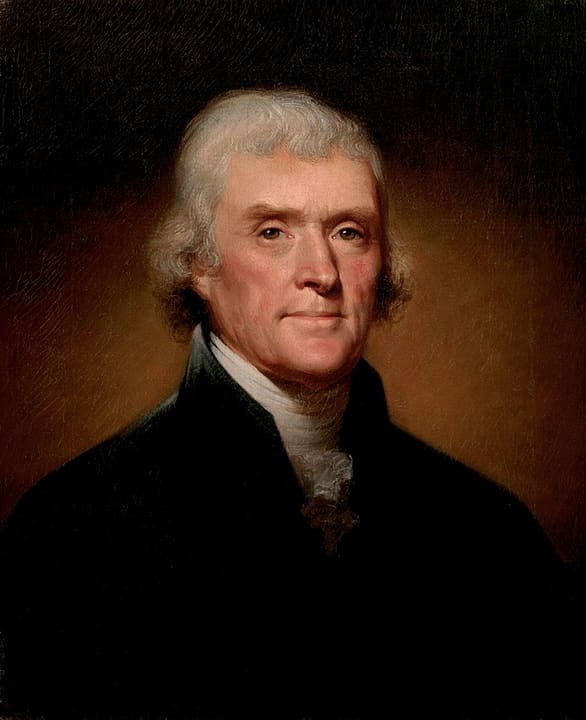
- Thomas Jefferson: Sitting Vice President who secretly wrote Kentucky's first set
- John Breckinridge: Kentucky lawmaker who sponsored and softened Jefferson's draft
- John Taylor of Caroline: Sponsor of the Virginia text in Richmond
- John Adams: Federalist President who approved the contested statutes

Summary
The Virginia and Kentucky Resolutions were the state legislatures' protests against the Alien and Sedition Acts, passed by a Federalist Congress and signed by President John Adams in June and July 1798 during the undeclared naval war with France. The Alien Friends Act let the President order dangerous aliens out of the country without trial; the Sedition Act made it a crime to publish false, scandalous and malicious writing against the government, Congress or the President. Vice President Thomas Jefferson and his ally James Madison regarded both acts as beyond the powers granted by the Constitution and the Sedition Act as a violation of the First Amendment. Each drafted resolutions in secret, and their authorship was not acknowledged publicly for years. Jefferson's draft reached the Kentucky legislature through Wilson Cary Nicholas and John Breckinridge, who introduced a revised version; the Kentucky House passed it on 10 November 1798 and the Senate concurred on 13 November. Its nine resolutions argue that the states formed the Constitution as a compact for special purposes, delegating certain powers and reserving the rest; that the general government is not the final judge of its own powers, so each party to the compact may judge infractions and the mode of redress; and that the Sedition Act, the Alien Friends Act and an act on crimes against the federal government exceed those powers and are void. The ninth resolution asks the other states to join in declaring the acts void and warns that confidence in rulers is the parent of despotism, while free government is founded in jealousy. Breckinridge's text left out the word nullification that Jefferson's draft had used. Madison's Virginia Resolutions, introduced by John Taylor of Caroline and agreed to by the Virginia Senate on 24 December 1798, are shorter and more measured. They affirm attachment to the Union and the Constitution, describe federal powers as resulting from a compact among the states, and declare that the states have the right and duty to interpose against a deliberate, palpable and dangerous exercise of powers not granted. They protest the two acts, defend free examination of public men and measures as the guardian of every other right, and invite the other states to join Virginia in declaring the acts unconstitutional. Several northern legislatures replied that the federal courts, not the states, should decide such questions. In November 1799 Kentucky answered with a further resolution, also in the library text, declaring that nullification by the states is the rightful remedy for unauthorized acts while promising to bow to the laws of the Union and oppose them only in a constitutional manner. Madison defended Virginia's position in his Report of 1800.
Virtues in this work
- Prudence: Kentucky's ninth resolution counsels watchfulness over power, binding even trusted rulers with the chains of the Constitution.
- Justice: Kentucky's sixth resolution insists that no person under the protection of the laws be removed on the President's suspicion without jury, public trial, confrontation of witnesses or counsel.
- Fortitude: Both legislatures protested a federal law in the face of prosecutions of critics under the Sedition Act, while pledging their attachment to the Union.
Plot or Argument
- Virginia Resolutions 1-2: loyalty to the Constitution and the Union
The General Assembly resolves to defend the Constitution of the United States and Virginia's own constitution against every aggression, and declares a warm attachment to the Union, pledging all its powers to maintain it.
- Virginia Resolutions 3-4: compact and interposition
Federal powers result from a compact to which the states are parties and are limited by the plain sense of the instrument; in a deliberate, palpable and dangerous exercise of ungranted powers the states may and must interpose. The Assembly regrets efforts to enlarge federal power by forced construction, which tend toward consolidating the states into one sovereignty and a monarchy.
- Virginia Resolutions 5-8: the protest and the appeal
The Assembly protests the Alien Act as exercising undelegated power and the Sedition Act as a power expressly forbidden by the First Amendment; recalls Virginia's ratifying convention's declaration on liberty of conscience and the press; appeals to the other states to declare the acts unconstitutional; and directs the governor to send the resolutions to every state and to Virginia's members of Congress.
- Kentucky Resolutions of 1798, 1-3: the compact and the reserved powers
The states are not united on the principle of unlimited submission; the Constitution is a compact for special purposes; the general government is not the final judge of its powers. Congress may punish only the few crimes the Constitution names, and since the powers over speech and the press were not delegated, the Sedition Act is void.
- Kentucky Resolutions of 1798, 4-6: aliens and trial by jury
Alien friends are under the jurisdiction of the states where they live; the Constitution's protection of the migration of persons until 1808 forbids the Alien Act; removing a person on the President's suspicion without jury, public trial or counsel violates the Fifth and Sixth Amendments and transfers judicial power to the executive.
- Kentucky Resolutions of 1798, 7-9: construction, transmission and the appeal to the co-states
Kentucky objects to broad construction of the general-welfare and necessary-and-proper clauses, instructs its members of Congress to seek repeal, and asks the other states to declare the acts void, warning that confidence in rulers breeds despotism and that the Constitution must bind those trusted with power.
- Kentucky Resolution of 1799: reply to the states
Having considered the other states' answers, Kentucky reaffirms its attachment to the Union and its view of the compact, declares that nullification by the sovereign states of unauthorized acts is the rightful remedy, enters its solemn protest against the acts, and promises to bow to the laws while opposing them in a constitutional manner.
Characters
- James Madison, author of the Virginia Resolutions
Former congressman living at Montpelier who drafted the Virginia text in 1798 and the Report of 1800.
- Thomas Jefferson, author of the Kentucky Resolutions of 1798
Vice President who drafted the Kentucky text secretly in the autumn of 1798.
- John Breckinridge, Kentucky legislator
Introduced and revised Jefferson's resolutions in the Kentucky House of Representatives.
- Wilson Cary Nicholas, Virginia intermediary
Jefferson's ally who carried his draft toward Kentucky.
- John Taylor of Caroline, Virginia delegate
Introduced Madison's resolutions in the Virginia House of Delegates.
- John Adams, President of the United States
Signed the Alien and Sedition Acts during the crisis with France in 1798.
Lessons
Who judges the limits of a delegated power?
The first Kentucky resolution says the general government cannot be the exclusive judge of its own powers, or its discretion rather than the Constitution would measure them. The northern states answered that the federal courts settle such questions. The resolutions are a sustained argument over where the final word on constitutional meaning should lie.
- Why does Kentucky say a government cannot be the final judge of its own powers?
- What answer did several other states give to that argument?
- Can any written constitution avoid the question of who interprets it?
Free communication as the guardian of every other right
Virginia's fifth resolution argues that the right of freely examining public characters and measures protects all other rights, because a people who cannot criticize their rulers cannot hold them to account. The Sedition Act, which punished criticism of Congress and the President, struck at that right directly.
- Why would the right to discuss public men protect the right to property or a fair trial?
- What does Virginia's fifth resolution say about the First Amendment?
Jealousy, not confidence, in questions of power
The ninth Kentucky resolution argues that confidence in rulers, even rulers of one's own choosing, is the parent of despotism, and that limited constitutions exist because free people are rightly watchful of those they trust with power. The point is not personal distrust but a rule of prudence about power itself.
- What does jealousy mean in Kentucky's ninth resolution?
- How does the image of binding rulers with the chains of the Constitution express the resolution's argument?
- Is it possible to trust a good leader and still want strict limits on his office?
Interposition and nullification
Madison's Virginia text speaks of the states' duty to interpose; Kentucky in 1799 names nullification as the rightful remedy. Madison later explained interposition as concerted protest and appeal by the states, while South Carolina in 1832 read the resolutions as warrant for a single state to annul a federal law, a reading Madison rejected.
- What did Virginia actually ask the other states to do?
- How is declaring a law unconstitutional different from refusing to obey it?
- Why might Madison and Jefferson have chosen different words for the states' remedy?
Context
In 1798 the United States was in an undeclared naval war with France after the XYZ affair, and the first party division of the republic, between Federalists and Jeffersonian Republicans, was at its height. The Federalist majority in Congress passed a Naturalization Act, the Alien Friends and Alien Enemies Acts, and the Sedition Act, under which a number of Republican editors and the Vermont congressman Matthew Lyon were prosecuted. With the federal courts and Congress in Federalist hands, Jefferson and Madison turned to the state legislatures of Kentucky and Virginia.
Composition
Jefferson wrote his draft in the autumn of 1798 at Monticello; it passed through Wilson Cary Nicholas to John Breckinridge, whose revised text the Kentucky House adopted on 10 November and the Senate on 13 November 1798. Madison's draft, introduced by John Taylor, passed the Virginia House of Delegates in December and the Senate on 24 December 1798. Kentucky's second resolution was adopted in November 1799 in reply to the other states. The library text joins the Avalon Project's Virginia Resolutions with the Kentucky texts of 1798 and 1799 printed in Jonathan Elliot's Debates in the Several State Conventions, volume 4 (1836).
Reception
Legislatures in several northern states replied that the resolutions were unwarranted and that federal courts should judge the constitutionality of federal laws, and no state joined Virginia and Kentucky. Madison's Report of 1800, adopted by the Virginia Assembly, defended the resolutions and the freedom of the press at length. The election of 1800 brought Jefferson to the presidency; the Sedition Act expired in March 1801, and Jefferson pardoned those still under its sentences. In the nullification controversy of 1828-1833, South Carolina's leaders, among them John C. Calhoun, cited the resolutions for a state's power to nullify a federal tariff, and Madison, in retirement, wrote that neither the Virginia Resolutions nor the compact theory supported nullification by a single state. Scholars continue to discuss how far Jefferson's and Madison's views differed and how the resolutions relate to later debates over federalism.
Comparisons
- the-founding-documents
Both sets of resolutions argue from the text of the Constitution itself, chiefly the First Amendment's protection of speech and press and the Tenth Amendment's reservation of undelegated powers.
- the-federalist-papers
In Federalist No. 46 Madison predicted that the states would sound the alarm and act in concert against federal encroachments; the Virginia Resolutions of 1798 put that prediction into practice.
- the-anti-federalist-papers
Anti-Federalist writers had warned that the necessary-and-proper and general-welfare clauses would be construed to enlarge federal power, the same construction Kentucky's seventh resolution protests.
- madison-selected-writings
Madison's Memorial and Remonstrance defends liberty of conscience against a state legislature, while his Virginia Resolutions defend liberty of the press against Congress; both rest on the limits of delegated authority.
- jefferson-selected-writings
Jefferson's letters on strict construction and on the dangers of consolidated government give the background of the argument he compressed into the Kentucky Resolutions.
- jefferson-first-inaugural-address
Three years after drafting the Kentucky text, Jefferson as President called for reconciliation between parties and promised support of the state governments in their rights, recasting the resolutions' concerns in a conciliatory key.
Quotes
Frequently cited
“in case of a deliberate, palpable, and dangerous exercise of other powers, not granted by the said compact, the states who are parties thereto, have the right, and are in duty bound, to interpose for arresting the progress of the evil”
Frequently cited
“that right of freely examining public characters and measures, and of free communication among the people thereon, which has ever been justly deemed, the only effectual guardian of every other right.”
Frequently cited
“this government, created by this compact, was not made the exclusive or final judge of the extent of the powers delegated to itself, since that would have made its discretion, and not the Constitution, the measure of its powers; but that, as in all other cases of compact among powers having no common judge, each party has an equal right to judge for itself, as well of infractions as of the mode and measure of redress.”
Frequently cited
“In questions of power, then, let no more be said of confidence in man, but bind him down from mischief by the chains of the Constitution.”
“That this assembly most solemnly declares a warm attachment to the Union of the States, to maintain which it pledges all its powers”
“confidence is every where the parent of despotism; free government is founded in jealousy, and not in confidence”
“That a nullification, by those sovereignties, of all unauthorized acts done under color of that instrument, is the rightful remedy”
For Students
A reading companion for classical Christian high school students. See the student guide.
Reading Guide
Watch for
- How Virginia's first two resolutions declare loyalty to the Union before raising any objection.
- The phrase deliberate, palpable, and dangerous in Virginia's third resolution, and what it requires before the states may interpose.
- Kentucky's first resolution and its claim that the general government is not the final judge of its own powers.
- The ninth Kentucky resolution's contrast between confidence and jealousy in questions of power.
- The 1799 Kentucky resolution, which names nullification but also promises to bow to the laws of the Union.
Key terms and names
- Alien and Sedition Acts
- Four laws of 1798 on naturalization, the removal of aliens, and the punishment of false and malicious writing against the government, which the resolutions protest.
- Compact
- An agreement among parties; both sets of resolutions describe the Constitution as a compact to which the states are parties.
- Interposition
- Madison's term in Virginia's third resolution for the states stepping in to arrest an unconstitutional exercise of power.
- Nullification
- The declaration that a law is of no force; Kentucky's 1799 resolution calls nullification by the states the rightful remedy.
- Construction
- Interpretation of a legal text; Virginia and Kentucky object to forced or broad construction of the Constitution's general phrases.
- Alien friends
- Citizens of nations at peace with the United States living in the country; Kentucky's fourth resolution places them under state jurisdiction.
- Jealousy
- In Kentucky's ninth resolution, watchful vigilance over power, contrasted with confidence in rulers.
Seminar Questions
- Comprehension What did the Sedition Act of 1798 make a crime, and why did Virginia and Kentucky say it was unconstitutional?
- Comprehension According to Kentucky's first resolution, why can the general government not be the final judge of its own powers?
- Comprehension What does Virginia ask the other states to do in its seventh resolution?
- Interpretation Why does Madison open the Virginia Resolutions with declarations of loyalty to the Constitution and the Union?
- Interpretation How does the ninth Kentucky resolution use the words confidence and jealousy, and why does it prefer jealousy?
- Interpretation Kentucky in 1799 calls nullification the rightful remedy but promises to bow to the laws of the Union. How can both statements stand together?
- Big Question When a lawful government passes a law that citizens believe violates their constitution, what means of resistance are open to them, and which should they refuse?
Faith Connections
- Acts 5:27-29 (Scripture)
Peter tells the council that he must obey God rather than men when ordered to stop speaking; the resolutions also ask what a citizen owes when a law forbids speech, though they argue from the Constitution rather than divine command.
- 1 Kings 12:1-16 (Scripture)
Rehoboam rejects the elders' counsel and answers the tribes' grievance harshly, and the kingdom divides; the resolutions likewise weigh the bonds of union against the redress of grievances.
- John Calvin, Institutes of the Christian Religion IV.20.31 (Great Conversation)
Calvin taught that private persons must not resist rulers, but that lesser magistrates appointed to restrain kings may be bound to oppose their abuses; Virginia's language of interposition by state assemblies has often been compared with this teaching.
Logic and Rhetoric
Central argument: The Constitution is a compact among the states delegating only certain powers; the Alien and Sedition Acts exercise powers not delegated and one expressly forbidden by the First Amendment; since the general government cannot be the final judge of its own powers, the states as parties to the compact may judge and protest such violations; therefore Virginia and Kentucky declare the acts unconstitutional and call on the other states to join them.
Rhetorical device: antithesis. Kentucky's ninth resolution sets confidence against jealousy and despotism against free government (quote 4), then resolves the contrast in the image of binding rulers with the chains of the Constitution (quote 5).
Debate: Resolved: that the states, rather than the federal courts, should have the final word on whether a federal law exceeds the Constitution.
Memory Work
In questions of power, then, let no more be said of confidence in man, but bind him down from mischief by the chains of the Constitution.
that right of freely examining public characters and measures, and of free communication among the people thereon, which has ever been justly deemed, the only effectual guardian of every other right.
Writing Prompts
Essay: Explain the compact theory of the Constitution as stated in the Virginia and Kentucky Resolutions, and evaluate the strongest objection made to it by the states that rejected the resolutions.
Comparison with The Federalist Papers: Compare Madison's account in Federalist No. 46 of how states would respond to federal encroachment with what he actually proposed in the Virginia Resolutions ten years later.
Medical Lens
The resolutions are constitutional and political arguments about delegated powers, aliens, and the freedom of speech and press; they contain no medical material.
Creative Prompts
- Classroom
Divide the class into the Kentucky and Virginia legislatures of 1798 and a Massachusetts legislature replying in 1799; each group drafts and defends a one-paragraph resolution on who should judge the constitutionality of the Sedition Act.
- Essay
Compare Virginia's word interpose with Kentucky's word nullification, and explain how the difference affected later arguments over the resolutions.
- Dialogue
Write a conversation between Jefferson and Madison in the autumn of 1798 about how far each state legislature should go in its protest.
- Fiction
Tell the story of a printer in 1798 who must decide whether to publish a letter criticizing President Adams after the Sedition Act becomes law.
Further Reading
- Freedom's Fetters: The Alien and Sedition Laws and American Civil Liberties, James Morton Smith
Detailed study of the 1798 acts, the prosecutions under them, and the state resolutions.
- The Age of Federalism, Stanley Elkins and Eric McKitrick
Political history of the 1790s, including the crisis with France and the Republican response.
- The Last of the Fathers: James Madison and the Republican Legacy, Drew R. McCoy
Examines Madison's retirement years, including his rejection of the nullifiers' reading of 1798.
- Liberty's First Crisis: Adams, Jefferson, and the Misfits Who Saved Free Speech, Charles Slack
Narrative history of the Sedition Act and its prosecutions.
Verification notes
All seven quotations were found by Grep in content/texts/virginia-and-kentucky-resolutions.txt. The Virginia text follows the Avalon Project and ends with the Senate's agreement of 24 December 1798; resolution numbers count its eight paragraphs. The Kentucky texts follow Elliot's Debates, which heads them as the original draft prepared by Thomas Jefferson, although what Elliot prints is the version passed by the Kentucky legislature; Jefferson's own draft, which used the word nullification, differs from it and is not in the library text. The printed Kentucky text records the governor's approval as 19 November 1798. Dates of passage are taken from the text and standard histories. The statement that Madison rejected nullification by a single state rests on his letters and notes of 1830-1836, especially his letter to Edward Everett of August 1830.
- Confirm the date of the Virginia House of Delegates vote (usually given as 21 December 1798).
- Confirm the list of states that sent formal replies rejecting the resolutions in 1799.
- Confirm that the Virginia House of Delegates struck language from Madison's draft declaring the acts null and void before adoption.