Work record
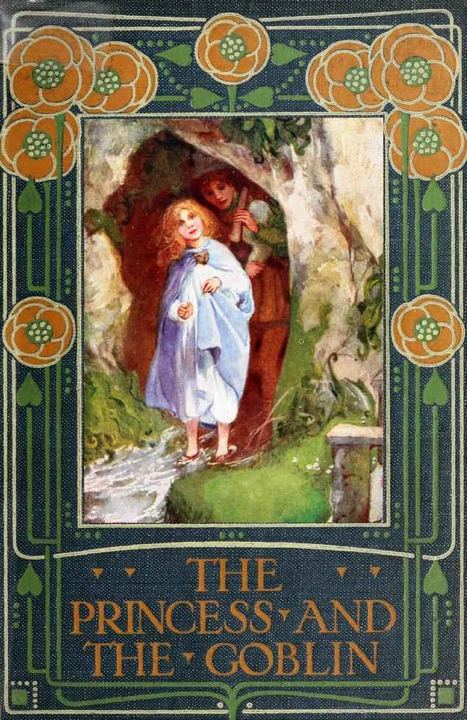
The Princess and the Goblin
1872 · 19th Century · Novel · English
Abstract
Background. George MacDonald, a Scottish former Congregational minister who made his living as a writer in England, wrote this tale for a children's magazine before its 1872 book edition.
Plot. Princess Irene, about eight and living in a mountain house while her father travels, climbs a forgotten stair and finds her great-great-grandmother at a spinning wheel; the old queen gives her a ring tied to a thread too fine to see. Curdie, a miner's son, overhears the goblins under the mountain plotting to seize Irene for their prince Harelip and, failing that, to flood the mines. When the goblins trap Curdie, Irene follows the thread underground and leads him out. Disbelieved and wounded, he still rouses the house, and the goblins drown in their own flood.
Structure. Short chapters alternate between Irene's visits to the tower and Curdie's labour in the dark, linked by the goblins' horror of rhymes and their tender feet.
Themes. Faith as following what cannot be seen, honesty that holds firm when disbelieved, and courage sized to a child. Curdie must learn to believe as Irene does, while the goblins show spite as finally foolish.
Significance. With its sequel, The Princess and Curdie, the book helped shape Christian fantasy and was admired by G. K. Chesterton and C. S. Lewis.
Main characters
- Princess Irene: Eight-year-old princess who learns to trust what others cannot see
- Curdie: Brave young miner who discovers the goblins' plans
- The great-great-grandmother: Mysterious queen who spins in the tower and guides Irene
- Lootie: Irene's anxious nurse
- The king: Irene's father, often away travelling his realm
- Peter and Joan: Curdie's father and mother, a miner and his wife
- Harelip: Goblin prince meant to carry off Irene as his bride
- The goblin king and queen: Rulers of the underground kingdom who plot against the house

Summary
The Princess and the Goblin (1872) sends Princess Irene into a mysterious tower where her great-great-grandmother spins a thread of protection, while young miner Curdie discovers goblin plots in the mountain’s underworld. George MacDonald joins fairy-tale wonder to moral courage: Irene must trust what she cannot always see, and Curdie must act with grit when songs and stones are weapons against creatures who hate verse and running water. The novel’s supernatural grandmother is not a stage trick but a figure of faithful guidance, and the goblins’ upside-down kingdom satirizes pride and spite without winking the story away. For School Launch’s 3–5 band it offers heroism scaled to children who still need help—thread, song, and adult allies—rather than lone invincibility. Teachers can watch Irene’s climb, the thread’s use in darkness, Curdie’s mine work, and the defense of the house, asking what trust looks like when others mock it. Themes of faith, friendship, and the supernatural serve virtue rather than atmosphere alone. Compared with Lang’s collected fairy tales, MacDonald sustains one long adventure with theological warmth and comic goblin absurdity. The full Gutenberg text allows verified quotes and complete reading beyond selection. Students finish knowing that courage can be quiet obedience to a good thread, and that light in an upstairs room may be more real than the sneers of the dark. A seminar can contrast Irene’s trust with Curdie’s skepticism until evidence forces him to sing. Memory work may take a short grandmother saying or a Curdie verse, checked against the stored file. The mine and the nursery meet in one moral world where children practice fortitude without ceasing to need grace, and where comic goblins teach that spite is finally foolish. Curdie’s mining songs and Irene’s upstairs visits give concrete scenes for narration; the rescue of the household shows friendship under pressure. Parents reading aloud can pause when the thread seems invisible and ask whether faith here means feeling or following. The book remains a clear next step after simple fairy collections because it holds wonder and duty in the same story.
Virtues in this work
Plot or Argument
- Tower and thread
Irene meets her grandmother and receives a guiding thread for dark ways.
- Mines and goblins
Curdie overhears goblin plots and suffers for warning the house.
- Deliverance
Courage, song, and trust defeat the underground threat.
Characters
- Princess Irene, protagonist
Young princess learning trust and courage.
- Curdie, hero
Miner boy who fights goblin plots.
- Great-great-grandmother, guide
Mysterious lady of the tower who aids Irene.
Lessons
Trust the thread
Irene must follow the grandmother’s thread when she cannot see the end—an image of faith.
- What is the thread for?
- When is it hard to trust?
Courage in the mine
Curdie’s bravery includes warning others at cost to himself.
- What does Curdie overhear?
- How is he treated afterward?
Song against fear
Music and rhyme unsettle the goblins; joy is a weapon.
- Why do goblins hate song?
- How does joy differ from mockery?
Context
Victorian Christian fairy novel for children, blending adventure with spiritual trust. It remains a formative English-language classic for school and home in the public domain.
Composition
Published 1872. See content/texts metadata for the Gutenberg file used.
Reception
Classic of children’s fantasy; praised by Lewis and others.
Comparisons
- the-blue-fairy-book
Shorter wonder tales beside MacDonald’s sustained fairy novel.
- heidi
Mountain childhood with moral formation, different tone.
Quotes
“There was once a little princess whose father was king over a great country full of mountains and valleys.”
“When the old lady had got her thread fairly going again, she said to the princess, but without looking at her: 'Do you know my name, child?'”
“'I follow the thread,' she would answer--'just as you do in the mine.'”
For Students
A reading companion for classical Christian high school students. See the student guide.
Reading Guide
Watch for
- Irene’s climb to the mysterious tower.
- The thread’s use in darkness and fear.
- Curdie working courageously in the mines.
- Goblin plans against the castle household.
- How the house and valley are finally saved.
Key terms and names
- Thread
- The grandmother’s gift that guides Irene when the way is dark.
- Goblin
- Underground enemy of the mountain house.
- Curdie
- The miner boy ally of Irene.
- Fairy novel
- A longer wonder-story with spiritual pattern, as MacDonald wrote.
Seminar Questions
- Comprehension Who does Irene meet in the tower?
- Comprehension What work does Curdie do?
- Comprehension How do the goblins threaten the princess’s house?
- Interpretation Why must Irene trust the thread without seeing its end?
- Interpretation Is Curdie’s courage mainly fighting or mainly telling truth?
- Interpretation How is the grandmother both mysterious and trustworthy?
- Big Question What does it mean to trust a guide you cannot fully explain?
Faith Connections
- Psalm 119:105 (Scripture)
Thy word is a lamp—thread-as-guidance in darkness.
- 2 Timothy 1:7 (Scripture)
Power, love, and a sound mind against fear of goblin plots.
- C. S. Lewis on MacDonald (Great Conversation)
Lewis named MacDonald a master of holy imagination.
Logic and Rhetoric
Central argument: Courage and trust, taught through fairy adventure, defeat fear that lives underground.
Rhetorical device: symbol (thread). The thread makes invisible guidance tangible for a child reader.
Debate: Resolved: that Irene is right to trust the grandmother even when others doubt.
Memory Work
There was once a little princess whose father was king over a great country full of mountains and valleys.
Writing Prompts
Essay: Explain the thread as an image of trust, using two scenes.
Comparison with The Blue Fairy Book: Compare MacDonald’s goblins with a threat in a Blue Fairy Book tale.
Medical Lens
Fear and underground pursuit are adventurous rather than clinical.
Listen to the book
Public-domain audiobook from LibriVox, read by Lizzie Driver. Recording: Princess and the Goblin on LibriVox (Internet Archive).
LibriVox recordings are volunteer readings released into the public domain. The reading may follow a different edition from the text in this library.
Creative Prompts
- Classroom
Follow a real string through a dark room as a trust exercise; then discuss.
- Essay
Why does MacDonald make the grandmother hard to explain?
- Fiction
A new goblin plot and how song defeats it.
Further Reading
- The Blue Fairy Book, Andrew Lang
Wonder-tale companions.
Verification notes
Quotes verified against PG #708. Need a third distinct quote.
No verification flags recorded.