Work record
Strange Case of Dr Jekyll and Mr Hyde
1886 · 19th Century · Novella · English
Abstract
Background. Composed while its author was an invalid on the south coast of England, the tale grew, by Stevenson's own account, from a dream. It was issued as a cheap shilling book and quickly became a bestseller on both sides of the Atlantic.
Plot. A lawyer grows alarmed when a client's will favours a violent stranger who tramples a child and later kills an elderly politician. Clues accumulate: matching handwriting, a doctor who dies of fright, a face at a window frozen in horror. When servants force the laboratory door, they find only the stranger's corpse. Letters left behind reveal that the physician himself had brewed a potion that let his worse nature walk the city in another body, until the change could no longer be reversed.
Structure. Eight chapters of detection seen from outside give way to two documents, so the reader learns the explanation only after the deaths.
Themes. The duality of human nature, the gap between reputation and conduct, the seductions of unrestrained science, and the slow enslavement of the will. Jekyll insists he was never a mere pretender, since both his selves were in dead earnest, and Stevenson leaves the reader to weigh that plea.
Significance. The paired names entered common speech, and the story has been adapted for stage and screen many times.
Main characters
- Mr. Utterson: Reserved lawyer who pieces the mystery together
- Dr. Henry Jekyll: Eminent physician leading a concealed double life
- Edward Hyde: Stunted, brutal alter ego released by a potion
- Dr. Lanyon: Former colleague who witnesses the transformation
- Poole: Loyal butler who fears for his master
- Sir Danvers Carew: Aged parliamentarian beaten to death in the street

Summary
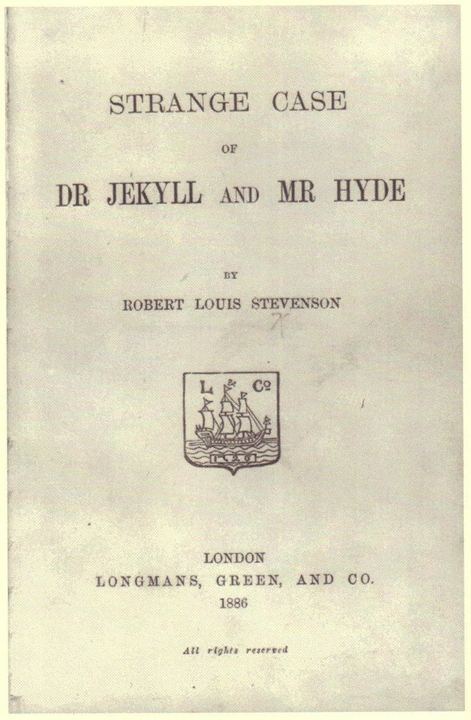
Mr. Utterson, a reserved and loyal London lawyer, takes his Sunday walk with his kinsman Richard Enfield, who points out a shabby door in a by-street and tells how, at three one winter morning, he saw a small man trample a little girl and walk on. Caught and threatened, the man paid close to a hundred pounds in compensation with a cheque signed by a respected gentleman. The man's name was Hyde. Utterson is disturbed, for he holds the will of his old friend Dr. Henry Jekyll, which leaves everything to Edward Hyde and provides for Jekyll's disappearance. Dr. Hastie Lanyon, who quarrelled with Jekyll years ago over his unscientific balderdash, knows nothing of Hyde. Utterson watches the door until he meets Hyde, a pale, dwarfish man who gives everyone who sees him a sense of deformity no one can name. Jekyll, pressed at a dinner, assures Utterson that he can be rid of Hyde whenever he chooses. Nearly a year later a maid sees Hyde club to death the elderly Sir Danvers Carew, a member of Parliament, with a heavy cane. Hyde vanishes from his rooms in Soho. Jekyll produces a letter from Hyde promising never to return, but the head clerk, Mr. Guest, notices that its handwriting matches Jekyll's own, sloped differently. For two months Jekyll is sociable and devout; then he shuts himself away, and Lanyon, after some shock he will not describe, sickens and dies, leaving Utterson a sealed paper not to be opened before Jekyll's death or disappearance. One evening Jekyll's butler Poole comes to Utterson in fear: the voice in the doctor's locked cabinet is not his master's, and endless notes are sent to the chemists for a pure supply of some salt. Utterson and Poole break down the door with an axe and find Hyde, dressed in clothes far too large, dead by his own hand, with no trace of Jekyll. Two documents complete the story. Lanyon's narrative tells how, at Jekyll's urgent request, he took a drawer of powders and a phial from the cabinet and received a stranger at midnight, who mixed the draught and changed before his eyes into Henry Jekyll. Jekyll's full statement explains that, aware all his life of a double nature, he discovered a drug that gave his darker self a body of its own, younger, smaller and free of conscience. Pleasure turned to cruelty; the changes began to happen unbidden in sleep and in Regent's Park, larger doses were needed, and the murder of Carew ended any hope of control. When his last supply of the salt ran out and a new one failed, he understood that the first had been impure. He writes his confession in his last hour as Jekyll. Stevenson wrote the novella at Bournemouth in 1885; Longmans, Green published it in London on 5 January 1886, and it sold close to forty thousand copies within six months.
Virtues in this work
- Friendship: Utterson keeps faith with Jekyll for years, tracking Hyde and finally breaking down the cabinet door to help him.
- Temperance: Jekyll's two months of abstinence collapse into a frenzy that ends in the Carew murder, showing what is lost when appetite is indulged rather than mastered.
- Humility: Jekyll's confession shows a man who chose to hide his faults rather than admit them, and whose pride in his reputation helped create Hyde.
- Prudence: Utterson honours Lanyon's instruction not to open the sealed envelope before Jekyll's death or disappearance, even though curiosity tempts him.
Plot or Argument
- Story of the Door
Enfield tells Utterson of the man who trampled a child and paid with a gentleman's cheque; the name is Hyde.
- Search for Mr. Hyde
Utterson rereads Jekyll's will, consults Lanyon, haunts the door, and finally meets Hyde face to face.
- Dr. Jekyll Was Quite at Ease
After a dinner Jekyll begs Utterson to drop the subject and to see that Hyde gets his rights if Jekyll is gone.
- The Carew Murder Case
A maid witnesses Hyde beat Sir Danvers Carew to death; the broken cane leads Utterson and Inspector Newcomen to Hyde's empty rooms in Soho.
- Incident of the Letter
Jekyll shows a farewell letter from Hyde; Guest compares the handwriting with a note from Jekyll and finds them almost identical.
- Incident of Dr. Lanyon
Jekyll returns to society, then withdraws; Lanyon, broken by what he has seen, dies and leaves a sealed envelope; Jekyll writes that he is the chief of sinners and of sufferers.
- Incident at the Window
Utterson and Enfield speak to Jekyll at his window, and see an expression of abject terror seize his face before he slams it shut.
- The Last Night
Poole brings Utterson to the house; they break into the cabinet and find Hyde dead, a will now naming Utterson, and a packet of documents.
- Dr. Lanyon's Narrative
Lanyon's letter describes the midnight visitor, the drug, and the transformation into Jekyll that destroyed his peace.
- Henry Jekyll's Full Statement of the Case
Jekyll's own confession of his double life, the discovery of the drug, the growth of Hyde, the loss of control, and the failure of the salt.
Characters
- Gabriel John Utterson, investigator
Austere, kindly lawyer whose loyalty to his friend drives the inquiry.
- Dr. Henry Jekyll, protagonist
Wealthy, respected physician and scientist who has long hidden a craving for undignified pleasures.
- Edward Hyde, Jekyll's other self
Small, younger, repellent embodiment of Jekyll's evil, who grows stronger with use.
- Dr. Hastie Lanyon, physician and friend
Hearty, conventional doctor who breaks with Jekyll over his transcendental science and dies after witnessing the change.
- Richard Enfield, Utterson's kinsman
Man about town who tells the story of the door.
- Poole, Jekyll's butler
Faithful servant who finally seeks Utterson's help.
- Sir Danvers Carew, victim
Elderly, courteous member of Parliament murdered by Hyde.
- Mr. Guest, Utterson's head clerk
Student of handwriting who sees that Hyde's hand and Jekyll's are nearly one.
- Inspector Newcomen, police officer
Scotland Yard man who goes with Utterson to Hyde's lodgings.
Lessons
Respectability is not virtue
Jekyll is honoured, charitable and outwardly devout, yet he has long hidden a desire for pleasures he thinks beneath his dignity. Rather than repent, he invents a way to sin without being seen. Stevenson shows that a reputation guarded for its own sake can become the very cloak under which vice grows.
- What does Jekyll say in his statement about why he concealed his pleasures in the first place?
- Why does Hyde need the respectable Jekyll as much as Jekyll needs Hyde?
- Is concealing a fault ever the first step toward a worse one?
The illusion of control
Jekyll tells Utterson that he can be rid of Hyde the moment he chooses, but each indulgence makes the change easier and the return harder, until Hyde appears in his sleep and in a public park. Habit, Stevenson suggests, slowly reshapes the self. The novella reads as a study of how repeated choices become a master.
- When does Jekyll first wake up as Hyde without taking the drug, and why does this frighten him?
- What happens when Jekyll tries to give Hyde up for two months?
- How is Jekyll's confidence in his own control like the confidence of anyone caught in a bad habit?
The divided self and the united person
Jekyll concludes that man is not truly one, but truly two, and he hopes to separate the two natures so each can go its way. The experiment frees only the evil side; the good side gains nothing. The story implies that the moral struggle cannot be escaped by chemistry, only fought within one person.
- Why does the drug produce a purely evil Hyde but not a purely good Jekyll?
- What does Jekyll mean by the perennial war among his members?
- Could anything have saved Jekyll after the murder of Carew?
Friendship and silence
Utterson, Lanyon and Poole are loyal men who sense something is wrong yet hesitate to pry, out of courtesy and fear of scandal. Their reticence protects Jekyll's name but leaves him alone with his secret. Stevenson's gentlemen show both the dignity and the cost of not asking.
- Why does Utterson refuse to open Lanyon's envelope early?
- Should Utterson have acted sooner, and what would that have looked like?
Context
The novella is set in a foggy late-Victorian London of professional men, lawyers and doctors, where reputation was everything and a respectable West End could lie a few streets from the poverty of Soho. It appeared at a time of keen interest in evolution and degeneration, in the new physiological psychology, and in published cases of so-called double consciousness, in which a patient seemed to alternate between two personalities. Stevenson does not cite such cases, and readers should not assume he drew on any particular one.
Composition
Stevenson, often bedridden with lung haemorrhages, wrote the story in 1885 at Skerryvore, his house in Bournemouth. In his essay A Chapter on Dreams (1888) he says that the central scene of the transformation came to him in a dream. A widely repeated family account holds that he burned a first draft after his wife Fanny's criticism and rewrote it in a few days. Longmans, Green published it on 5 January 1886 as a shilling paperback, with a New York edition from Scribner's the same month.
Reception
The book was an immediate success, selling close to forty thousand copies in Britain within six months; it was read by people who did not usually read fiction and was cited in sermons and religious papers. Thomas Russell Sullivan's stage adaptation, starring Richard Mansfield, opened in Boston in 1887 and played in London in 1888. The names Jekyll and Hyde passed into ordinary English for a person with a hidden second character.
Comparisons
- frankenstein
Both stories turn on a scientist whose secret experiment produces a being he cannot control, but Frankenstein's creature is a separate person while Hyde is Jekyll himself.
- dracula
A decade later Stoker also used a mosaic of letters, diaries and narratives by professional men to uncover a monstrous figure hidden in respectable London.
- confessions
Augustine's account in Book VIII of two wills at war within him, one old and carnal and one new and spiritual, is the classic Christian treatment of the inner division Jekyll tries to solve with a drug.
- the-screwtape-letters
Lewis, like Stevenson, shows how small indulgences and self-deceptions gradually capture a soul, though Lewis writes from the tempter's side.
- studies-on-hysteria
Breuer and Freud, writing a decade later, built their account of hysteria on the splitting of consciousness, a clinical counterpart to the double life Stevenson imagined.
- treasure-island
Stevenson's earlier adventure also centres on a man of two faces: Long John Silver, whose charm and treachery are as inseparable as Jekyll and Hyde.
Quotes
Frequently cited
“If he be Mr. Hyde,” he had thought, “I shall be Mr. Seek.”
Frequently cited
“man is not truly one, but truly two.”
Frequently cited
“all human beings, as we meet them, are commingled out of good and evil: and Edward Hyde, alone in the ranks of mankind, was pure evil.”
“I let my brother go to the devil in his own way.”
“the moment I choose, I can be rid of Mr. Hyde.”
“If I am the chief of sinners, I am the chief of sufferers also.”
“My life is shaken to its roots; sleep has left me; the deadliest terror sits by me at all hours of the day and night”
“I was slowly losing hold of my original and better self, and becoming slowly incorporated with my second and worse.”
For Students
A reading companion for classical Christian high school students. See the student guide.
Reading Guide
Watch for
- The door in the by-street in the first chapter, and where it turns out to lead.
- The way every witness struggles to describe what is wrong with Hyde's appearance.
- Mr. Guest's comparison of the two handwritings in Incident of the Letter.
- The sealed envelopes Utterson receives, and the order in which he finally reads them.
- The moment in Jekyll's statement when he wakes to find Hyde's hand on the bedclothes.
Key terms and names
- Cabinet
- Jekyll's private room above his laboratory, reached through the old dissecting rooms of the surgeon who owned the house before him; Hyde dies there.
- Transcendental
- Going beyond ordinary experience; Jekyll says his scientific studies led toward the mystic and transcendental, which Lanyon scorns.
- Draught
- A dose of liquid medicine; Jekyll's draught is made from a white salt and a red tincture.
- Cain's heresy
- Utterson's joking name for letting others go their own way, from Cain's question, Am I my brother's keeper?
- Will
- Jekyll's legal will, which leaves everything to Hyde; it is the first clue that troubles Utterson.
- Soho
- A poor, crowded district of London where Hyde keeps rooms.
Seminar Questions
- Comprehension What does Enfield see Hyde do in the first chapter, and how does Hyde pay for it?
- Comprehension Why is Utterson so troubled by the terms of Jekyll's will?
- Comprehension What does Lanyon witness that destroys his health?
- Interpretation Why does Stevenson tell most of the story through Utterson, a man who never learns the truth until he reads the documents?
- Interpretation Hyde is smaller and younger than Jekyll. What does Jekyll suggest this means about the evil side of his nature?
- Interpretation Jekyll calls himself the chief of sinners and the chief of sufferers. Is his statement at the end a true confession, or still a defence of himself?
- Big Question Is the evil in a person something separate that can be cut away, or part of one self that must be fought and forgiven?
- Big Question What does the story suggest about keeping a good reputation while hiding a secret life?
Faith Connections
- Romans 7:15-25 (Scripture)
Paul describes another law in his members warring against the law of his mind; Jekyll speaks of the perennial war among his members. Paul cries out for deliverance and thanks God through Christ, while Jekyll seeks deliverance through a drug.
- 1 Timothy 1:15 (Scripture)
Paul calls himself the chief of sinners in a passage about Christ coming to save sinners; Jekyll borrows the phrase in his letter but adds that he is chief of sufferers, without turning to the mercy Paul received.
- Genesis 4:9 (Scripture)
Cain's question, Am I my brother's keeper?, lies behind Utterson's joke about Cain's heresy; the story then tests how far a friend should go to keep his brother.
- Augustine, Confessions VIII (Church Fathers)
Augustine describes two wills, one old and one new, struggling within him until grace unites him; Jekyll's attempt to house his two wills in two bodies is the opposite remedy, and it fails.
Logic and Rhetoric
Central argument: Every person is a mixture of good and evil. If a man tries to separate the two so that he may indulge evil without guilt, the evil, freed from restraint, grows stronger while the good gains nothing. Therefore the attempt to escape moral struggle, by chemistry or concealment, ends in the destruction of the whole self.
Rhetorical device: pun. In Search for Mr. Hyde Utterson plays on the name of the man he is hunting: if he be Mr. Hyde, he will be Mr. Seek, turning the whole mystery into a children's game of hide and seek.
Debate: Resolved: that Henry Jekyll is fully responsible for the crimes committed by Edward Hyde.
Memory Work
man is not truly one, but truly two.
I was slowly losing hold of my original and better self, and becoming slowly incorporated with my second and worse.
Writing Prompts
Essay: Jekyll says the drug did not create Hyde but only shook the doors of his prison. Using his full statement, argue whether Jekyll was a good man destroyed by a drug or a divided man exposed by it.
Comparison with Frankenstein: Compare Victor Frankenstein and Henry Jekyll as scientists who make something they cannot control. Which one bears more responsibility for the harm that follows, and why?
Medical Lens
The novella is built around physicians and a drug. Jekyll is a doctor of medicine and law and a fellow of the Royal Society, Lanyon a fashionable practitioner in Cavendish Square, and their old quarrel sets conventional medicine against Jekyll's mystic and transcendental science. The transformation depends on a white crystalline salt from a wholesale chemist mixed with a blood-red tincture; it brings nausea, grinding in the bones and deadly horror, and later a single dose no longer suffices and the dose must be doubled. Readers since publication have read the story as an image of addiction: Jekyll's promise that he can stop when he chooses, his two months of abstinence followed by a fierce relapse, the spontaneous changes, and the frantic notes to the chemists for a purer supply. That reading is interpretive; Stevenson never names a real drug, and claims that he wrote under the influence of cocaine are not supported by evidence. The book also appeared amid medical interest in double or alternating personality and in degeneration, and Hyde's smaller, apelike body echoes contemporary fears of moral regression; here too any link is a reading, not a documented source. Lanyon's sleeplessness, terror and death within weeks of what he saw are a period picture of a man killed by shock. Hyde's death by poison, recognised by the smell of kernels in the cabinet, is a suicide, and the whole story raises the question of a physician who experiments on himself without restraint.
- Search for Mr. Hyde
Lanyon tells Utterson that Jekyll began to go wrong in mind more than ten years ago and dismisses his work as unscientific.
- The Last Night
Poole reports the repeated notes sent to wholesale chemists demanding a purer sample of a drug, and the men find Hyde dead amid the smell of kernels.
- Dr. Lanyon's Narrative
Lanyon inventories the drawer of white salt, the blood-red liquid and the notebook of experiments, then watches the visitor drink and transform.
- Henry Jekyll's Full Statement of the Case
Jekyll describes his first dose, its physical agonies, and the sense of lightness, recklessness and freedom from conscience that followed.
- Henry Jekyll's Full Statement of the Case
Jekyll wakes with Hyde's hand on the sheet, needs double doses to return, abstains for two months, then relapses into the Carew murder.
- Henry Jekyll's Full Statement of the Case
Jekyll explains that his original supply of salt was impure, that fresh supplies fail, and that he expects his last transformation.
Listen to the book
Public-domain audiobook from LibriVox, read by Bob Neufeld. Recording: Strange Case of Dr. Jekyll and Mr. Hyde (version 3) on LibriVox (Internet Archive).
LibriVox recordings are volunteer readings released into the public domain. The reading may follow a different edition from the text in this library.
Creative Prompts
- Classroom
Build a case file as Utterson might have kept it: the will, Enfield's account, the maid's testimony, the forged letter and Poole's report, each with what it proves and what it hides.
- Fiction
Write the scene of the Carew murder as reported by the maid at the window, keeping to what she could actually have seen.
- Essay
Why does Stevenson save Jekyll's own explanation for the very end? What would be lost if the story were told in order?
Further Reading
- Treasure Island, Robert Louis Stevenson
- Across the Plains, Robert Louis Stevenson
Contains A Chapter on Dreams, Stevenson's account of the dream origin of the story.
- Myself and the Other Fellow: A Life of Robert Louis Stevenson, Claire Harman
- Frankenstein, Mary Shelley
Verification notes
Plot details and chapter titles follow the attached Project Gutenberg text (#43), which prints the sixth chapter as Incident of Dr. Lanyon in its contents; the first edition heading reads Remarkable Incident of Dr. Lanyon. The publication date of 5 January 1886 by Longmans, Green and the sales of close to forty thousand copies within six months were checked by web search (e.g. theorkneynews.scot, 5 January 2025, and rare-book dealer descriptions). The dream origin rests on Stevenson's own essay; the burned first draft is a family account, reported as such. The addiction and double-personality readings in medicalLens are interpretive. All quotes were found in the attached text.
- Confirm the story of the burned first draft, which rests on Lloyd Osbourne's and Fanny Stevenson's later recollections.
- Confirm the dates of the Sullivan-Mansfield adaptation (Boston, May 1887; London, August 1888) before publication.
- Confirm whether the sixth chapter should be cited as Remarkable Incident of Dr. Lanyon (first edition) or Incident of Dr. Lanyon (Gutenberg contents).