Work record
Just So Stories
1902 · Early 20th Century · Short Stories · English
Abstract
Background. Kipling began these tales at bedtime for his small daughter, who wanted every one repeated in exactly the same words. After her death he gathered them, added verses and his own pen drawings, and issued the volume in London through Macmillan.
Content. Each tale explains a feature of the present world by an event in a mythical past: a whale's narrow gullet, a camel's lump, a rhinoceros's wrinkles, a leopard's markings, an elephant's trunk, a kangaroo's hop, the scaly armour of armadillos, the first letter and alphabet, the tides, the household cat, and a butterfly's stamp that hushes nine hundred and ninety-nine royal wives. Settings range from the South African veldt and the Amazon to the Malay coast and a cave beside a Surrey river.
Form. Spoken to an unseen listener, the prose relies on refrains, invented compound words, comic long names, and asides that ask the child to remember a detail; a poem closes every story.
Themes. Curiosity, idleness, pride and cleverness are each rewarded or corrected by a change of shape, and two stories trace how pictures grew into letters.
Significance. Among the best-known read-aloud books in English, it gave the language phrases still in use and remains the standard English example of the pourquoi tale, the story that explains why.
Main characters
- Best Beloved: The child addressed by the storyteller
- The Elephant's Child: Curious young elephant who gains a trunk
- The Camel: Lazy desert beast humped by a Djinn
- The Leopard and the Ethiopian: Hunting partners who change their coats
- Old Man Kangaroo: Vain animal chased into hopping by Yellow-Dog Dingo
- Taffy and Tegumai: Stone Age daughter and father who invent writing
- Pau Amma: Giant crab whose movements make the tides
- The Cat: Independent animal who strikes bargains with the Woman
- Suleiman-bin-Daoud and Balkis: Wise king and queen who tame a boastful butterfly

Summary
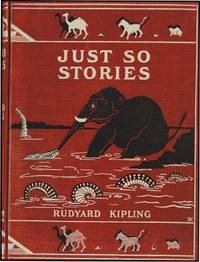
Just So Stories is Rudyard Kipling's collection of comic tales that explain, in the voice of a father talking to a child he calls O Best Beloved, how things in the world came to be the way they are. Each story is followed by a poem. The library text contains twelve. In How the Whale Got His Throat a small 'Stute Fish sends a hungry Whale to swallow a shipwrecked Mariner, a man of infinite resource and sagacity, who dances inside him until he is carried home and then jams a grating, tied with his suspenders, into the Whale's throat. In How the Camel Got His Hump the idle Camel answers every request to work with 'Humph!' until the Djinn in charge of All Deserts gives him a hump to live on while he makes up lost time. A Parsee on the Red Sea shore takes revenge on a cake-stealing Rhinoceros by filling his unbuttoned skin with stale crumbs, so that he rubs it into folds. The Leopard and an Ethiopian hunter, finding that the game has hidden in a shadowy forest, take the wise baboon Baviaan's advice; the hunter darkens his skin and presses his fingertips all over the Leopard to make spots. In The Elephant's Child an endlessly curious young elephant, spanked for every question, goes to the great grey-green, greasy Limpopo River to ask what the Crocodile has for dinner, and has his nose pulled into a trunk. Old Man Kangaroo asks the god Nqong to make him different and popular, and Yellow-Dog Dingo chases him across Australia until he hops. On the Amazon a Hedgehog and a Tortoise confuse Painted Jaguar with his mother's instructions, then learn each other's tricks and become the first Armadillos. Two stories tell how the Neolithic girl Taffy and her father Tegumai invented the picture-letter, which nearly gets a friendly stranger beaten, and then the first alphabet. In The Crab That Played with the Sea, the Eldest Magician humbles the giant crab Pau Amma, whose comings and goings cause the tides. In The Cat That Walked by Himself the Woman tames the Dog, the Horse and the Cow, while the Cat bargains his way to the fire and the milk but keeps his wild independence. The last tale tells how wise Queen Balkis helps King Suleiman-bin-Daoud teach a boastful butterfly, and with him nine hundred and ninety-nine quarrelling queens, a lesson. Kipling first told many of the stories to his daughter Josephine, who died in 1899; some appeared in magazines, and the book was published by Macmillan in London in 1902 with Kipling's own illustrations.
Virtues in this work
- Industry: The Djinn makes the Camel work to make up the three days he spent saying Humph while the other animals worked double.
- Friendship: Stickly-Prickly and Slow-Solid help each other learn to swim and curl until they both become Armadillos.
- Humility: Suleiman-bin-Daoud falls on his face and admits he gave his great dinner only to show off.
- Prudence: Balkis quietly turns the Butterfly's boast into a lesson that ends the quarrelling of the queens.
Plot or Argument
- The Whale and the Camel
The Mariner of infinite resource and sagacity blocks the Whale's throat with a grating; the Djinn of All Deserts gives the idle Camel his humph and sends him back to work.
- The Rhinoceros and the Leopard
The Parsee's cake-crumbs make the Rhinoceros's skin itch into folds; on Baviaan's advice the Ethiopian changes his skin and gives the Leopard his five-fingered spots.
- The Elephant's Child
Spanked for his questions, the Elephant's Child travels to the Limpopo, where the Crocodile and the Bi-Coloured-Python-Rock-Snake between them stretch his nose into a useful trunk.
- The Kangaroo and the Armadillos
Nqong grants Old Man Kangaroo's wish to be different by setting Yellow-Dog Dingo to chase him; Stickly-Prickly Hedgehog and Slow-Solid Tortoise outwit Painted Jaguar and turn into Armadillos.
- Taffy's letter and alphabet
Taffy's birch-bark picture brings the whole Tribe of Tegumai down on a puzzled Stranger-man; a week later she and her father make sound-pictures that become letters.
- Pau Amma and the tides
The Eldest Magician finds the King Crab under the Wonderful Tree, takes away his shell, and gives him and his children their present shape, while the Fisherman of the Moon takes over pulling the sea.
- The Cat That Walked by Himself
The Woman makes the Dog, Horse and Cow into First Friend, First Servant and Giver of Good Food; the Cat wins three words of praise but keeps walking by his wild lone.
- The Butterfly That Stamped
Balkis turns a butterfly's boast into a lesson; Suleiman-bin-Daoud lets the Djinns lift the palace when the butterfly stamps, and the quarrelling queens creep back in silence.
Characters
- Best Beloved, listener
The child to whom the narrator tells every tale.
- The Elephant's Child, hero of The Elephant's Child
A young elephant full of curiosity whose nose becomes the first trunk.
- The Bi-Coloured-Python-Rock-Snake, helper
A long-winded snake who saves the Elephant's Child from the Crocodile.
- The Camel, idler
A desert animal who says only Humph until the Djinn humphs him.
- The Djinn in charge of All Deserts, spirit
A thoughtful magician who punishes the Camel by giving him a hump.
- Taffy (Taffimai Metallumai), heroine of the two Taffy stories
A Neolithic girl who invents the picture-letter and helps make the alphabet.
- Tegumai Bopsulai, Taffy's father
A patient cave-man who fishes with Taffy and draws the first letters with her.
- The Cat, hero of The Cat That Walked by Himself
The wildest animal, who bargains for a place in the Cave but keeps his freedom.
- The Woman, tamer
The first housekeeper, who tames the Man and the animals with her Singing Magic.
- Pau Amma, King Crab
A giant crab who plays with the sea until the Eldest Magician humbles him.
- Suleiman-bin-Daoud and Balkis, king and queen
Solomon the Son of David and his wise Head Queen, who teach the butterflies and the quarrelling queens.
- The Leopard and the Ethiopian, hunters
Partners who change their coats after their prey hides in the forest shadows.
Lessons
Questions can lead somewhere
The Elephant's Child is spanked for every question, but his question about the Crocodile's dinner wins him a trunk that helps all elephants after him. The poem that follows praises What and Where and When and How and Why and Who. Curiosity is good, though it should be joined with good sense.
- What does the Elephant's Child want to know, and who tells him where to go?
- How does the Bi-Coloured-Python-Rock-Snake help him?
- Is it good that the Elephant's Child goes home and spanks his relatives?
Idleness gives you the hump
The Camel will not trot, fetch or plough, so the other animals do double work until the Djinn gives him a hump. The poem afterward says that people get a hump too when they have too little to do, and that the cure is to dig in the garden.
- Why are the Horse, the Dog and the Ox angry with the Camel?
- What does the poem say is the cure for the hump?
- What helps you when you feel grumpy and have nothing to do?
Pride gets a surprise
The Kangaroo asks to be different and popular, Pau Amma thinks he is very important, and the Butterfly boasts that he could stamp away a palace. Each proud creature gets more than he asked for and learns a lesson. Kipling laughs at boasting rather than scolding it.
- What did Old Man Kangaroo ask Nqong for, and how did he get it?
- Why does the Eldest Magician take away Pau Amma's shell?
- How does Queen Balkis use the Butterfly's boast to help King Suleiman?
Pictures and words need care
Taffy's picture-letter makes perfect sense to her, but her mother reads it as a story of spears and enemies, and the friendly Stranger-man is mobbed. In the next story Taffy and her father make signs for sounds so that a message can say exactly what is meant.
- What did Taffy draw on the birch-bark, and what did her mother think it meant?
- Why do sound-signs work better than pictures for sending a message?
- Have you ever been misunderstood when you were trying to help?
Context
Kipling wrote the stories at the height of his fame, partly in America and partly in England. They draw on his wide travels and reading: the High Veldt and the Limpopo of South Africa, the Malay coast, Australia, the Amazon, the caves of prehistoric Surrey, and the Islamic legends of Suleiman, the Solomon of the Bible. Their names, rhythms and repetitions come from the habit of telling the same story over and over to small children who wanted it told just so.
Composition
Kipling first told many of the tales aloud to his elder daughter Josephine, who died in 1899; three appeared in the American Ladies' Home Journal in 1900, and others in magazines before the book was published by Macmillan in London in 1902 with Kipling's own drawings and long, joking captions. The library text (Project Gutenberg #2781) prints the twelve stories and their poems but not the illustrations, so the letters in How the Alphabet Was Made appear only as numbered placeholders.
Reception
The book has never been out of print and is one of the most often read-aloud books in English; phrases such as Best Beloved, 'satiable curtiosity and the great grey-green, greasy Limpopo have passed into common use. The poem I Keep Six Honest Serving-Men is often quoted by teachers and writers. The Gutenberg text of How the Leopard Got His Spots keeps a racial epithet in the Ethiopian's last speech; many later children's printings change that sentence, and a teacher reading aloud will want to know it is there.
Comparisons
- the-jungle-book
Kipling's earlier animal stories are serious adventures with a code of law; the Just So animals are comic, and their stories end in a changed shape rather than a lesson of the Jungle.
- aesops-fables
Like Aesop's fables, the Camel, the Kangaroo and the Butterfly stories punish idleness and boasting, but Kipling explains how an animal came to look as it does rather than closing with a stated moral.
- metamorphoses
Ovid tells how gods changed people into animals and plants; Kipling's Djinn, Eldest Magician and Nqong change animals into their present forms, with a smile instead of a tragedy.
- alices-adventures-in-wonderland
Both books began as stories told aloud to particular children, and both delight in nonsense words, comic logic and long, funny names.
- winnie-the-pooh
Milne, like Kipling, writes as a father telling stories to a child, and both books mix prose with verses meant to be read aloud.
Quotes
“who was full of ‘satiable curtiosity, and that means he asked ever so many questions”
“the great grey-green, greasy Limpopo River, all set about with fever-trees”
“Their names are What and Where and When And How and Why and Who.”
“That’s your very own humph that you’ve brought upon your very own self by not working.”
“But uglier yet is the hump we get From having too little to do.”
“Them that takes cakes Which the Parsee-man bakes Makes dreadful mistakes.”
“How wise are little children who see and are silent!”
“I am the Cat who walks by himself, and all places are alike to me.”
For Students
A reading companion for classical Christian high school students. See the student guide.
Reading Guide
Watch for
- How almost every story begins with long ago and ends with from that day to this, telling why an animal looks the way it does now.
- The words the narrator says over and over, like Best Beloved, 'satiable curtiosity and the great grey-green, greasy Limpopo.
- The short poem after each story and what it adds.
- Which animals are proud or lazy, and what happens to each of them.
- Taffy's picture on birch-bark and how differently her mother reads it.
Key terms and names
- Best Beloved
- The name the storyteller calls the child listening to him; it makes each tale sound like a bedtime story.
- Djinn
- A powerful spirit from Arabian tales. The Djinn in charge of All Deserts gives the Camel his hump.
- Limpopo
- A real river in southern Africa, where the Elephant's Child meets the Crocodile.
- Neolithic
- Belonging to the late Stone Age, when Taffy and her family lived in a cave and fished with spears.
- Tides
- The daily rising and falling of the sea, which The Crab That Played with the Sea explains with the Fisherman of the Moon.
- Bargain
- A promise in which each side agrees to give something; the Cat makes one with the Woman, and then with the Man and the Dog.
Seminar Questions
- Comprehension What did the Elephant's Child want to know, and what happened when he asked the Crocodile?
- Comprehension What did the Camel say every time someone asked him to work?
- Comprehension What three things did the Cat get from the Woman, and how did he get each one?
- Interpretation Why did Taffy's mother think the Stranger-man had hurt Tegumai?
- Interpretation Old Man Kangaroo got what he asked for. Why wasn't he happy about it?
- Interpretation Why does Queen Balkis tell the Butterfly's wife to make her husband stamp?
- Big Question God made every animal different. Which animal in these stories would you like to be, and why?
Faith Connections
- Jeremiah 13:23 (Scripture)
The prophet asks whether the Ethiopian can change his skin or the leopard his spots, meaning that people cannot change their sinful habits by themselves. Kipling ends How the Leopard Got His Spots by joking about this very saying.
- Proverbs 6:6-11 (Scripture)
Go to the ant, you sluggard, and be wise. The idle Camel, who will not work while the Horse, the Dog and the Ox do double duty, is the sluggard of the Just So Stories.
- 1 Kings 10:1-13 (Scripture)
The Queen of Sheba visits King Solomon to test his wisdom. Kipling's Suleiman-bin-Daoud and Balkis come from later legends about these two, and in his story the queen is nearly as wise as the king.
- Genesis 2:19-20 (Scripture)
God brings the animals to Adam to see what he will call them. Kipling's Eldest Magician tells each animal what to play at, and Mother Jaguar insists that everything has its proper name.
Logic and Rhetoric
Central argument: Every creature has its shape for a reason. Long ago the animals were different, and something they did, whether asking questions, refusing work, stealing a cake, or boasting, changed them. Therefore the way things are today is a story worth telling, and the habits we choose shape what we become.
Rhetorical device: repetition (refrain). In The Elephant's Child the phrase the great grey-green, greasy Limpopo River, all set about with fever-trees returns again and again (quote 1), so a child listening can say it along with the reader.
Debate: Resolved: that the Cat was wiser than the Dog.
Memory Work
Their names are What and Where and When And How and Why and Who.
I am the Cat who walks by himself, and all places are alike to me.
Writing Prompts
Essay: Choose one animal in the book that changes shape. Tell what it did, how it changed, and what lesson the change teaches.
Comparison with Aesop's Fables: Compare How the Camel Got His Hump with an Aesop fable about a lazy animal, such as The Ant and the Grasshopper. Which story teaches its lesson better?
Medical Lens
There is little medicine here, but the tales keep a few traces of the tropical world Kipling knew. The fever-trees that line the Limpopo are named for the old belief, common among nineteenth-century travellers in southern Africa, that the swampy ground where they grow brought fever; the link was later understood through the malaria mosquito, though Kipling's phrase is pure atmosphere. In How the Alphabet Was Made, Tegumai's first useful word is yo, bad swamp-water that gives fever if you drink it, so that the first written message is in effect a warning about unsafe water. The Leopard and the Ethiopian get the Big Tummy-ache from eating rats and beetles, the Elephant's Child's stretched nose hurts him hijjus and is cooled in banana leaves, and the Rhinoceros scratches himself raw from cake-crumbs under his skin. These are comic details, not clinical ones.
- The Elephant's Child
Kolokolo Bird's refrain about the Limpopo River set about with fever-trees; the Crocodile stretches the young elephant's nose, which he wraps in cool banana leaves.
- How the Alphabet Was Made
Tegumai draws the signs for yo, bad black swamp-water that gives fever, so that Taffy will know not to drink from a marked pool.
- How the Rhinoceros Got His Skin
Stale crumbs inside his skin make the Rhinoceros itch, roll and rub until his skin folds.
Listen to the book
Public-domain audiobook from LibriVox, read by Tim Bulkeley (1948-2019). Recording: Just So Stories (version 4) on LibriVox (Internet Archive).
LibriVox recordings are volunteer readings released into the public domain. The reading may follow a different edition from the text in this library.
Creative Prompts
- Fiction
Write your own Just So story: how the Giraffe got his long neck, or how the Skunk got his smell. Start with O Best Beloved.
- Classroom
Make a map of the world and put a picture on it for each story: the Limpopo, the Amazon, the Red Sea, Australia, the Malay coast, and Taffy's river in England.
- Poetry
Write a short poem in the style of the six honest serving-men, using the questions What, Where, When, How, Why and Who.
- Classroom
Draw a picture-letter like Taffy's to ask for something, give it to a partner, and see whether they can read it without words.
- Dialogue
Act out the Cat's three bargains with the Woman, with one child as the Cat, one as the Woman and one as the Bat.
Further Reading
- The Jungle Book, Rudyard Kipling
- Puck of Pook's Hill, Rudyard Kipling
- Something of Myself, Rudyard Kipling
Kipling's own short memoir, published after his death.
- Rudyard Kipling: His Life and Work, Charles Carrington
Verification notes
Story titles, contents and verses follow the attached Project Gutenberg text (#2781), which has twelve stories with their poems and omits Kipling's illustrations and captions. The 1902 Macmillan first edition with plates by Kipling, the Ladies' Home Journal printing of three stories in 1900, and the tales' origin as stories for Josephine were checked against rare-book dealer descriptions (baumanrarebooks.com). The note on the fever-tree's name is general natural history; medical readings are slight and interpretive. All quotes were found in the attached text.
- Confirm which magazines printed the stories before 1902 and in what years (a children's magazine in the late 1890s is often mentioned besides the Ladies' Home Journal).
- The library text gives only the first part of the Merrow Down verses after How the First Letter Was Written; check a printed edition for the full poem.
- Some later editions add a thirteenth tale, The Tabu Tale; confirm when it was first collected.