Work record
The Innocence of Father Brown
1911 · Early 20th Century · Short Stories · English
Abstract
Background. Chesterton, then a celebrated London journalist and still an Anglican, created his clerical sleuth in 1910 as a deliberate contrast to the scientific detective of the Holmes tradition, drawing on a Yorkshire priest's surprising worldliness.
Contents. Brown first outwits the master thief Flambeau with a sapphire cross and a trail of spilt salt, then exposes the Paris police chief who staged a beheading. Later cases bring a postman nobody noticed, a servant who strips a castle of gold, a doctor who forges a suicide, a prince who sets two foes against each other, a hammer dropped from a tower, a sun-cult murder in a lift shaft, a general's secret on a South American battlefield, and a suicide prevented in vain.
Structure. Flambeau's conversion in the fourth tale, at Christmas, divides the book: before it he is the quarry, afterward Brown's companion on holidays and investigations.
Themes. Reason as an ally of faith, humility as the condition of insight, pride on high places, false modern creeds, and mercy that seeks confession rather than capture.
Significance. The first of five Father Brown volumes, it gave the genre its most famous priest and a store of solutions built on paradox, and its images have passed into later English fiction.
Main characters
- Father Brown: Unassuming Essex priest who detects by understanding sin
- Flambeau: Giant French thief who reforms and becomes Brown's partner
- Aristide Valentin: Paris police chief and freethinker, later unmasked as a killer
- Israel Gow: Literal-minded heir to the gold of Glengyle
- Dr. Harris: Physician who murders his poet patient
- Wilfred Bohun: Curate who strikes his brother from the church heights
- Kalon: Sun-worshipping prophet in a Westminster office block
- Sir Arthur St. Clare: Celebrated general hiding a murder behind a battle

Summary
The Innocence of Father Brown collects the first twelve stories about Father Brown, a short, round-faced Roman Catholic priest from Essex with a shabby umbrella and an armful of brown-paper parcels, who solves crimes by understanding the sinners who commit them. In "The Blue Cross" Aristide Valentin, head of the Paris police, lands at Harwich hunting the giant French thief Flambeau and follows a trail of absurdities across London: salt in a sugar bowl, soup thrown at a wall, a window broken and paid for in advance, price labels swapped on a fruit stall. Brown himself has laid the trail, because he knows that the tall priest walking beside him is Flambeau, after a silver cross set with sapphires. On Hampstead Heath he reveals that the real cross has already gone on to Westminster and that the thief gave himself away by attacking reason. "The Secret Garden" turns the tables: Valentin, a fierce freethinker, beheads the American millionaire Julius K. Brayne, who was drifting toward the Church, disguises the crime with the head of a guillotined criminal, and takes poison when Brown sees through him. In "The Queer Feet" Brown, writing in a hotel office, hears footsteps that change their pace and catches Flambeau stealing the fish-silver of the Twelve True Fishermen by passing as a waiter to the gentlemen and as a gentleman to the waiters. In "The Flying Stars" Flambeau, playing Harlequin in a Christmas pantomime at a house near Putney, steals Sir Leopold Fischer's diamonds; Brown, talking to him in a garden tree, persuades him to give them back and give up thieving. From then on Flambeau is Brown's friend and a private detective. "The Invisible Man" shows how a killer passed four watchers unseen because he was the postman. "The Honour of Israel Gow" finds a Scottish castle stripped of every grain of gold by a literal-minded servant obeying his dead master's will. In "The Wrong Shape" the snipped corners of a quire of paper expose the doctor who stabbed the opium-dreaming poet Leonard Quinton. "The Sins of Prince Saradine" ends with a prince who lets his blackmailing brother and a Sicilian avenger destroy each other, and laughs. In "The Hammer of God" the curate Wilfred Bohun, praying high in his church, drops a small hammer on his brother the colonel, and Brown urges him to confess. "The Eye of Apollo" unmasks Kalon, priest of a sun cult, who let a blind heiress walk into an empty lift shaft. "The Sign of the Broken Sword" reveals that the revered General St. Clare, having killed Major Murray, hid the body by ordering a hopeless attack. "The Three Tools of Death" proves that a rope, a knife and a pistol were used to save the cheerful philanthropist Sir Aaron Armstrong from himself. The stories first appeared in magazines in 1910 and 1911 and were collected in book form in 1911.
Virtues in this work
- Humility: Brown tells Wilfred Bohun on the church tower that humility is the mother of giants, and his own refusal to think himself above sin is how he reads every criminal.
- Prudence: In The Blue Cross Brown sees through Flambeau's disguise and quietly posts the sapphire cross to Westminster before walking onto the heath with him.
- Charity: Speaking to Flambeau in the tree in The Flying Stars, Brown asks him to give back the diamonds for his own soul's sake, and wins a friend instead of a conviction.
- Justice: Israel Gow takes every grain of the gold willed to him and not one grain more, even putting the earl's skull back in the grave once its gold tooth is removed.
Plot or Argument
- The Blue Cross
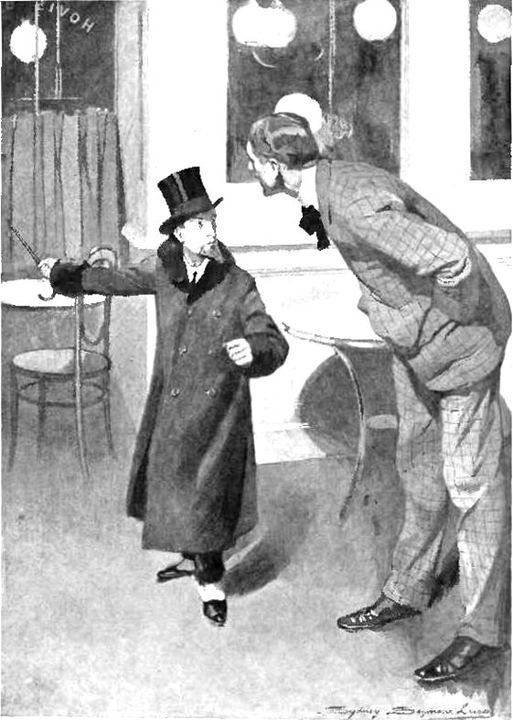
Valentin trails two clergymen across London by the odd disturbances they leave behind. On Hampstead Heath the small priest and the tall one argue about whether reason rules even the stars; Brown then tells Flambeau that he has already posted the sapphire cross to Westminster, that he knew him for a thief because a true priest would not attack reason, and that the police are waiting under the trees.
- The Secret Garden
At a dinner in Valentin's walled Paris garden a headless body is found, and a second head soon turns up in the river. Brown works out that the dead man is Brayne, given a guillotined criminal's head, and that only the host had the means and the motive: to stop a convert's fortune from reaching the French Church. Valentin is found dead at his desk beside a box of pills.
- The Queer Feet
In the exclusive Vernon Hotel, Brown, called to hear a dying waiter's confession, sits in a cloakroom office and listens to footsteps that alternate between a gentleman's stroll and a waiter's scurry. He traps Flambeau, gets back the club's silver knives and forks, and lets him go with a few words that will later bring him back.
- The Flying Stars
On Boxing Day, Sir Leopold Fischer brings three diamonds to his goddaughter Ruby Adams. A harlequinade staged by a newcomer becomes cover for the theft, while the socialist John Crook falls under suspicion. Brown finds Flambeau in a tree, warns him that evil only goes downhill, and Flambeau returns the stones; this is his last crime.
- The Invisible Man
John Turnbull Angus seeks help for Laura Hope, threatened by a rejected suitor. The inventor Isidore Smythe, master of clockwork servants, is murdered in Himylaya Mansions though four men watched the entrance. Brown points out that nobody counts the postman, and James Welkin, so dressed, carried the body off in his sack.
- The Honour of Israel Gow
At Glengyle Castle the last earl has died, and Inspector Craven, Flambeau and Brown find loose diamonds, snuff, candles and clockwork without their gold settings. Brown spins several dark theories, then learns the plain truth: the deaf servant Israel Gow was left all the gold of Glengyle and has taken exactly that, even from the dead earl's tooth.
- The Wrong Shape
In a Hampstead house the poet Leonard Quinton, who writes Eastern fantasies and takes opium, is found stabbed beside a note confessing suicide. Brown notices that the paper has been trimmed to the wrong shape; Dr. Harris had cut off the quotation marks from a line of Quinton's story and killed the drugged poet while the others read it.
- The Sins of Prince Saradine
Flambeau, now retired from crime, sails the Norfolk Broads with Brown and visits Prince Saradine's reed-bound house. A young Sicilian, Antonelli, arrives to avenge his father and kills the prince in a duel, but the old steward turns out to be the real Prince Paul, who sent his blackmailing brother Stephen to wear his name and die in his place.
- The Hammer of God
In the village of Bohun Beacon the dissolute Colonel Norman Bohun is killed by a blow from a small hammer. Suspicion falls on the blacksmith Simeon Barnes and on the simple village boy Joe. Brown takes the curate Wilfred Bohun up the church tower, speaks of the danger of looking down on the world from heights, and shows that he knows Wilfred let the hammer fall.
- The Eye of Apollo
Flambeau's office shares a Westminster building with Kalon, a handsome prophet who prays to the sun from his balcony. Pauline Stacey, who has promised him her fortune, falls to her death down the lift shaft. Brown explains that she was going blind, that Kalon sent the lift away while she wrote her will, and that her sister Joan had foiled him by leaving the pen without ink.
- The Sign of the Broken Sword
Walking at night through a snowy wood to the hero's monument, Brown tells Flambeau the hidden story of General Sir Arthur St. Clare. The pious hero had killed Major Murray with his sword, which broke, and to hide the body he led his men into a hopeless attack; after the Brazilian general Olivier released the prisoners, St. Clare's own soldiers hanged him.
- The Three Tools of Death
Sir Aaron Armstrong, apostle of cheerfulness and temperance, is found dead below his window, and his secretary Patrick Royce, his daughter Alice and a scattered rope, knife and pistol seem to tell a story of murder. Brown shows that Armstrong had fallen back into drink and sought death, that Royce used each weapon to stop him, and that Alice, misunderstanding, cut the rope that held him.
Characters
- Father Brown, protagonist
Small, clumsy-seeming Catholic priest from Cobhole in Essex whose experience of the confessional lets him think his way into a criminal's mind.
- Flambeau, thief turned detective
Gigantic Gascon master thief, famed for audacity and disguise, who is converted to honesty by Brown in The Flying Stars and becomes his friend and fellow investigator.
- Aristide Valentin, head of the Paris police
Brilliant rationalist detective who pursues Flambeau in The Blue Cross and is revealed as a murderer in The Secret Garden.
- Julius K. Brayne, victim
American millionaire who funds many sects and is murdered when he seems about to support the Catholic Church.
- Israel Gow, servant
Deaf, literal-minded servant of Glengyle Castle who takes his inheritance of gold and nothing else.
- Dr. James Erskine Harris, murderer
Physician who kills the poet Leonard Quinton and later confesses in a letter, believing himself a healthy animal free of conscience.
- Prince Paul Saradine, villain
Exiled prince who arranges for his two enemies, his brother Stephen and the avenger Antonelli, to destroy each other.
- Wilfred Bohun, curate
Devout, nervous clergyman who kills his brother Norman from the heights of his church in The Hammer of God.
- Kalon, sun-priest
Self-styled priest of Apollo who exploits Pauline Stacey's blindness to gain her fortune.
- Sir Arthur St. Clare, general
National hero and Bible-reading soldier whose secret crime Brown uncovers in The Sign of the Broken Sword.
- Sir Aaron Armstrong, philanthropist
Public preacher of cheerfulness and teetotalism whose hidden despair drives The Three Tools of Death.
- Patrick Royce, secretary
Armstrong's rough, loyal secretary, who accepts blame for a death rather than let Alice learn her part in it.
Lessons
Reason belongs to faith
Flambeau dresses as a priest but gives himself away by sneering at reason, and Brown calls that bad theology. Again and again the priest is the most rational man in the room, while the freethinker Valentin, the sun-worshipper Kalon and the self-styled man of science Dr. Harris reason themselves into murder. Chesterton argues in story form that Christian faith guards the mind rather than replacing it.
- Why does Brown say that attacking reason is bad theology in The Blue Cross?
- Valentin and Dr. Harris both think of themselves as rational men. Where does their reasoning go wrong?
- Is it surprising that the priest, not the policeman, is the most logical detective in the book? Why might Chesterton have arranged it so?
Knowing evil from the inside
Brown solves crimes not by fingerprints or chemistry but by imagining how he himself might commit them. His years of hearing confessions have taught him the paths of temptation, and that humility about his own heart makes him hard to deceive. Innocence in the title means harmlessness and purity of intention, not ignorance.
- How does Brown explain to Flambeau, at the end of The Blue Cross, how he knew so much about thieves' tricks?
- In what sense is Father Brown innocent, given how much he knows about sin?
- Can a person understand wickedness well without being corrupted by it?
Mercy that brings the sinner back
Brown rarely hands anyone over to the police. He lets Flambeau walk away in The Queer Feet, talks him down from the tree in The Flying Stars, and urges Wilfred Bohun to give himself up rather than denouncing him. His aim is repentance and restoration, and Flambeau's change from thief to friend runs through the whole book.
- What does Brown say to Flambeau in the tree, and why does it work?
- Why does Brown want Wilfred Bohun to confess rather than simply telling the police what he knows?
- When is mercy wiser than punishment, and when is it not?
The proud man on the heights
Several villains fall through a kind of loftiness: Wilfred Bohun looks down from his tower, Kalon stares into the sun without flinching, General St. Clare treats his piety as a private possession. Brown's warning about heights in The Hammer of God turns a physical setting into a lesson about spiritual pride.
- What does Brown mean when he says one sees great things from the valley and only small things from the peak?
- How does Kalon's calm at the moment of Pauline's death give him away?
- How can religious practice itself become a temptation to pride?
Context
The stories belong to the great age of the magazine detective story that followed Arthur Conan Doyle's Sherlock Holmes, whose scientific method set the pattern Chesterton gently overturns. They are set in Edwardian England and France, among hotels, country houses, suburban villas and seaside towns, and they carry on Chesterton's running quarrel with the fashionable creeds of his day: materialist rationalism, the cult of the superman, Eastern mysticism adopted as a pose, and a cheerful humanitarianism with no room for sin.
Composition
Chesterton began the series in 1910, and the stories appeared in British and American magazines before Cassell gathered twelve of them in London in 1911. He wrote them while still an Anglican, a decade before his reception into the Catholic Church, and later said in his Autobiography that the priest owed his origin to Father John O'Connor, whose frank knowledge of evil had surprised him on a Yorkshire walk.
Reception
The collection was followed by The Wisdom of Father Brown (1914), The Incredulity (1926), The Secret (1927) and The Scandal (1935), and Father Brown became one of the best-known detectives in English. The paradox of the hidden leaf, the mentally invisible postman and the line about a twitch upon the thread have entered the language of the genre; Evelyn Waugh took A Twitch upon the Thread as the title of the last book of Brideshead Revisited. The stories have been repeatedly adapted for film, radio and television.
Comparisons
- the-screwtape-letters
Both books rest on the claim that a Christian who studies temptation closely sees through human evil; Lewis gives the tempter's view, Chesterton the confessor's.
- crime-and-punishment
Dr. Harris's letter in The Wrong Shape, with its belief that a strong man is free to kill and its sudden collapse into remorse, condenses Raskolnikov's theory and breakdown into a few pages.
- the-brothers-karamazov
Valentin in The Secret Garden is an atheist who kills to keep a fortune from the Church, a version of the question Dostoevsky asks through Ivan: what becomes of morality when God is denied.
- pensees
Brown's defence of reason on Hampstead Heath and his distrust of the purely clever share Pascal's view that the heart has reasons and the mind must be humble, while insisting with him that faith is not opposed to thinking.
- the-scarlet-pimpernel
Flambeau and Sir Percy Blakeney are Edwardian masters of disguise who fool everyone by acting the part people expect, one for crime and the other for rescue.
Quotes
Frequently cited
“Reason and justice grip the remotest and the loneliest star.”
Frequently cited
“I caught him, with an unseen hook and an invisible line which is long enough to let him wander to the ends of the world, and still to bring him back with a twitch upon the thread.”
Frequently cited
“Men may keep a sort of level of good, but no man has ever been able to keep on one level of evil. That road goes down and down.”
Frequently cited
“Humility is the mother of giants. One sees great things from the valley; only small things from the peak.”
Frequently cited
“Where does a wise man hide a leaf? In the forest.”
“Has it never struck you that a man who does next to nothing but hear men’s real sins is not likely to be wholly unaware of human evil?”
“Heights were made to be looked at, not to be looked from.”
“Even the most murderous blunders don’t poison life like sins”
For Students
A reading companion for classical Christian high school students. See the student guide.
Reading Guide
Watch for
- The moment in each story when Brown says something that sounds foolish or off the point; it is usually the key to the solution.
- Flambeau's path from the thief of The Blue Cross to the repentant man in the tree in The Flying Stars and the partner of the later stories.
- The villains' philosophies: Valentin's rationalism, Kalon's sun-worship, Dr. Harris's man-of-science creed and Armstrong's religion of cheerfulness.
- How often Brown lets a guilty person go or urges confession instead of making an arrest.
- Chesterton's landscapes at sunset and dawn, which usually open the stories with bright colour before a dark deed.
Key terms and names
- Flambeau
- French for torch; the name of the giant thief who becomes Brown's friend and the private detective of the later stories.
- Confessional
- The sacrament of penance, in which the priest hears sins privately. Brown's long experience of it is the source of his knowledge of criminals.
- Paradox
- A statement that seems absurd but proves true, such as a man being mentally invisible. Chesterton builds nearly every solution on one.
- The Twelve True Fishermen
- The exclusive dining club of The Queer Feet, whose fish knives and forks Flambeau steals.
- Glengyle
- The Scottish castle and earldom of The Honour of Israel Gow, whose last earl left all its gold to one honest man.
- Apollo
- The Greek sun god. Kalon revives his worship in Westminster, and Brown notes that the old pagans knew the sun could blind.
- Curate
- An assistant clergyman of a parish. Wilfred Bohun is the curate of Bohun Beacon in The Hammer of God.
Seminar Questions
- Comprehension In The Blue Cross, what odd things does Brown do in the restaurant, the shop and the street, and why does he do them?
- Comprehension How did the murderer in The Invisible Man enter and leave Himylaya Mansions without being seen by the four watchers?
- Comprehension What exactly did Israel Gow take from Glengyle Castle, and why did he take nothing else?
- Interpretation Why does Chesterton make Valentin, the great detective of the first story, the murderer of the second?
- Interpretation Brown tells Wilfred Bohun that heights were made to be looked at, not looked from. How does the church tower in The Hammer of God become a picture of spiritual pride?
- Interpretation In The Three Tools of Death, Brown calls cheerfulness without sorrow a cruel religion. What does he mean, and how does Armstrong's death prove his point?
- Interpretation What does the twitch upon the thread in The Queer Feet suggest about how God draws back a sinner like Flambeau?
- Big Question Brown's humility about his own capacity for evil makes him see clearly. Is self-knowledge of this kind necessary for justice?
Faith Connections
- Luke 15:4-7 (Scripture)
The shepherd leaves the ninety-nine to find the one lost sheep and rejoices over the sinner who repents. Brown's pursuit of Flambeau is less a manhunt than this kind of search, and it ends in a conversion.
- Proverbs 16:18 (Scripture)
Solomon's warning that a haughty spirit comes before a fall could stand over three of these stories. Wilfred Bohun on his tower, Kalon on his balcony and General St. Clare in his fame all fall from a height they made for themselves.
- Jeremiah 17:9 (Scripture)
The heart is deceitful above all things. Brown's knowledge of human hearts, including his own, is the method behind every solution in the book.
- Thomas Aquinas, Summa Theologica I, q. 1, a. 8 (Church Fathers)
Aquinas teaches that grace does not destroy nature but perfects it, so sacred teaching can use reason in argument. Brown's charge that attacking reason is bad theology rests on this tradition.
Logic and Rhetoric
Central argument: Crimes are committed by human beings, not machines; anyone who knows the human heart, including its capacity for sin, can trace them. A priest who hears confessions and is humble about his own heart knows it better than a detective who trusts only physical clues or a theory of human nature. Therefore the humble priest sees what the clever and the proud miss, and his aim is not only to expose the sinner but to bring him back.
Rhetorical device: paradox. The Hammer of God turns on Brown's claim that humility is the mother of giants, the low place giving the great view, and the riddle of the leaf hidden in the forest in The Sign of the Broken Sword solves its whole mystery.
Debate: Resolved: Father Brown was right to let Flambeau go free in The Queer Feet rather than handing him to the police.
Memory Work
Men may keep a sort of level of good, but no man has ever been able to keep on one level of evil. That road goes down and down.
Humility is the mother of giants. One sees great things from the valley; only small things from the peak.
Writing Prompts
Essay: Choose three villains from the collection, such as Valentin, Dr. Harris and Kalon, and argue that each crime grows from a false philosophy that Brown sees through.
Comparison with The Screwtape Letters: Father Brown understands sin from the confessional; Screwtape understands it from hell. Compare what Chesterton and Lewis think a Christian gains by understanding temptation, and what each says about pride.
Medical Lens
Medicine is not the subject of the collection, but several stories turn on medical matters and on Chesterton's quarrel with a medical materialism that denies conscience. In The Wrong Shape the murderer is the family physician, who sedates the opium-taking poet with a sleeping draught and uses his anatomical knowledge to drive a curved knife to the heart; his confession speaks of himself as a healthy animal reasoning like a man of science, then records sudden illness and remorse, a fictional answer to the period's evolutionary ethics. The Three Tools of Death presents Sir Aaron Armstrong's relapse into drink after years as a temperance preacher, and Brown's reading of it as a despair masked by public cheerfulness that becomes an attempt at suicide; it is a literary portrait, not a clinical description, though it touches the Edwardian temperance debate. The Eye of Apollo makes Pauline Stacey's inherited eye disease worse through her refusal of spectacles and her cult's practice of staring at the sun. Valentin dies by poison from a box of pills, and the deaf servant Israel Gow and the simple boy Joe of The Hammer of God show the period's language for disability, used by Chesterton to make the despised figure the honest one.
- The Wrong Shape, Dr. Harris's letter
A physician explains how he drugged his patient, staged a suicide note and calculated the angle of the knife.
- The Wrong Shape, early scenes
Quinton's opium habit and his wife's objection to it are described as part of his Eastern fantasies.
- The Three Tools of Death, Brown's explanation
A teetotal philanthropist relapses into drink and tries to kill himself; the rope, knife and pistol were used to restrain him.
- The Eye of Apollo, conclusion
Brown explains Pauline Stacey's hereditary failing sight, aggravated by sun-gazing, and how her blindness was used to kill her.
- The Secret Garden, last paragraph
Valentin is found dead at his desk with a small box of pills beside him.
Listen to the book
Public-domain audiobook from LibriVox, read by Brian Roberg. Recording: Innocence of Father Brown on LibriVox (Internet Archive).
LibriVox recordings are volunteer readings released into the public domain. The reading may follow a different edition from the text in this library.
Creative Prompts
- Fiction
Write a thirteenth Father Brown story set in your own town, in which the solution depends on a person everyone sees but no one notices, as the postman is in The Invisible Man.
- Dialogue
Stage the Hampstead Heath conversation from The Blue Cross as a two-person scene, with one student as the real priest and one as Flambeau trying to sound like one.
- Essay
Compare Father Brown's method with Sherlock Holmes's: does Brown's knowledge of sin make him a better detective than Holmes's knowledge of tobacco ash?
- Classroom
Before reading the end of each story, have students write down their own solution, then compare which clue in the text Brown noticed and they missed.
Further Reading
- The Wisdom of Father Brown, G. K. Chesterton
The second collection, published in 1914.
- Orthodoxy, G. K. Chesterton
Chesterton's 1908 defence of the Christian faith, which shares the stories' arguments about reason and madness.
- The Man Who Was Thursday, G. K. Chesterton
His 1908 novel of detectives, anarchists and disguise.
- Autobiography, G. K. Chesterton
Published in 1936; tells how Father John O'Connor suggested Father Brown.
- Father Brown on Chesterton, John O'Connor
Memoir by the priest who inspired the character.
Verification notes
Plot details, names (Valentin, Brayne, Becker, Israel Gow, Dr. James Erskine Harris, Prince Paul and Stephen Saradine, Antonelli, Kalon, Pauline and Joan Stacey, Major Murray, Olivier, Patrick and Alice Royce/Armstrong) and every quotation were checked against the stored Project Gutenberg #204 text; all eight quotes were found by grep, with curly apostrophes as printed. Chesterton's biography (conversion 1922, Autobiography 1936, Father O'Connor) and the later collection dates are well established. The Brideshead Revisited book title is from Waugh's novel.
- Exact first magazine appearances and dates of the twelve stories (The Blue Cross is generally given as 1910), and whether the 1911 London first edition was published by Cassell.
- Which story Chesterton's Autobiography connects most directly to Father O'Connor's conversation.