Work record
The St Crispin's Day Speech
1599 · Renaissance Early Modern · Drama · English
Abstract
Background. Shakespeare closed his second cycle of English histories with Henry V in 1599, while English forces fought in Ireland. From Holinshed he took a nameless soldier's sigh for reinforcements at Agincourt and the king's rebuke, and expanded the rebuke into a full oration.
Occasion. Exhausted by marching and disease, the English face a far greater French host at dawn. A kinsman of the king voices the fear that they are too few.
Content. Henry reasons that small numbers lessen the national loss in defeat and enlarge each man's glory in victory, and calls his hunger for glory his single sin. Anyone afraid may go home with travel money. Then he looks ahead: old veterans will celebrate the saints' eve, bare their arms to display their scars, toast the captains by name, and pass the tale to their children. Every man who bleeds beside him becomes his kin and is raised in rank, while those asleep at home will feel shamed.
Themes. Honour freely chosen, fellowship that crosses the lines of birth and rank, and remembrance as the only reward a soldier is promised.
Significance. The Olivier and Branagh films made it the best-known battle oration in the language, and its phrase about brothers has passed into common military speech.
Main characters
- King Henry V: Young English monarch rallying his lords before battle
- Earl of Westmorland: Royal cousin who longs for reinforcements
- Bedford, Exeter, Warwick, Talbot, Salisbury, Gloucester: Nobles the king names as future household words
- Saints Crispin and Crispinian: Martyred shoemaker brothers whose feast falls that day

Summary
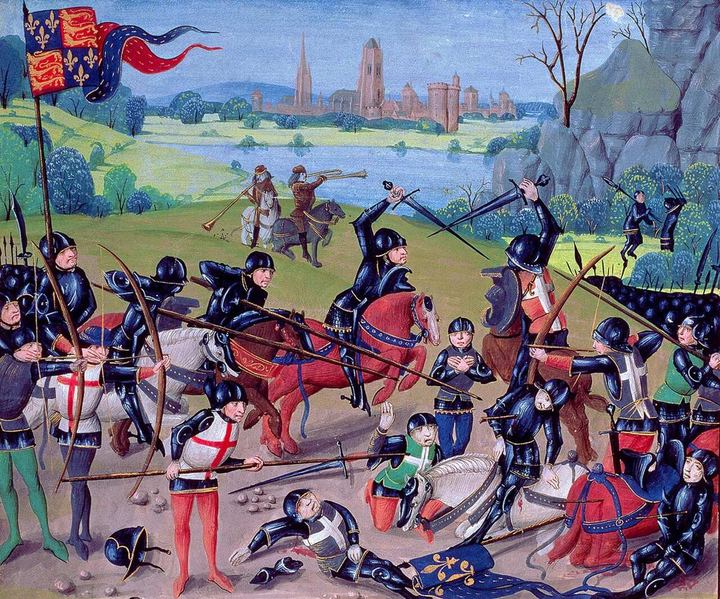
The St Crispin's Day speech is King Henry's address to his nobles in Act 4, Scene 3 of Shakespeare's Henry V, first performed in 1599. It is set on the morning of 25 October 1415 at Agincourt in northern France, where a small English army, worn down by sickness and a long march, faces a much larger French host. The day was the feast of Saints Crispin and Crispinian, two brothers martyred in Roman Gaul and venerated as patrons of shoemakers. The speech grows from a single remark. The Earl of Westmorland wishes they had here one ten thousand of the men in England who do no work today. Henry, entering, answers that wish in about fifty lines of blank verse. He first turns the arithmetic around: if they are marked to die, they are enough to grieve their country; if to live, the fewer men, the greater share of honour. He confesses that if it is a sin to covet honour he is the most offending soul alive, and he will not lose a share of it to one man more. He then offers safe conduct and money to any soldier who has no stomach for the fight, since he would not die in the company of a man who fears to die with him. The second half looks into the future. Every survivor will stand on tiptoe when the day is named, feast his neighbors each year on its vigil, strip his sleeve to show his scars, and tell the story to his son, until the names of Harry the King, Bedford, Exeter, Warwick, Talbot, Salisbury and Gloucester are household words. The climax is the line We few, we happy few, we band of brothers: whoever sheds his blood with the king shall be his brother, however low his birth, and gentlemen in England now abed will hold their manhoods cheap. Shakespeare took the wish for more men from Holinshed's Chronicles, which assigns it to an unnamed soldier. The speech became one of the most famous in English, filmed by Laurence Olivier in 1944 and Kenneth Branagh in 1989, and its phrase band of brothers has been borrowed by admirals, soldiers and historians.
Virtues in this work
- Fortitude: Facing a far larger French army, Henry refuses to wish for one man more and resolves to fight with those he has.
- Honor: Henry confesses that if it be a sin to covet honour he is the most offending soul alive, and makes honour the prize of the day.
- Friendship: He promises that whoever sheds his blood with him shall be his brother, however humble his condition.
- Magnanimity: Henry offers passports and money to any man unwilling to fight rather than compelling an unwilling soldier.
Plot or Argument
- Westmorland's wish
Looking at the odds, the Earl of Westmorland wishes for ten thousand of the idle men at home in England.
- The fewer men, the greater share of honour
Henry rejects the wish: if they die, fewer men is less loss to England; if they live, fewer men means more honour for each, which he admits he covets.
- Leave to depart
He offers passports and convoy money to any man without stomach for the fight, refusing to die in the company of one who fears to die with him.
- The feast of Crispian remembered
He imagines each survivor in old age feasting his neighbors, showing his scars, naming the lords, and teaching the story to his son until the end of the world.
- We band of brothers
Whoever sheds blood with the king becomes his brother and is ennobled by the day, while gentlemen safe in England will count themselves accursed for missing it.
Characters
- King Henry V, speaker
The young king of England, rallying his outnumbered nobles on the morning of Agincourt.
- Earl of Westmorland, interlocutor
Henry's cousin, whose wish for ten thousand more men prompts the speech.
Lessons
Turning weakness into privilege
Henry does not deny that the English are few; he redefines what fewness means. Fewer men divides honour among fewer sharers, so the army's weakness becomes the source of its glory. A leader's first act here is to change how his men see their situation.
- How does Henry answer both possibilities, death and survival, in his first argument?
- Is it honest for Henry to treat the odds as an advantage?
- What would have happened to morale if Henry had agreed with Westmorland?
The honour of free consent
Henry offers money and safe passage to anyone who wishes to leave. By making the fight voluntary he turns his soldiers into companions who choose their danger, and the choice is part of what makes the day honourable.
- Why does Henry offer passports and crowns for convoy?
- Why would he not die in that man's company who fears his fellowship?
- Does a free choice make a sacrifice more honourable?
Memory as reward
The second half of the speech promises no plunder, only remembrance: the vigil feast, the shown scars, the names in flowing cups, the story taught to sons. Henry roots honour in a community that remembers, and makes brotherhood the highest rank.
- What rewards does Henry promise, and what does he leave out?
- Why does he name his nobles so precisely?
- What does it mean that this day shall gentle his condition?
Context
Henry V invaded France in August 1415 to press his claim to the French crown, took Harfleur after a costly siege in which dysentery killed many of his men, and marched toward Calais. A large French army blocked him near Agincourt, and on 25 October, the feast of Saints Crispin and Crispinian, the English archers and men-at-arms won a famous victory on muddy ground. Shakespeare's audience of 1599 knew the battle as a high point of English memory at a time when England was again at war, with the Earl of Essex campaigning in Ireland.
Composition
Shakespeare wrote Henry V in 1599 as the last play of his second tetralogy, drawing chiefly on Raphael Holinshed's Chronicles (1587), which reports that one of the host wished aloud for more of the good soldiers then idle in England, and that the king rebuked him. Shakespeare gives the wish to Westmorland and expands the king's reply into the Crispin speech. A shorter quarto text appeared in 1600; the fuller text, used here, is from the First Folio of 1623.
Reception
The speech is among the most quoted passages in Shakespeare. Laurence Olivier's 1944 film, made during the Second World War, and Kenneth Branagh's 1989 film both build toward it. Nelson borrowed band of brothers for his captains, and Stephen Ambrose's 1992 history of an American paratrooper company, Band of Brothers, took its title from it.
Comparisons
- friends-romans-countrymen
Both are Shakespearean set-piece orations, but Henry rallies loyal men openly toward a shared danger, while Antony turns a crowd by irony and indirection.
- elizabeth-speech-at-tilbury
Elizabeth I addressed her troops before the Armada threat of 1588 with the same claim of a ruler sharing her soldiers' danger, a decade before Shakespeare wrote Henry's speech.
- pericles-funeral-oration
Pericles honours the dead after the fact and makes their city their memorial, while Henry promises the living a remembrance kept alive at every year's feast.
- lepanto
Chesterton's Don John and Shakespeare's Henry are both young commanders who meet a great host with a call to glory and faith.
Quotes
Frequently cited
“If we are mark’d to die, we are enough To do our country loss; and if to live, The fewer men, the greater share of honour.”
Frequently cited
“We few, we happy few, we band of brothers. For he today that sheds his blood with me Shall be my brother; be he ne’er so vile, This day shall gentle his condition;”
Frequently cited
“And gentlemen in England now abed Shall think themselves accurs’d they were not here, And hold their manhoods cheap whiles any speaks That fought with us upon Saint Crispin’s day.”
“But if it be a sin to covet honour, I am the most offending soul alive.”
“That he which hath no stomach to this fight, Let him depart. His passport shall be made, And crowns for convoy put into his purse. We would not die in that man’s company That fears his fellowship to die with us.”
“Then will he strip his sleeve and show his scars, And say, “These wounds I had on Crispian’s day.””
For Students
A reading companion for classical Christian high school students. See the student guide.
Reading Guide
Watch for
- How Henry answers Westmorland's wish point by point, beginning with the two outcomes of being marked to die or to live.
- The confession that he covets honour, set against his indifference to gold and garments.
- The offer of passports and crowns for convoy to anyone without stomach for the fight.
- The shift into future tense as Henry imagines old soldiers feasting their neighbors and showing their scars.
- The list of noble names, then the widening to every man who sheds his blood with the king.
Key terms and names
- Saint Crispin's day
- 25 October, the feast of the martyr brothers Crispin and Crispinian, patron saints of shoemakers; Agincourt was fought on it in 1415.
- Agincourt
- The battle in northern France where Henry's outnumbered army defeated the French.
- Westmorland
- Ralph Neville, Earl of Westmorland, Henry's cousin, whose wish for more men opens the scene.
- Vigil
- The evening before a feast day; Henry's veterans will feast their neighbors on the vigil of Crispian.
- Gentle his condition
- To raise a man to the rank of gentleman; Henry says fighting beside him will ennoble even the lowliest soldier.
- Blank verse
- Unrhymed iambic pentameter, the measure of Shakespeare's dramatic speech, used here for Henry's address.
- Holinshed's Chronicles
- The 1587 English history from which Shakespeare took the soldier's wish and the king's reply.
Seminar Questions
- Comprehension What does Westmorland wish for, and how does Henry first reply?
- Comprehension What will the survivors do each year on the vigil of the feast, according to Henry?
- Interpretation Why does Henry say it would be a sin to wish for more men, and is his love of honour a fault or a virtue?
- Interpretation What is the purpose of offering passports and money to anyone who wishes to leave?
- Interpretation How does Henry move from naming his great lords to calling every soldier his brother?
- Interpretation Why does the speech end with the gentlemen in England now abed rather than with the battle?
- Big Question Can the desire for honour be a proper motive for a Christian, or must it always be purified into something else?
Faith Connections
- 1 Samuel 14:6 (Scripture)
Jonathan tells his armor-bearer that there is no restraint to the Lord to save by many or by few, a faith that lies behind Henry's refusal to wish for one man more.
- Judges 7:2-7 (Scripture)
God reduces Gideon's army and sends home the fearful so that Israel cannot boast of its own strength; Henry likewise sends away whoever has no stomach to the fight.
- John 15:13-15 (Scripture)
Christ calls his disciples friends and names laying down one's life as the greatest love, a deeper version of Henry's promise that whoever sheds his blood with him shall be his brother.
- Augustine, City of God V.12-19 (Church Fathers)
Augustine weighs the Roman love of glory, granting that it restrained worse vices yet ranking it below the love of God; a frame for Henry's confession that he covets honour, and for his order after the battle to sing Non nobis.
Logic and Rhetoric
Central argument: If the English die, fewer men means less loss to England; if they win, fewer men means a greater share of honour for each. Honour is worth more than safety, and it is shared only with those who freely choose to stay. Those who stay will be remembered and made brothers of the king. Therefore no one should wish for one man more.
Rhetorical device: anaphora and climax. In the line We few, we happy few, we band of brothers, the repeated we builds in three steps from small numbers to joy to kinship.
Debate: Resolved: that Henry's speech at Agincourt is a model of honest leadership rather than manipulation.
Memory Work
We few, we happy few, we band of brothers. For he today that sheds his blood with me Shall be my brother; be he ne’er so vile, This day shall gentle his condition;
If we are mark’d to die, we are enough To do our country loss; and if to live, The fewer men, the greater share of honour.
Writing Prompts
Essay: Analyze how Henry moves his hearers from Westmorland's fear of being too few to the conviction that fewness is an honour, tracing the stages of the speech.
Comparison with Mark Antony's Funeral Oration ("Friends, Romans, countrymen"): Compare Henry's Crispin speech with Antony's funeral oration in Julius Caesar. Which speaker is more honest with his audience, and how does Shakespeare let us judge?
Medical Lens
Henry promises his men that their scars will become badges displayed every year at the Crispian feast, an early literary picture of how veterans carry and narrate war wounds. The army Shakespeare depicts had been weakened by the dysentery that killed many men at the siege of Harfleur, a fact he mentions elsewhere in the play rather than in this speech.
- Act 4, Scene 3 (the Crispian feast)
The imagined veteran strips his sleeve each year to show the wounds he received on Crispian's day and tells their story to his neighbors.
Creative Prompts
- Classroom
Stage the scene with Westmorland and a group of nobles reacting silently to each turn of the speech, then discuss which lines would change their faces most.
- Adaptation
Watch the speech in Olivier's 1944 film and Branagh's 1989 film and compare how each actor builds from the reply to Westmorland to the band of brothers.
- Essay
Argue whether Henry's speech is an honest account of honour or a skillful piece of persuasion, using his offer of safe conduct as evidence.
Further Reading
- Henry V (The Arden Shakespeare, Third Series), William Shakespeare, ed. T. W. Craik
Annotated text with the Holinshed sources.
- Agincourt: Henry V and the Battle That Made England, Juliet Barker
- The Face of Battle, John Keegan
Includes a celebrated chapter reconstructing Agincourt from the soldier's point of view.
- 1599: A Year in the Life of William Shakespeare, James Shapiro
Verification notes
The stored text is an excerpt of Act 4, Scene 3 from the Project Gutenberg Henry V (Folio-based), from Westmorland's wish to the end of Henry's speech; all quotes are found verbatim in it. The Holinshed source, the 1415 date and feast, and the 1600 quarto and 1623 Folio are standard. The exact size of the two armies is disputed among historians, so the summary says only that the English were much outnumbered.
No verification flags recorded.