Work record
First Inaugural Address (Jefferson)
1801 · 19th Century · Oratory · English
Abstract
Background. Quarrels over finance, France, and the Sedition Act of 1798 had hardened two parties by 1800. Republicans won, yet a tie between their own candidates left the choice to the House, which settled it only after weeks of balloting. Federalists then surrendered the executive to their rivals without resistance.
Occasion. Speaking in the one completed wing of a half-built Capitol, the new President addressed legislators and onlookers in the young federal city on the Potomac, the first such ceremony held there.
Content. After a modest opening, the speech pleads for harmony, distinguishes passing disagreement from shared conviction, and defends the vigour of popular rule. It names the country's advantages, defines good government as restraint of injury combined with liberty, and condenses a program, from foreign neutrality to jury trial, into one sweeping sentence.
Teaching. Majorities govern only when reasonable; minorities keep equal protection; error is harmless while argument stays free; citizens should hold to a civic creed and test officials by it.
Significance. The address marked the first transfer of national power between opposing parties under the Constitution, and its phrases about partisan names and foreign ties became fixtures of American political speech, sometimes misattributed to Washington. Historians still debate whether its conciliatory tone signalled a genuine truce between the parties or a prelude to Republican dominance.
Key figures
- Thomas Jefferson: Incoming third President and the speaker
- John Marshall: Chief Justice who swore him in
- John Adams: Defeated incumbent, absent from the ceremony
- Aaron Burr: Running mate whose electoral tie forced a House vote
- George Washington: Honoured in the closing paragraph without being named

Summary
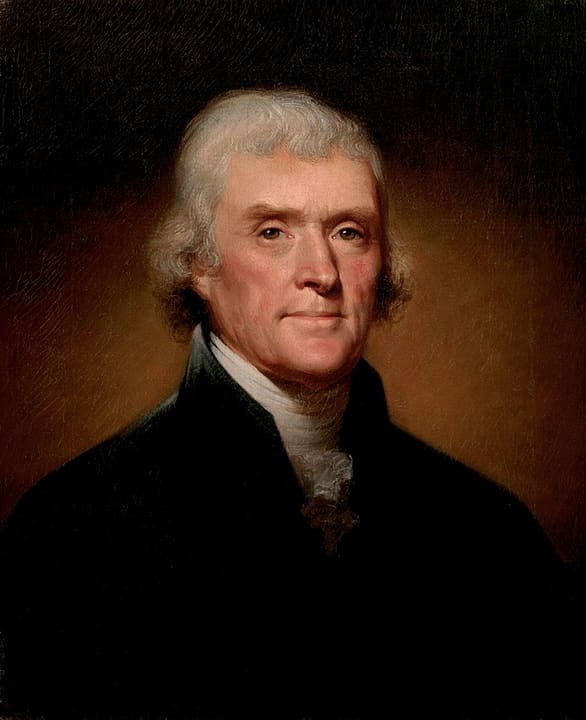
Thomas Jefferson delivered his First Inaugural Address on 4 March 1801 in the Senate chamber of the unfinished Capitol, the first presidential inauguration held in the new federal city of Washington. Chief Justice John Marshall administered the oath. The election of 1800 had been fought bitterly between the Federalists of President John Adams and the Republicans led by Jefferson, in the shadow of the French Revolution, the Quasi-War with France and the Alien and Sedition Acts. Because Jefferson and his running mate Aaron Burr received equal numbers of electoral votes, the House of Representatives had to decide the election, choosing Jefferson on the thirty-sixth ballot in February 1801. Adams left Washington early on the morning of the inauguration. For the first time, power passed from one party to its opponents under the Constitution. The address is short, about 1,700 words in five paragraphs. Jefferson opens by thanking his fellow citizens and confessing that the task is above his talents; he describes a rising nation spread over a wide land and says he relies on the wisdom of the other branches of government. In the second paragraph he turns to the recent contest. Now that the voice of the nation has decided it under the rules of the Constitution, all should unite for the common good, remembering that the majority must rule but its will must be reasonable and the minority's equal rights protected. Having banished religious intolerance, Americans should not countenance political intolerance. Every difference of opinion is not a difference of principle, he says, and he declares that all are Republicans and all are Federalists. Those who would dissolve the Union may be left undisturbed, since error can be tolerated where reason is free to combat it. Against those who fear a republic cannot be strong, he calls this government the strongest on earth and asks whether, if man cannot govern himself, he can be trusted to govern others. The third paragraph lists the blessings of the country, its separation from Europe's wars, room for a thousand generations, equal rights, and a benign religion acknowledging an overruling Providence, and adds one thing more: a wise and frugal government that restrains men from injuring one another and leaves them otherwise free. The fourth paragraph states what he calls the essential principles of the government, among them equal and exact justice, peace and commerce with all nations and entangling alliances with none, support of the state governments, preservation of the general government, majority rule, a militia, civilian supremacy, economy, payment of debts, freedom of religion, of the press and of person under habeas corpus, and trial by jury. He calls them the creed of our political faith. In closing he honours Washington, asks indulgence for his own errors, and prays that the Infinite Power which rules the universe will guide the nation's councils. The library text is the Avalon Project transcription.
Virtues in this work
- Humility: Jefferson opens by declaring the task above his talents and later asks indulgence for errors he expects to make through defect of judgment.
- Magnanimity: After a bitter defeat of his opponents he declares that all are Republicans and all are Federalists and promises to conciliate those who did not vote for him.
- Justice: He names equal and exact justice to all men, of whatever state or persuasion, as the first essential principle of the government.
- Friendship: He asks citizens to restore to social life the harmony and affection without which liberty itself is a dreary thing.
Plot or Argument
- Opening: humility before the charge
Jefferson thanks the assembled citizens, confesses that the task is above his talents, describes a rising nation engaged in commerce with nations who feel power and forget right, and says he will rely on the other authorities of the Constitution, especially Congress, to steer the vessel of state.
- Reconciliation after the contest of 1800
The election has been decided by the voice of the nation under the Constitution. The majority's will must prevail but must be reasonable, and the minority's equal rights must be protected. Americans who have banished religious intolerance should not allow political intolerance. Every difference of opinion is not a difference of principle; all are Republicans and all are Federalists.
- The strength of a republican government
Those who would dissolve the Union may stand undisturbed as monuments of the safety with which error can be tolerated. Jefferson calls the government the strongest on earth because every citizen would rally to the law, and asks whether man, if he cannot govern himself, can be trusted to govern others.
- Blessings and a wise and frugal government
He lists the country's advantages: distance from Europe's wars, abundant land, equal right to the fruits of one's own industry, a benign religion in various forms, and an overruling Providence. One thing more is needed: a government that restrains men from injuring one another, leaves them otherwise free, and does not take from labour the bread it has earned.
- The essential principles of our government
Jefferson compresses into one long sentence the principles that should shape his administration: equal and exact justice, peace and honest friendship with all nations, the rights of the states and the vigor of the general government, elections, majority rule, militia, civilian supremacy, economy, payment of debt, agriculture and commerce, the diffusion of information, freedom of religion and the press, habeas corpus and juries. They are to be the creed of political faith and the touchstone for those in office.
- Closing: Washington, indulgence and a prayer
He honours the first and greatest revolutionary character without naming him, expects to make errors and asks indulgence for them, promises to conciliate opponents, and closes by asking the Infinite Power which rules the destinies of the universe to lead the nation's councils.
Characters
- Thomas Jefferson, speaker
Newly elected third President, addressing Congress and citizens in the Senate chamber.
- John Marshall, Chief Justice
Administered the oath of office; a Federalist and Jefferson's cousin and political opponent.
- John Adams, outgoing President
Federalist defeated in 1800; he left Washington before the ceremony.
- Aaron Burr, Vice President
Tied with Jefferson in electoral votes, sending the election to the House of Representatives.
- George Washington, praised but unnamed
Called our first and greatest revolutionary character in the closing paragraph.
Lessons
A peaceful transfer of power
In 1801 the Federalists handed the executive to their opponents after a bitter campaign and a deadlocked electoral count. Jefferson's address treats the result as decided by the voice of the nation under the rules of the Constitution, and asks everyone to arrange themselves under the will of the law.
- Why does Jefferson stress that the election was decided according to the rules of the Constitution?
- What might have happened if the losing side had refused to accept the result?
- Why is it significant that a defeated party gave up power without force?
Majority rule and minority rights
Jefferson holds both that the will of the majority must prevail and that it must be reasonable, leaving the minority its equal rights. He later calls absolute acquiescence in majority decisions the vital principle of republics, so the two ideas are meant to stand together.
- What does Jefferson say would happen if the majority violated the rights of the minority?
- How can a majority's will be unreasonable?
- Who decides whether the majority is being reasonable?
Difference of opinion and difference of principle
Jefferson argues that Americans have called by different names brethren of the same principle. He compares political intolerance to the religious intolerance the country had banished and trusts reason, left free, to answer error.
- What principles does Jefferson think Republicans and Federalists share?
- Why does he compare political intolerance with religious intolerance?
- Is it always possible to tell a difference of opinion from a difference of principle?
A creed of political faith
The list of essential principles gathers in one sentence ideas from the Declaration, the Constitution and the Bill of Rights, from justice for all persuasions to trial by jury. Jefferson wants citizens to learn them as a civic creed and use them as a touchstone to judge their leaders.
- Which principles on the list concern foreign affairs, and which concern liberty at home?
- Why might Jefferson use religious words such as creed and faith for political principles?
- Which principle on the list would you call most important, and why?
Context
The 1790s divided American leaders into Federalists, who favoured Hamilton's financial program and closer ties with Britain, and Republicans, led by Jefferson and Madison, who feared consolidated power and sympathized at first with revolutionary France. The Alien and Sedition Acts of 1798 and the Quasi-War with France sharpened the conflict. In the election of 1800 the Republicans won the presidency and Congress, but Jefferson and Burr tied with 73 electoral votes each, and the House chose Jefferson on 17 February 1801 after thirty-six ballots.
Composition
Jefferson wrote the address himself in the weeks before the inauguration; drafts survive among his papers. He delivered it on 4 March 1801 in the Senate chamber, the only finished wing of the Capitol, reportedly in a low voice that many could not hear, and the National Intelligencer printed it the same day. The library text is the Avalon Project transcription.
Reception
Federalist and Republican newspapers alike printed the address, and many Federalists welcomed its conciliatory tone. Its phrases, especially the line about all being Republicans and Federalists and the words entangling alliances with none (often wrongly credited to Washington's Farewell Address), entered American political vocabulary. Historians have discussed whether the conciliatory language described a real truce or prepared the way for Republican dominance; Jefferson himself later called his election the revolution of 1800.
Comparisons
- jefferson-selected-writings
Jefferson's letters and Notes on the State of Virginia develop the ideas compressed in the essential principles: freedom of religion, agrarian citizenship, education and limited government.
- washington-farewell-address-and-selected-letters
Washington's Farewell Address warns against the spirit of party and permanent alliances; Jefferson, speaking after the fiercest party contest yet, answers with entangling alliances with none and a call to unity.
- lincoln-second-inaugural-address
Both are short inaugurals delivered after deep national division that seek reconciliation and close with an appeal to Providence.
- virginia-statute-for-religious-freedom
Jefferson's appeal to tolerate error where reason is free to combat it repeats the statute's conviction that truth needs only free argument and debate.
- the-federalist-papers
Jefferson's question whether angels in the forms of kings could govern man meets Madison's remark in Federalist No. 51 that if men were angels no government would be necessary.
- the-founding-documents
The essential principles restate rights from the Declaration, the Constitution and the Bill of Rights, including free exercise of religion, a free press, habeas corpus and jury trial.
Quotes
Frequently cited
“though the will of the majority is in all cases to prevail, that will to be rightful must be reasonable; that the minority possess their equal rights, which equal law must protect, and to violate would be oppression.”
Frequently cited
“But every difference of opinion is not a difference of principle. We have called by different names brethren of the same principle. We are all Republicans, we are all Federalists.”
Frequently cited
“a wise and frugal Government, which shall restrain men from injuring one another, shall leave them otherwise free to regulate their own pursuits of industry and improvement, and shall not take from the mouth of labor the bread it has earned.”
Frequently cited
“peace, commerce, and honest friendship with all nations, entangling alliances with none”
“Sometimes it is said that man can not be trusted with the government of himself. Can he, then, be trusted with the government of others? Or have we found angels in the forms of kings to govern him? Let history answer this question.”
For Students
A reading companion for classical Christian high school students. See the student guide.
Reading Guide
Watch for
- The image of the vessel in which we are all embarked at the end of the first paragraph, and how Jefferson places himself inside it rather than at its helm alone.
- The turn in the second paragraph from the contest of opinion to the sacred principle of majority rule with minority rights.
- The pair of questions about whether man can govern himself or others, and the appeal to history to answer them.
- The single long sentence of essential principles in the fourth paragraph, and the words creed, text and touchstone that follow it.
- The unnamed tribute to Washington and the closing prayer to the Infinite Power which rules the destinies of the universe.
Key terms and names
- Federalists
- The party of Washington's and Adams's administrations, favouring a strong national government and Hamilton's financial system; defeated in 1800.
- Republicans
- Jefferson's and Madison's party, favouring a limited federal government and the rights of the states; not the same as the later Republican Party of 1854.
- Entangling alliances
- Permanent treaties binding the United States to join in other nations' wars, which Jefferson's principles reject.
- Habeas corpus
- The legal right of an imprisoned person to be brought before a judge to test whether the detention is lawful; one of Jefferson's listed freedoms.
- Sheet anchor
- A ship's largest anchor, used in emergencies; Jefferson's image for the general government as the security of peace at home and safety abroad.
- Providence
- God's guiding care over the world; Jefferson speaks of an overruling Providence that delights in the happiness of man here and hereafter.
Seminar Questions
- Comprehension What does Jefferson say all citizens should do now that the election has been decided?
- Comprehension What one thing more, beyond the country's blessings, does Jefferson say is necessary to make Americans happy and prosperous?
- Comprehension Name four of the essential principles Jefferson lists in the fourth paragraph.
- Interpretation Why does Jefferson say that those who wish to dissolve the Union should be left undisturbed?
- Interpretation Jefferson calls the American government the strongest on earth. What kind of strength does he mean?
- Interpretation Why might Jefferson describe the principles as a creed and a touchstone rather than simply a list of laws?
- Big Question Can people who disagree strongly about policy still share the same principles, as Jefferson claims?
Faith Connections
- Romans 12:18 (Scripture)
If it be possible, as much as lieth in you, live peaceably with all men; Jefferson asks opponents after a bitter election to restore harmony and affection.
- Acts 4:32 (Scripture)
The early believers were of one heart and of one soul; Jefferson calls on his fellow citizens to unite with one heart and one mind.
- 1 Samuel 8 (Scripture)
Israel asks for a king like the nations, and Samuel warns what a king will take; Jefferson's question about angels in the forms of kings also doubts that rulers are better than the ruled.
- Augustine, City of God XIX.24 (Great Conversation)
Augustine defines a people as a multitude bound together by agreement about the things it loves, a frame for Jefferson's claim that Americans share principles beneath their party names.
Logic and Rhetoric
Central argument: The election has been lawfully decided; Americans differ in opinion but share the same principles; a republic that leaves reason free can safely tolerate error and is the strongest of governments; therefore citizens should unite under the essential principles and judge their leaders by them.
Rhetorical device: rhetorical question (hypophora). In paragraph 2 Jefferson asks whether man, untrusted with governing himself, can govern others, and whether angels in the forms of kings have been found (quote 2), then hands the answer to history.
Debate: Resolved: that a free people should tolerate those who wish to dissolve their government, as long as they act only by argument.
Memory Work
But every difference of opinion is not a difference of principle. We have called by different names brethren of the same principle. We are all Republicans, we are all Federalists.
peace, commerce, and honest friendship with all nations, entangling alliances with none
Writing Prompts
Essay: Choose three of Jefferson's essential principles and explain how each answers the conflicts of the 1790s that led up to the election of 1800.
Comparison with Farewell Address and Selected Letters: Compare Washington's warnings about faction and foreign alliances in the Farewell Address with Jefferson's call to unity and his rule of entangling alliances with none.
Medical Lens
The address concerns party conflict, constitutional principle and foreign policy and has no medical content.
Creative Prompts
- Classroom
Divide the list of essential principles among small groups; each group finds where its principle appears in the Declaration, the Constitution or the Bill of Rights and reports back.
- Dialogue
Write a conversation between a Federalist and a Republican newspaper editor on the evening of 4 March 1801, each deciding how to report the speech.
- Essay
Explain what Jefferson means by every difference of opinion is not a difference of principle, using his own examples from the address.
- Fiction
Tell the story of a young clerk in the crowded Senate chamber who strains to hear the new President's quiet voice and reads the printed speech that night.
Further Reading
- Jefferson the President: First Term, 1801-1805, Dumas Malone
Fourth volume of Malone's biography, opening with the inauguration and the address.
- Adams vs. Jefferson: The Tumultuous Election of 1800, John Ferling
Narrative of the campaign, the electoral tie and the House vote.
- Jefferson's Second Revolution: The Election Crisis of 1800 and the Triumph of Republicanism, Susan Dunn
Study of the election and the transfer of power it produced.
Verification notes
All five quotations were found by Grep in content/texts/jefferson-first-inaugural-address.txt (Avalon Project transcription). The Avalon text reads We are all Republicans, we are all Federalists, capitalized and with a comma; Jefferson's own manuscript and some early printings give the line in lower case with a colon (we are all republicans: we are all federalists), so wording and punctuation vary among editions. The House vote of 17 February 1801 on the thirty-sixth ballot, the 73-73 electoral tie, Marshall's administration of the oath and Adams's early departure are standard facts.
- Confirm that the National Intelligencer printed the address on the day of delivery.
- Confirm the reports that Jefferson's delivery was too quiet for much of the audience to hear.