Great Art · Gothic
The sculptors of Chartres
The Royal Portal and the north porch: kings, queens and prophets in column-statues, carved for a church of light and glass.
The workshops
No one name signs the sculpture at Chartres. In the middle of the twelfth century a workshop of masons cut the west, or Royal, portal: long column-statues of kings and queens of Judah, a Christ in Majesty in the tympanum, and a whole stone Bible around the doors. After the fire of 1194, later shops carved the north and south porches with still more freedom — Melchizedek and Abraham, the Incarnation, a crowd of saints — while the glass went up inside.
The figures are not portraits of living French kings; they are the royal line of Scripture, made to stand as columns and still look like people. A student can learn more from one jamb at Chartres — the fall of a carved robe, the book in a prophet's hand, the almost shy turn of a head — than from a long account of the Gothic. These carvers spent a city's fortune and a generation's skill on the door by which people entered to hear the Word.
Key sculptures
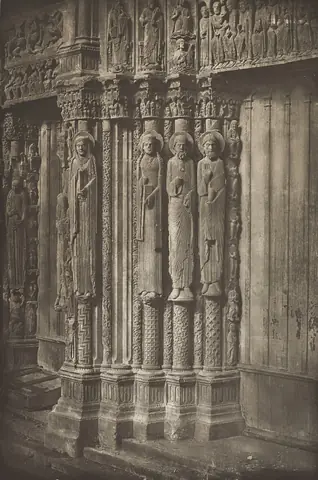
Image: Wikimedia Commons · CC0 (public domain) Right door of the Royal Portal, photographed by Charles Nègre
Look closely. Charles Nègre's mid-nineteenth-century photograph of the right door of the west portal, with the column-statues and the small Madonna of the trumeau. Look at the long, quiet figures against the deep shadow of the door, and at how an early photograph already knows to stand back and let the carved line of the jambs run from base to capital.
In the library: The Bible (KJV) · Mary, mother of Jesus
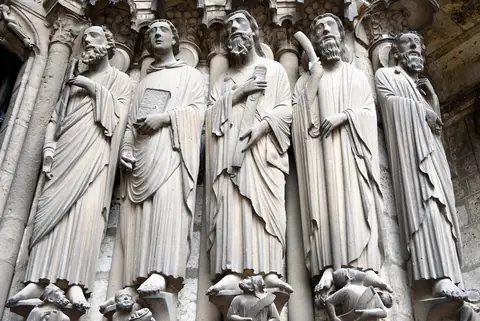
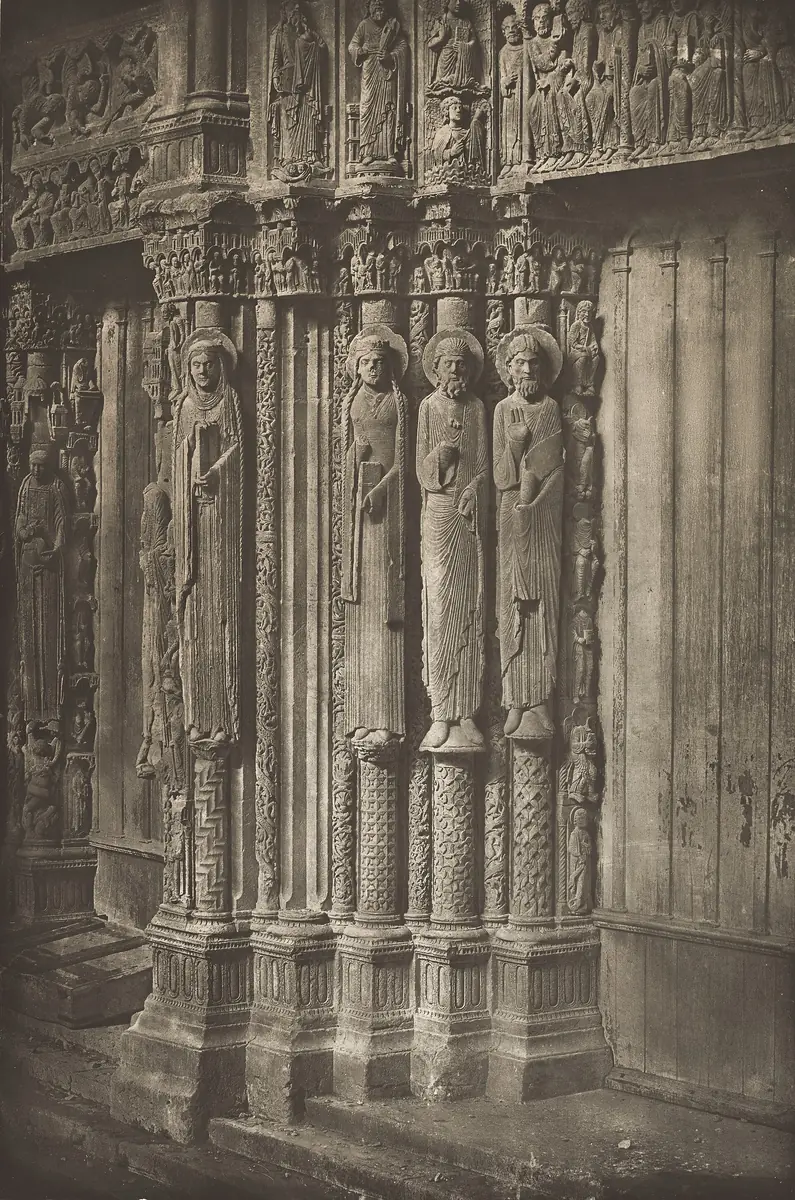
Image: Wikimedia Commons · CC0 (public domain) Jamb statues, Royal Portal
Look closely. The column-statues of the central bay: elongated kings and queens with their books and scrolls, their feet on carved bases, their heads under carved canopies. Look at the almost cylindrical fall of the robes, the thin faces, and the way each figure is both a person and a load-bearing shaft.
In the library: The Bible (KJV)
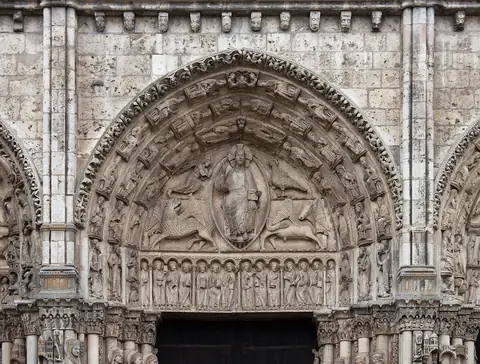
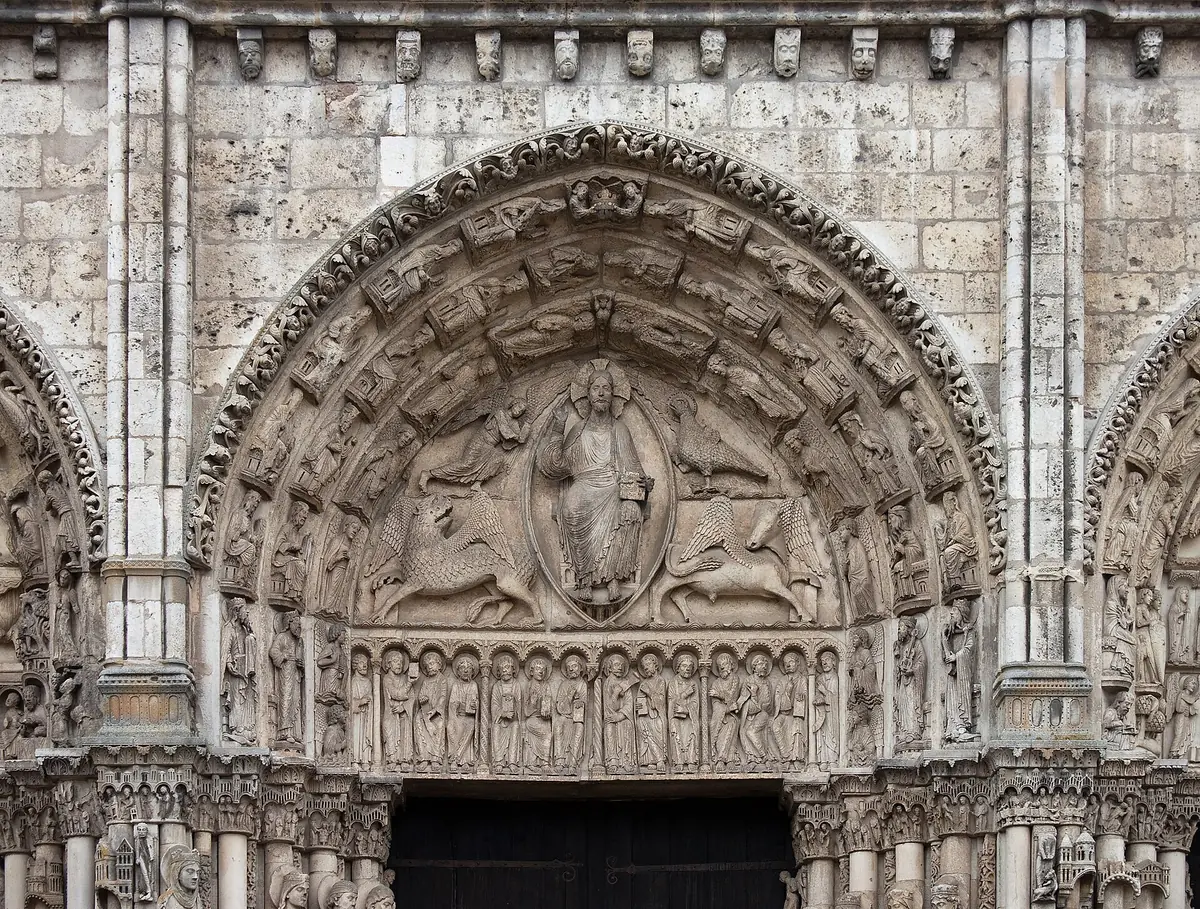
Image: Wikimedia Commons · CC BY 3.0 · Photo: Eusebius Christ in Majesty, central tympanum of the Royal Portal
Look closely. In the central tympanum, Christ sits in a mandorla, the four living creatures around him, the apostles in the lintel below. Look at the firm, almost severe symmetry, the blessing hand, and the way the archivolts pack angels and elders into the stone around the vision.
In the library: The Bible (KJV) · Jesus Christ
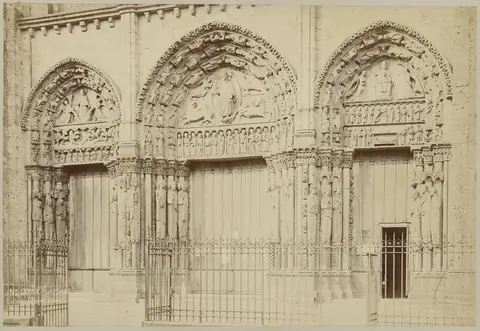
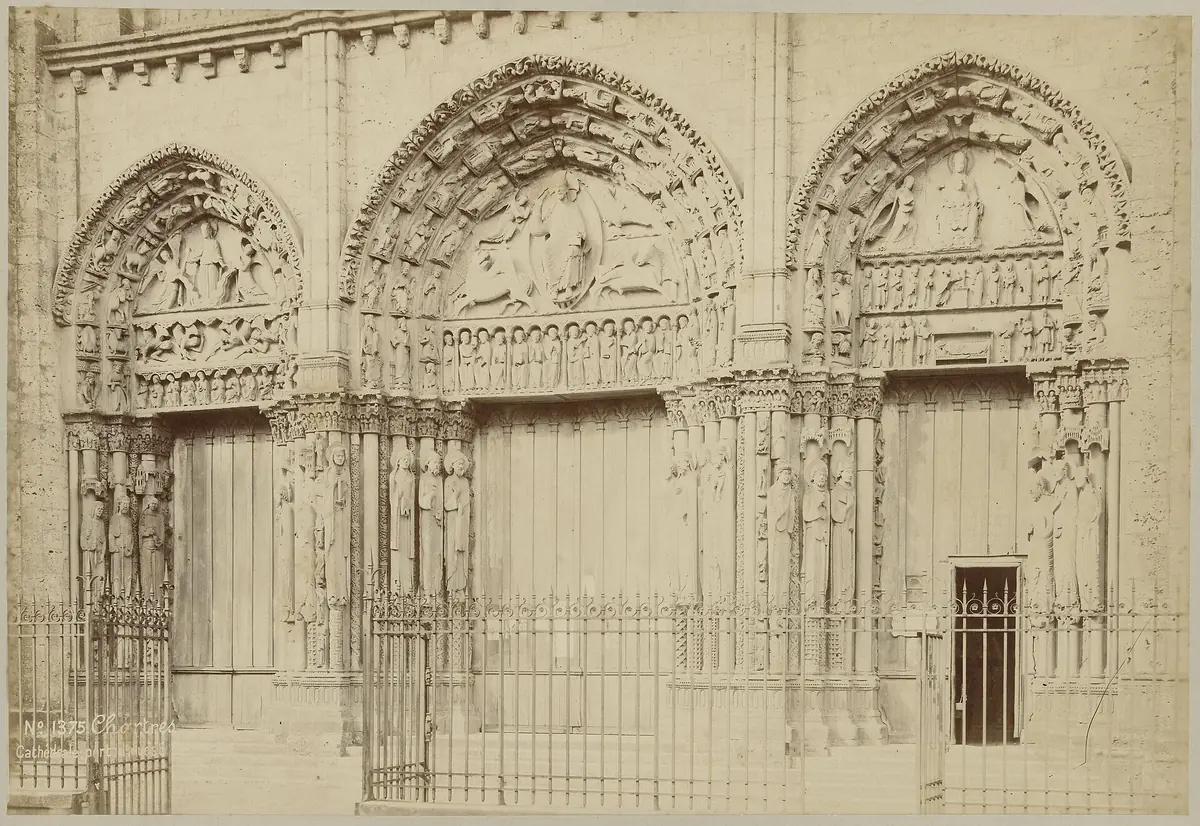
Image: Wikimedia Commons · CC0 (public domain) The west portal as a whole
Look closely. A historic photograph of the three doors of the Royal Portal, the Incarnation, the Majesty, and the Ascension set over the three openings, a low fence in front. Look at the portal as a single composed face of the church, and at how the carved line of the jambs knits the three bays together.
In the library: The Bible (KJV) · Jesus Christ · Mary, mother of Jesus
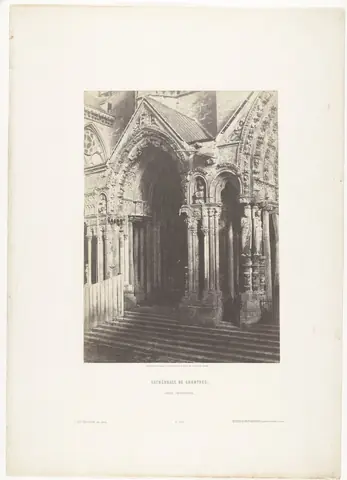
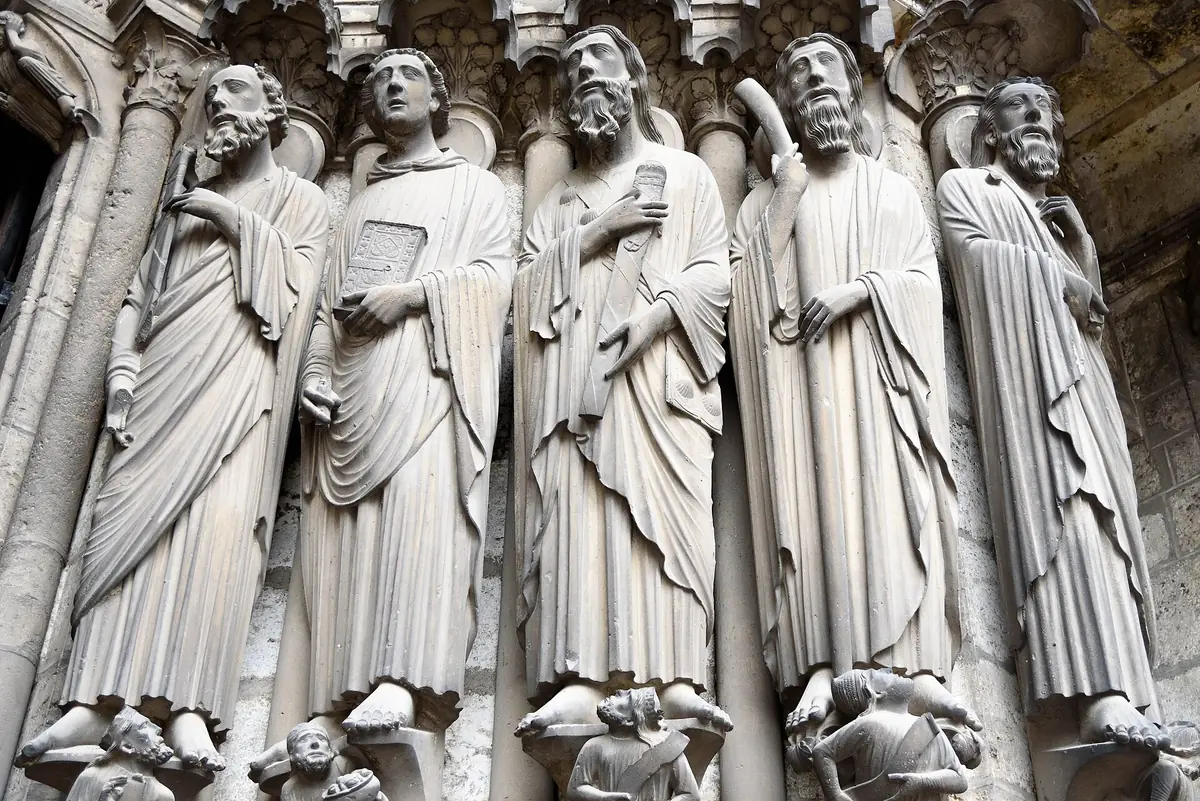
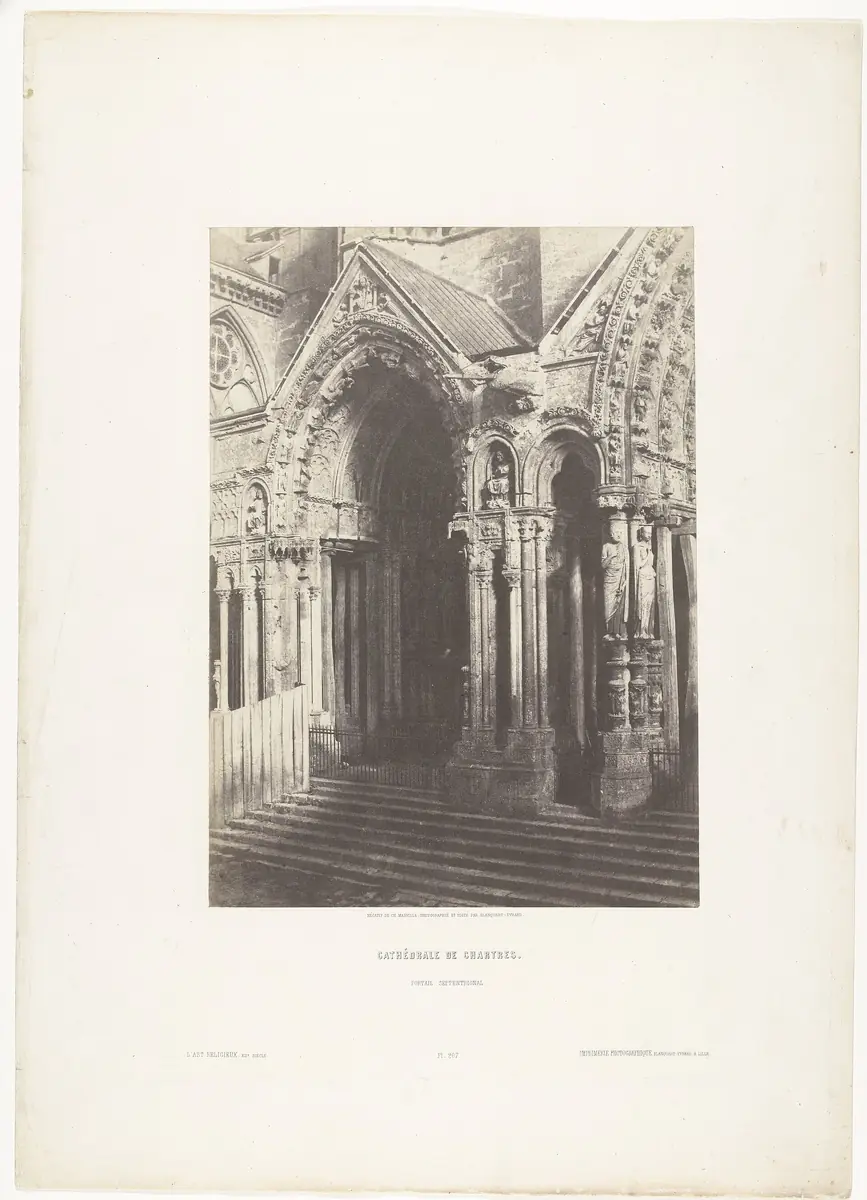
Image: Wikimedia Commons · CC0 (public domain) The north porch
Look closely. A detail of the later north porch, where the figures have more room to turn and the drapery is softer than on the west. Prophets and patriarchs stand in conversation. Look at the freer stance and at the deeper undercutting — a shop that has learned from the Royal Portal and is no longer bound to the shape of a single column.
In the library: The Bible (KJV) · Abraham and Sarah · Moses


What to watch for in The sculptors of Chartres
Look slowly- A statue that is also a column. The early figures are long and still, because they have to be architecture.
- A later porch that breathes. On the north, bodies turn and talk; the stone has learned an easier stance.
- Kings and queens of Scripture. Do not read them as portraits of Capetian royalty.
- A tympanum as a sermon. Christ in Majesty over the Royal Portal is the text of the door.
- Old photographs. Charles Nègre's mid-nineteenth-century plate already treats the portal as a thing to be looked at slowly.
Dates and collections follow the holding museums and Wikidata. Images of paintings are photographs of public-domain pictures from Wikimedia Commons or museum open-access releases; photographs of sculpture are used only when the photograph itself is Public domain, CC0, or CC BY with a named credit. Each picture links to its source page with full licence details.