Great Art · Hellenistic
The Hellenistic masters
The age after Alexander: Victory alighting on a ship's prow, a veiled dancer, and the great altar at Pergamon.
Their work
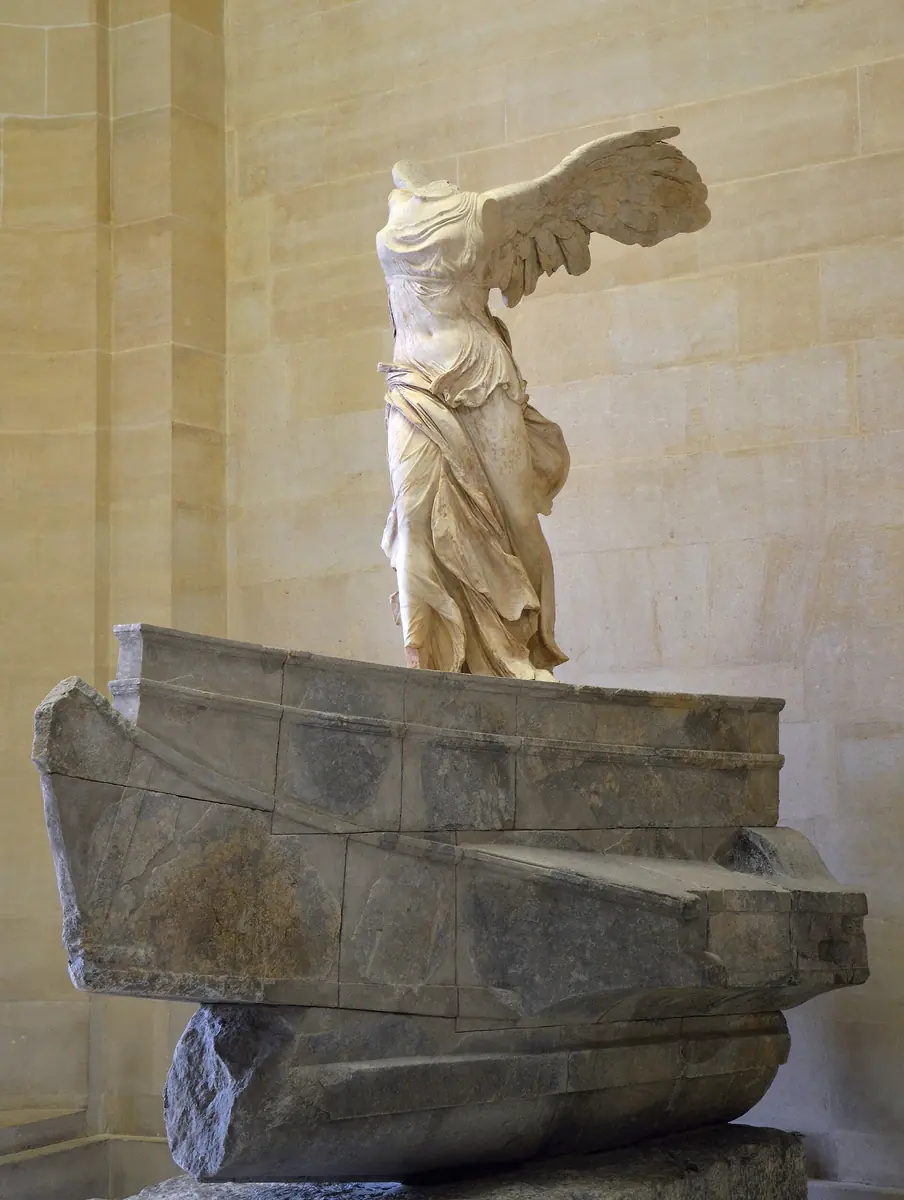
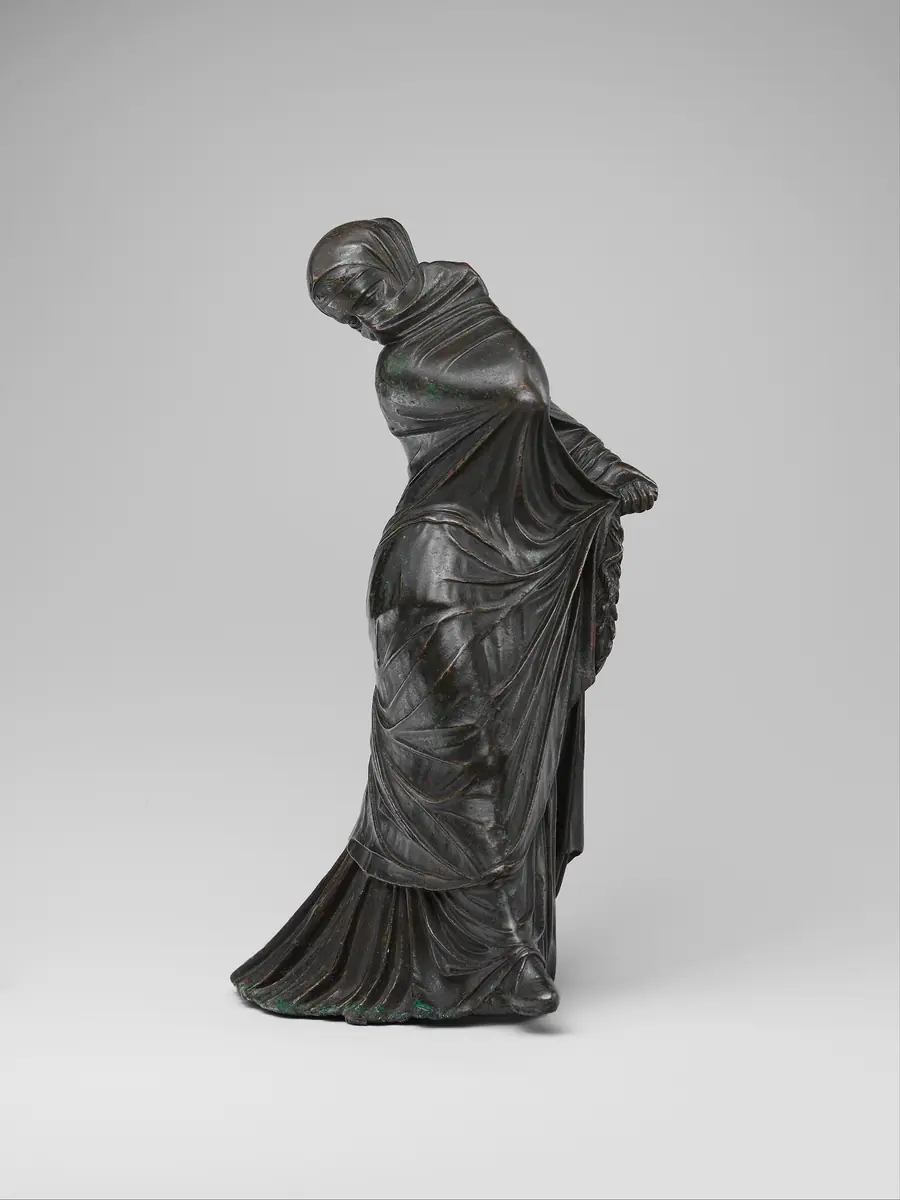
After Alexander's death, Greek sculptors worked for new courts and old sanctuaries from Pergamon to Alexandria. They kept the skill of the fifth century and added movement, wind, age, and theatre. The Nike of Samothrace lands on the prow of a ship, her clothes blown tight against her; a little bronze dancer in New York is wrapped to the eyes; an old market woman in the same museum is allowed to be tired. At Pergamon, Athena and the earth-goddess wrestle across a huge frieze.
The Laocoön group in the Vatican — the Trojan priest and his sons caught by the serpents, a story Virgil would tell in the Aeneid — is the most famous work of the age, and it is named below rather than shown, because the three figures are essentially unclothed. What this page can show is the other gift of the period: drapery in a wind, a face lined by work, and a sacred combat carved so that a goddess still keeps her clothes and her dignity.
Key sculptures
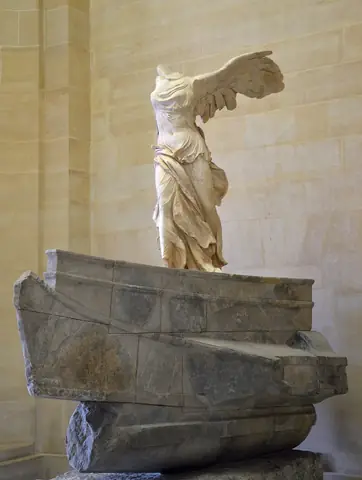
Image: Wikimedia Commons · CC0 (public domain) Nike of Samothrace (Winged Victory)
Look closely. Victory stands on the prow of a stone ship, her great wings open, her clothes driven back by a wind from the sea. The head and arms are lost; the landing is complete. Look at the deep, wet-looking folds over the right leg, the twist of the torso, and the way the cloth breaks against the belt — a goddess who has just touched down.
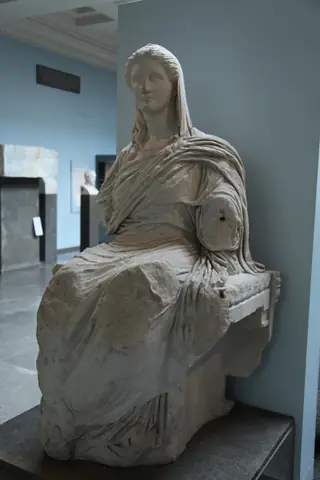
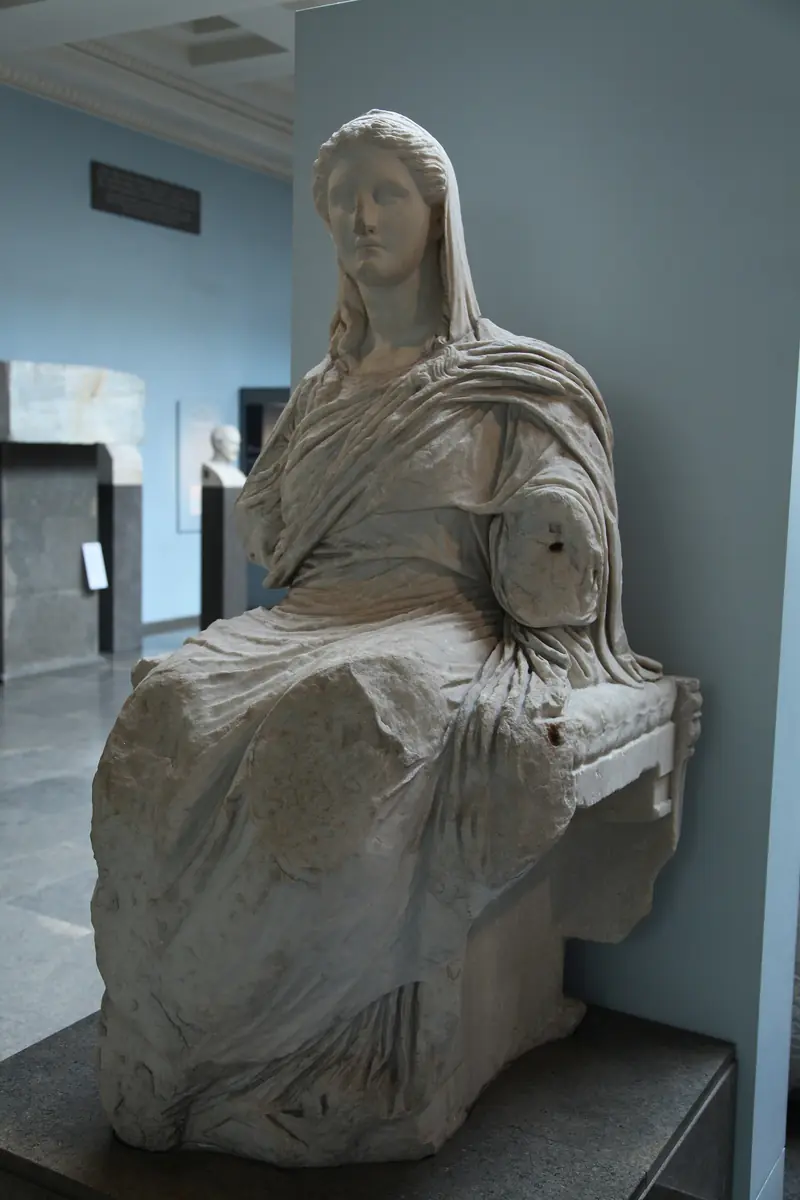
Image: Wikimedia Commons · CC0 (public domain) Demeter of Knidos
Look closely. A seated Demeter, heavily draped, from the sanctuary at Knidos. She sits as a mourning or waiting mother, the himation drawn over her hair, the body a solid pyramid of cloth. Though a little earlier than the high Hellenistic baroque, she is shown here with that later world because she was found in the same wide Greek east, and because her gravity is the other half of Victory's wind. Look at the deep shadow in the lap and at the still, almost rectangular fall of the cloak.
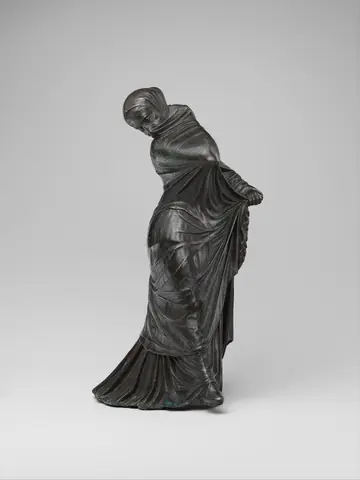
Image: Wikimedia Commons · CC0 (public domain) Veiled and masked dancer
Look closely. A small bronze woman dancing in a long veil that covers her to the face, one hand lifting the cloth, the body turning underneath. Look at how much motion is achieved with a figure you could hold in the palm, and at the tight spiral of the drapery — a performance in a few inches of metal.
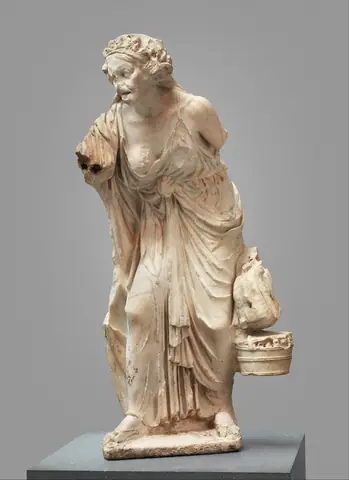
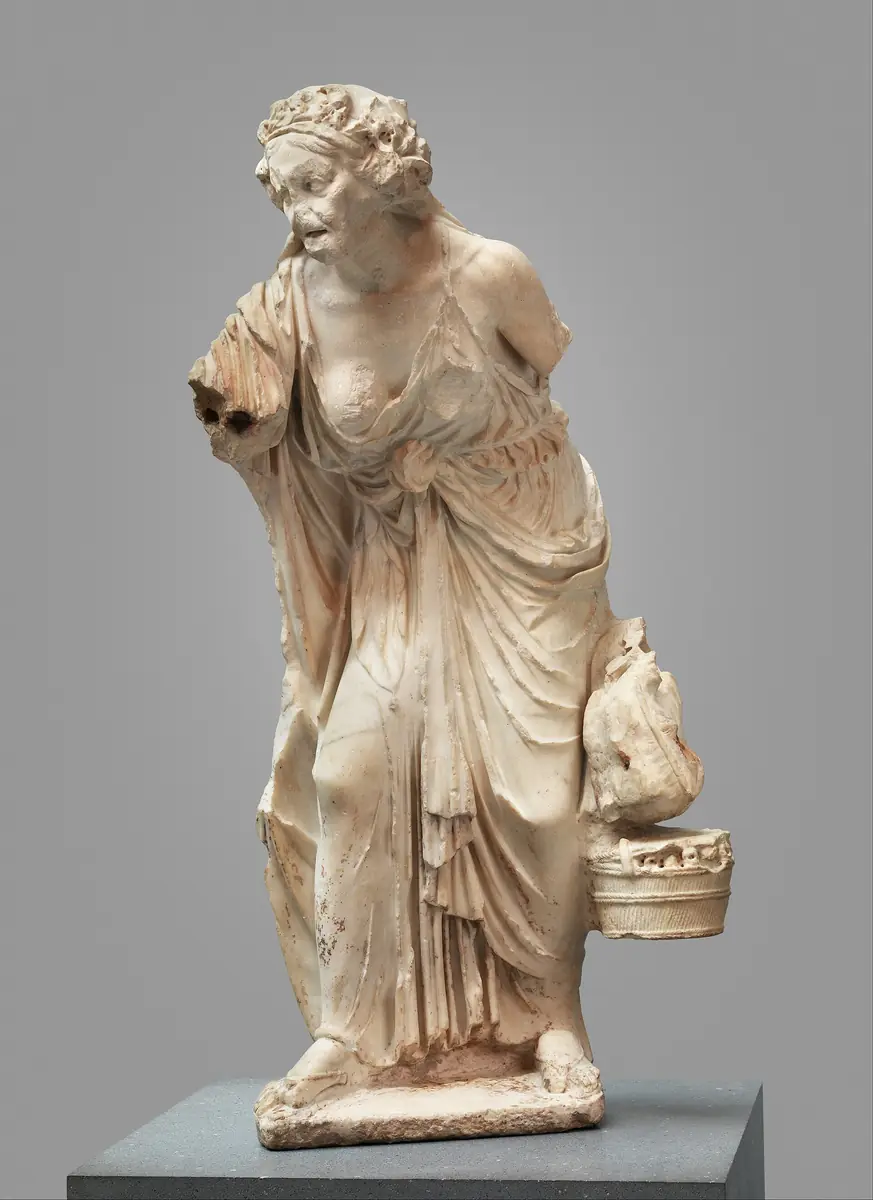
Image: Wikimedia Commons · CC0 (public domain) Old market woman
Look closely. A marble figure of an aged woman in a sleeved chiton and himation, stooped, a basket of fruit or fowl at her side, her face thin and intent. Look at the jut of the shoulder, the open mouth, and the careful, unkind carving of age — a street seller given the same attention as a goddess.
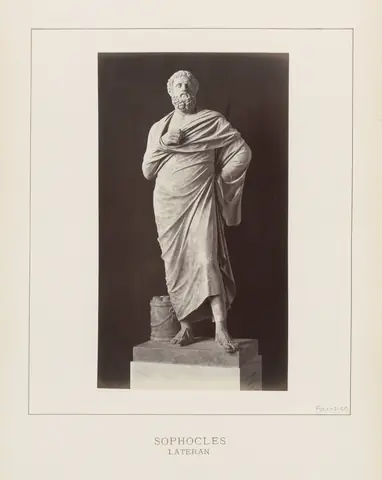
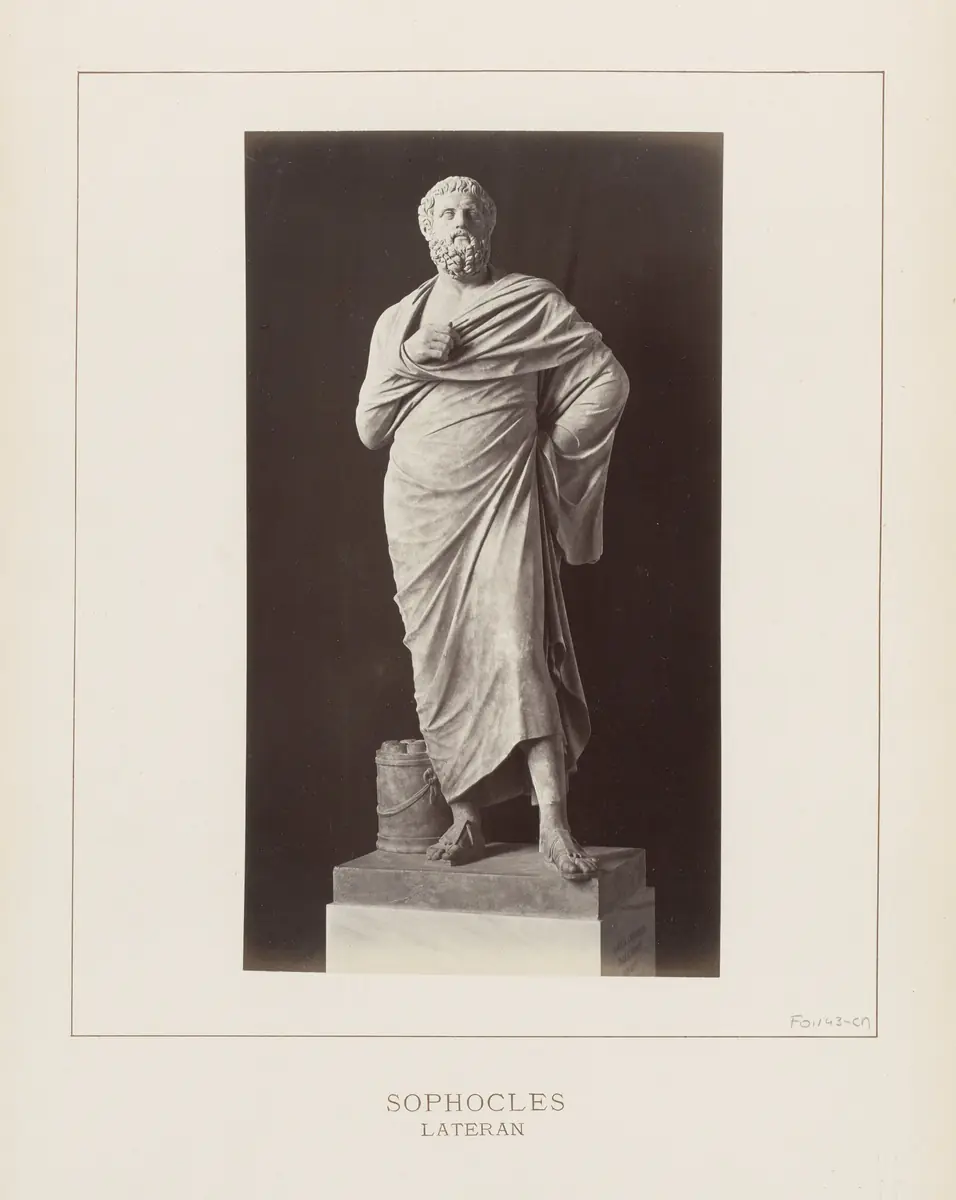
Image: Wikimedia Commons · CC0 (public domain) Sophocles (the Lateran type)
Look closely. A historic photograph of the Lateran Sophocles, a standing poet fully wrapped in a himation, a box of scrolls at his feet. Look at the gathered cloak, the lifted right hand, and the self-possession of a civic portrait — a Hellenistic taste for the thinking public man, not only for the fighting one.


What to watch for in The Hellenistic masters
Look slowly- Cloth in motion. Hellenistic drapery can look wet or wind-blown; follow one fold from shoulder to hem.
- A body implied, not displayed. The Nike and the veiled dancer are fully dressed; the drama is in the cloth.
- Age and work. The old market woman is allowed a stoop and a lined face.
- A monument in pieces. The Nike's head and arms are gone; the landing still reads.
- Casts and originals. The Pergamon panel shown here is a plaster cast of the Berlin frieze; the look of the carving is true, the stone is not.
For older students
These famous works include nudity, so they are named here but not shown. Teachers and parents can decide when to look at them together.
- The Laocoön group, c. 200–20 BC (date debated), Vatican Museums, Rome. The Trojan priest and his sons, essentially unclothed, struggling with the serpents. Virgil tells the story in Aeneid book 2.
- The Dying Gaul, c. 230–220 BC (copy of a Pergamene bronze), Capitoline Museums, Rome. A wounded Gallic warrior, unclothed, sinking on his shield.
- The Barberini Faun, c. 220 BC, Glyptothek, Munich. A sleeping satyr, unclothed.
- Athena and Alkyoneus, from the Pergamon Altar (plaster casts and the original frieze), c. 180–160 BC, Pergamon Museum, Berlin. The Gigantomachy includes unclothed giants in combat with the gods; Athena herself is draped.
Dates and collections follow the holding museums and Wikidata. Images of paintings are photographs of public-domain pictures from Wikimedia Commons or museum open-access releases; photographs of sculpture are used only when the photograph itself is Public domain, CC0, or CC BY with a named credit. Each picture links to its source page with full licence details.