Great Art · British (18th century)
Thomas Gainsborough
The Suffolk painter of silken portraits and of feathery landscapes, who would rather, he said, have been painting the woods than the faces that paid.
His life
Thomas Gainsborough was born in Sudbury, Suffolk, in 1727, trained in London, and first made a living in Ipswich and then in fashionable Bath, painting the gentry who came to take the waters. In 1774 he moved to London and became, with Reynolds, the leading portraitist of the age, though he liked to say that landscape was his real delight. He painted on a feathery, liquid surface, letting trees, silk and hair shimmer.
He died in London in 1788. His gift was grace that does not feel stiff. A couple walking, a boy in blue satin, or a cart in a lane can look as if a breeze were still moving through the picture.
Key works
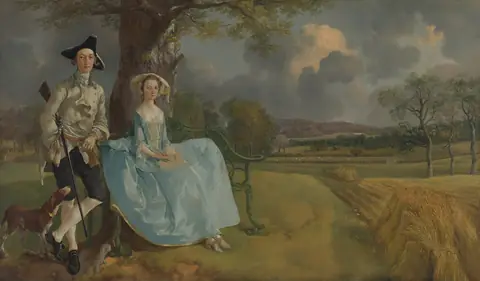
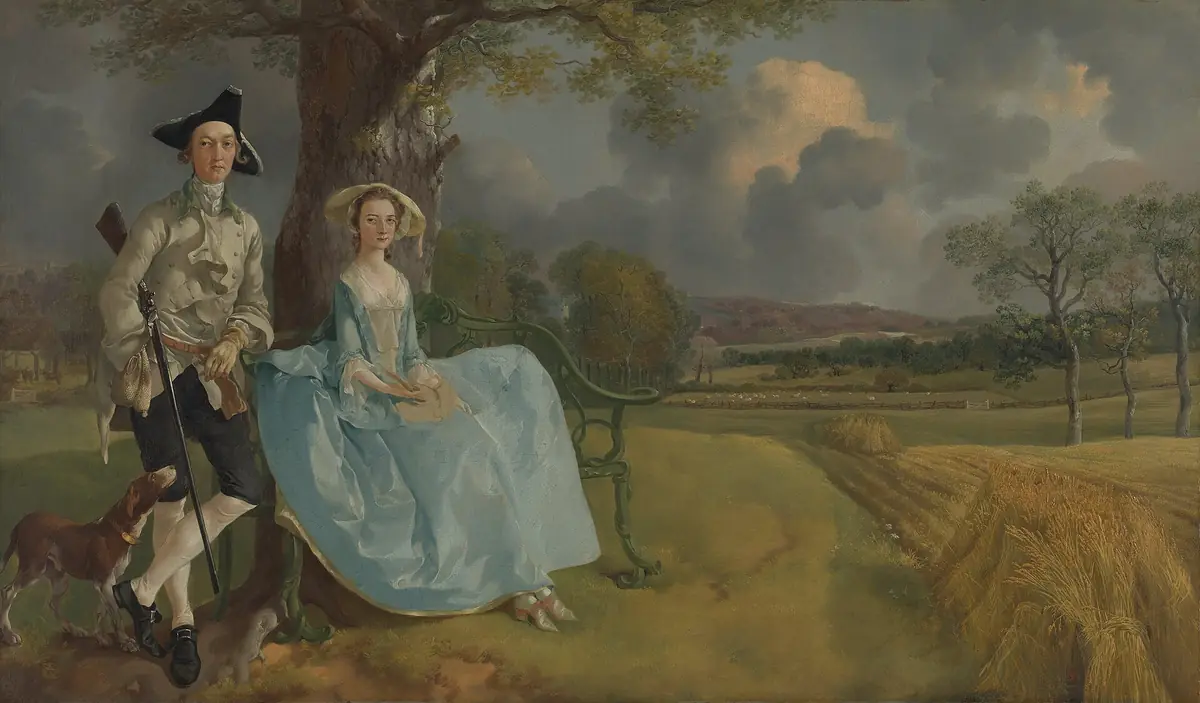
Image: Wikimedia Commons · Public domain (PD-Art) Mr and Mrs Andrews
Look closely. A newly married Suffolk couple sit at the edge of their fields: he with a gun and a dog, she in a blue dress on a bench, a wide, freshly harvested and still-growing landscape opening behind them. Look at the oak, at the sheaves, at the distance between the two sitters, and at how a portrait is also a picture of land and of marriage as a settled fact.
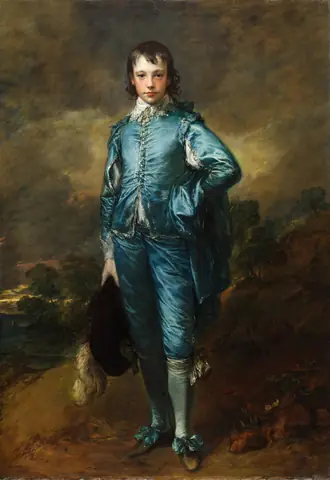
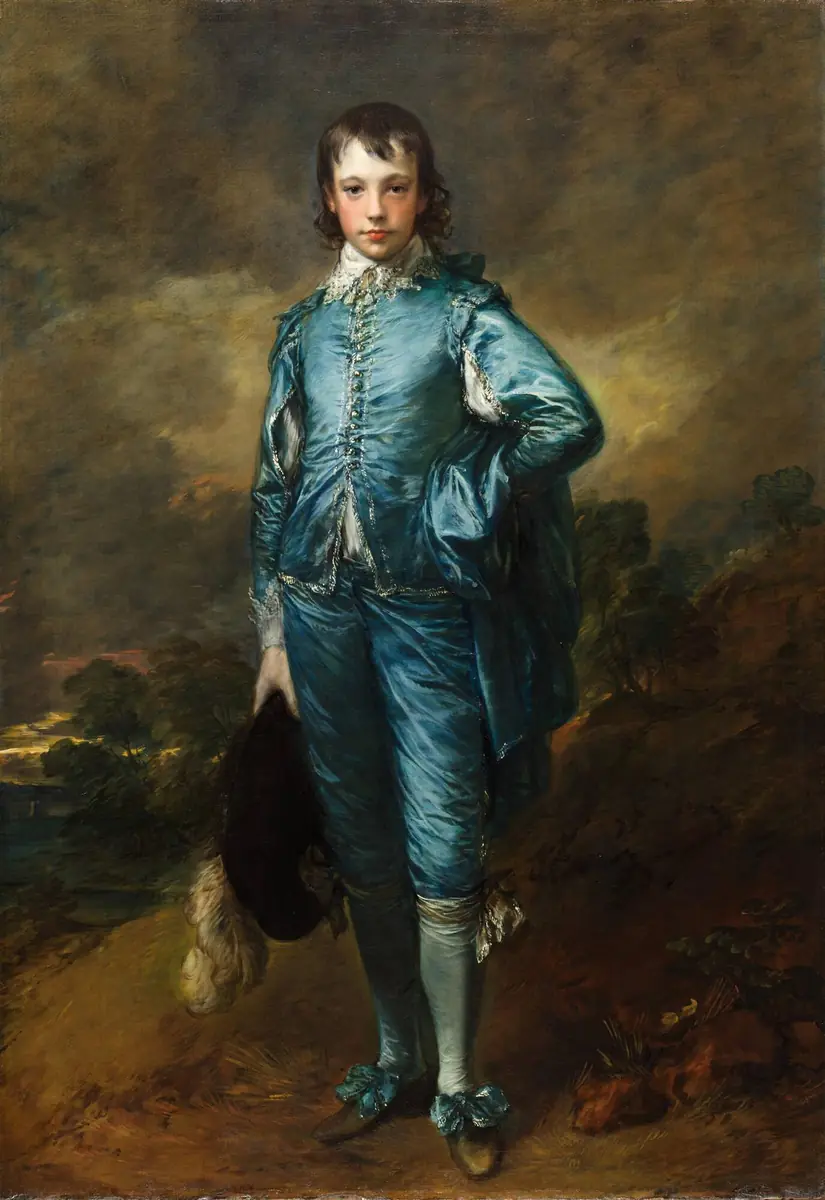
Image: Wikimedia Commons · Public domain (PD-Art) The Blue Boy
Look closely. A boy in a gleaming blue satin slashed costume, after the manner of Van Dyck, stands in a dark landscape, a feathered hat in one hand, a pale, slightly proud face looking out. Look at the liquid blue of the suit, at the flicker of the highlights, and at how a fancy-dress portrait can still feel like a living child rather than a costume plate.
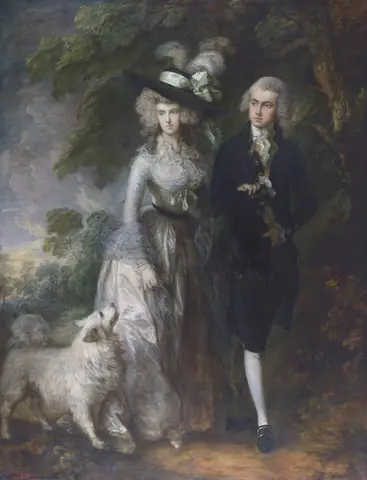
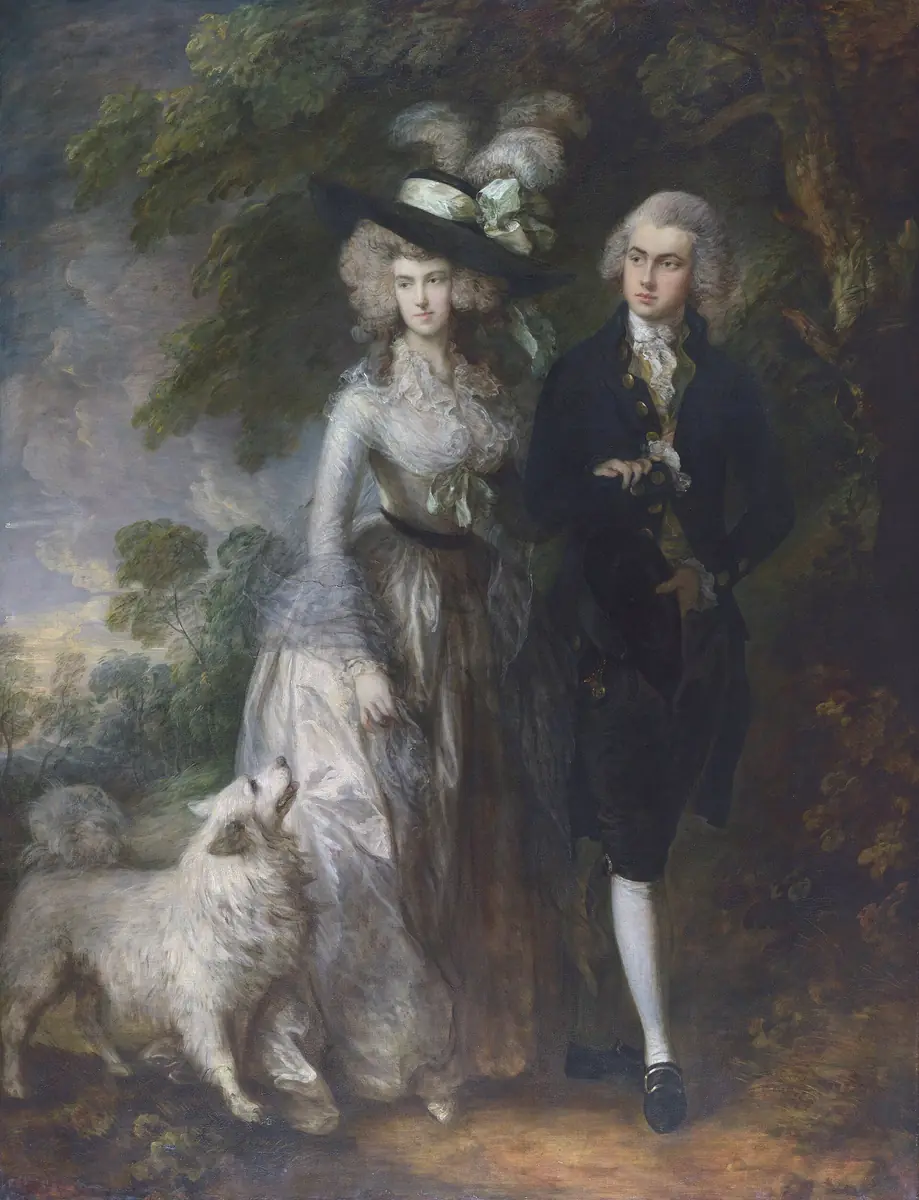
Image: Wikimedia Commons · Public domain (PD-Art) The Morning Walk (Mr and Mrs William Hallett)
Look closely. A young couple walk arm in arm through a feathery wood, she in a pale, rustling dress and an enormous hat, a white dog stepping beside them. Look at the lightness of the foliage, at the almost dancing rhythm of the walk, and at the sense that this is a morning just beginning, not a formal indoor sitting.
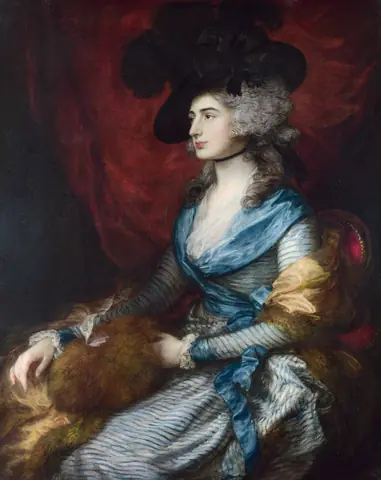
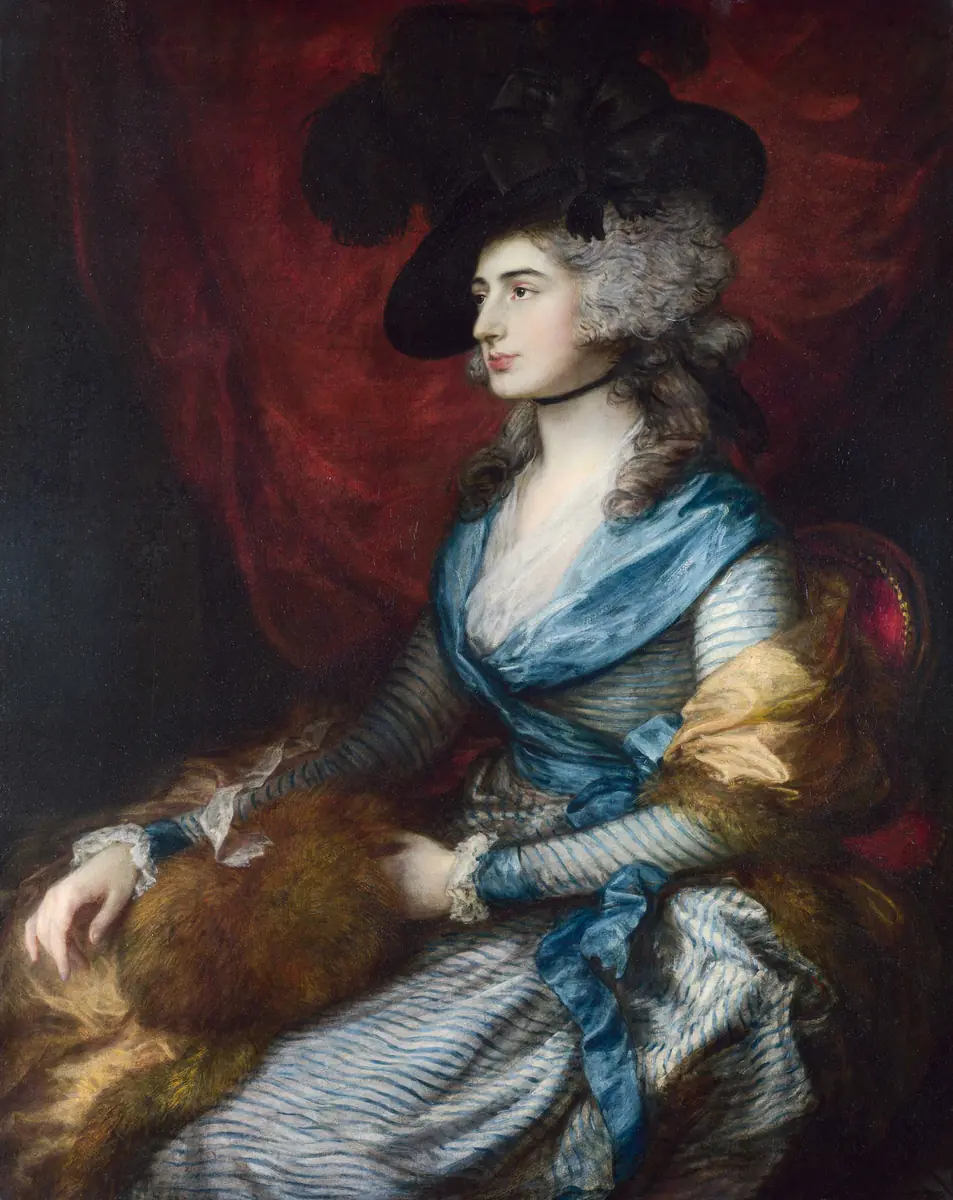
Image: Wikimedia Commons · Public domain (PD-Art) Mrs Siddons
Look closely. The great tragic actress sits in profile in a striped dress and a large black hat with feathers, a pale, serious face set against a plain ground. Look at the long, still profile, at the black-and-white dignity of the costume, and at how little theatrical gesture is needed: the gravity is all in the head.
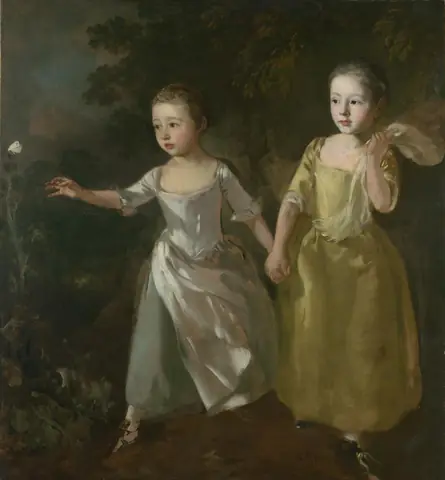
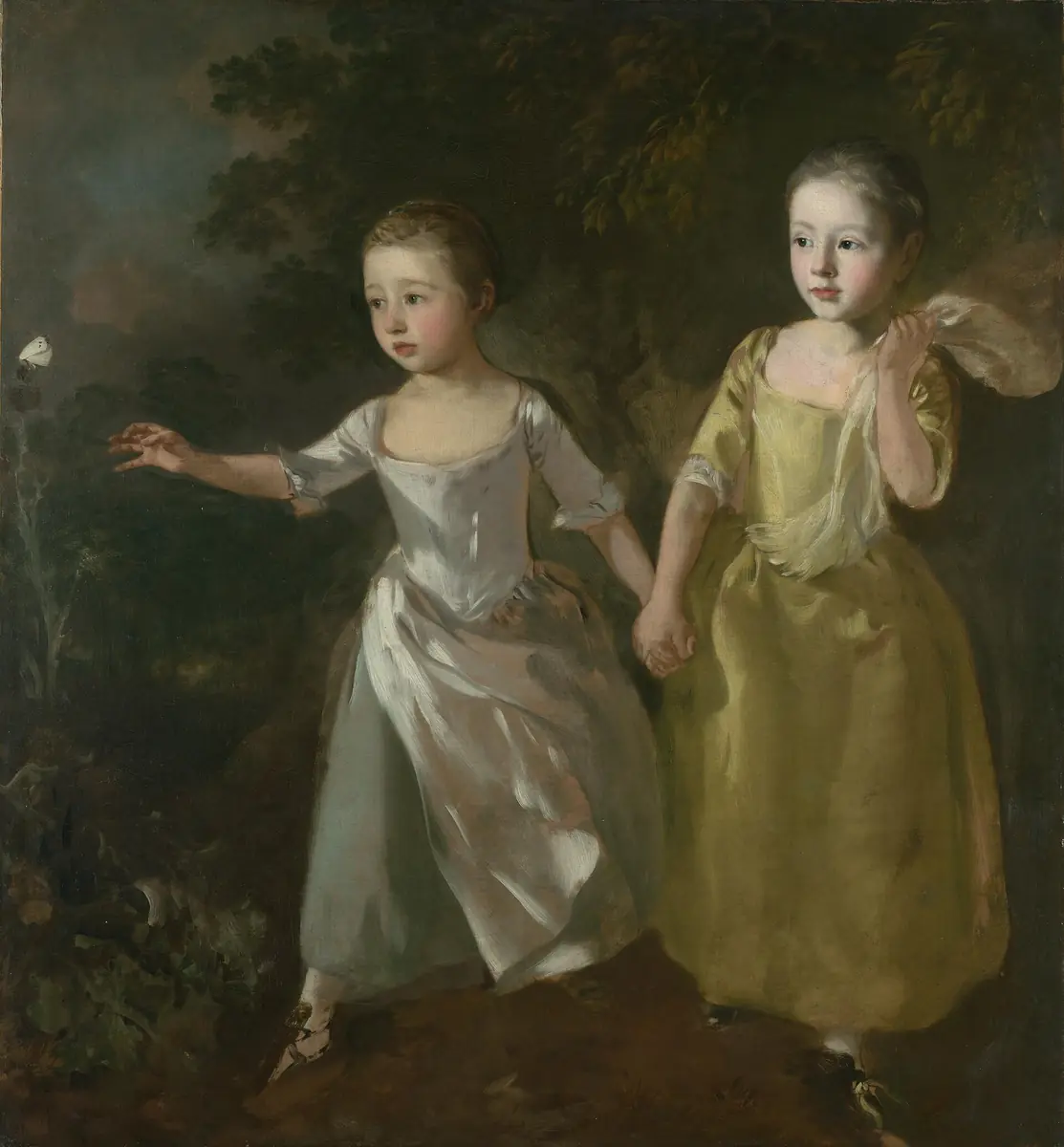
Image: Wikimedia Commons · Public domain (PD-Art) The Painter's Daughters chasing a Butterfly
Look closely. Gainsborough's two young daughters reach together toward a butterfly at the edge of a dark wood, their pale dresses flickering, their faces intent and a little anxious. Look at the joined hands, at the unfixed, almost trembling paint, and at the tenderness of a father painting children who are still allowed to run.
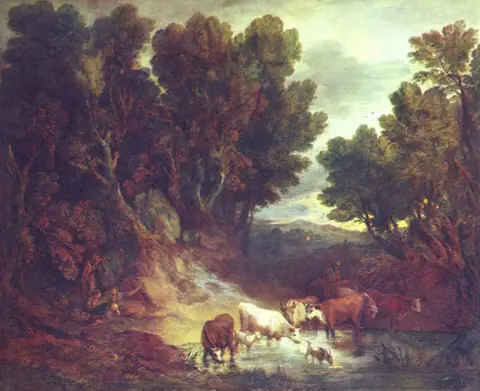
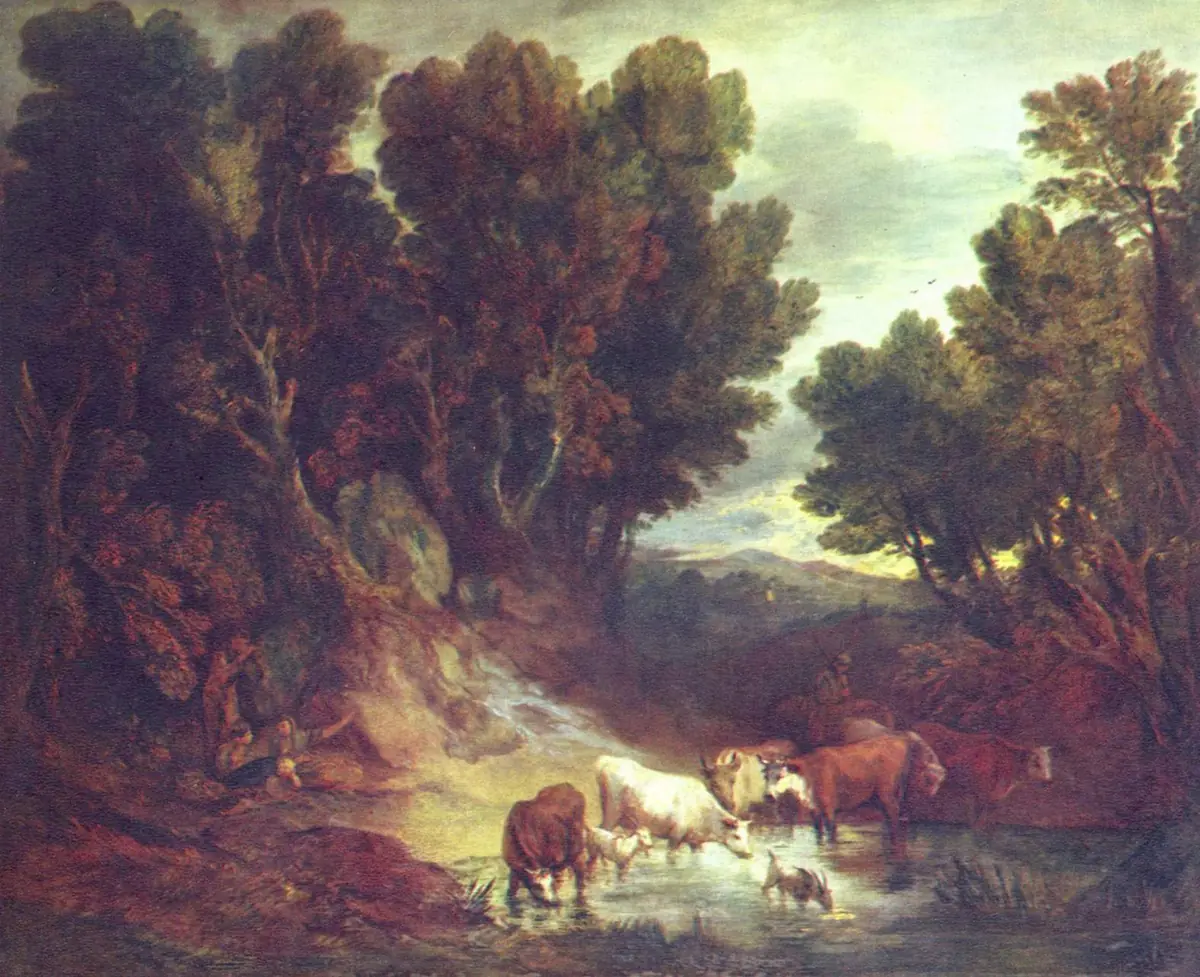
Image: Wikimedia Commons · Public domain (PD-Art) The Watering Place
Look closely. Cattle and figures gather at a pool in a wooded, evening landscape, the trees feathery against a pale, moist sky. Look at the still water, at the loose, scumbled foliage, and at how a modest rural subject is given the richness of a grand, almost musical calm.
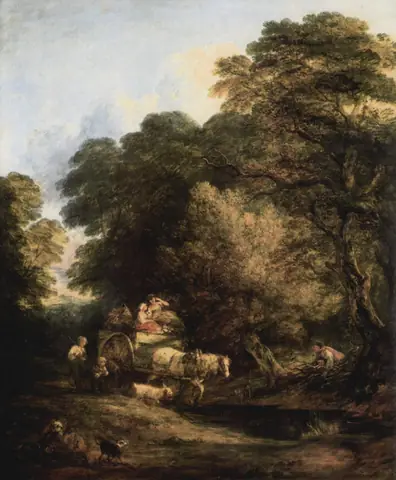
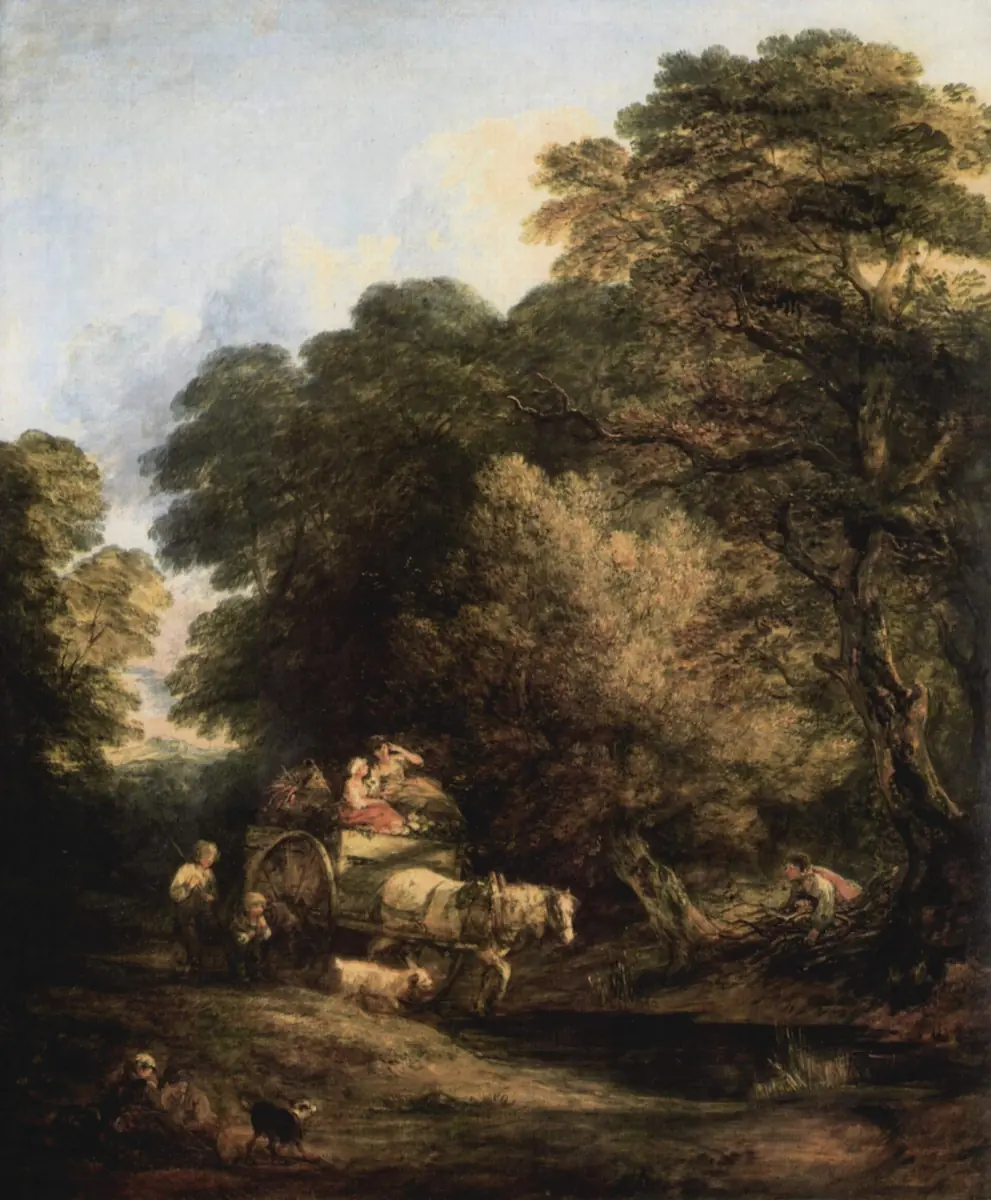
Image: Wikimedia Commons · Public domain (PD-Art) The Market Cart
Look closely. A loaded cart comes down a sandy lane under heavy trees, children and a driver among the baskets, a dog trotting beside, the wood opening to a softer light at the right. Look at the deep, rusty shade, at the turning wheel, and at the everyday motion of a Suffolk or a country road remembered late in life.


What to watch for in Thomas Gainsborough
Look slowly- A feathery, flickering brush. Leaves, silk and hair are often a little unfixed, as if in moving air.
- A landscape behind a likeness. Even a grand portrait may open onto a wood or a pale sky.
- Informal elegance. Sitters often seem to have paused on a walk rather than taken a pose in a studio.
- Blue, gold and a cool light. Satin and a northern sky do a lot of the talking.
- Children and dogs. Look for small, unforced life at the edge of a formal picture.
Dates and collections follow the holding museums and Wikidata. Images of paintings are photographs of public-domain pictures from Wikimedia Commons or museum open-access releases; photographs of sculpture are used only when the photograph itself is Public domain, CC0, or CC BY with a named credit. Each picture links to its source page with full licence details.