Great Art · Eighteenth century (Georgian)
George Romney
The cabinetmaker's son from the north of England who became one of London's favourite portrait painters.
His life
George Romney was the son of a cabinetmaker in Dalton-in-Furness in Lancashire and worked in his father's shop before training with a travelling portrait painter in Kendal. There he married Mary Abbot. In 1762 he went to London to make his fortune, leaving his wife and young son in Kendal, and for most of the next thirty-seven years he saw them only rarely, sending money home.
In London he became, with Reynolds and Gainsborough, one of the most fashionable portrait painters of the day, admired for clean, graceful lines learned from ancient sculpture. He painted Emma Hart, later Lady Hamilton, dozens of times in the roles of characters from history and literature. His later years were troubled by illness and melancholy. In 1799, old and failing, he returned to Kendal, where Mary nursed him faithfully until his death in 1802. Their story is a sober one about neglect and the forgiveness he did not deserve.
Key works
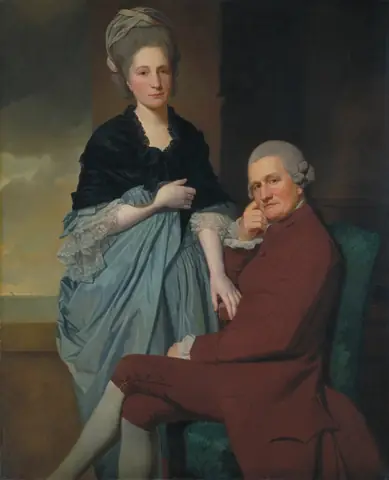
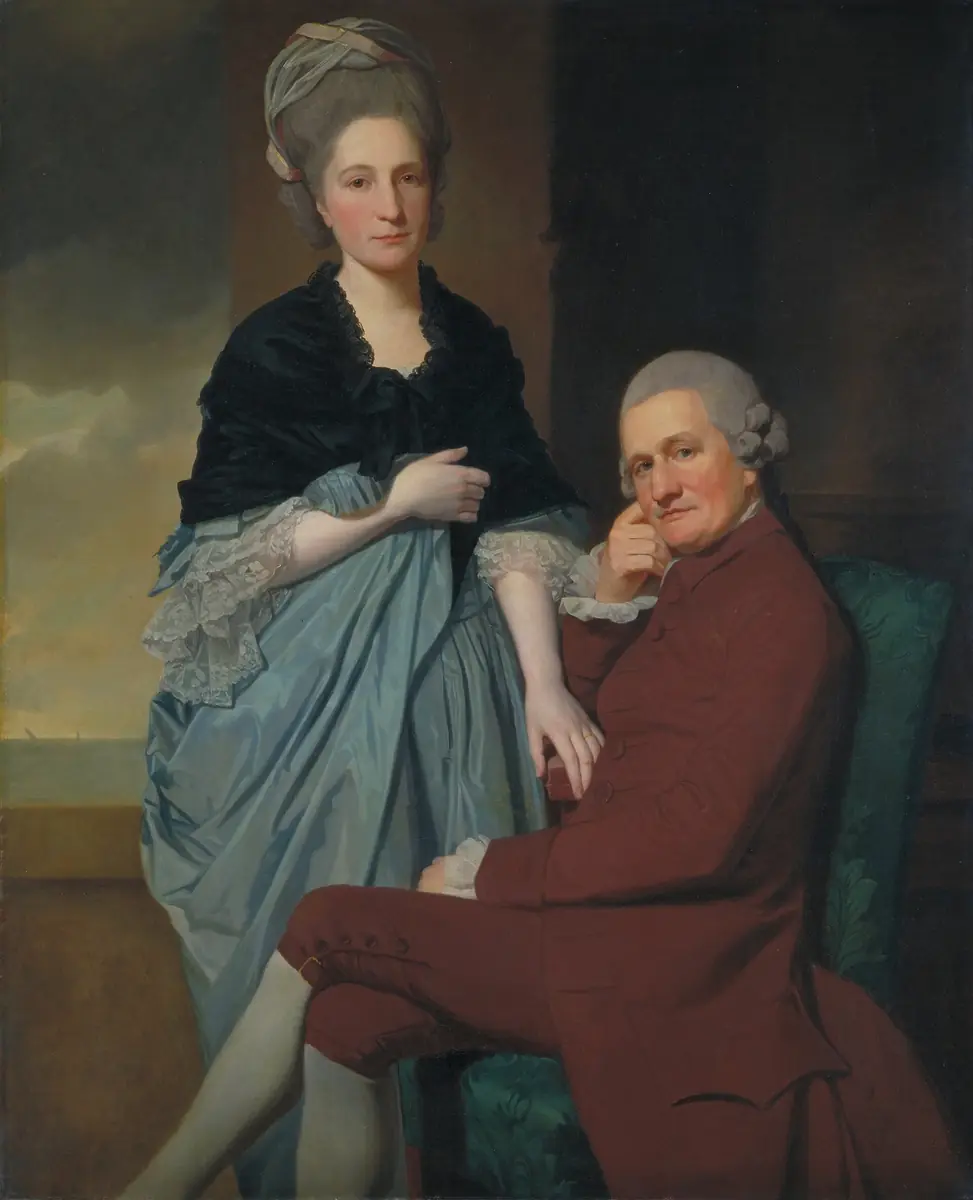
Image: Wikimedia Commons · Public domain (PD-Art) Mr and Mrs William Lindow
Look closely. A married couple from Lancaster: Mrs Lindow stands beside her seated husband, her hand resting near his shoulder, while he turns to look out at us. Romney paints their clothes simply and lets the quiet companionship of the pose carry the picture.
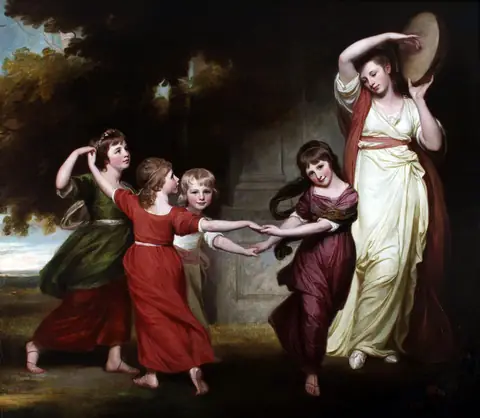
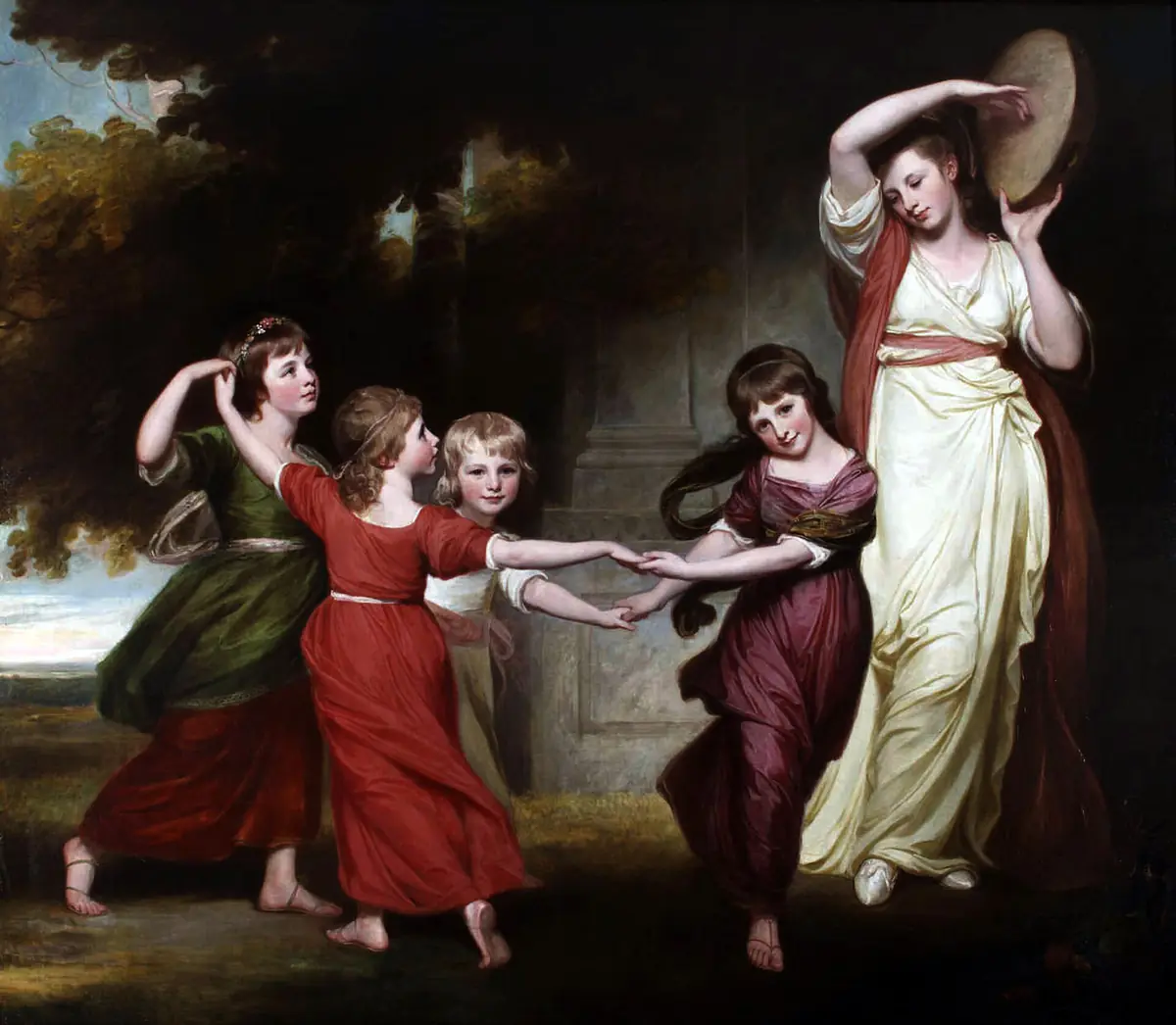
Image: Wikimedia Commons · Public domain (PD-Art) The Gower Family: The Children of Granville, 2nd Earl Gower
Look closely. Five children dance in a ring while the eldest sister lifts a tambourine. The flowing line of their linked arms comes from ancient Roman carvings of dancers that Romney had studied in Italy. Look at how the colours of their dresses pass from one child to the next.
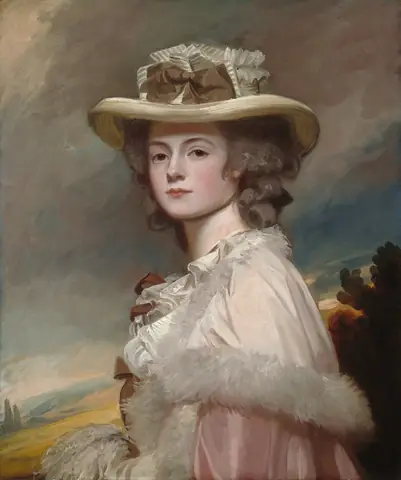
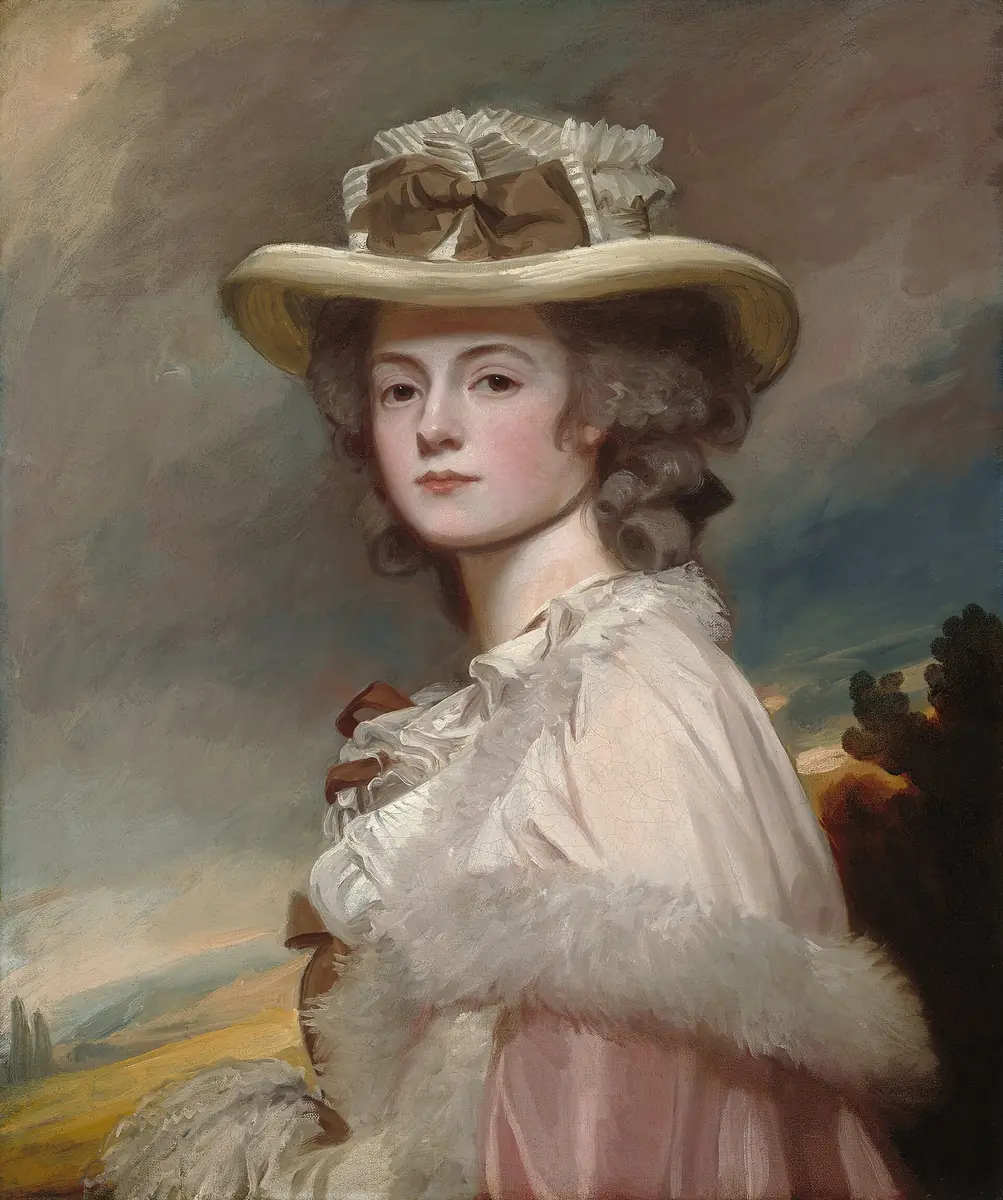
Image: Wikimedia Commons · Public domain (PD-Art) Mrs Davies Davenport
Look closely. A young woman in a broad straw hat with a ribbon bow and a fur-trimmed cape looks straight out at us against a stormy sky. Notice how few colours he uses, and how the white fur and pink silk are laid in with quick strokes.
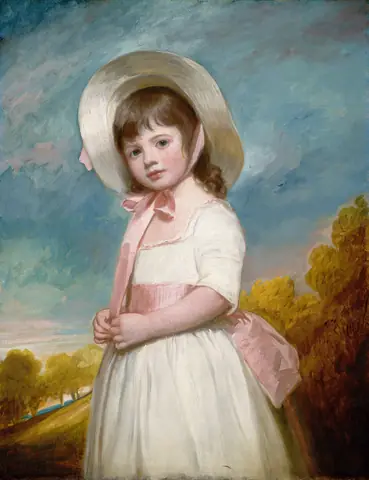
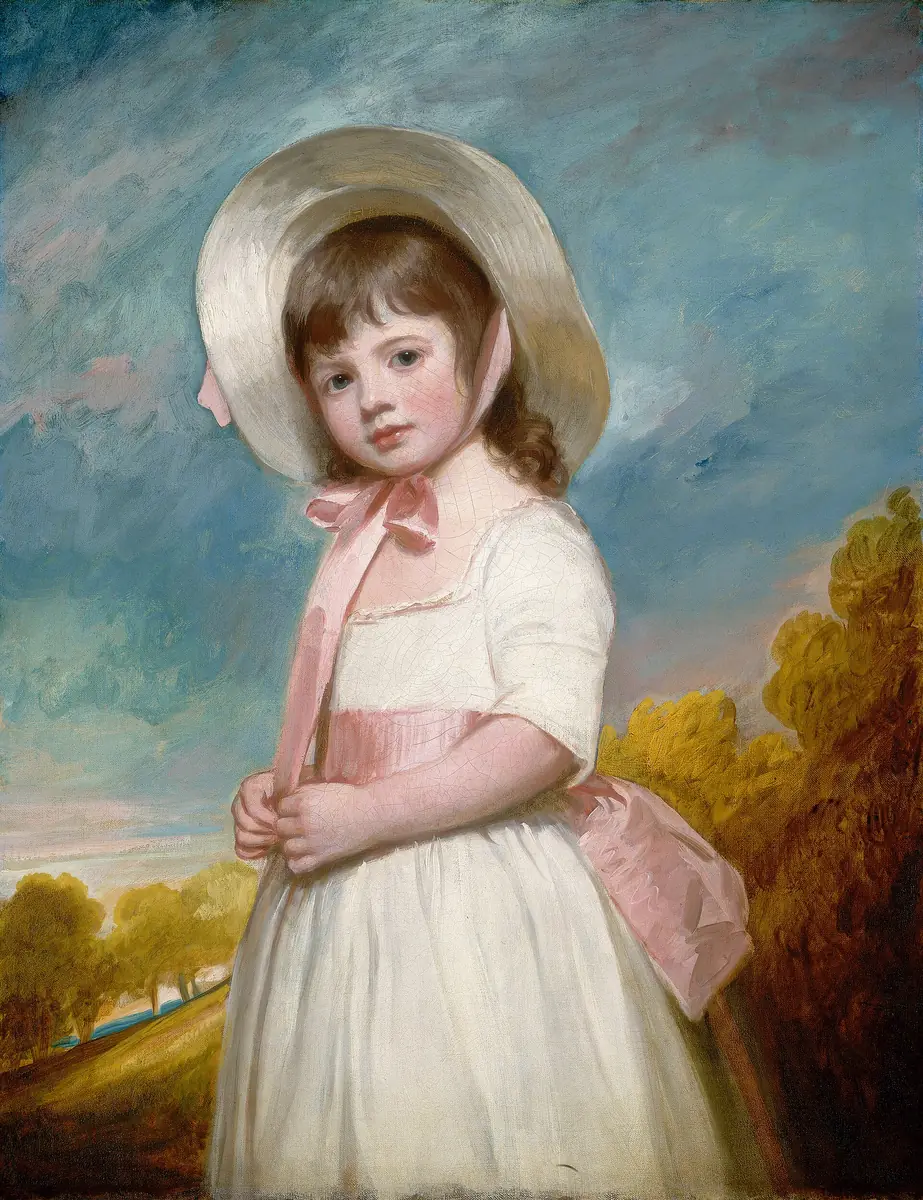
Image: Wikimedia Commons · Public domain (PD-Art) Miss Juliana Willoughby
Look closely. A small girl in a white dress, pink sash and huge bonnet stands shyly in a landscape, hands clasped. The white dress is painted with quick, sure strokes. Compare her with Reynolds's Lady Caroline Howard, painted at the same time.
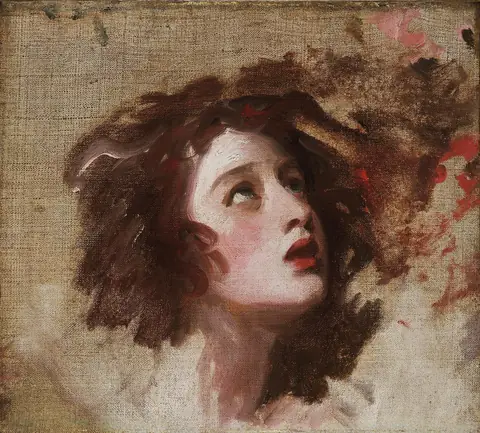
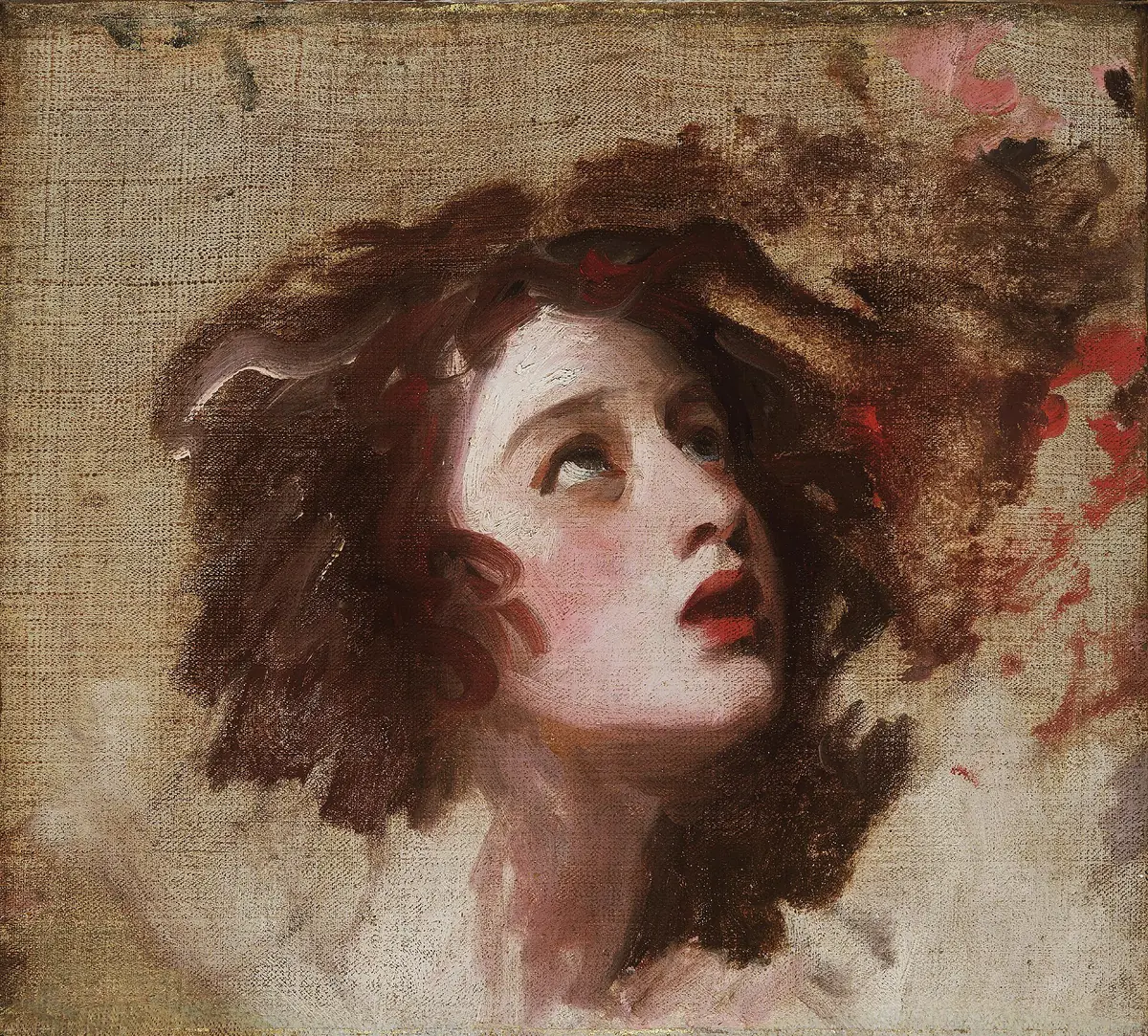
Image: Wikimedia Commons · Public domain (PD-Art) Emma Hart as Miranda
Look closely. Emma Hart plays Miranda in Shakespeare's The Tempest, looking up in fear as she watches the ship founder in her father's magic storm. Her hair blows across her face. Romney made this study for a larger painting.
In the library: Shakespeare, The Tempest · William Shakespeare
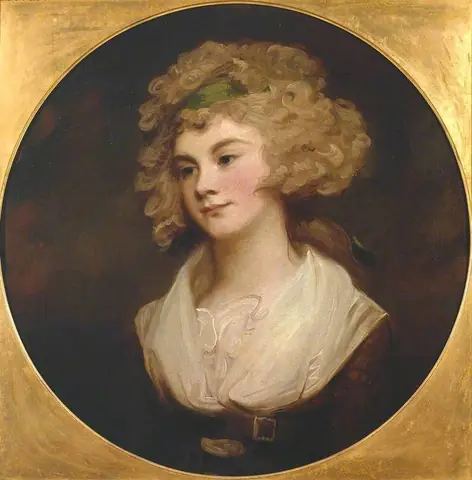
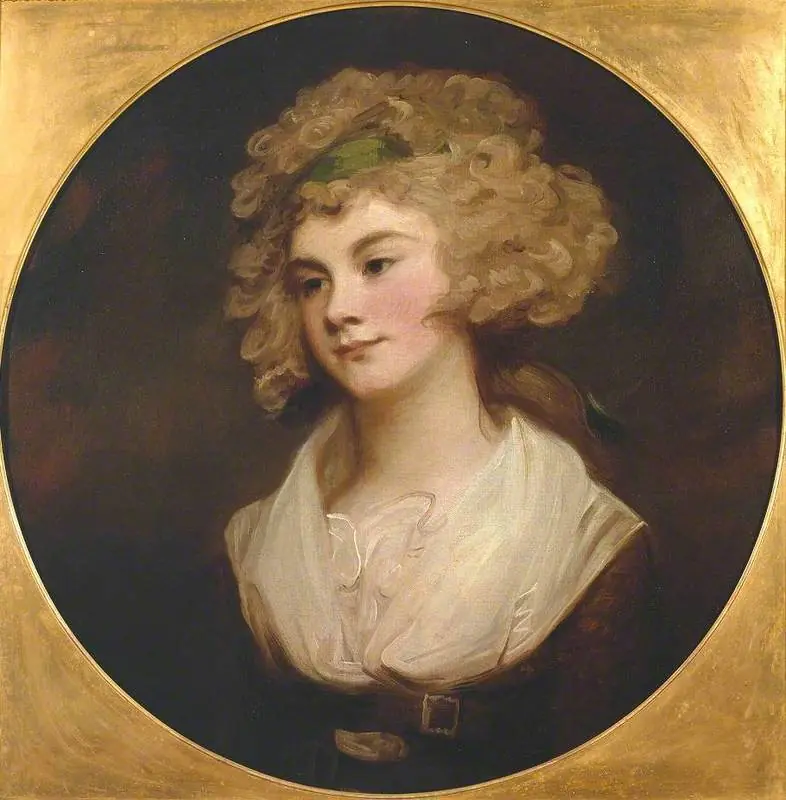
Image: Wikimedia Commons · Public domain (PD-Art) The Parson's Daughter
Look closely. A young woman in a small round picture, her curly hair tied with a green ribbon and her face turned slightly. Nobody knows who she was; the title was given later. Romney lets the round shape and soft light do the work.


What to watch for in George Romney
Look slowly- Clean outlines. Romney's figures have the clear edges of ancient carved reliefs.
- Fewer details. Plain backgrounds and simple dresses keep attention on face and pose.
- Movement. Dancing children and windblown hair give his portraits life.
- Roles and stories. Sitters sometimes play characters from Shakespeare or myth.
- Fresh colour. Pinks, whites and soft greens painted quickly and thinly.
Dates and collections follow the holding museums and Wikidata. Images of paintings are photographs of public-domain pictures from Wikimedia Commons or museum open-access releases; photographs of sculpture are used only when the photograph itself is Public domain, CC0, or CC BY with a named credit. Each picture links to its source page with full licence details.