Great Art · Early Renaissance
Lorenzo Ghiberti
The maker of the Baptistery doors, who told the Old Testament in gilded bronze for the people of Florence.
His life
In 1401 Ghiberti won the competition to make new bronze doors for the Florence Baptistery, beating Brunelleschi with a relief of the Sacrifice of Isaac. He spent more than twenty years on the north doors, a grid of New Testament scenes, and then, at the city's request, a second pair for the east — the doors Michelangelo is said to have called the Gates of Paradise. Ten large square panels, in a deeper, freer relief, tell the stories from Adam to Solomon. He set them in a frame of flowers, prophets and tiny heads, and he gilded the bronze so that the sun on the piazza would light the Word.
Ghiberti was a goldsmith by training and a writer late in life. He knew how to pack a story into a panel without crowding it to death, and how to let a distant hill or a little building sit in a shallow space. The original east doors are now in the Museo dell'Opera; copies stand on the Baptistery. The photographs here include historic plates of both faces of the building and a closer look at single panels.
Key sculptures
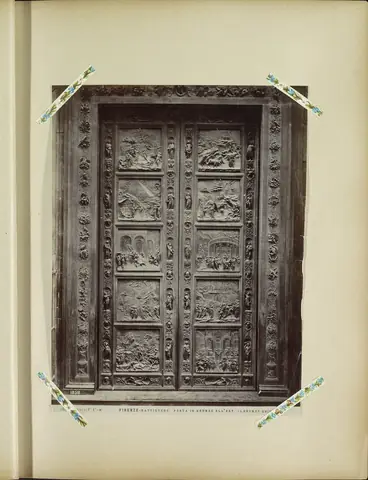
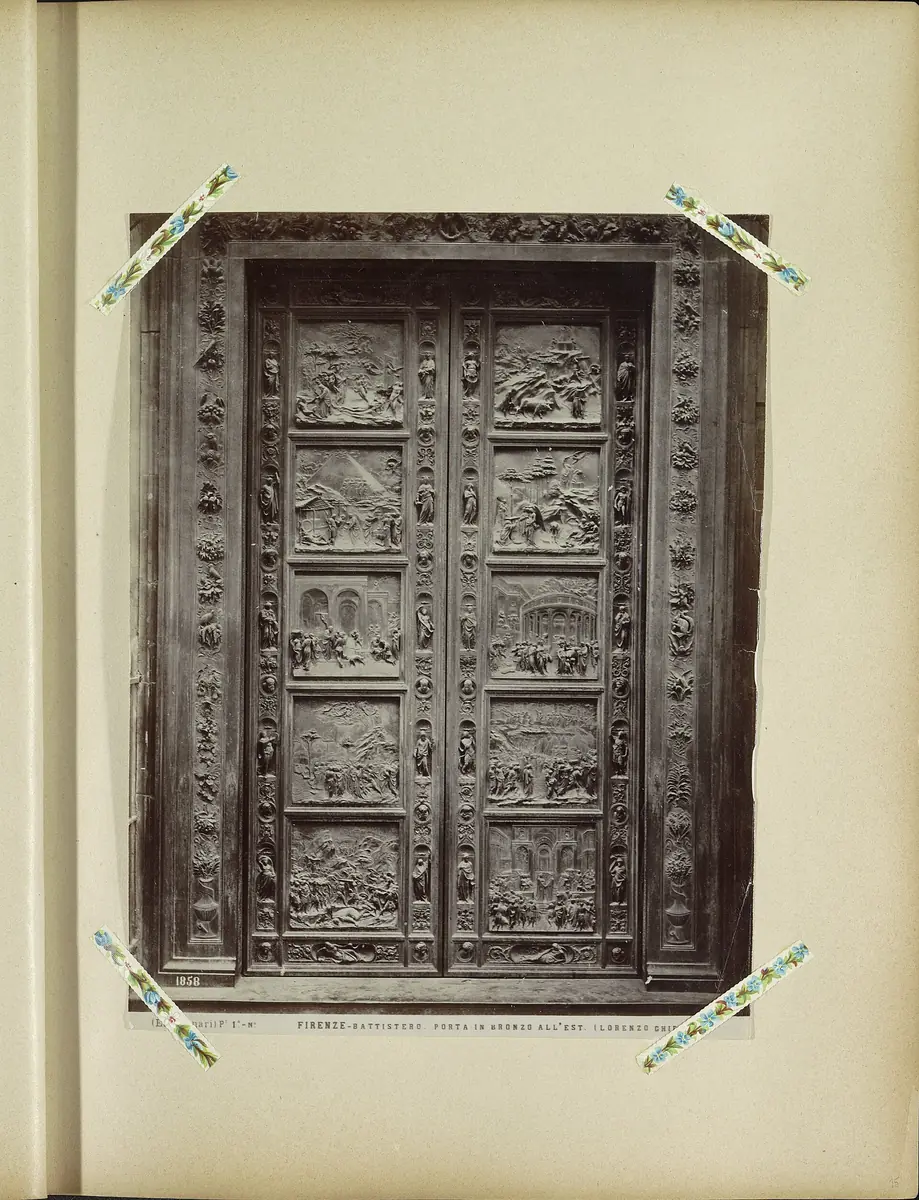
Image: Wikimedia Commons · CC0 (public domain) The Gates of Paradise (east doors)
Look closely. A historic photograph of the east doors: ten large square panels in a richly carved and gilded frame, each panel a whole Old Testament story. Look at the even grid, the deep shadows in the relief, and the way the frame of prophets and foliage is as carefully made as the scenes themselves.
In the library: The Bible (KJV)
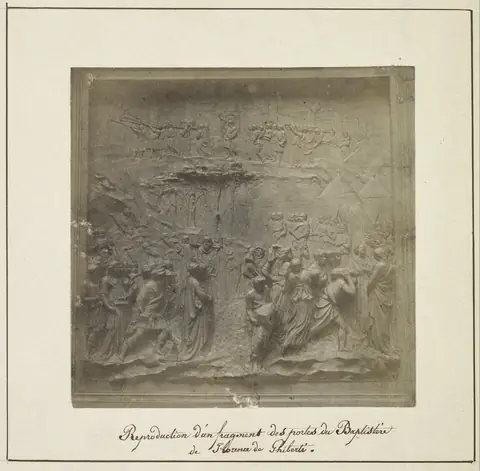
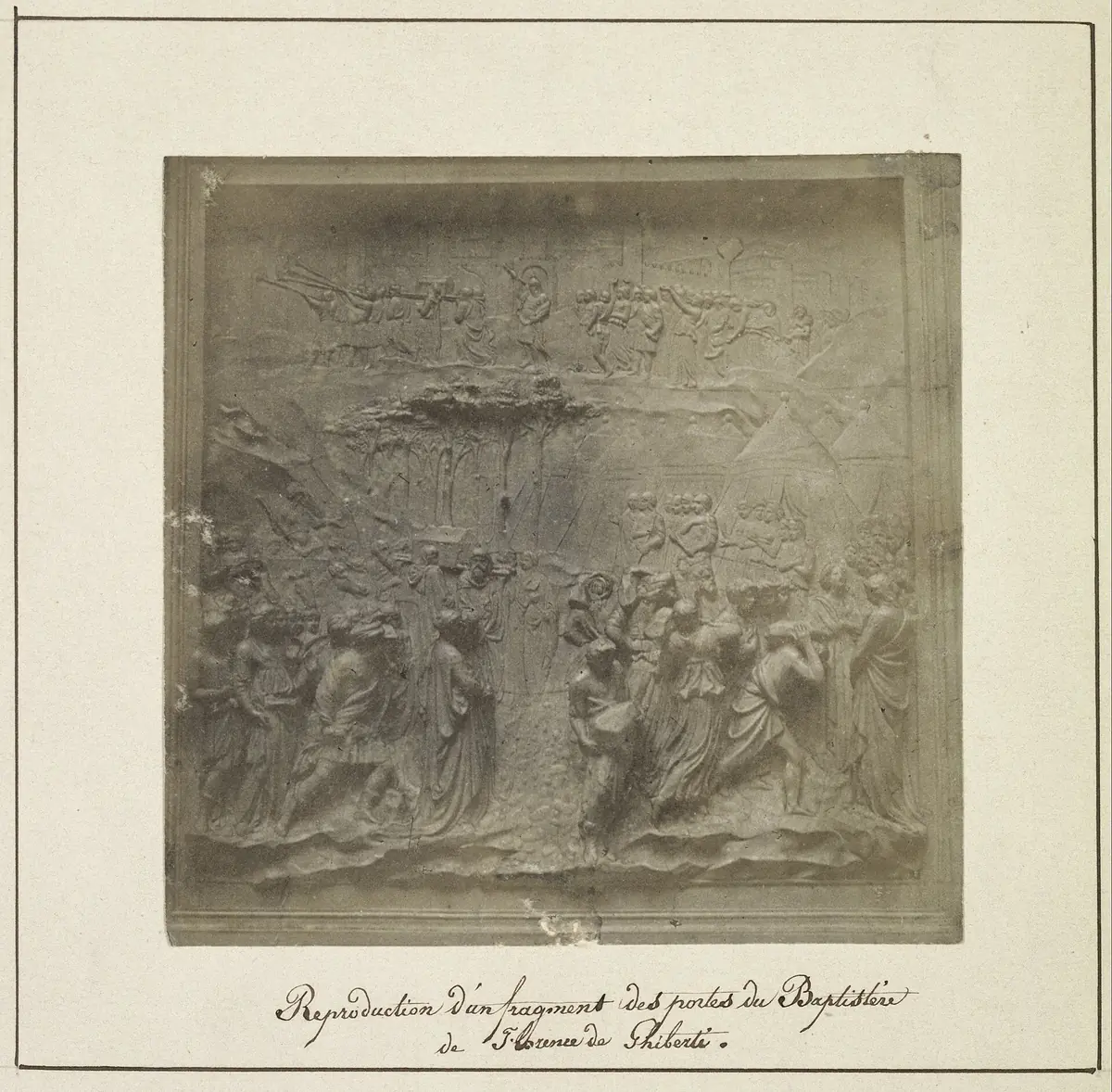
Image: Wikimedia Commons · CC0 (public domain) Joshua at Jericho, from the Gates of Paradise
Look closely. A closer plate of the Joshua panel: the procession around Jericho, the city in the background, many small figures in a single bronze field. Look at how Ghiberti lets a crowd and a city recede by lowering the relief, and at the little architecture that stands in for the falling walls.
In the library: The Bible (KJV)
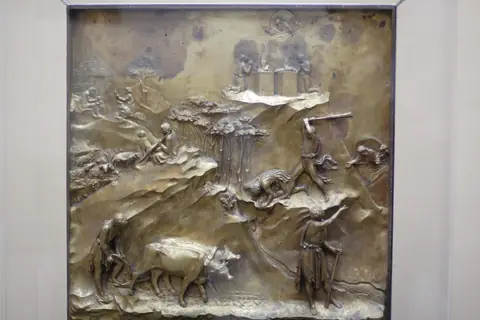
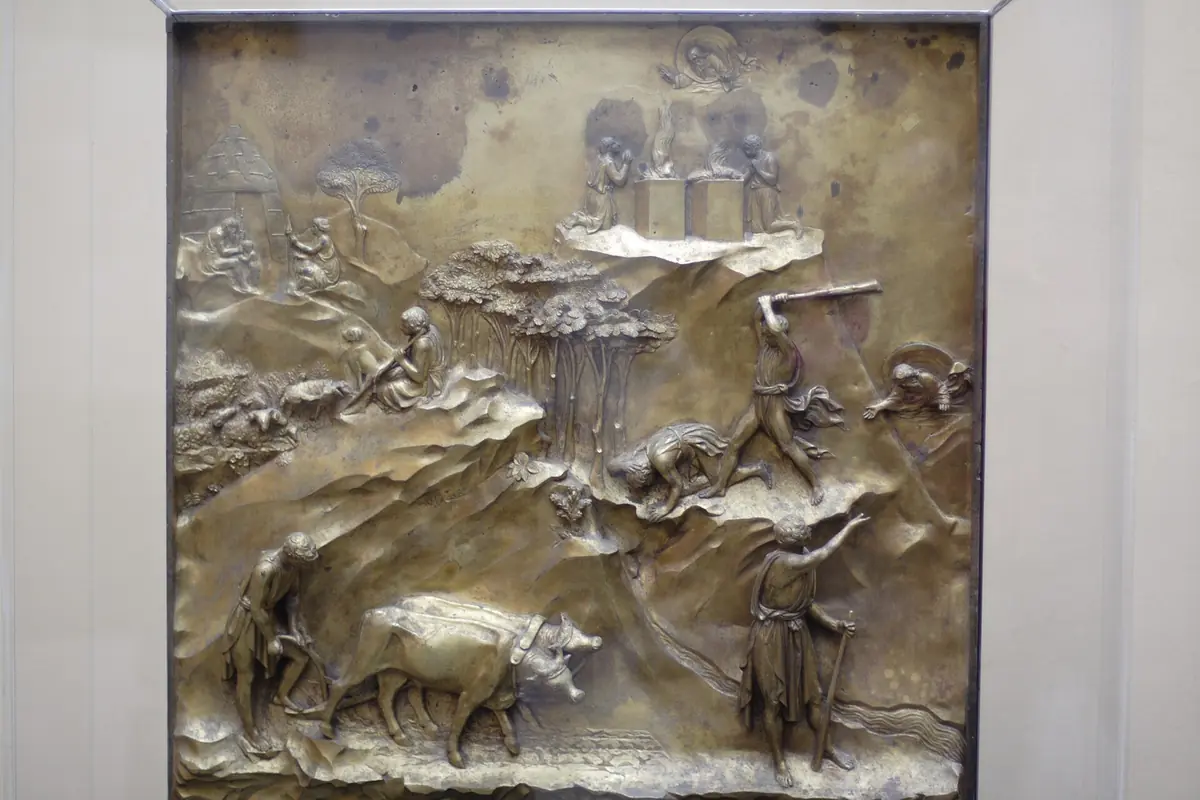
Image: Wikimedia Commons · Public domain Cain and Abel, from the Gates of Paradise
Look closely. The panel of Cain and Abel: offerings on an altar, the brothers in the field, and the first murder set in a wide bronze landscape. Look at the several moments told in one square, and at the contrast between the quiet of the sacrifice and the violence in the lower ground. (The brothers at work are lightly clad; the panel is shown because it is a dressed narrative, not a study of the nude.)
In the library: The Bible (KJV)
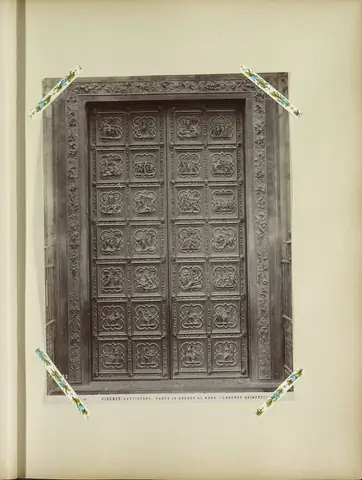
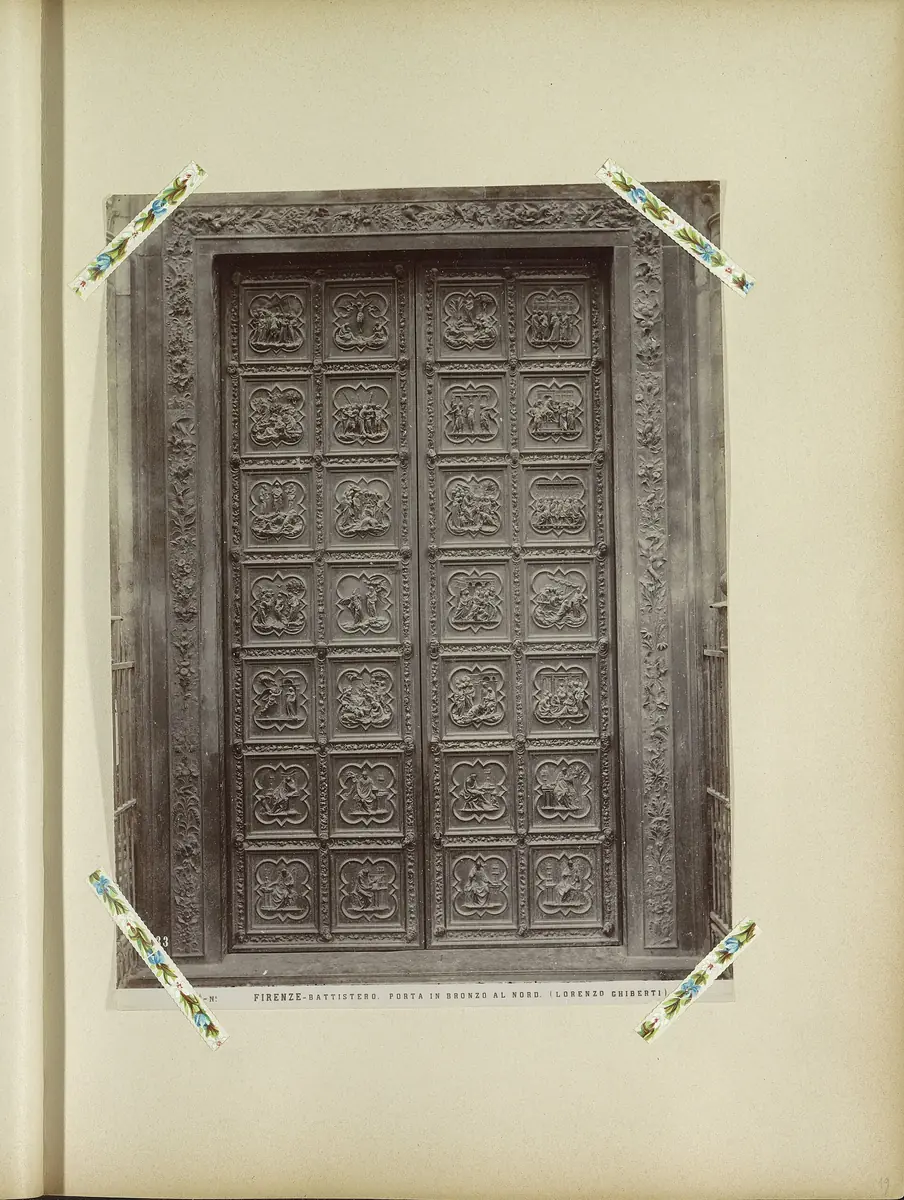
Image: Wikimedia Commons · CC0 (public domain) The north doors of the Baptistery
Look closely. The earlier doors, a tighter grid of twenty-eight panels of the New Testament and the Evangelists, still in the older four-lobed frame. Look at the smaller scale of each scene compared with the east doors, and at the perseverance of a work that took more than twenty years of a goldsmith's life.
In the library: The Bible (KJV) · Jesus Christ
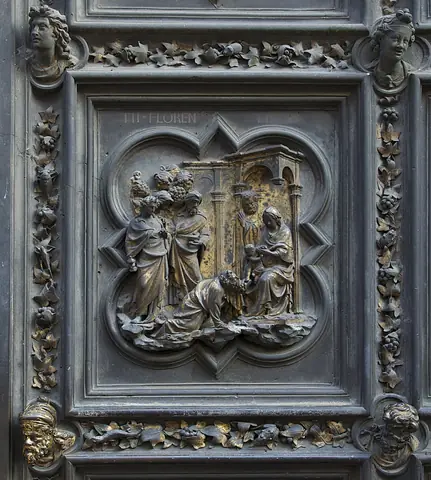
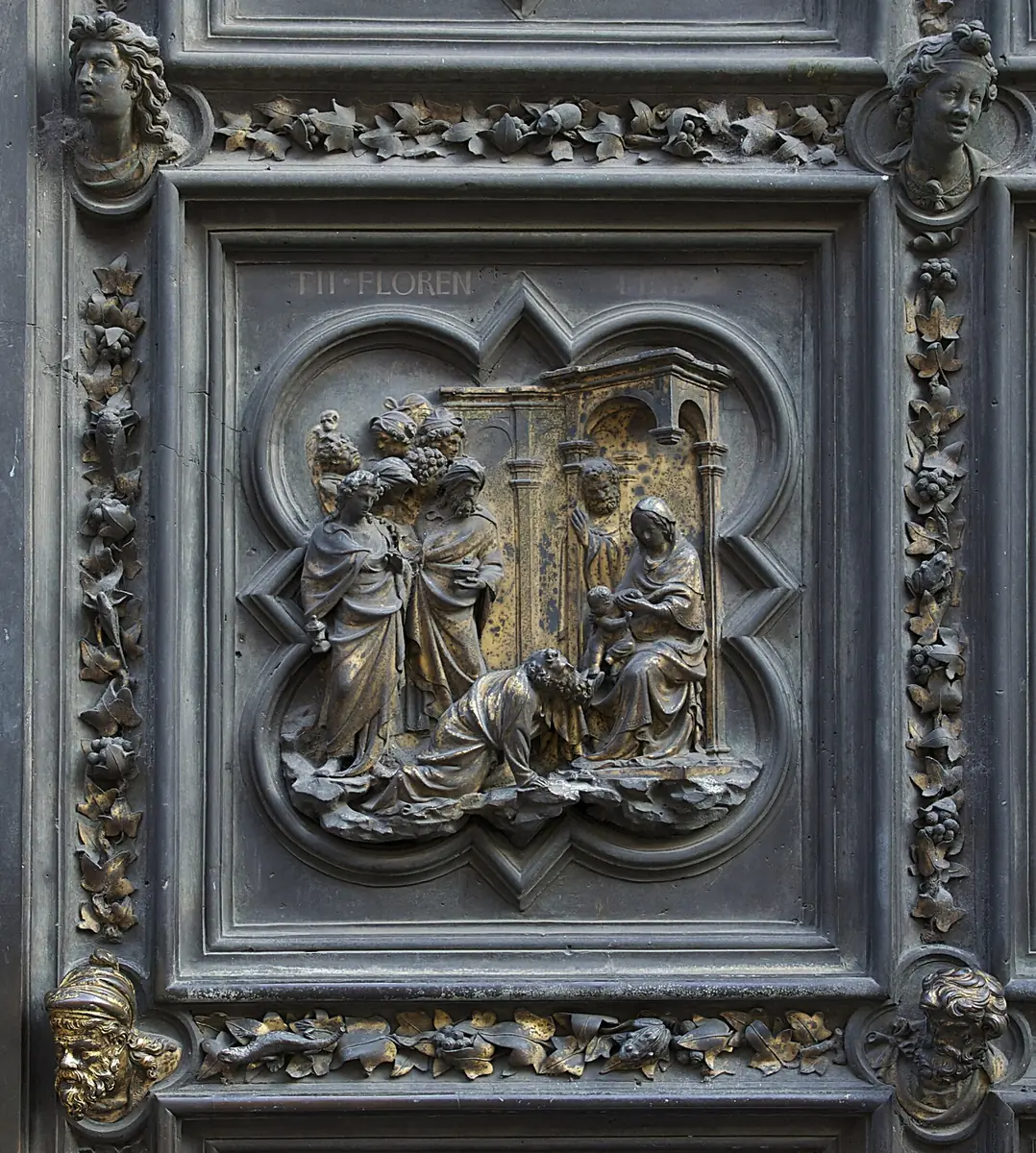
Image: Wikimedia Commons · CC0 (public domain) The Adoration of the Magi, from the north doors
Look closely. The Magi kneel and offer gifts before Mary and the Child, a compact bronze scene in the quatrefoil of the north doors. Look at the press of the kings' attendants, the Child on Mary's knee, and the way Ghiberti fits a whole visit into the curved frame without breaking it.
In the library: The Bible (KJV) · Jesus Christ · Mary, mother of Jesus
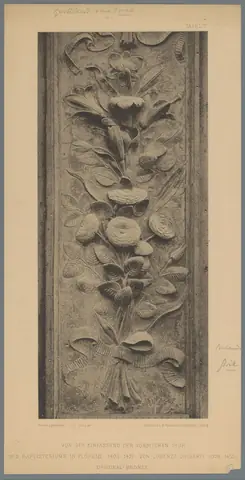
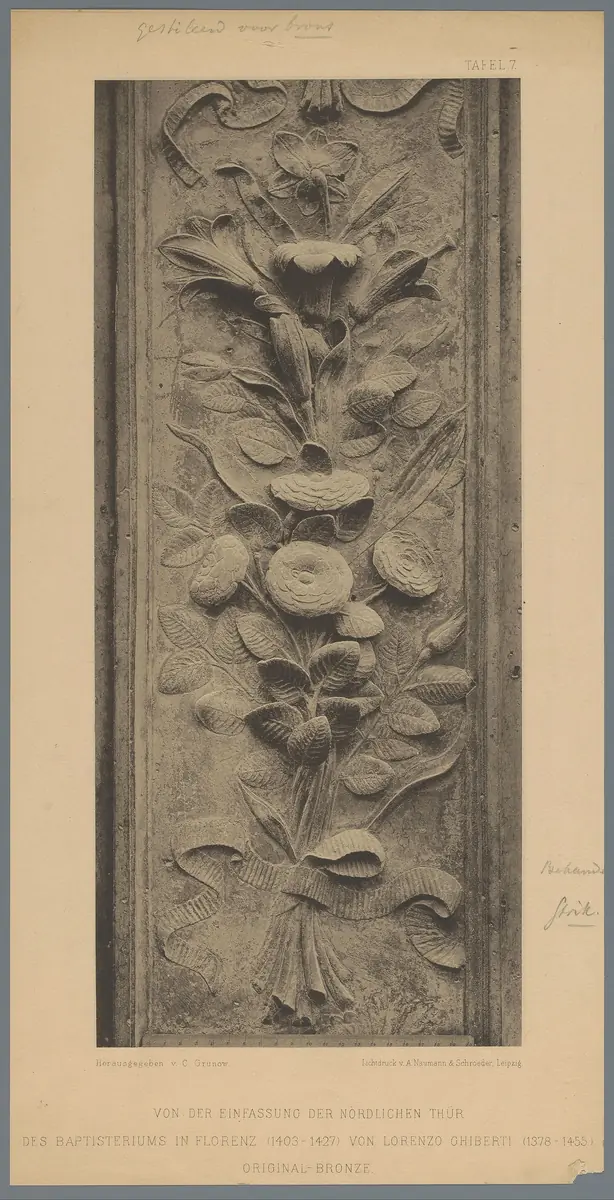
Image: Wikimedia Commons · CC0 (public domain) Floral border from the north doors
Look closely. A length of the bronze border: flowers, leaves and small creatures modelled almost in the round, a goldsmith's work running like a living hedge around the sacred scenes. Look at the undercutting and at how much life Ghiberti will spend on a frame that many walkers never stop to see.


What to watch for in Lorenzo Ghiberti
Look slowly- A story in shallow space. Figures nearest us stand almost in the round; the background falls away in lower relief.
- A gilded field. Imagine the east doors in sun: the gold was meant to flash.
- A frame that works as hard as the panels. Flowers, prophets and small heads run around the stories.
- North and east together. The earlier north doors are a grid of smaller scenes; the east doors are ten large squares.
- Original and copy. The plates may show the doors on the Baptistery or in the museum; the design is Ghiberti's either way.
For older students
These famous works include nudity, so they are named here but not shown. Teachers and parents can decide when to look at them together.
- Adam and Eve (east door, first panel), c. 1425–1452, Museo dell'Opera del Duomo, Florence. The creation and fall include unclothed figures of Adam and Eve.
Dates and collections follow the holding museums and Wikidata. Images of paintings are photographs of public-domain pictures from Wikimedia Commons or museum open-access releases; photographs of sculpture are used only when the photograph itself is Public domain, CC0, or CC BY with a named credit. Each picture links to its source page with full licence details.