Great Art · Early Renaissance
Donatello
The sculptor who could make a prophet look as if he had been arguing in the street, and a condottiere ride forever in Padua.
His life
Donatello was trained in Florence, worked on Ghiberti's doors as a young man, and then made a body of work that no one in the city could ignore: prophets for the campanile, a Saint George for Orsanmichele, the cavalcanti Annunciation in Santa Croce, a wooden Magdalene as raw as a desert, and, in Padua, the Gattamelata, the first great bronze equestrian statue since antiquity. He could carve a face that looks tired, angry, or quietly sure, and he could make bronze stand like a living horse.
Vasari later wrote his life among the artists of Florence. Donatello never became smooth. The Zuccone — the bald prophet, probably Habakkuk — seems to be in mid-sentence; the Magdalene is all hair, hunger and prayer; Saint George is a young soldier who has not yet killed the dragon, only thought about it. He used the gift in the service of the church and of a soldier's tomb, and he left Florence a harder, more honest idea of what a statue could be.
Key sculptures
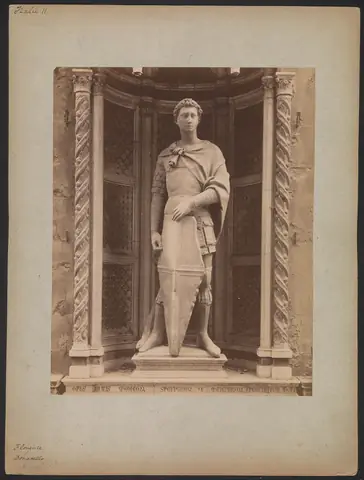
Image: Wikimedia Commons · CC0 (public domain) Saint George
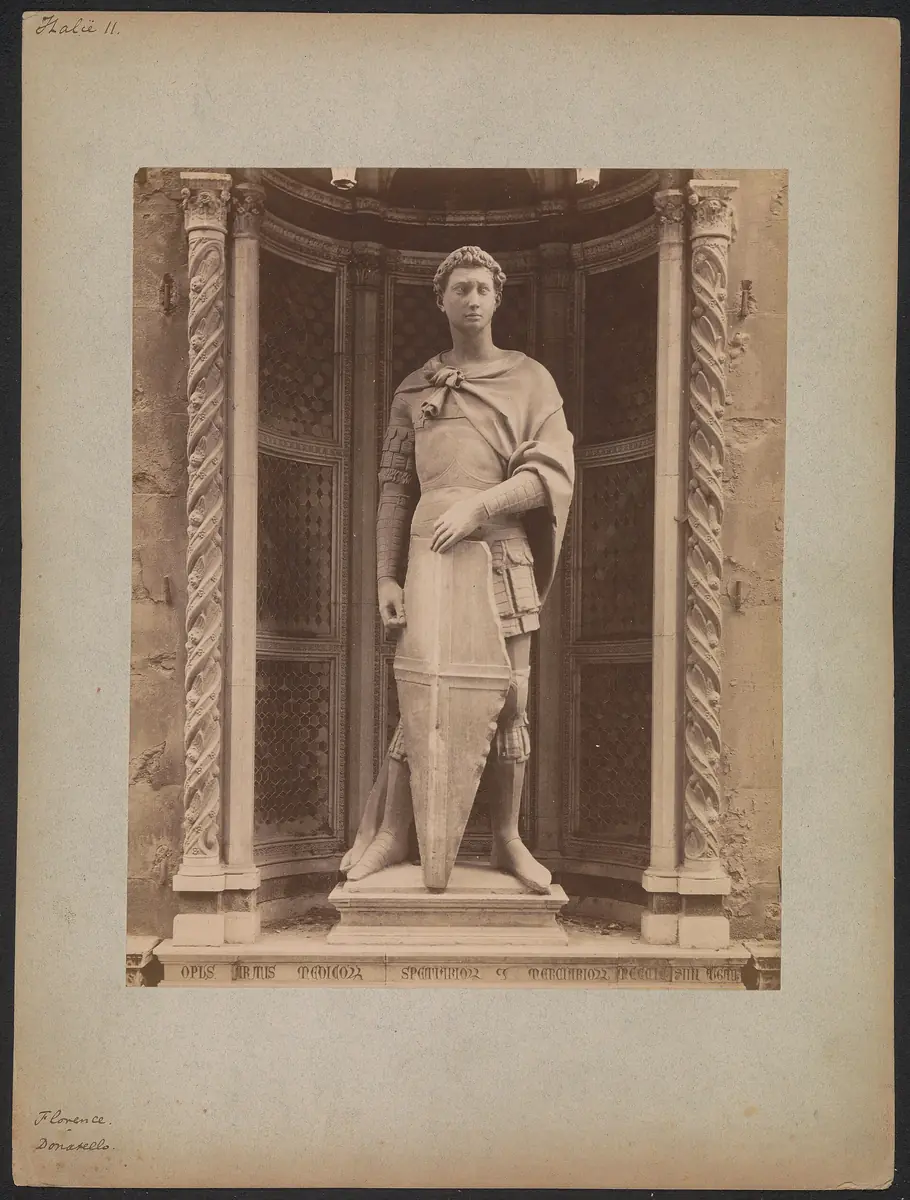
Look closely. A historic photograph of the marble Saint George: a young soldier in a tight cuirass and cloak, the shield planted, the head slightly turned, the look more thought than triumph. Look at the still, almost stubborn stance, and at the little relief of the dragon slaying that once stood under his feet (not always visible in every plate).
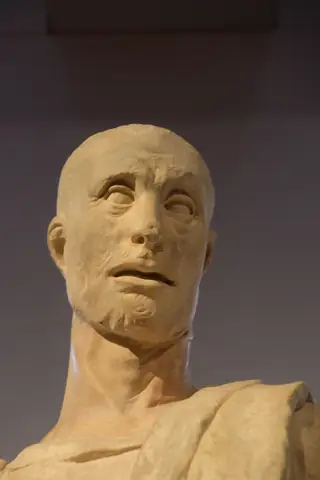
Image: Wikimedia Commons · CC BY 2.0 · Photo: George M. Groutas Habakkuk (the Zuccone)
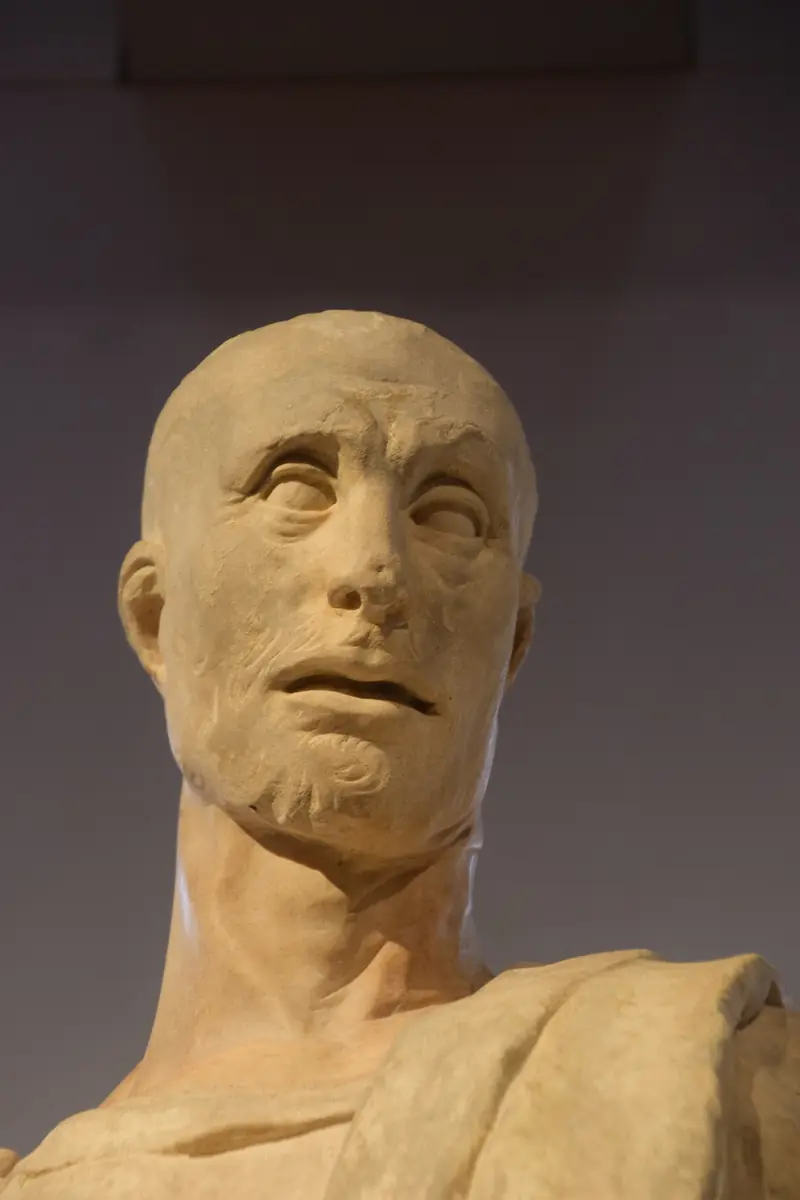
Look closely. A close view of the head of the bald prophet, long called the Zuccone and generally identified as Habakkuk: the mouth slightly open, the eyes set in a worn face, a fold of cloak at the shoulder. Look at the bare skull, the deep-cut features, and the sense that he has turned mid-sentence. The full figure, in a heavy cloak, was made for the campanile and now stands in the cathedral museum.
In the library: The Bible (KJV)
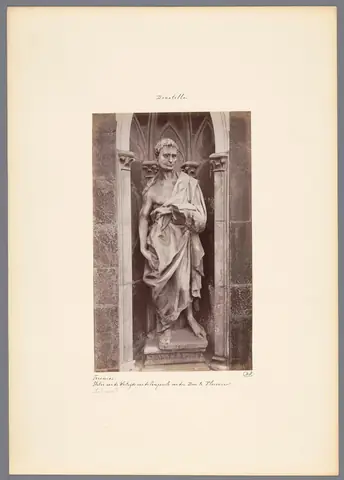
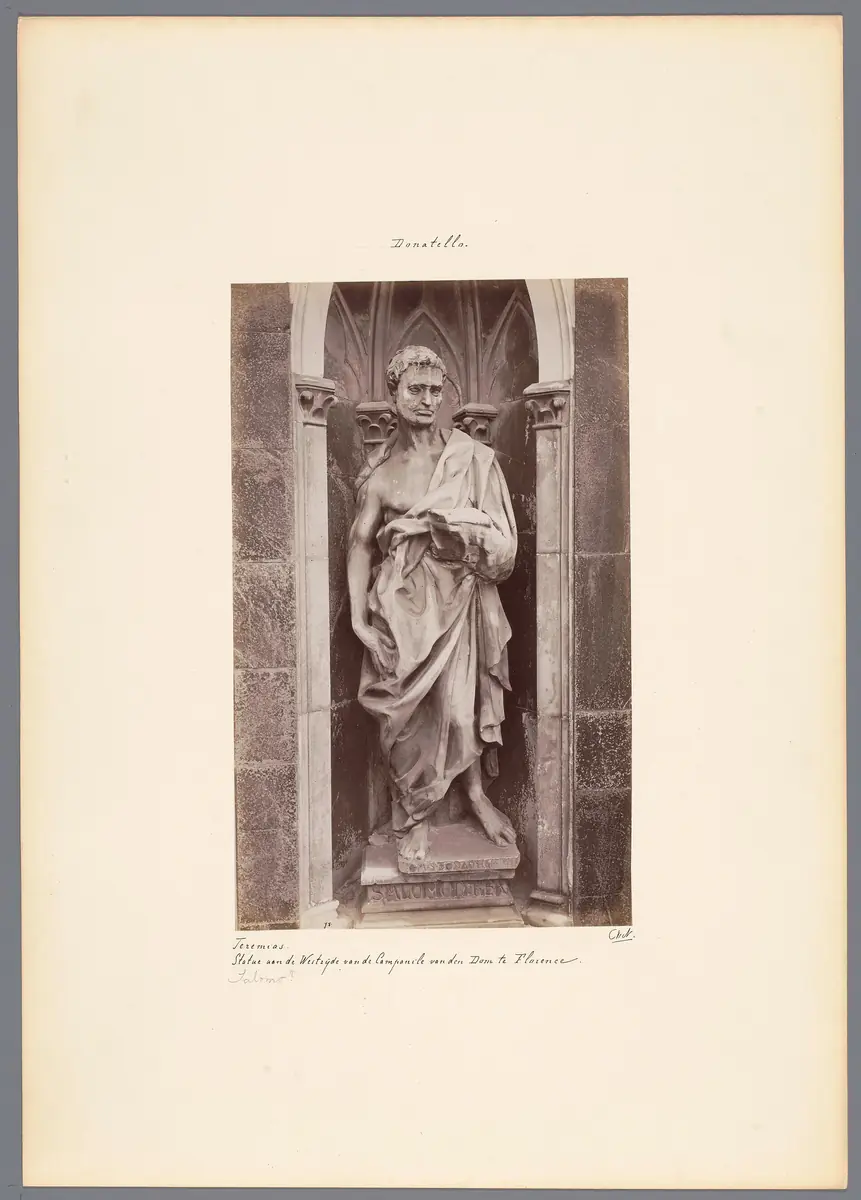
Image: Wikimedia Commons · CC0 (public domain) Jeremiah
Look closely. The companion prophet from the campanile, a deep-eyed, bearded figure in a thick cloak, more inward than the Zuccone. Look at the set of the mouth and at the way the heavy cloth makes a simple, almost box-like volume of the body, so that the life of the statue is all in the head and hands.
In the library: The Bible (KJV) · Jeremiah
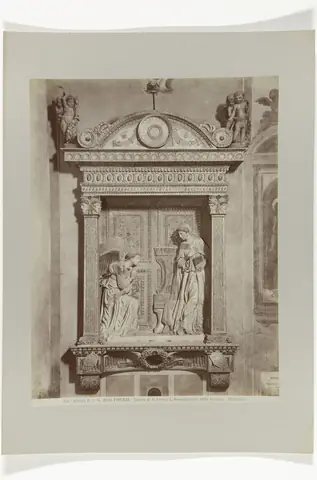
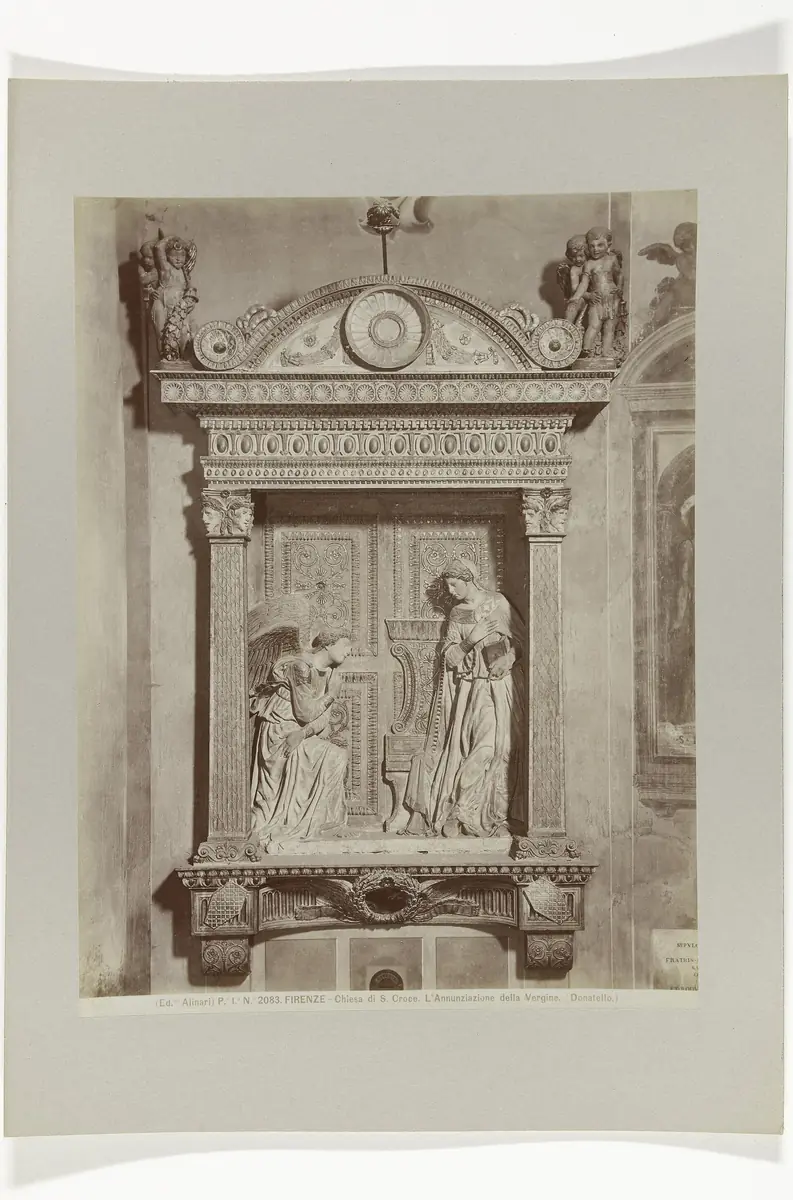
Image: Wikimedia Commons · CC0 (public domain) The Cavalcanti Annunciation
Look closely. A historic photograph of the gilded limestone relief in Santa Croce: Gabriel kneels or steps in from the left, Mary turns from her lectern, both in quietly luxurious drapery under a carved tabernacle. Look at the space between the two figures — the whole subject is in that interval — and at the small classical details of the frame.
In the library: The Bible (KJV) · Mary, mother of Jesus · Jesus Christ
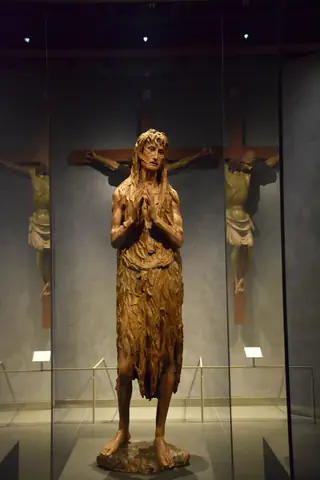
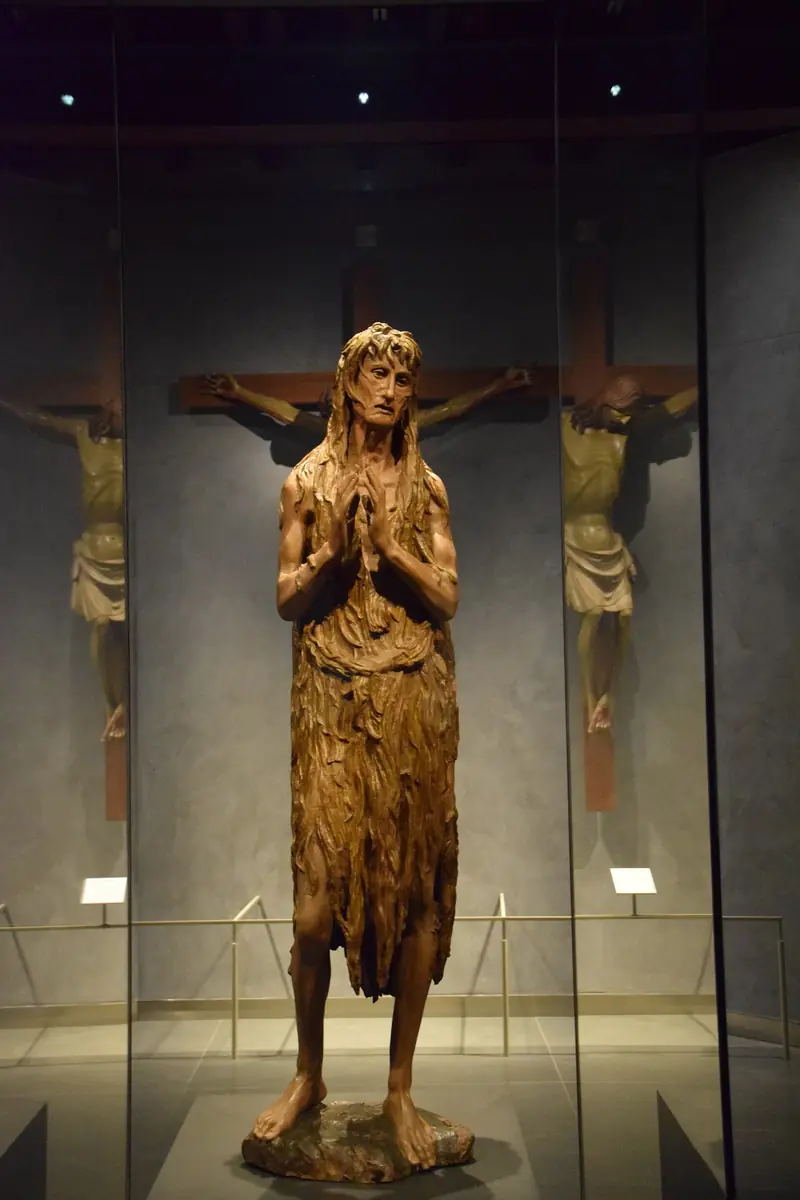
Image: Wikimedia Commons · CC BY 2.0 · Photo: George M. Groutas Penitent Magdalene
Look closely. The wooden Magdalene, gaunt, dressed in her own carved hair, the hands almost meeting in prayer, the mouth a little open. Look at the thin arms, the hollowed face, and the refusal of prettiness: this is a saint at the end of a long repentance, made for a baptistery, not for a palace.
In the library: The Bible (KJV) · Mary Magdalene
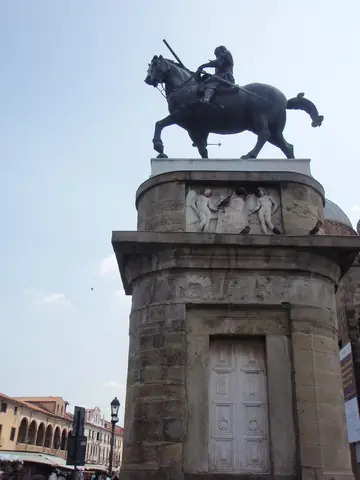
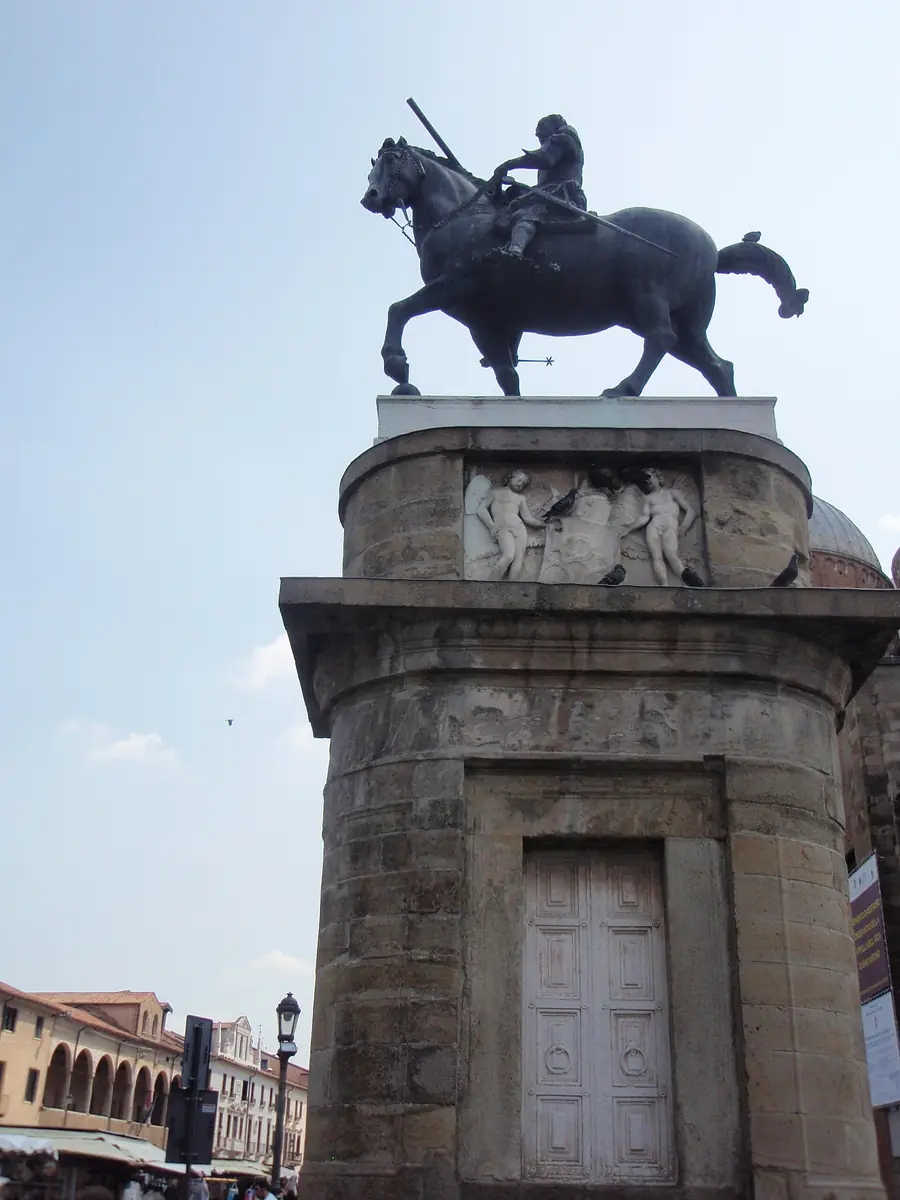
Image: Wikimedia Commons · Public domain Equestrian monument of Gattamelata
Look closely. The bronze condottiere Erasmo da Narni, called Gattamelata, rides in the square before the basilica of Saint Anthony. The horse is four-square and heavy; the rider is calm, a baton in his hand, a commander rather than a charger. Look at the long, almost processional pace, the armour, and the way Donatello has made a Christian soldier sit like a Roman one without losing the living weight of the animal.


What to watch for in Donatello
Look slowly- A face in mid-speech. Habakkuk and Jeremiah look as if they had just looked down at you.
- Drapery that is worn, not arranged. The Magdalene's hair and rag of a dress are part of her penitence.
- A horse that has weight. On the Gattamelata, look at the hooves and the way the rider sits.
- A shallow relief that still has space. The Cavalcanti Annunciation is almost a picture in stone.
- Youth and age. Saint George is young and taut; the prophets are worn.
For older students
These famous works include nudity, so they are named here but not shown. Teachers and parents can decide when to look at them together.
- Bronze David, c. 1440s, Bargello, Florence. The famous bronze of the young David, unclothed except for boots and a hat, with the head of Goliath at his feet.
- Judith and Holofernes, c. 1455–1460, Palazzo Vecchio, Florence. Judith stands over the fallen Holofernes, whose body is largely unclothed.
Dates and collections follow the holding museums and Wikidata. Images of paintings are photographs of public-domain pictures from Wikimedia Commons or museum open-access releases; photographs of sculpture are used only when the photograph itself is Public domain, CC0, or CC BY with a named credit. Each picture links to its source page with full licence details.