Great Art · Mannerist
Giambologna
The Flemish sculptor of Florence, who could send a bronze horse and rider into a public square, and a draped Architecture into a palace.
His life
Giambologna, born Jean de Boulogne in the Low Countries, came to Italy as a young man and stayed in the service of the Medici. He had a gift for the twisting figure and for bronze that seemed to fly, and his Mercury became one of the most copied statues in Europe. Many of those famous works are unclothed and are named below. What this page can show is the public, civic gift: the great equestrian Cosimo I in the Piazza della Signoria, the later Ferdinando I on the Piazza della Santissima Annunziata (designed by Giambologna and finished by his pupil Pietro Tacca), the bronze doors at Pisa, and a bronze bust of Francesco I from the shop.
He ran a large workshop and set a style that travelled. A student walking the squares of Florence still meets his horses and his doors. The skill is the same whether the subject is a flying god or a grand duke in armour: a body fully understood, then set into bronze that can live outdoors.
Key sculptures
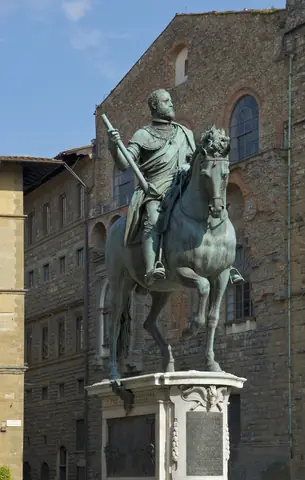
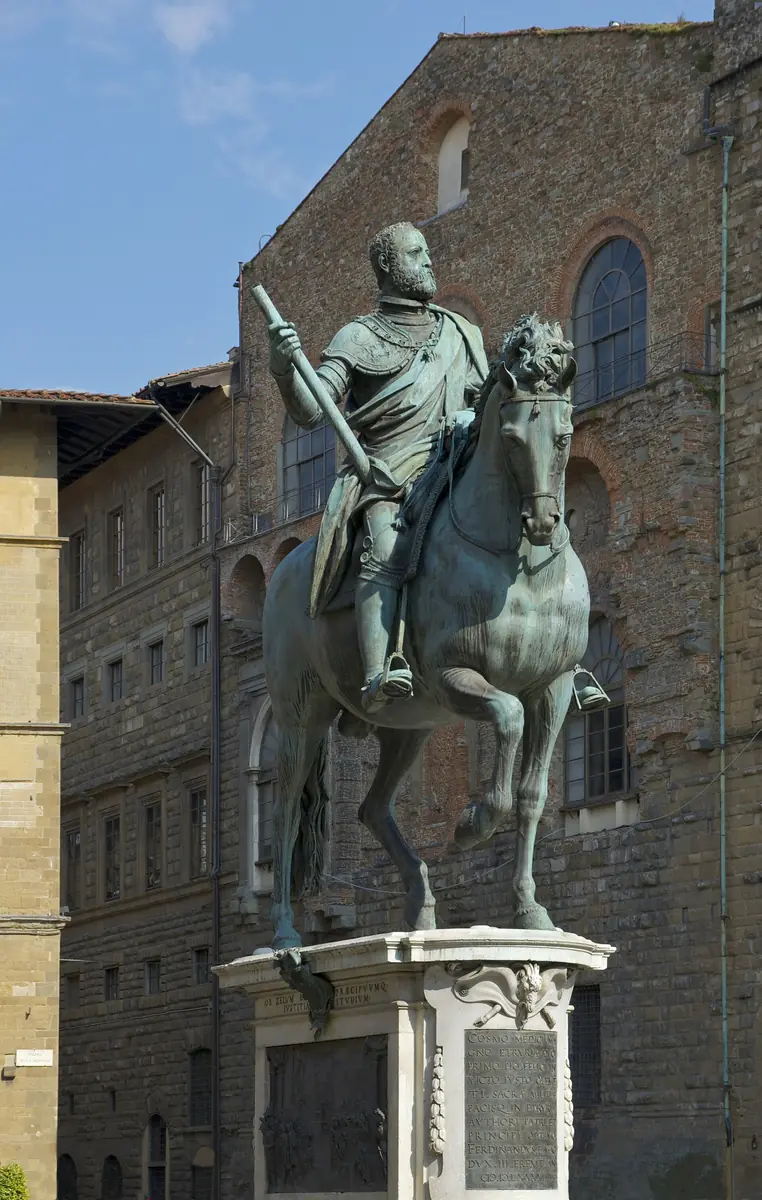
Image: Wikimedia Commons · CC0 (public domain) Equestrian monument of Cosimo I de' Medici
Look closely. The grand duke rides in armour in the main square of Florence, the horse collected, one foreleg raised, the rider calm and slightly turned. Look at the long, official dignity of the group, the richly worked armour, and the way the statue holds the piazza without needing to rear or charge.
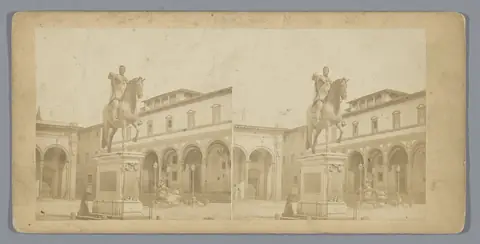
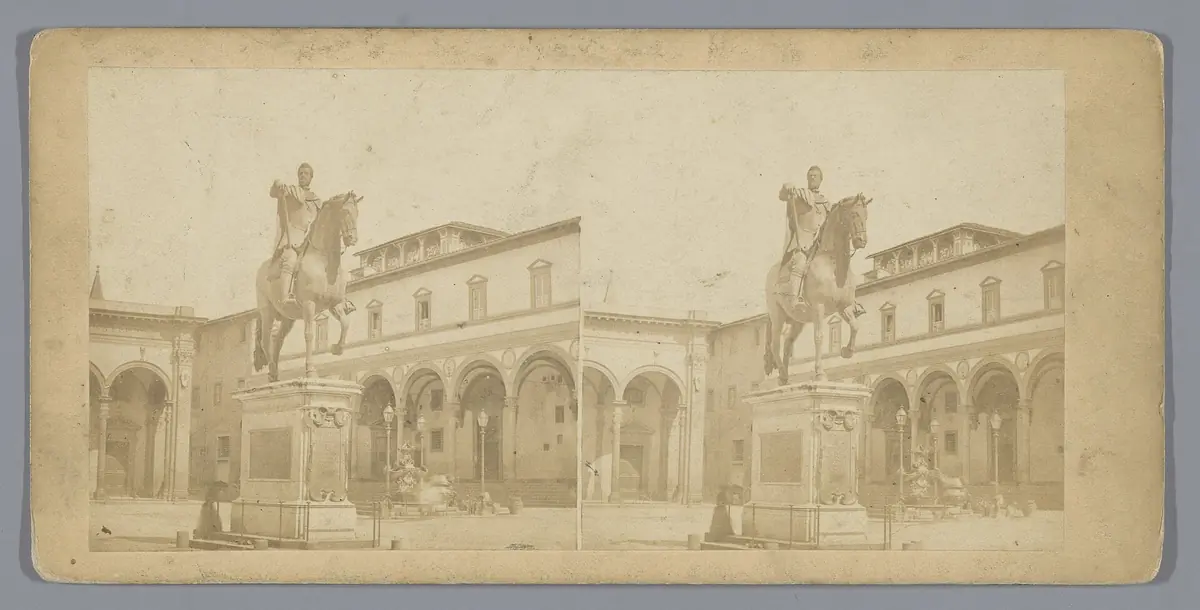
Image: Wikimedia Commons · CC0 (public domain) Equestrian monument of Ferdinando I de' Medici
Look closely. A historic photograph of Ferdinando's monument in the piazza of the Annunziata. The design is Giambologna's; Tacca finished the bronze after his master's death. Look at the similar collected horse and the slightly different, heavier rider — a shop continuing a language already set by the Cosimo.
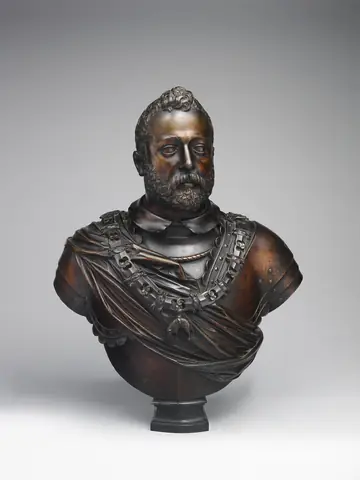
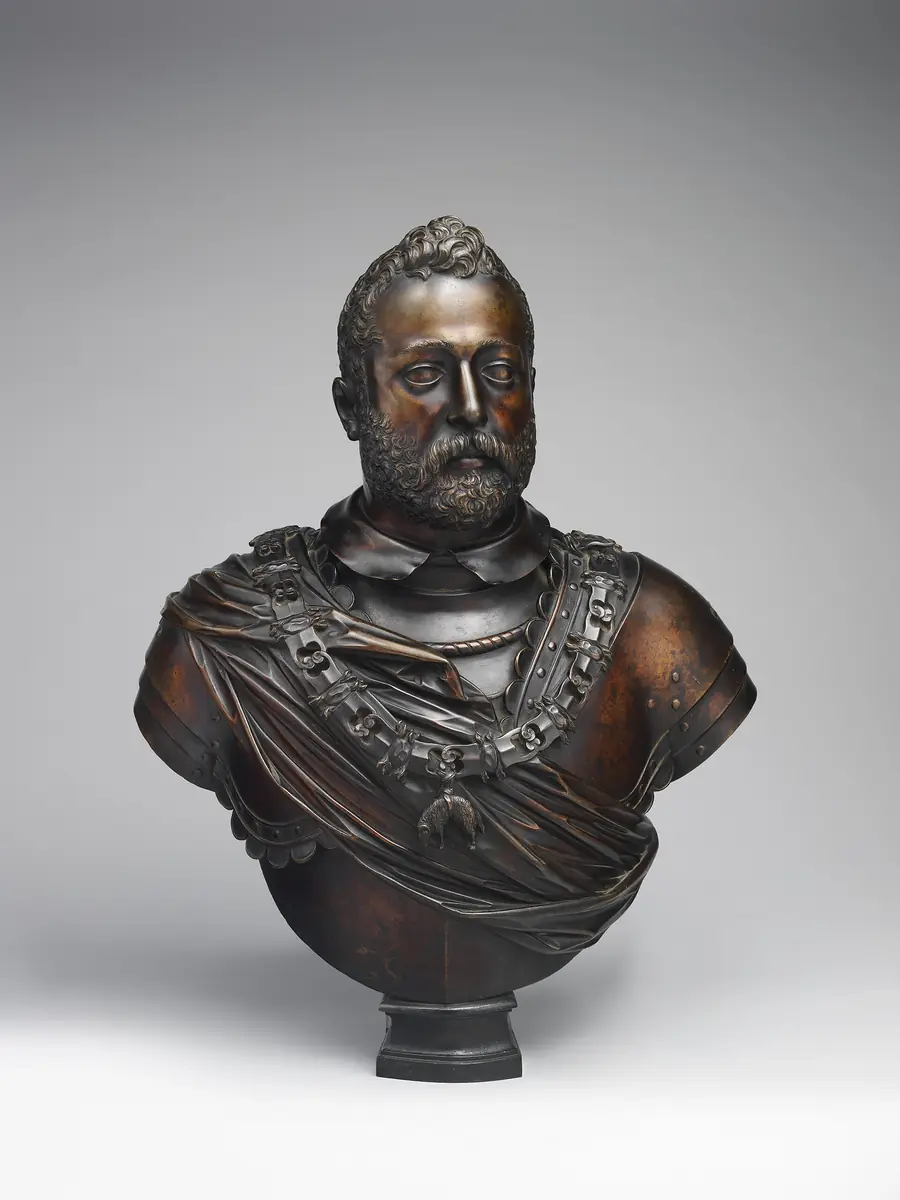
Image: Wikimedia Commons · CC0 (public domain) Francesco I de' Medici
Look closely. A bronze bust of the grand duke in armour, a collar and the badge of the Golden Fleece across the chest. The work comes from Giambologna's shop and is often associated also with his pupil Pietro Tacca. Look at the careful, official dignity of the head, the richly worked armour, and the way a public face is made for bronze rather than for a piazza.
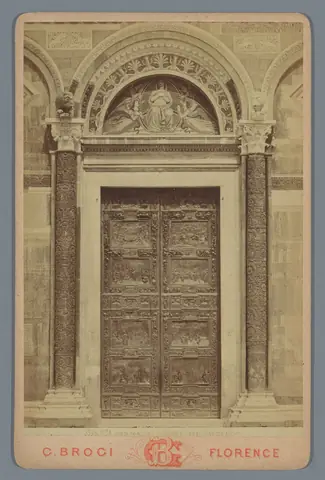
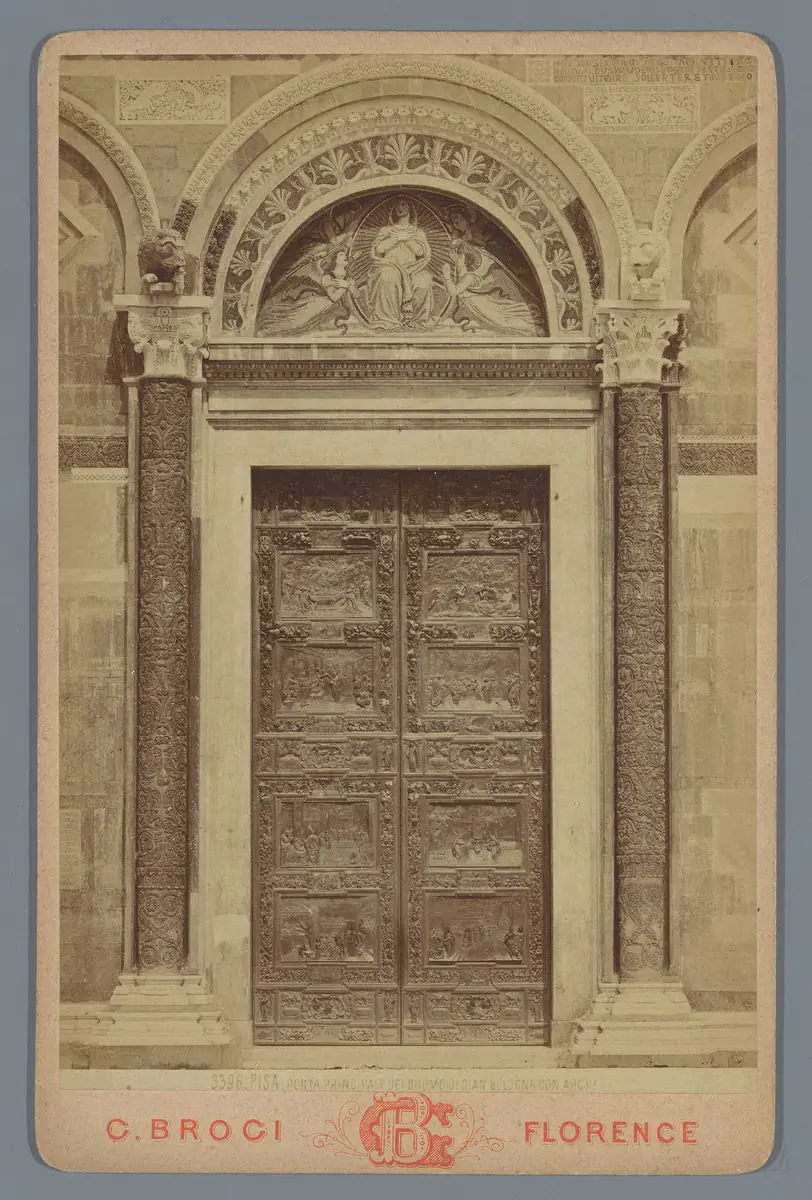
Image: Wikimedia Commons · CC0 (public domain) Bronze doors of Pisa Cathedral
Look closely. A historic photograph of the principal bronze doors, a work of Giambologna's shop: panels of sacred story set in a richly ornamented frame. Look at the even programme of the leaves and at the way a Flemish master, late in life, still spends his skill on a cathedral door.
In the library: The Bible (KJV) · Jesus Christ
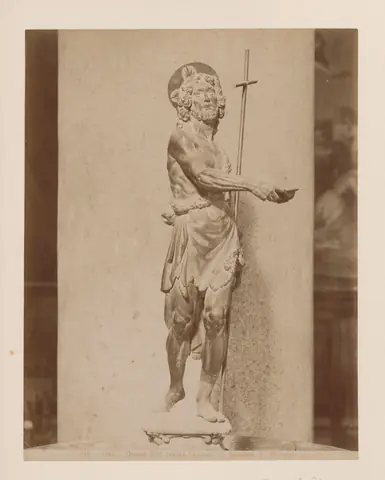
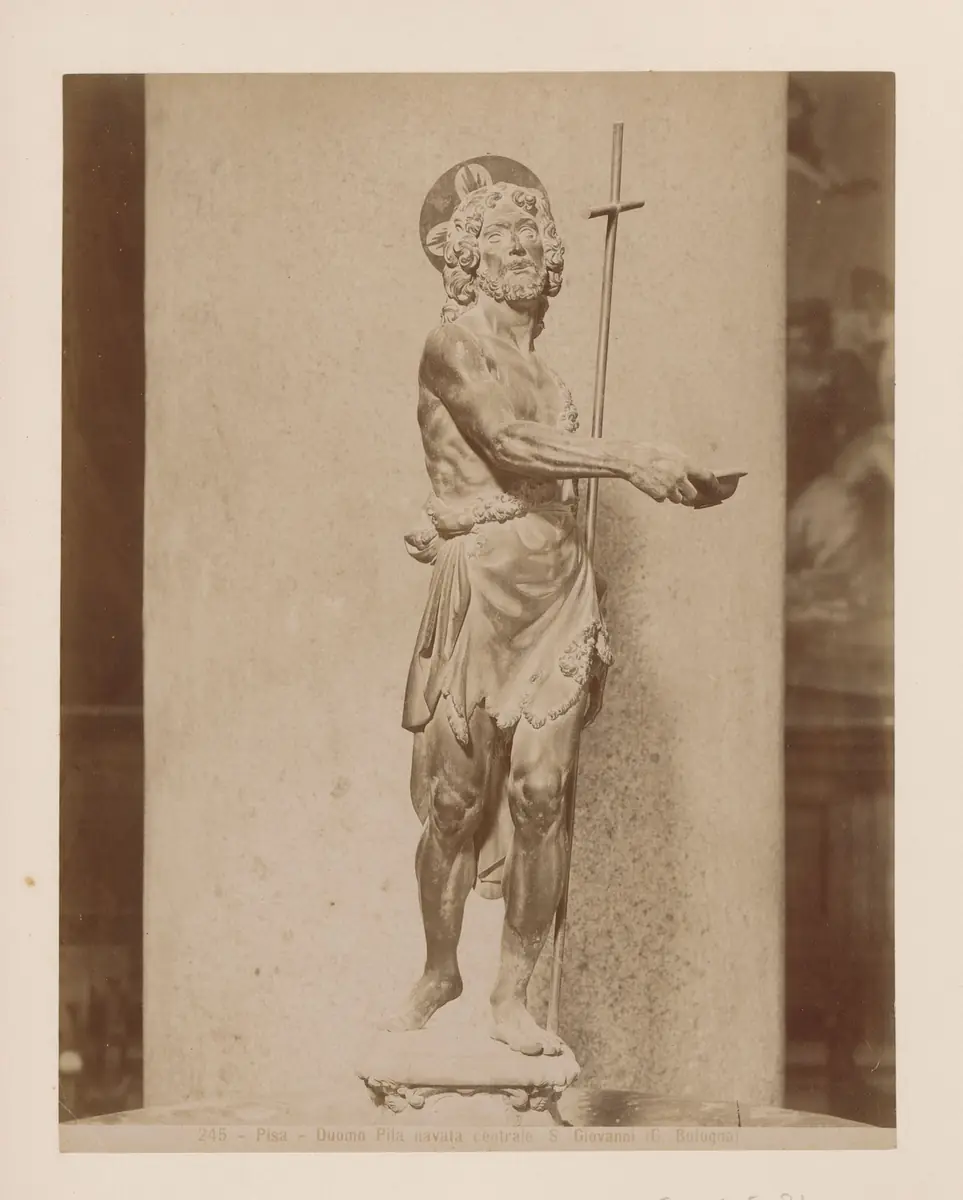
Image: Wikimedia Commons · CC0 (public domain) Saint John, on a holy-water stoup, Pisa Cathedral
Look closely. A small bronze or marble Saint John on a stoup in the cathedral, recorded in a historic photograph. Look at the modest scale — a figure meant to meet a person coming in to take water — and at the careful, almost private devotion of a work that is not a piazza monument.
In the library: The Bible (KJV)


What to watch for in Giambologna
Look slowly- A rider who commands the square. Look at how Cosimo sits, and at the horse's lifted hoof.
- A bust as well as a horse. Francesco I is a face for a palace, not a figure for a square.
- A door as a set of stories. At Pisa, the bronze leaves are a programme, not a single picture.
- A design finished by a pupil. Ferdinando's monument was completed by Pietro Tacca after Giambologna's design.
- Armour and drapery as form. The civic works are fully dressed; the thought is still in the twist of a torso or a neck.
For older students
These famous works include nudity, so they are named here but not shown. Teachers and parents can decide when to look at them together.
- Mercury, c. 1563–1580 (several versions), Bargello, Florence, and elsewhere. The famous flying messenger, a male nude balanced on a breath of air.
- The Rape of the Sabine Women, 1579–1583, Loggia dei Lanzi, Florence. A twisting group of three unclothed figures, carved from a single block of marble.
- Hercules and the centaur Nessus, 1599, Loggia dei Lanzi, Florence. A combat group in which the bodies are largely unclothed.
- Allegory of Architecture, c. 1565–1570, Bargello, Florence, and other versions. A seated female figure, largely unclothed, with the tools of architecture.
Dates and collections follow the holding museums and Wikidata. Images of paintings are photographs of public-domain pictures from Wikimedia Commons or museum open-access releases; photographs of sculpture are used only when the photograph itself is Public domain, CC0, or CC BY with a named credit. Each picture links to its source page with full licence details.