Great Art · Baroque
Gian Lorenzo Bernini
The sculptor and architect of Baroque Rome, who could make marble seem to breathe, and a whole church seem to rise on four bronze columns.
His life
Bernini grew up in his father's workshop and was already famous in his teens. Rome became his workshop: popes and cardinals asked him for tombs, fountains, saints, and the great bronze canopy over the high altar of St Peter's. He could make a bust talk, an angel lean into the wind, and a saint lift off her stone bed as if in prayer. The most famous early groups — Apollo and Daphne, the David, the figure of Proserpina — are named below, because they are largely unclothed. What this page can show is the later public gift: the baldachin, St Longinus, the angels of the Ponte Sant'Angelo, the bust of Cardinal Scipione, and the two great draped women in ecstasy, Teresa and Ludovica.
He also designed churches, squares, and the colonnade that opens its arms before St Peter's. A student walking in Rome still walks inside his thinking. The gift is speed and fullness at once: drapery that flies, a face that has just spoken, a building that does not wait to be noticed.
Key sculptures
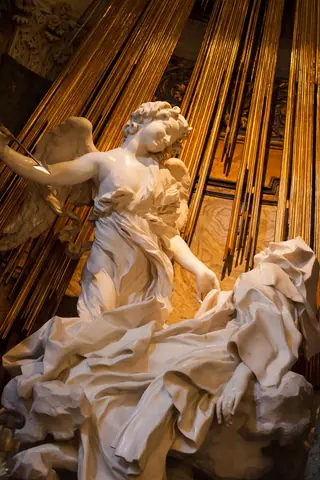
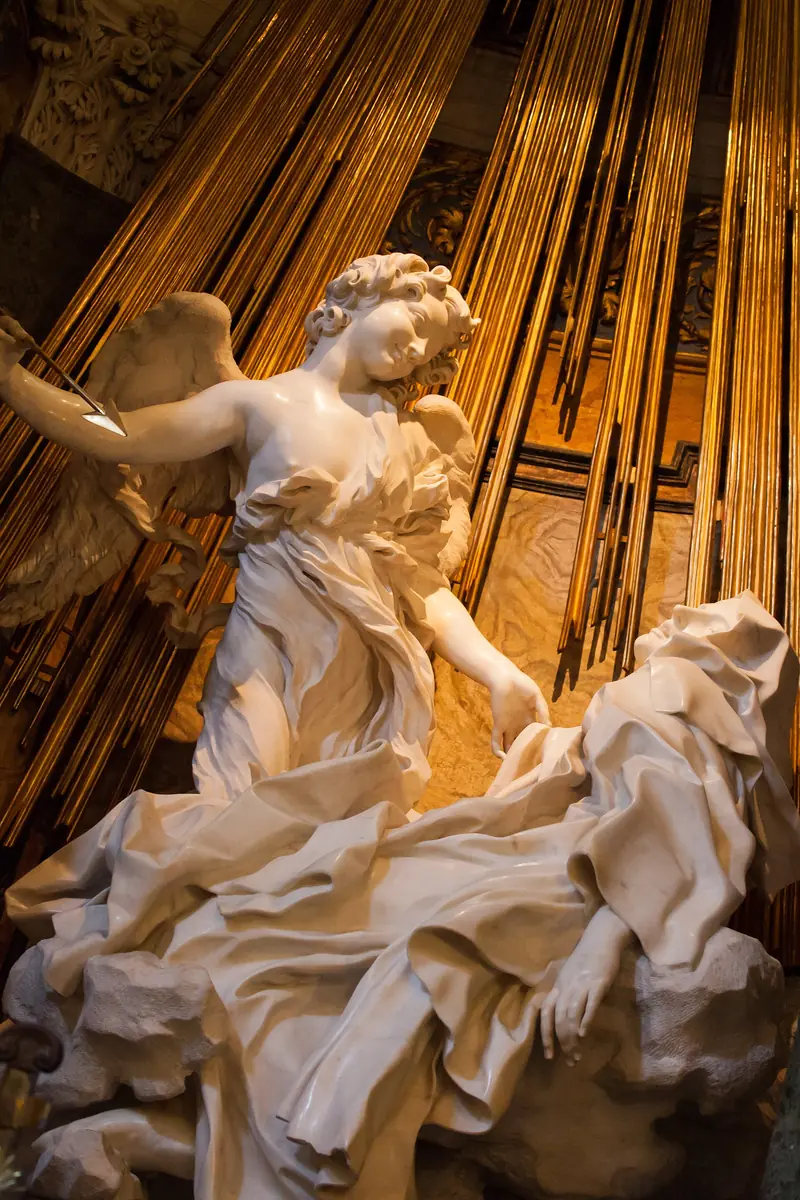
Image: Wikimedia Commons · CC BY 2.0 · Photo: Bradley Weber The Ecstasy of Saint Teresa
Look closely. Teresa of Avila, fully draped, lies back on a cloud as the angel of her vision approaches with a golden arrow, the whole group set in a shallow chapel as if on a stage. Look at the heavy, broken folds of her habit, the light that Bernini arranged to fall from a hidden window, and the quiet of her face in the midst of so much movement.
In the library: The Life of St Teresa of Jesus
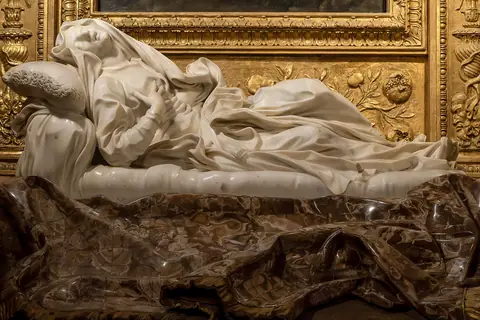
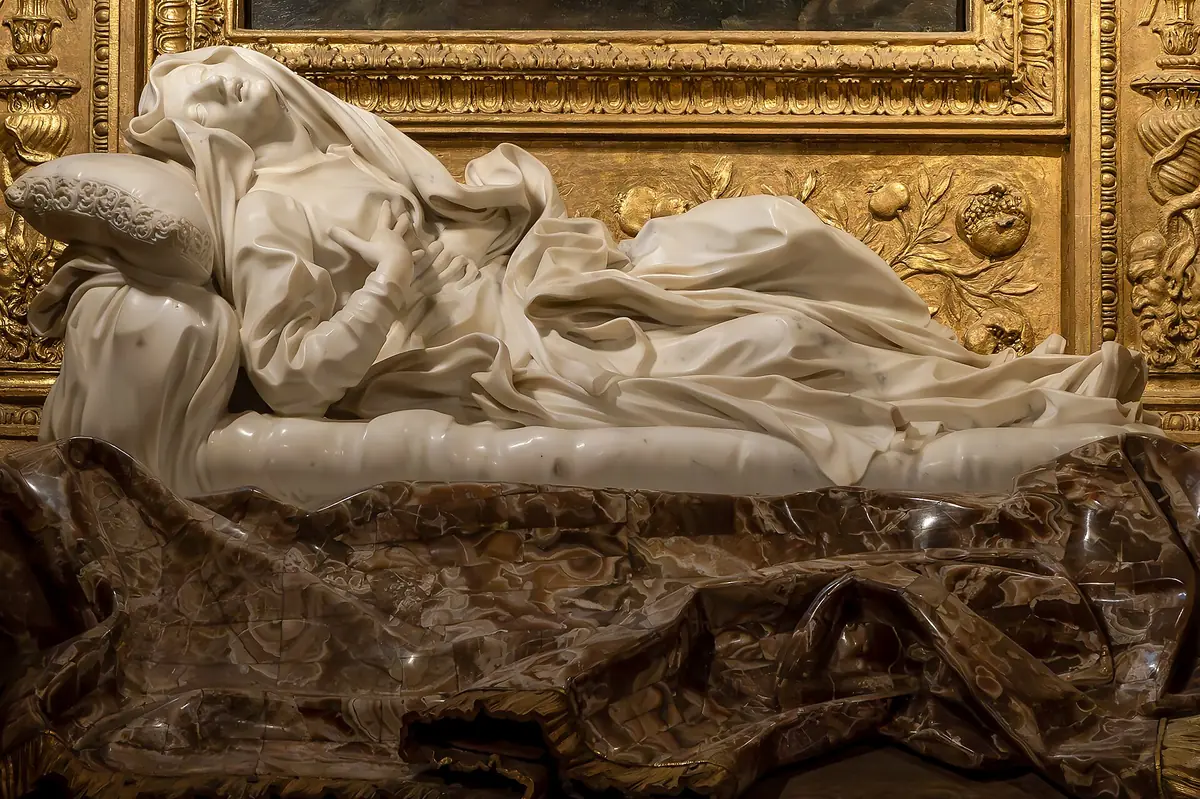
Image: Wikimedia Commons · CC BY 4.0 · Photo: Labicanense Blessed Ludovica Albertoni
Look closely. The dying Ludovica, a Franciscan tertiary, recumbent on a bed, her hands to her breast, her robes in deep, restless folds. Look at the way the drapery both covers and expresses her, and at the hush of a late work that has no need of a large supporting group.
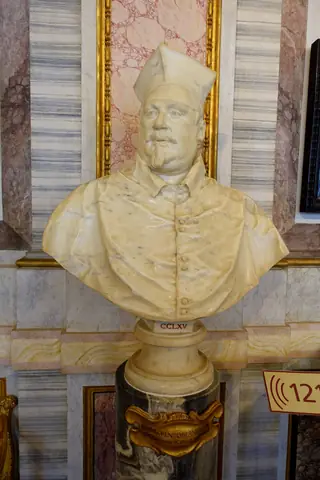
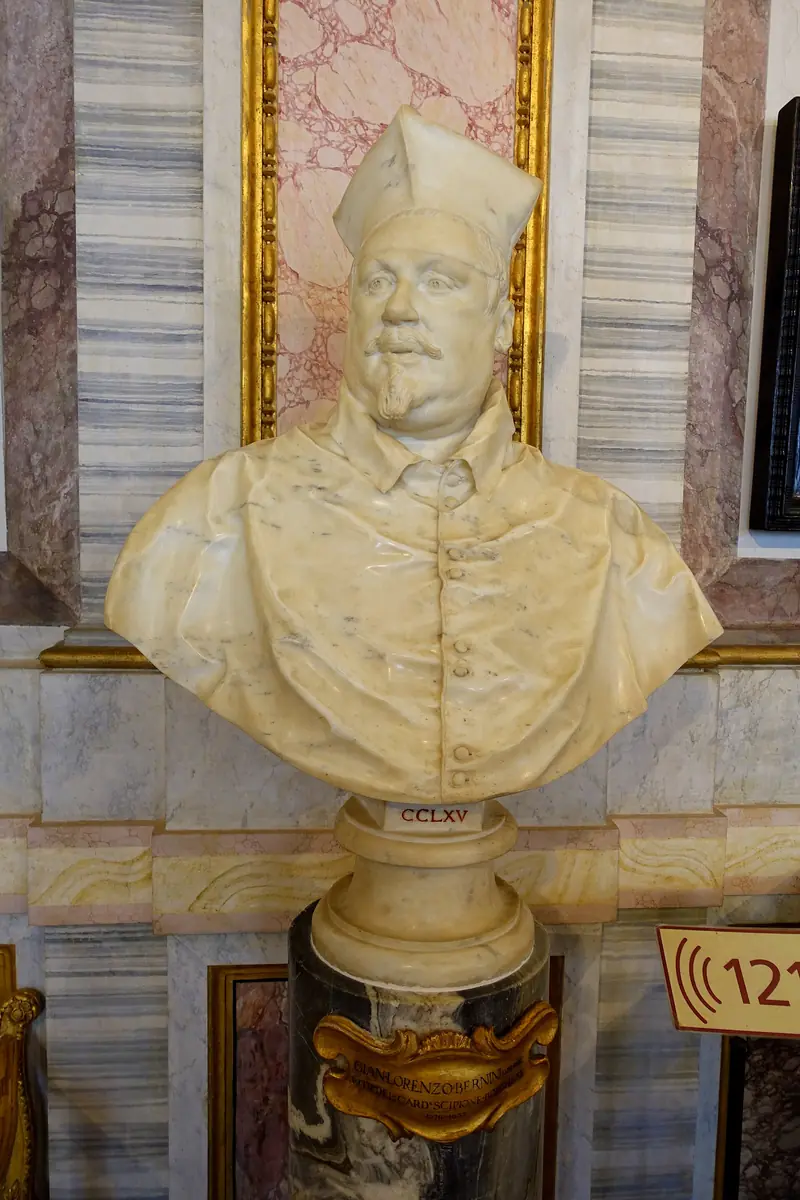
Image: Wikimedia Commons · Public domain Bust of Cardinal Scipione Borghese
Look closely. The cardinal turns slightly, lips parted, the mozzetta and biretta carved with an almost conversational ease. Look at the open mouth, the lively eyes, and the way a formal portrait has been made to feel like a greeting.
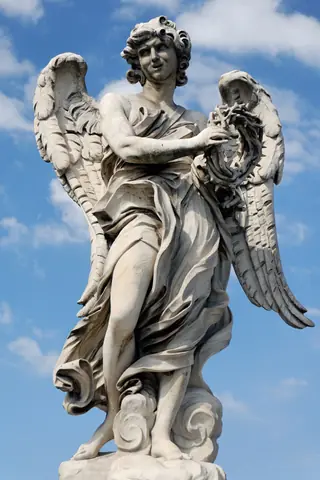
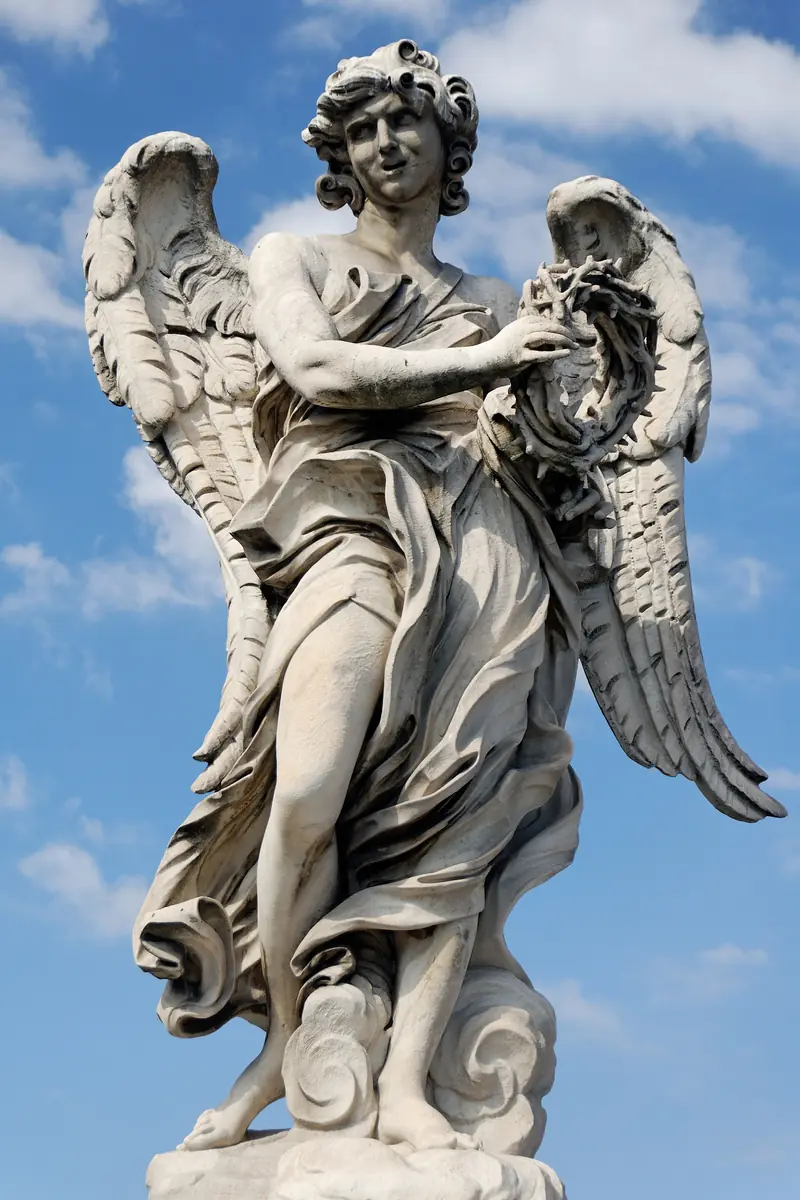
Image: Wikimedia Commons · CC BY 2.5 · Photo: Marie-Lan Nguyen (User:Jastrow) Angel with the Crown of Thorns, Ponte Sant'Angelo
Look closely. One of the angels of the bridge over the Tiber, holding the crown of thorns, the drapery blown as if by a river wind. Look at the long, twisting folds, the careful instrument of the Passion in the hands, and the way a figure meant for open air still reads as a prayer, not a decoration.
In the library: The Bible (KJV) · Jesus Christ
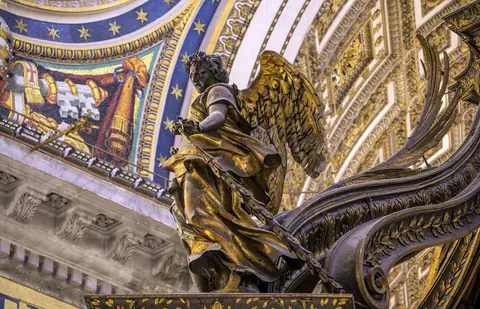
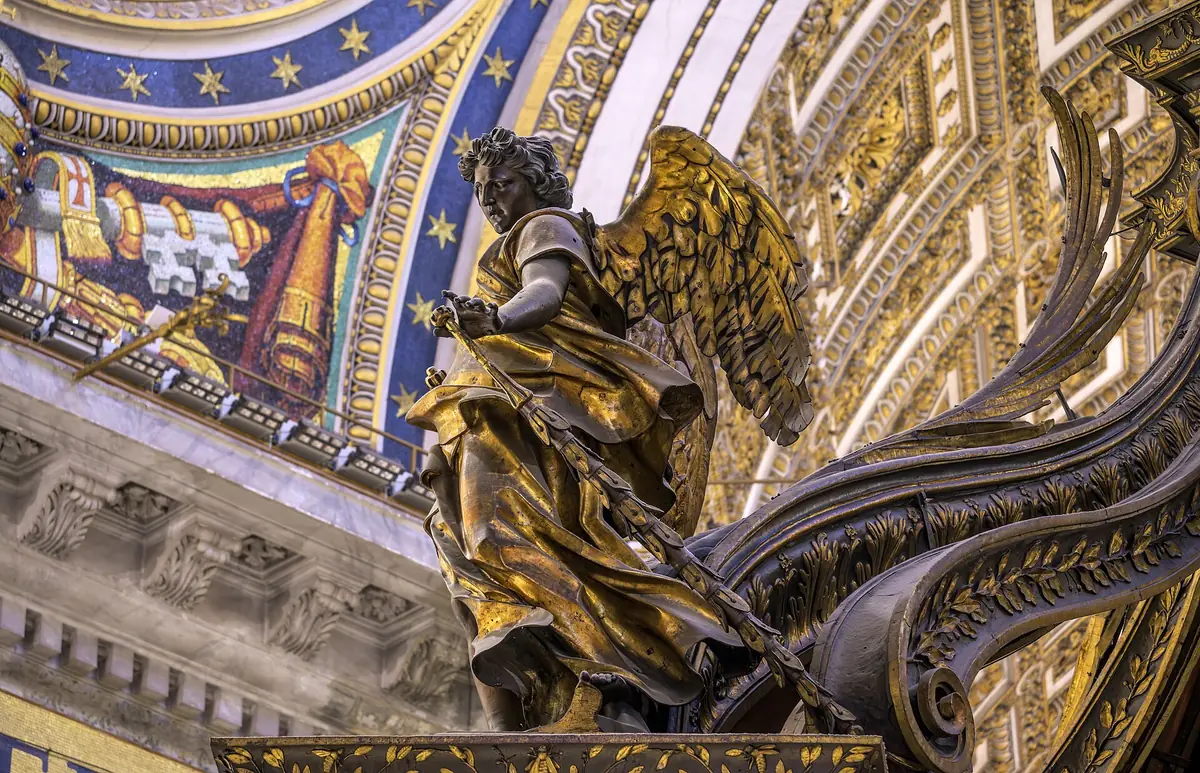
Image: Wikimedia Commons · CC0 (public domain) The baldachin of St Peter's
Look closely. The great bronze canopy over the high altar and the tomb of the apostle, four twisting columns, a crossing of ornament, and a cross at the top. Look at the scale — it is a building inside a building — and at how Bernini fills the vast crossing without closing it.
In the library: The Bible (KJV) · Peter
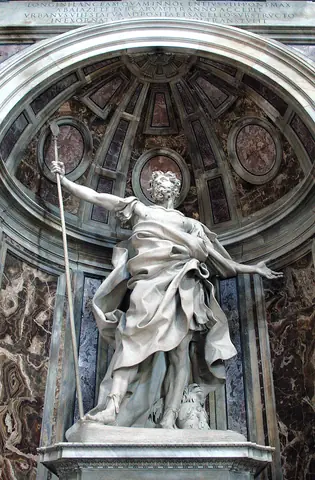
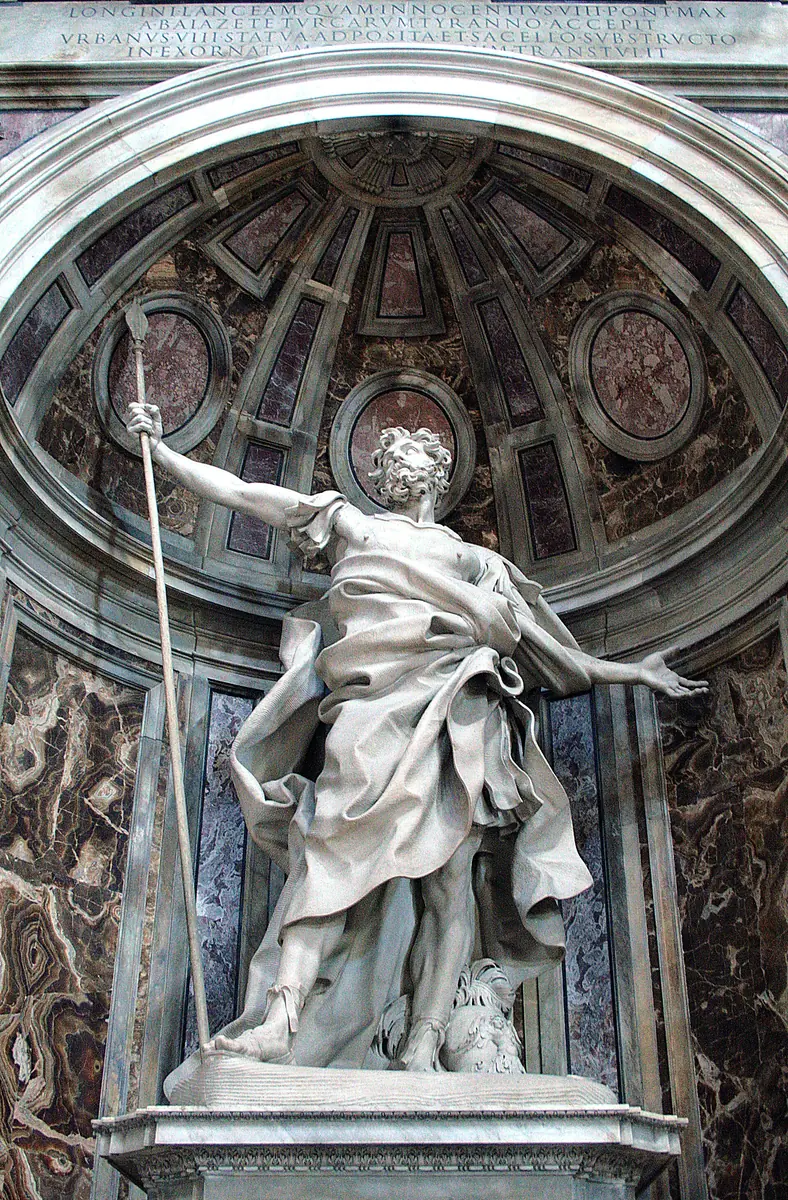
Image: Wikimedia Commons · CC BY 3.0 · Photo: Jean-Pol GRANDMONT Saint Longinus
Look closely. The huge marble Longinus in a niche of the crossing, the soldier who pierced Christ's side, his arms thrown wide, a spear in one hand, a swirl of cloak around a body otherwise in military dress. Look at the open gesture, large enough to be read from far down the nave, and at the way a conversion has been made into a single, sudden movement.
In the library: The Bible (KJV) · Jesus Christ


What to watch for in Gian Lorenzo Bernini
Look slowly- Marble that seems to move. Look at a fold of cloth, a lock of hair, or a mouth just opening.
- A saint in prayer, not in a pose. Teresa and Ludovica are shown in a private moment, fully dressed.
- Architecture and sculpture together. The baldachin is both a monument and a piece of the church.
- An angel on a bridge. The figure is meant to be met as you walk, carrying an instrument of the Passion.
- A bust that seems to speak. Scipione turns as if you had just come into the room.
For older students
These famous works include nudity, so they are named here but not shown. Teachers and parents can decide when to look at them together.
- David, 1623–1624, Galleria Borghese, Rome. The young David, a male figure largely unclothed, twisted in the act of slinging the stone.
- Apollo and Daphne, 1622–1625, Galleria Borghese, Rome. The god pursues Daphne as she turns into a laurel; both figures are largely unclothed.
- The Rape of Proserpina, 1621–1622, Galleria Borghese, Rome. A group of unclothed figures, famous also for the fingers pressed into marble flesh.
Dates and collections follow the holding museums and Wikidata. Images of paintings are photographs of public-domain pictures from Wikimedia Commons or museum open-access releases; photographs of sculpture are used only when the photograph itself is Public domain, CC0, or CC BY with a named credit. Each picture links to its source page with full licence details.