Great Art · American / Academic
Henry Ossawa Tanner
The American painter, son of an A.M.E. bishop, who gave a banjo lesson, a poor table blessing, and the Gospel a grave, inward light.
His life
Henry Ossawa Tanner was born in Pittsburgh in 1859, the son of Benjamin Tucker Tanner, a bishop of the African Methodist Episcopal Church, and Sarah Miller Tanner. He studied with Thomas Eakins in Philadelphia, faced the racial barriers of the American art world, and in 1891 settled in France, where he built a long career. Early pictures of African American domestic life — The Banjo Lesson, The Thankful Poor — were followed by a great series of biblical subjects, often quietly lit, in which he tried to imagine Scripture as a scene of real prayer and astonishment rather than of theatrical gesture.
He lived in France for the rest of his life and died in Paris in 1937. His gift was a grave tenderness. An old man teaching a boy the banjo, a column of light in a bare room, or two disciples at an empty tomb can feel both humble and filled with meaning, because he looked at faces and at light with the same seriousness.
Key works
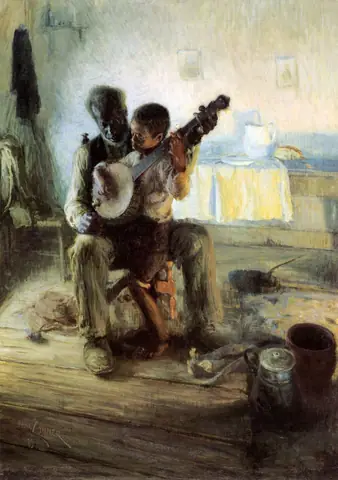
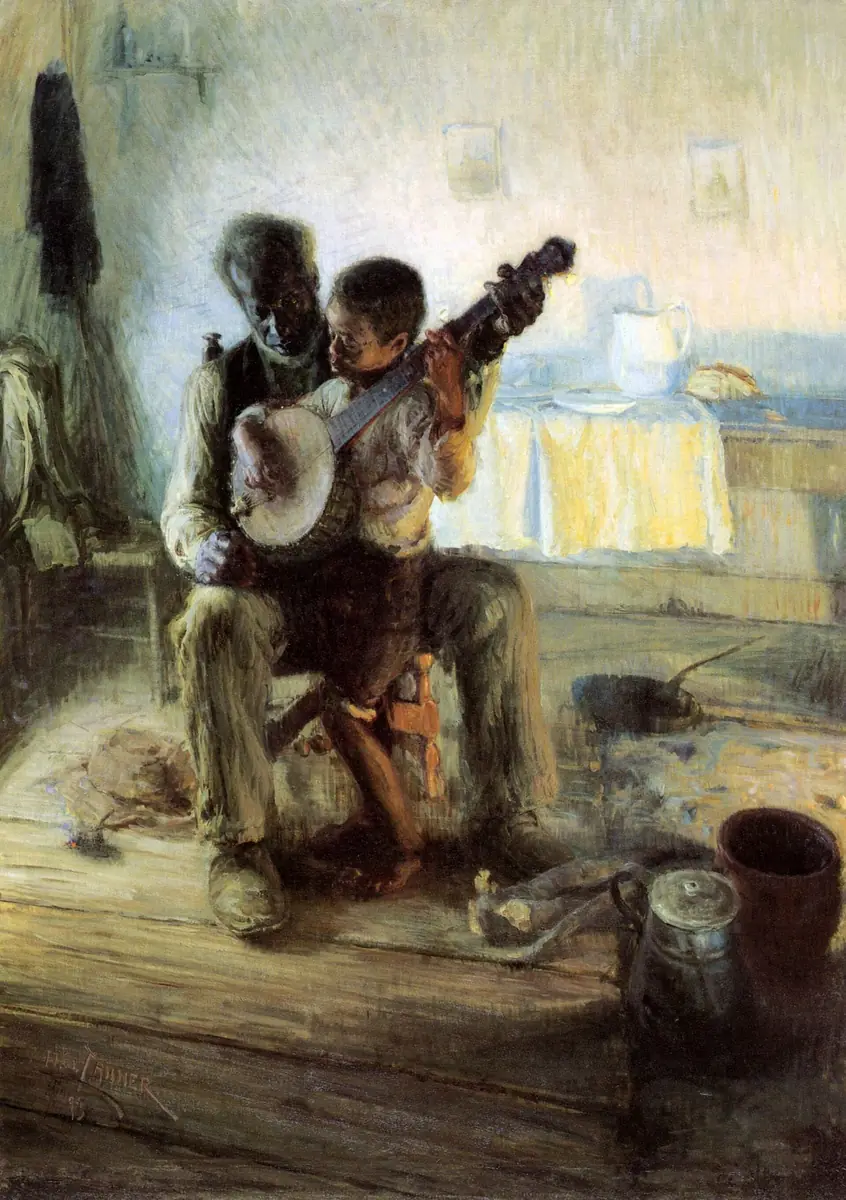
Image: Wikimedia Commons · Public domain (PD-Art) The Banjo Lesson
Look closely. An older man sits on a wooden platform in a humble room and steadies a banjo for a boy who stands between his knees, both of them intent on the lesson; a pitcher and a table catch the light in the background, a jug and a cup sit in the foreground. Look at the man's hands and the boy's, at the worn floor, and at how a quiet transmission of skill is given the dignity of a large picture. Signed H. O. Tanner, 93, at the lower left.
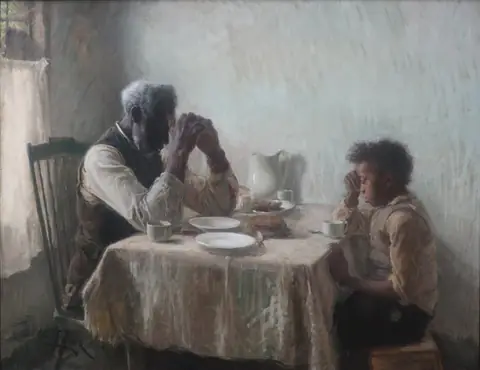
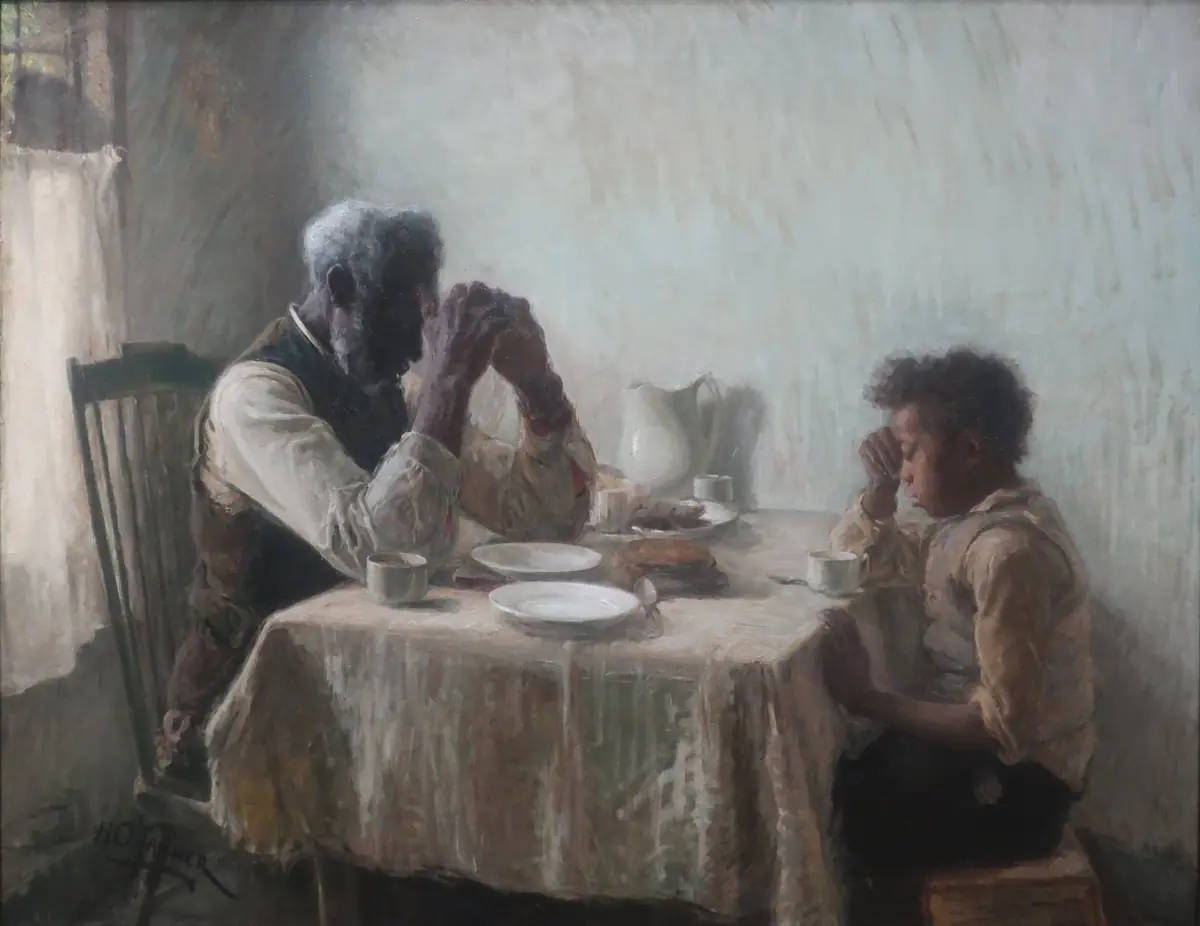
Image: Wikimedia Commons · Public domain (PD-Art) The Thankful Poor
Look closely. An old man and a boy sit at a modest table, heads bowed in grace before a few plates, cups, a loaf and a white pitcher; light comes from a window at the left, and the plaster wall is bare. Look at the old man's clasped hands, at the boy's quieter, almost waiting prayer, and at how little is on the table — and how seriously the blessing is taken.
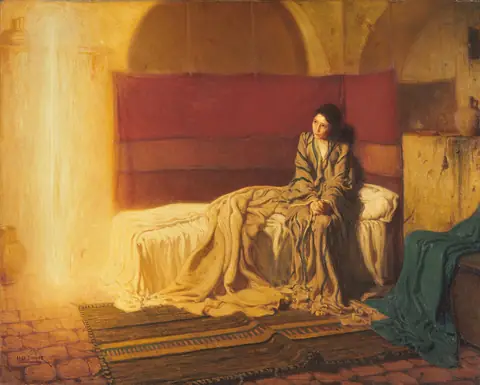
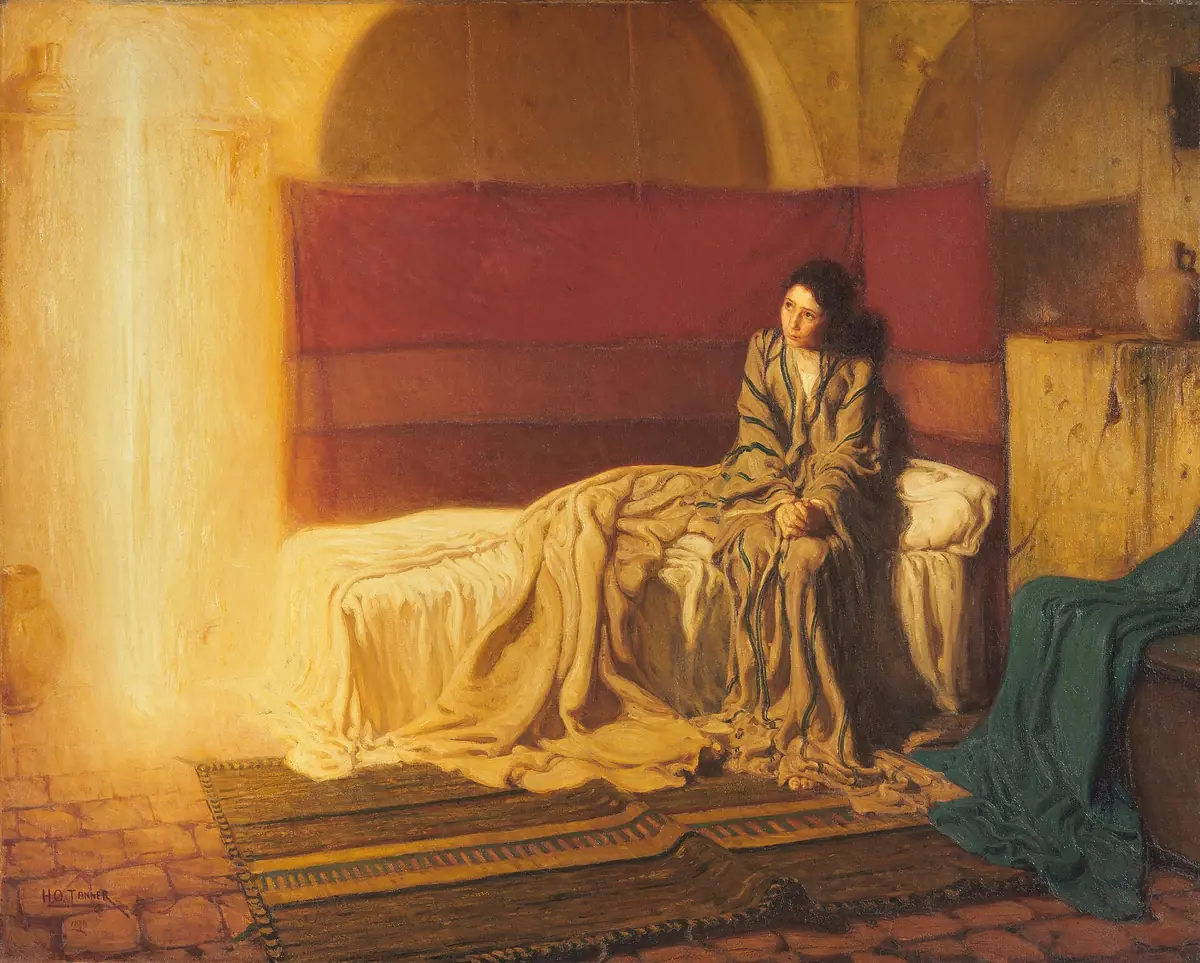
Image: Wikimedia Commons · Public domain (PD-Art) The Annunciation
Look closely. Mary sits on a rumpled bed in a bare, arched room, wrapped in a striped robe, hands clasped, looking toward a tall column of golden light at the left; there is no winged angel, only the light, a red hanging behind the bed, and striped rugs on a stone floor. Look at her still, listening face, at the jar and the teal cloth, and at how a Gospel visit is staged as a real room filled, suddenly, with light. Signed H. O. Tanner, 1898.
In the library: The Bible (KJV) · Mary, mother of Jesus
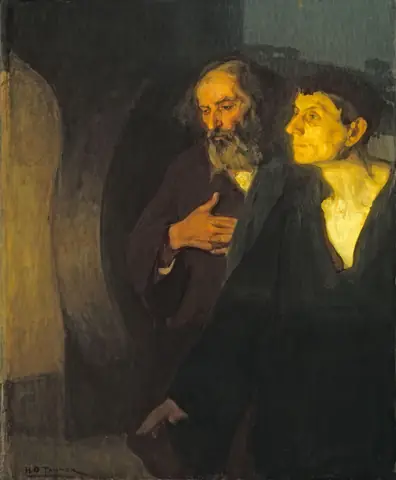
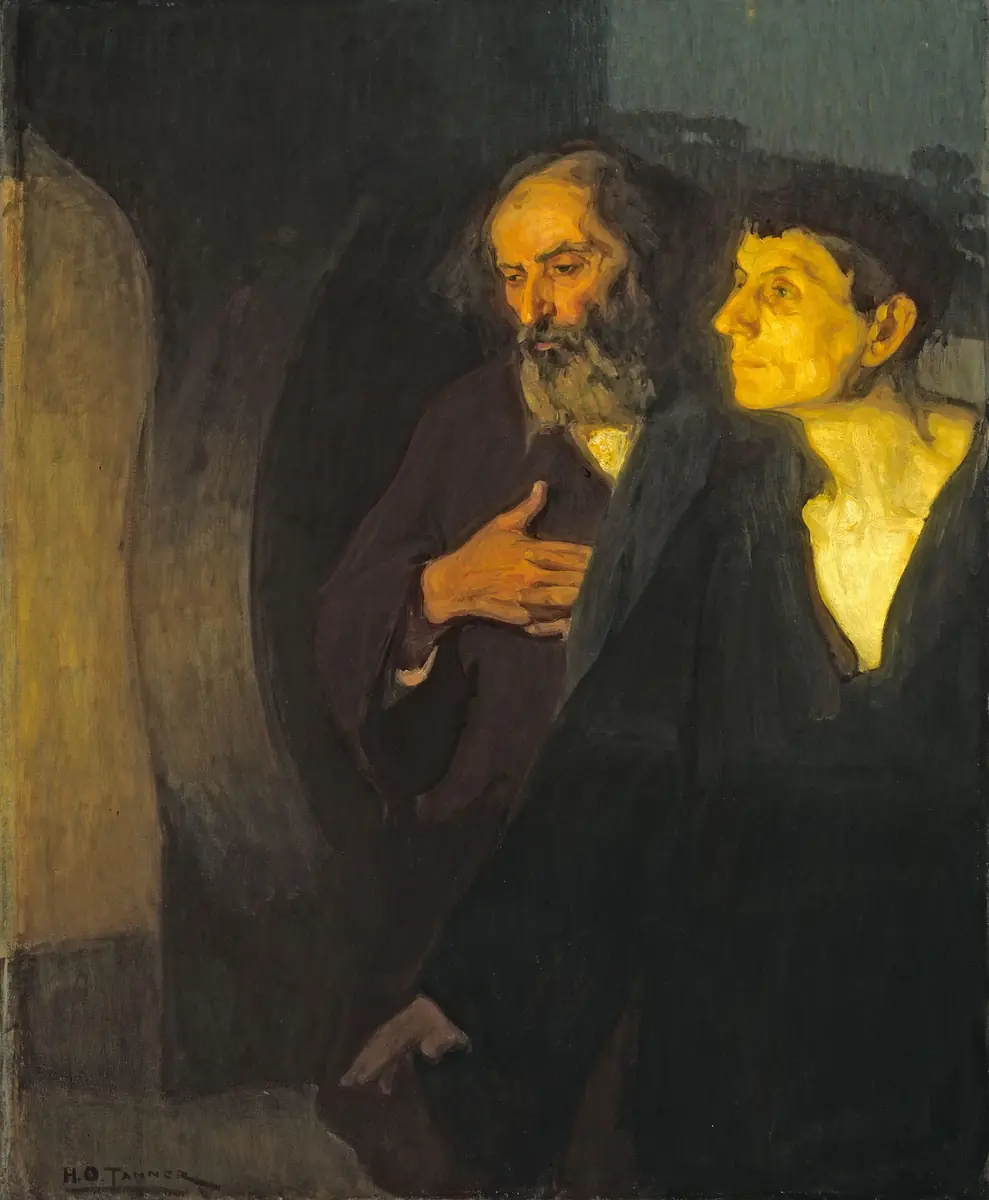
Image: Wikimedia Commons · Public domain (PD-Art) Two Disciples at the Tomb
Look closely. Two men stand at the entrance of a dark tomb: an older, bearded disciple (Peter) with his hand on his chest, and a younger, clean-shaven one (John) whose face is turned into a gold light coming from the left. Look at the two different responses — one inward and almost troubled, one lifted toward the light — and at how little of the tomb itself is shown besides that light and the dark. Signed H. O. Tanner at the lower left.
In the library: The Bible (KJV) · Peter · John the Apostle · Jesus Christ
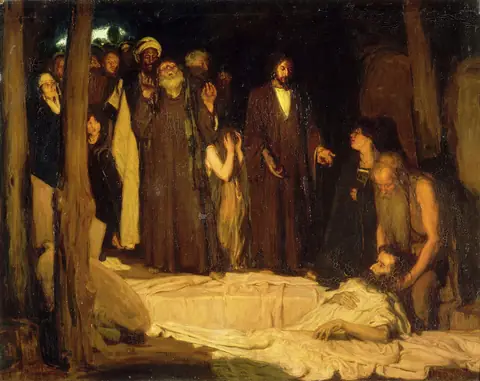
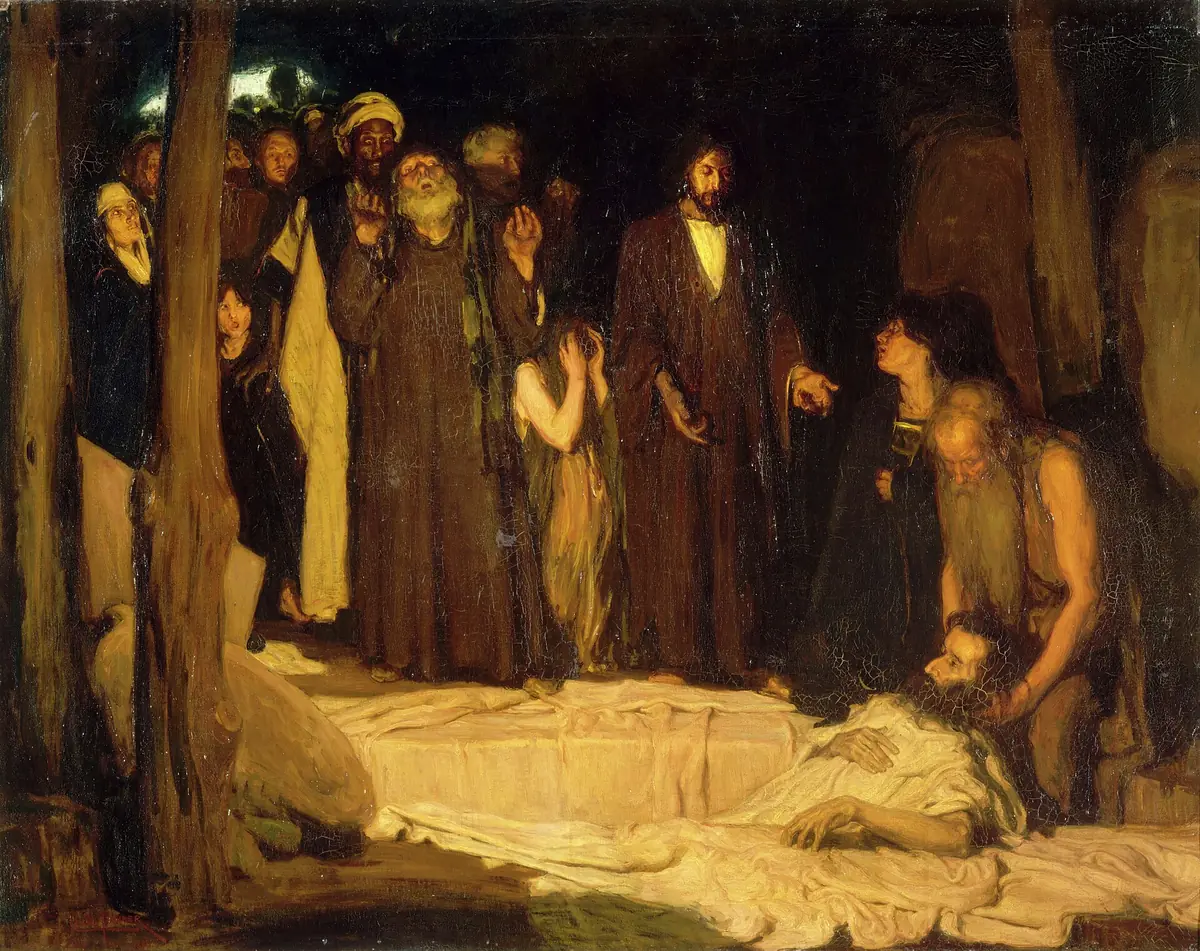
Image: Wikimedia Commons · Public domain (PD-Art) The Raising of Lazarus
Look closely. In a dark tomb-like interior, Lazarus still lies wrapped in white on the ground, his head and one arm visible, as a bearded man bends over him; Christ stands farther back in a dark robe, one hand extended, a woman looking up at him, a child covering a face, and a watching crowd at the left. Look at the fact that Lazarus is not yet standing — the miracle is mid-way — and at the mix of awe, fear and ordinary crowding in the dim space.
In the library: The Bible (KJV) · Jesus Christ · Mary and Lazarus of Bethany · Martha of Bethany
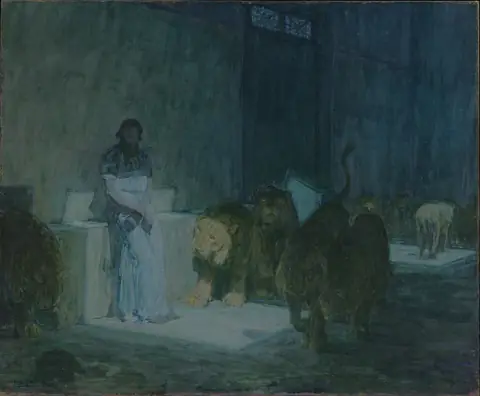
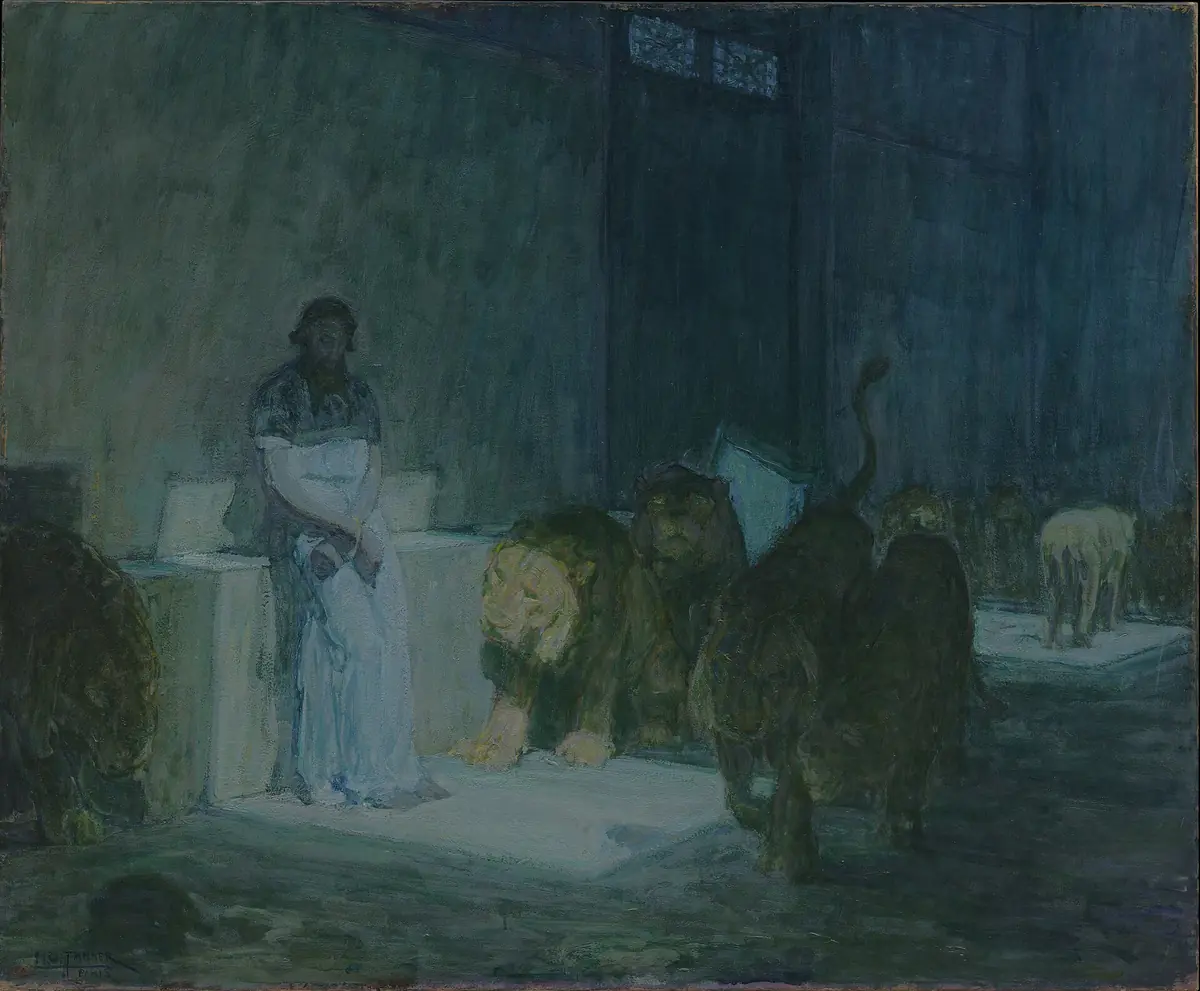
Image: Wikimedia Commons · Public domain (PD-Art) Daniel in the Lions' Den
Look closely. Daniel, in a short-sleeved garment and a long pale robe, stands or sits at the left of a cool, blue-green den, hands together, facing us; several lions move in the half-light, one walking close in front of him, another pale animal farther back, the architecture a bare, high chamber. Look at his still, almost praying pose, at the lions as real animals in a dim room, and at how little drama of roaring is needed. (This is Tanner's later version of a subject he had already painted in the 1890s.)
In the library: The Bible (KJV) · Daniel
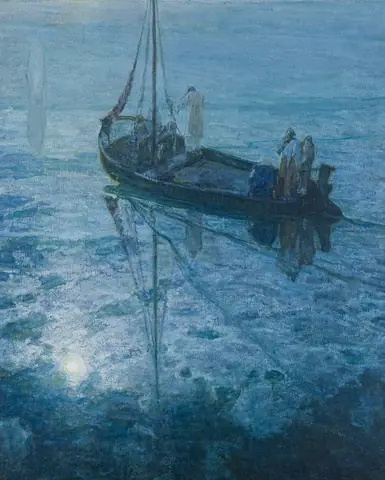
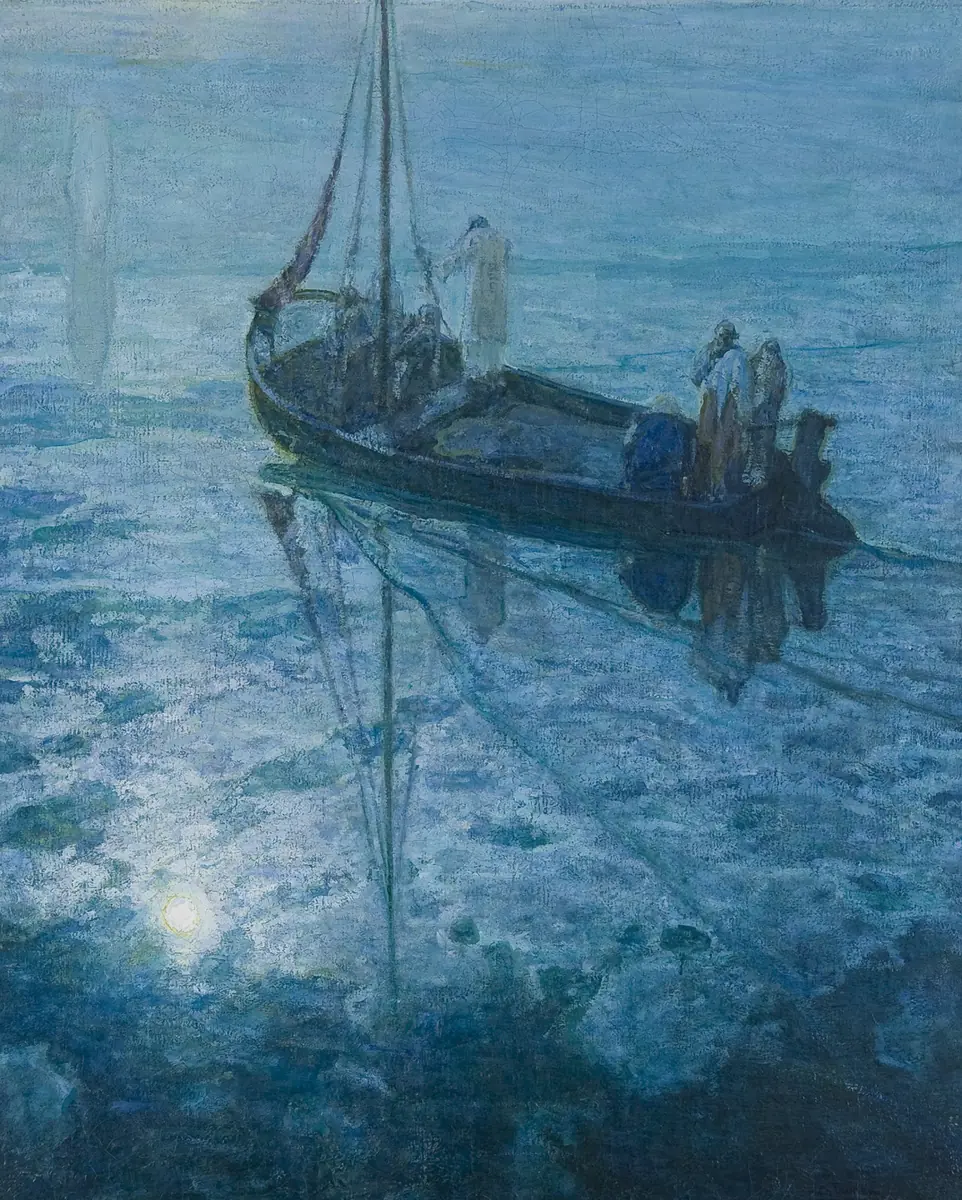
Image: Wikimedia Commons · Public domain (PD-Art) The Disciples See Christ Walking on the Water
Look closely. A fishing boat sits on a calm, moonlit blue sea, its mast and hull doubled in the reflection; the disciples are gathered in the boat, and a pale, almost transparent vertical figure stands on the water at the left. Look at how nearly invisible that figure is, at the moonlight on the ripples, and at the title's insistence that this is the moment of seeing — not a stormy, theatrical crossing.
In the library: The Bible (KJV) · Jesus Christ


What to watch for in Henry Ossawa Tanner
Look slowly- Light as the event. In the Annunciation, the angel is a column of light, not a winged figure.
- A humble room. Tables, jugs and wooden floors are painted with the same care as sacred subjects.
- Quiet faces. Look at how little Tanner needs in the way of theatrical gesture.
- Night and tomb light. Several of the Gospel pictures happen in a dim interior or in moonlight.
- Teaching and blessing. The early domestic pictures treat skill and thanksgiving as subjects worthy of a large canvas.
Dates and collections follow the holding museums and Wikidata. Images of paintings are photographs of public-domain pictures from Wikimedia Commons or museum open-access releases; photographs of sculpture are used only when the photograph itself is Public domain, CC0, or CC BY with a named credit. Each picture links to its source page with full licence details.