Great Art · British (18th century)
William Hogarth
The London painter and engraver who made modern life a moral comedy, and who could also be quietly tender with a child or a shrimp girl.
His life
William Hogarth was born in London in 1697, the son of a schoolmaster who spent time in the debtors' prison, a fact the son never forgot. He was trained as a silver-engraver, then became a painter of portraits, conversation pieces and, above all, modern moral subjects — series of pictures that could be engraved and sold to a wide public. He married Jane Thornhill, campaigned against cheap imported prints, and helped to settle the idea that a British artist could live by his own inventions.
He died in London in 1764. His gift was sharp seeing used as teaching. A collapsed marriage, a gate at Calais, or a foundling hospital captain can be packed with objects that all have a job, and yet a face — a tired husband, a laughing girl — can still be looked at with sympathy.
Key works
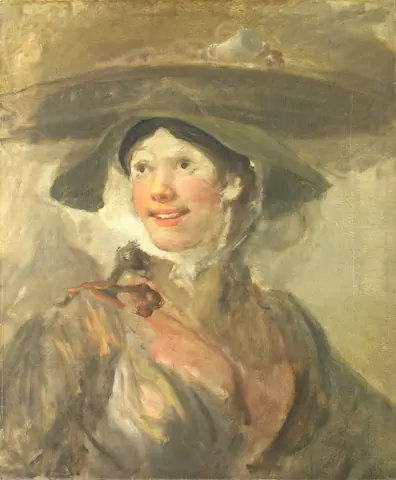
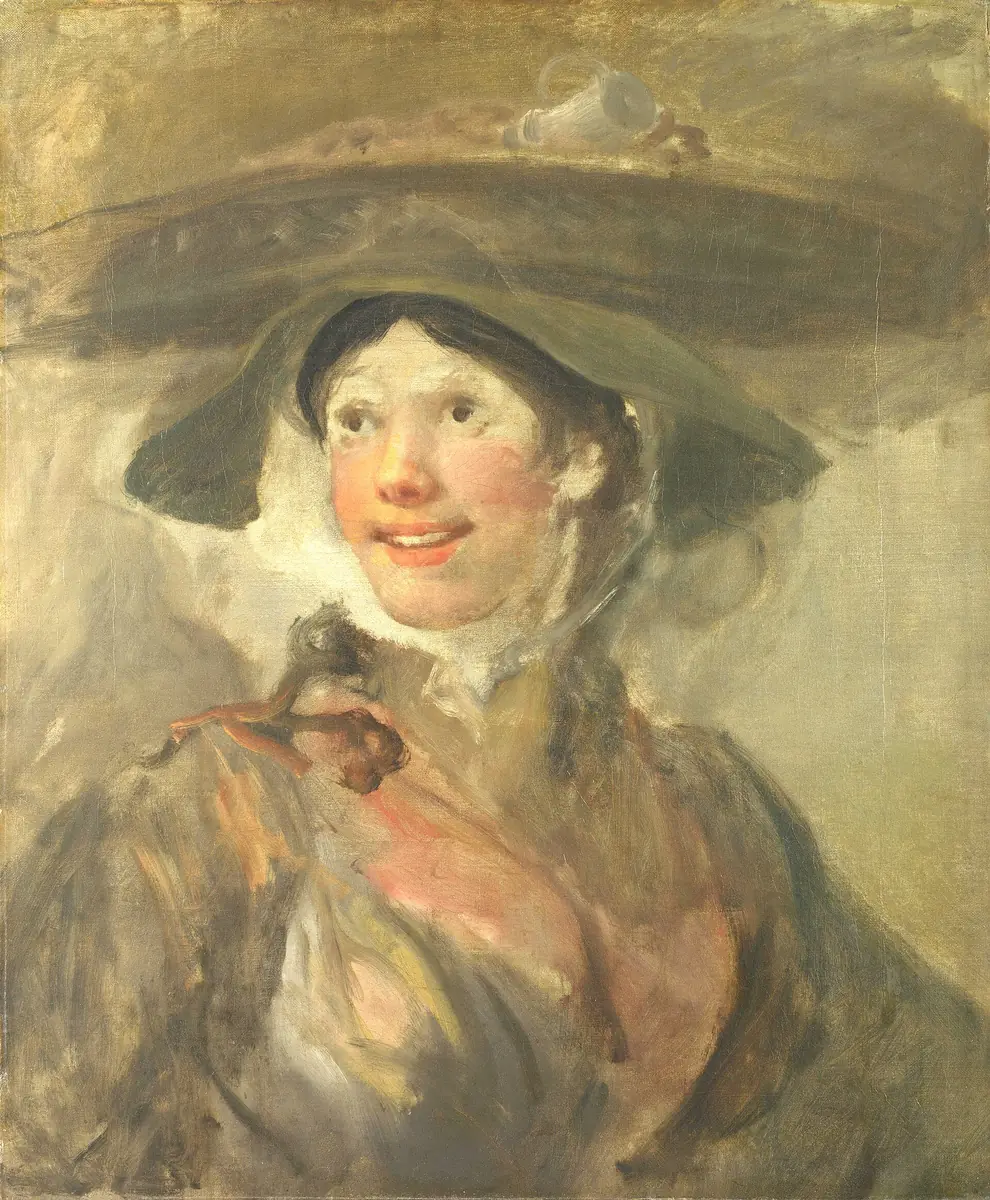
Image: Wikimedia Commons · Public domain (PD-Art) The Shrimp Girl
Look closely. A young woman selling shrimp looks out with a half-open mouth and a bright, unfinished freshness, a dish of shrimp on her head, the paint still loose and flickering. Look at the rosy face, at the sketch-like dress, and at how little finish is needed for a likeness that feels as if she had just called out in the street.
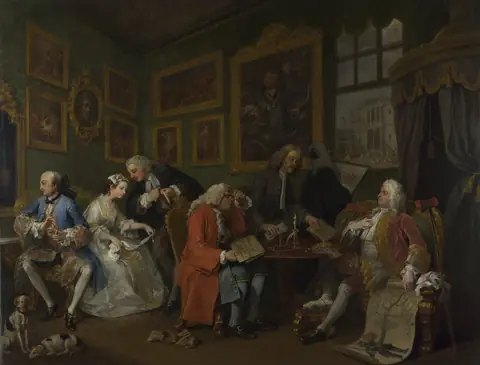
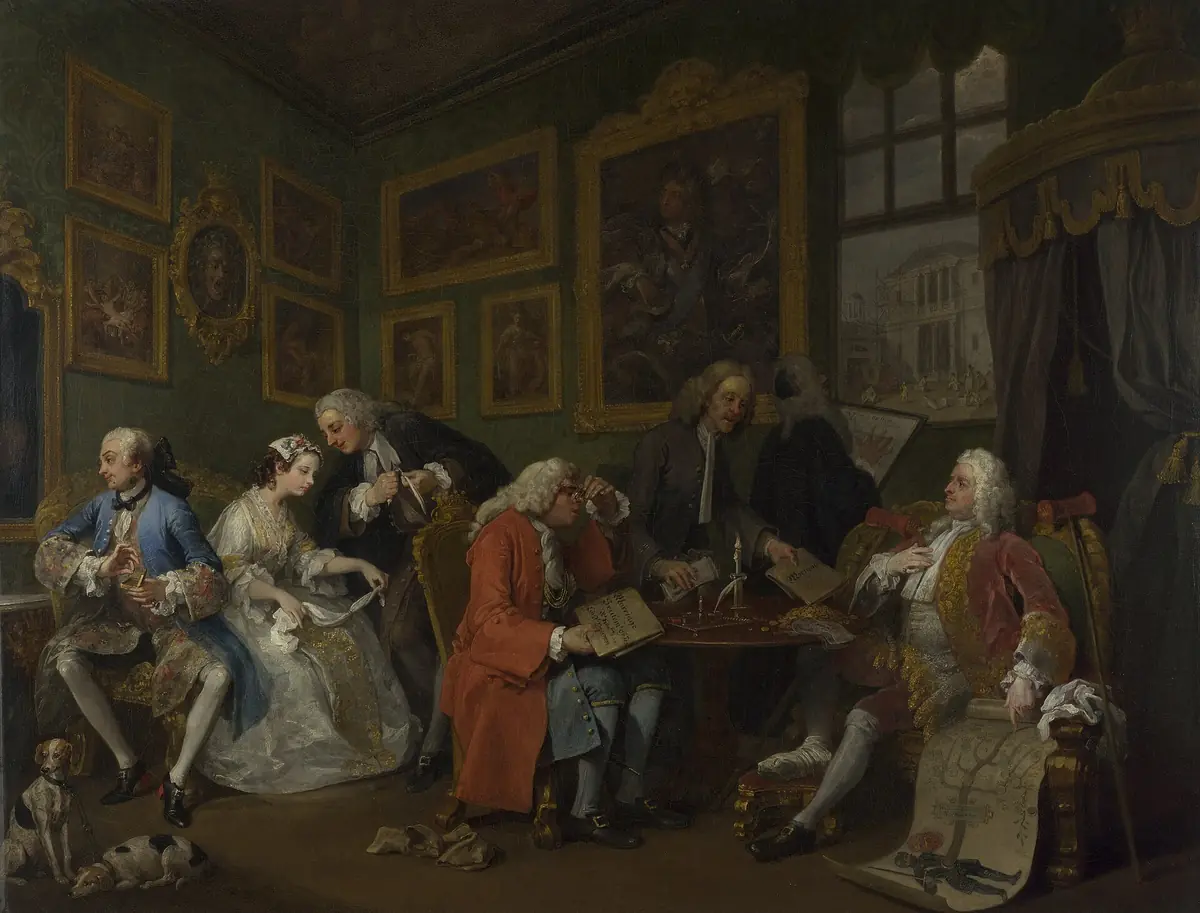
Image: Wikimedia Commons · Public domain (PD-Art) Marriage A-la-Mode: 1. The Marriage Settlement
Look closely. In a rich, overcrowded room, a gouty earl and a wealthy alderman settle a marriage of their children, who sit apart and do not look at one another; a lawyer, a ledger, and a family tree do the talking. Look at the chained dogs, at the building plans, at the couple's already wandering attention, and at how a contract is shown as the beginning of a disaster.
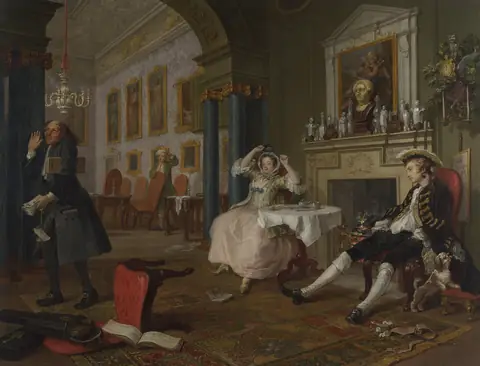
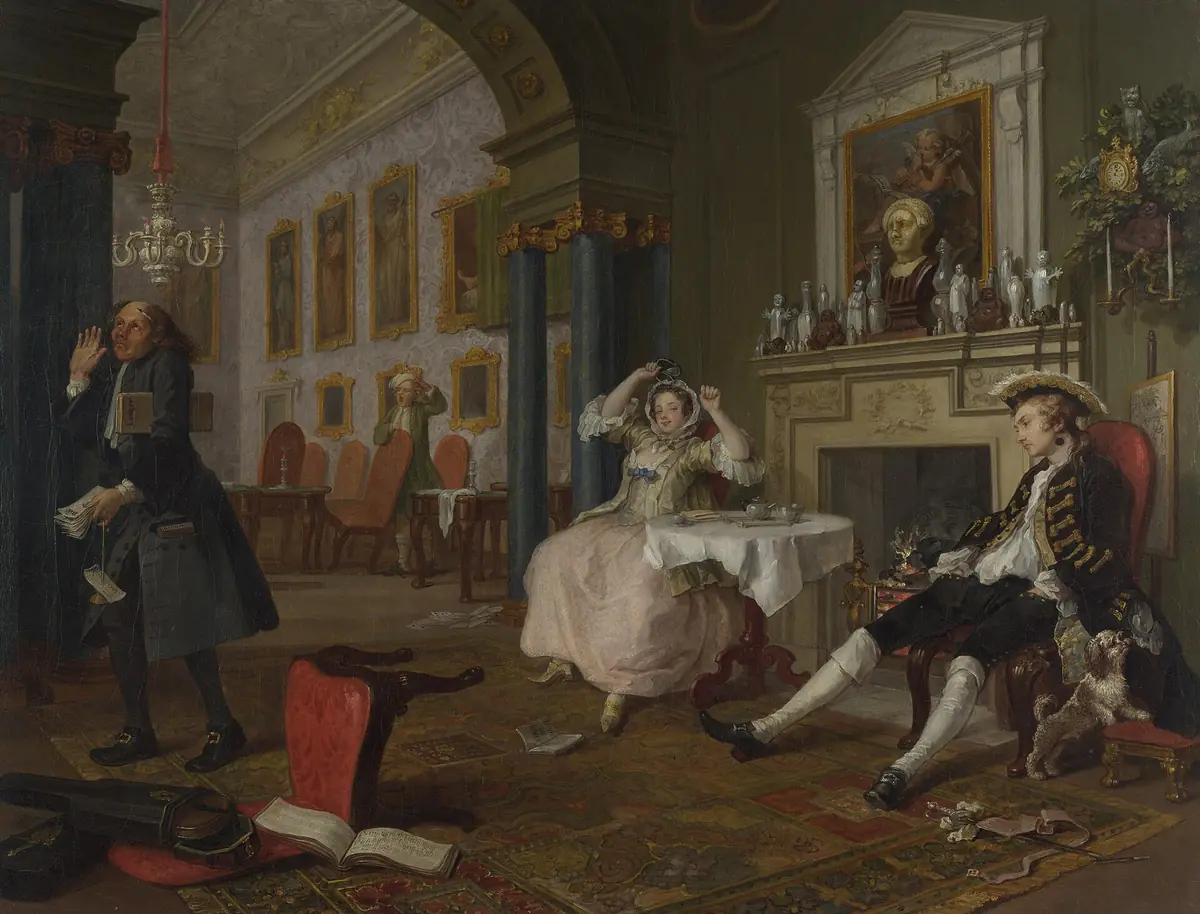
Image: Wikimedia Commons · Public domain (PD-Art) Marriage A-la-Mode: 2. The Tête à Tête
Look closely. Morning after a long night: the young husband slumps in a chair, a dog sniffs at a cap in his pocket, while his wife stretches and yawns at the table, a steward with a pile of bills walking out in despair. Look at the overturned chair, at the clock, at the paintings on the wall, and at how many small signs already say that the marriage is coming apart.
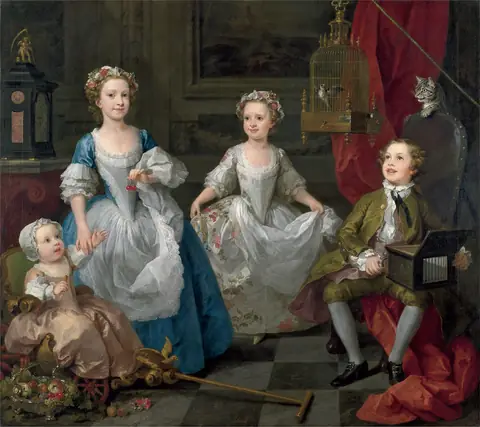
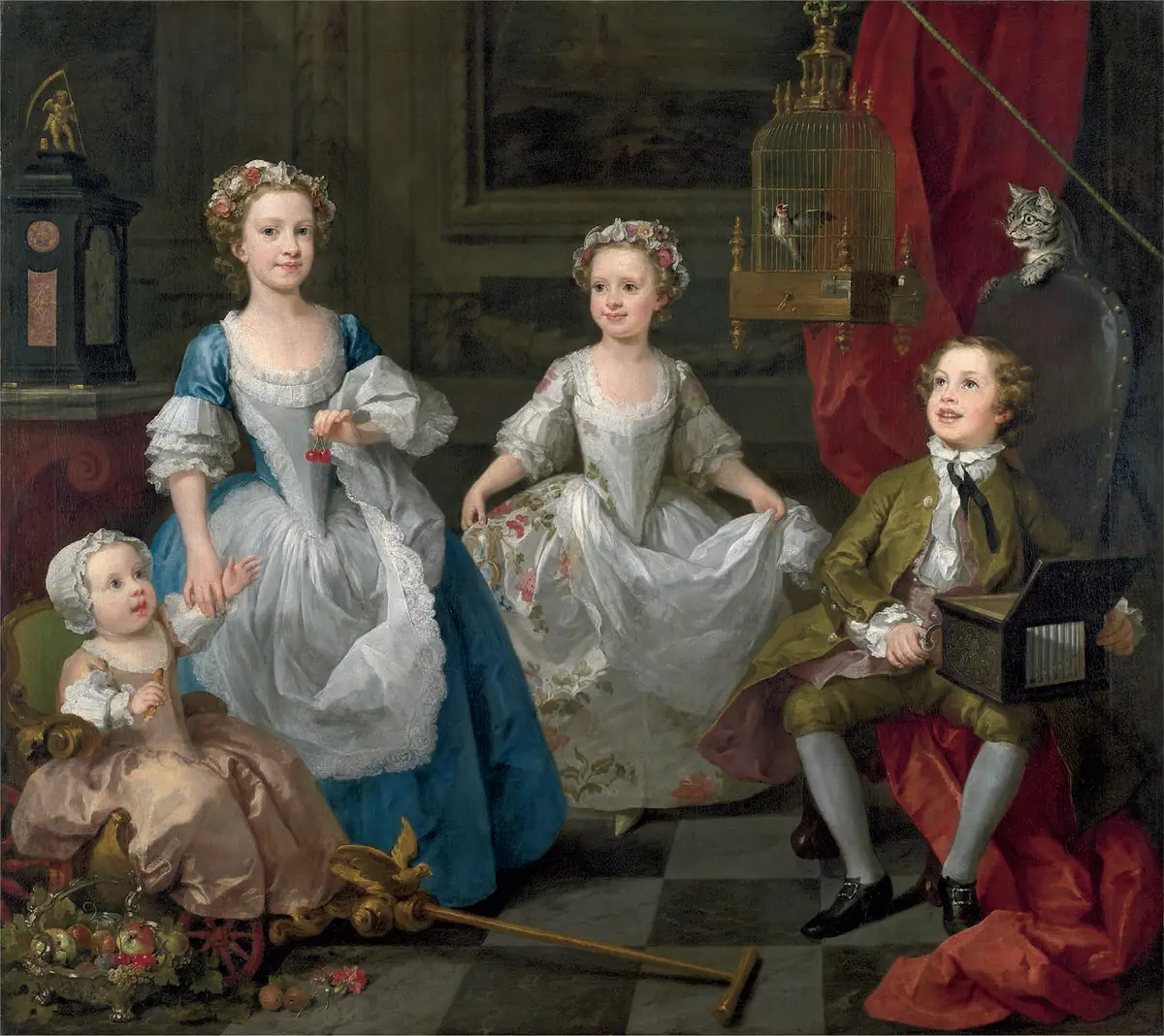
Image: Wikimedia Commons · Public domain (PD-Art) The Graham Children
Look closely. Four children of a royal physician stand around a silver bowl of fruit, a cat watching a bird in a cage, a little boy playing a bird-organ, the youngest in a fine gown on a cart. Look at the living faces, at the still-life of toys and fruit, and at the cat — a small, sharp reminder that even a happy nursery has a predator in it. The infant had already died when the picture was finished; the portrait keeps him among his siblings.
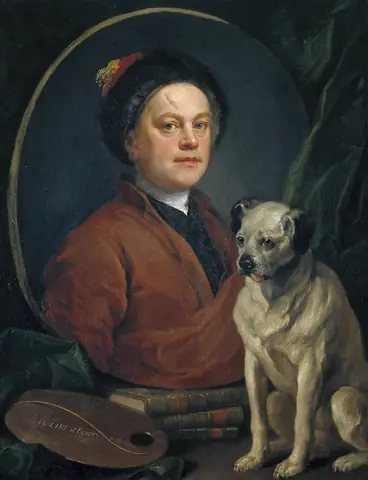
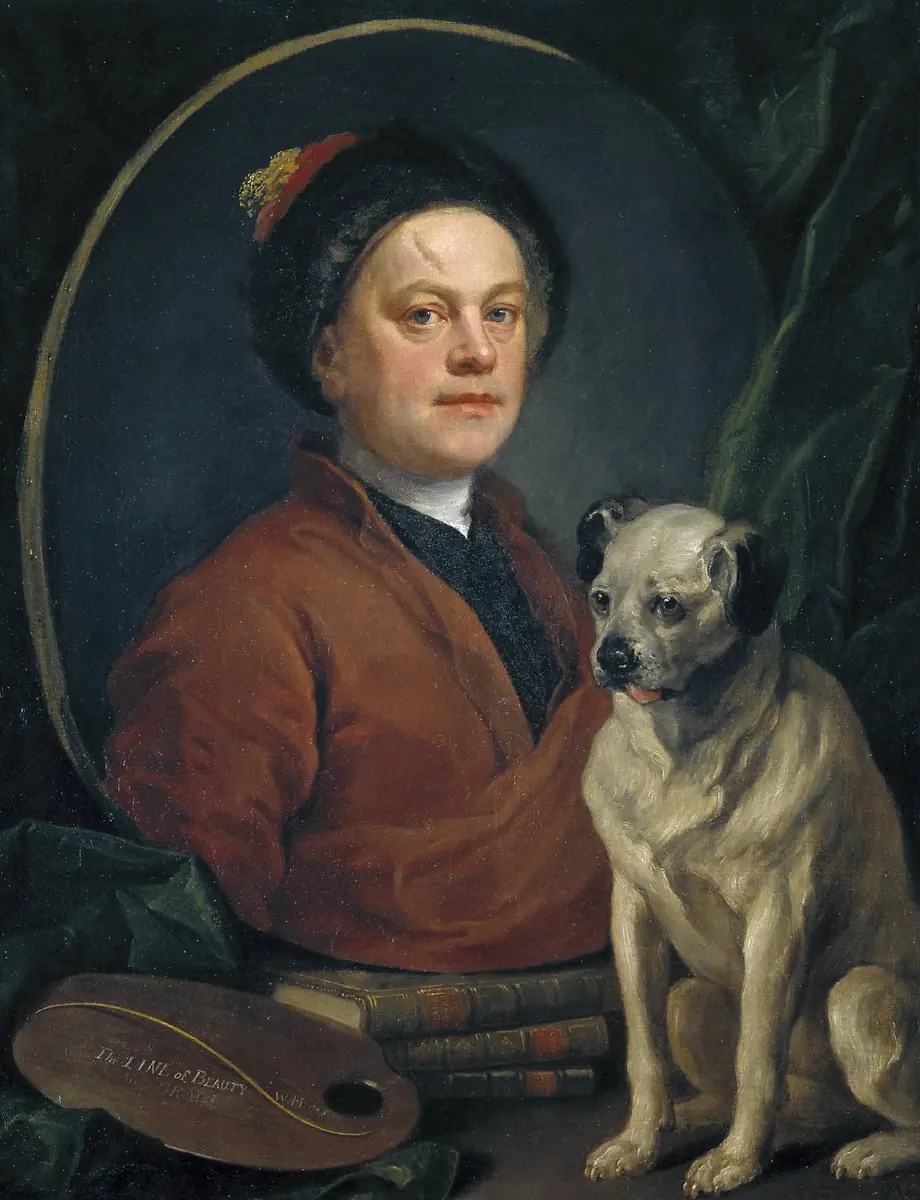
Image: Wikimedia Commons · Public domain (PD-Art) The Painter and his Pug
Look closely. Hogarth presents himself as an oval portrait resting on books, a palette with the line of beauty, and his pug Trump sitting in front as a lively, almost comic companion. Look at the sturdy, unflattered face, at the books of Shakespeare, Swift and Milton, and at the joke of a self-portrait that is also a still-life of the tools and the dog he loved.
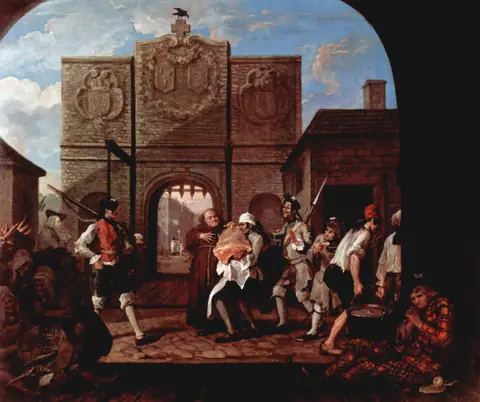
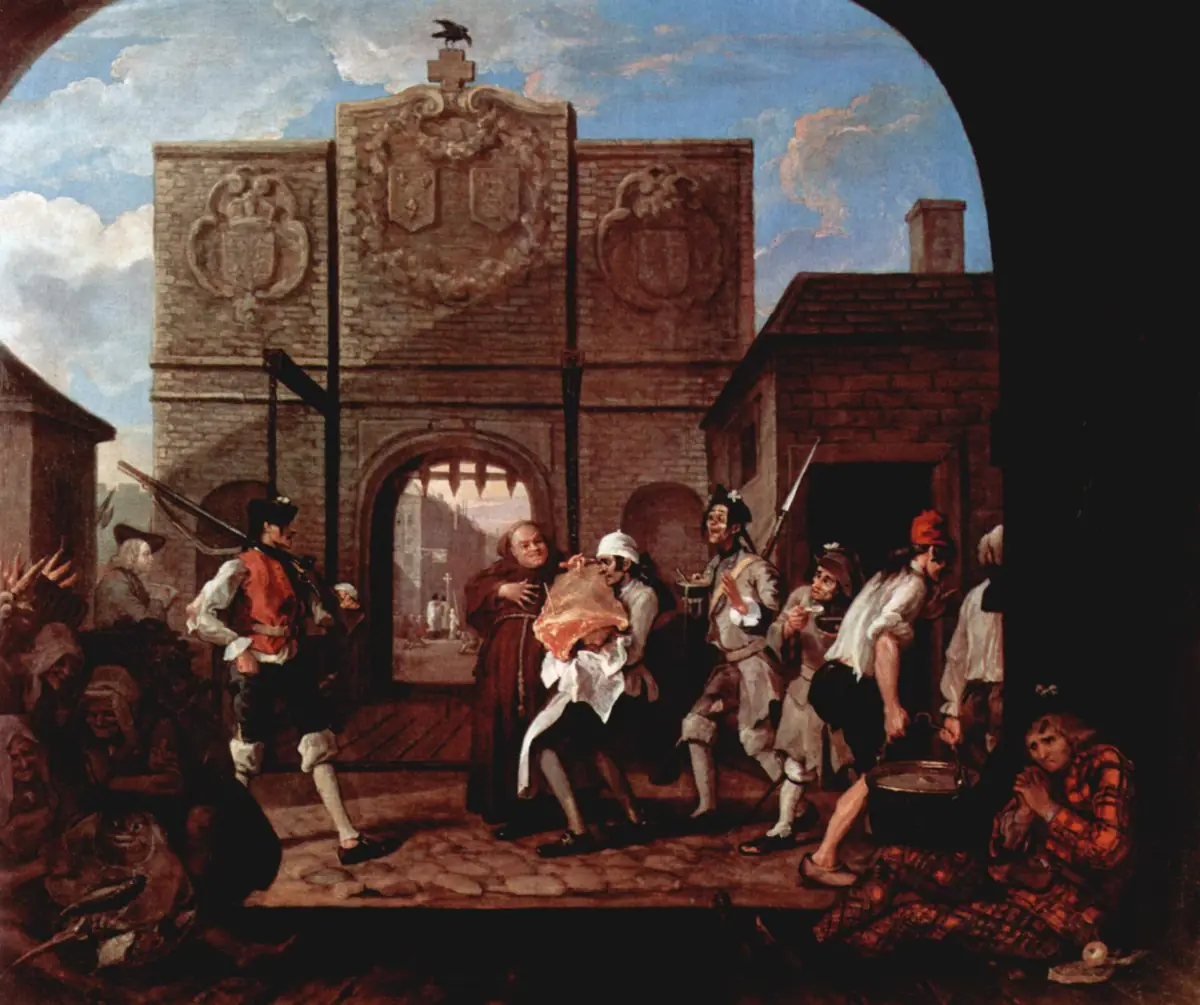
Image: Wikimedia Commons · Public domain (PD-Art) O the Roast Beef of Old England (The Gate of Calais)
Look closely. At the gate of Calais, a huge joint of English beef arrives while thin French soldiers, a fat friar, and a ragged cook look on; Hogarth himself can be seen sketching at the left. Look at the contrast of plenty and hunger, at the architecture of the gate, and at the comic, pointed patriotism of a picture born of a real visit (and a brief arrest) in France.
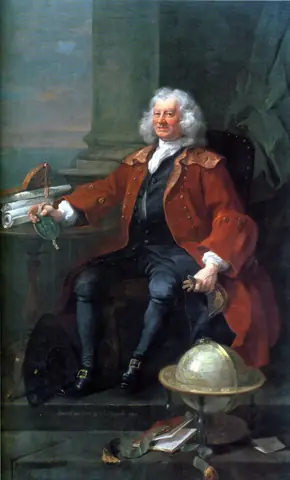
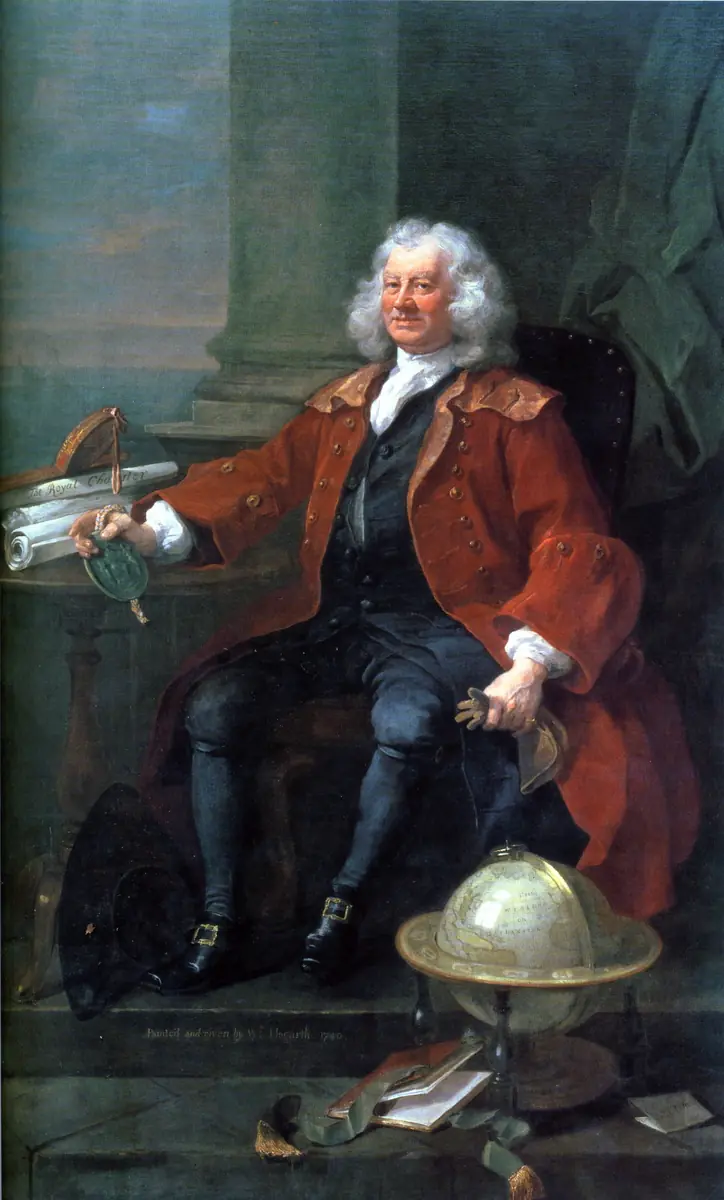
Image: Wikimedia Commons · Public domain (PD-Art) Portrait of Captain Thomas Coram
Look closely. The sea-captain who founded the Foundling Hospital sits in a broad coat, a globe and the hospital's charter at his side, a weather-beaten, kindly face under a wig. Look at the solidity of the body, at the outdoor redness of the cheeks, and at how a philanthropist is painted without courtly polish — a donor portrait meant to hang where the children were raised.


What to watch for in William Hogarth
Look slowly- Read the furniture. A clock, a picture on the wall, a ledger, or a dog is usually part of the story.
- A series, not only a single scene. Marriage à-la-mode is one chapter in a six-picture plot.
- Faces that have been lived in. Even a satirical head is a likeness.
- Charity and craft. He painted for the Foundling Hospital and cared about the status of British art.
- A looser, tender brush in the sketches. The Shrimp Girl is as fresh as the moral series are tight.
For older students
These famous works include nudity, so they are named here but not shown. Teachers and parents can decide when to look at them together.
- Gin Lane, 1751, Prints in many collections. A grim satire of gin addiction and urban misery, published as a pair with Beer Street. Named here but not shown.
- Marriage A-la-Mode: 3. The Inspection; 5. The Bagnio; 6. The Lady's Death, c. 1743–45, National Gallery, London. Later scenes of the marriage series include a quack doctor's rooms, a fatal assignation, and the wife's death. Named here but not shown.
Dates and collections follow the holding museums and Wikidata. Images of paintings are photographs of public-domain pictures from Wikimedia Commons or museum open-access releases; photographs of sculpture are used only when the photograph itself is Public domain, CC0, or CC BY with a named credit. Each picture links to its source page with full licence details.