Great Art · Baroque (Dutch Golden Age)
Johannes Vermeer
The quiet painter of Delft, who made daylight on a wall, a jug or a face into something holy.
Read Johannes Vermeer's Great Life →
His life
Vermeer spent his whole life in Delft, where his father ran an inn and dealt in paintings. He married Catharina Bolnes, a Catholic, in 1653, and the couple lived with her mother and raised eleven surviving children. He joined the painters' guild, served as its headman, and dealt in art, but he painted slowly: only about thirty-five paintings are known to be his.
Most show a room with a window on the left and one or two people absorbed in an ordinary task: pouring milk, reading a letter, weighing pearls. His gift was patience: he watched how daylight falls and built each picture with great care, using costly pigments such as ultramarine from lapis lazuli. When war ruined the Dutch art market in 1672, his income collapsed, and he died in debt at forty-three. He was almost forgotten for two centuries before being rediscovered in the 1800s.
Key works
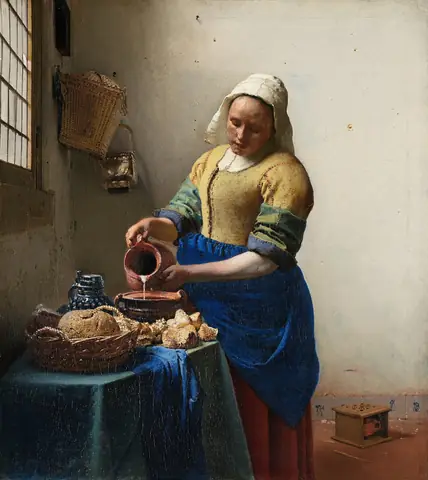
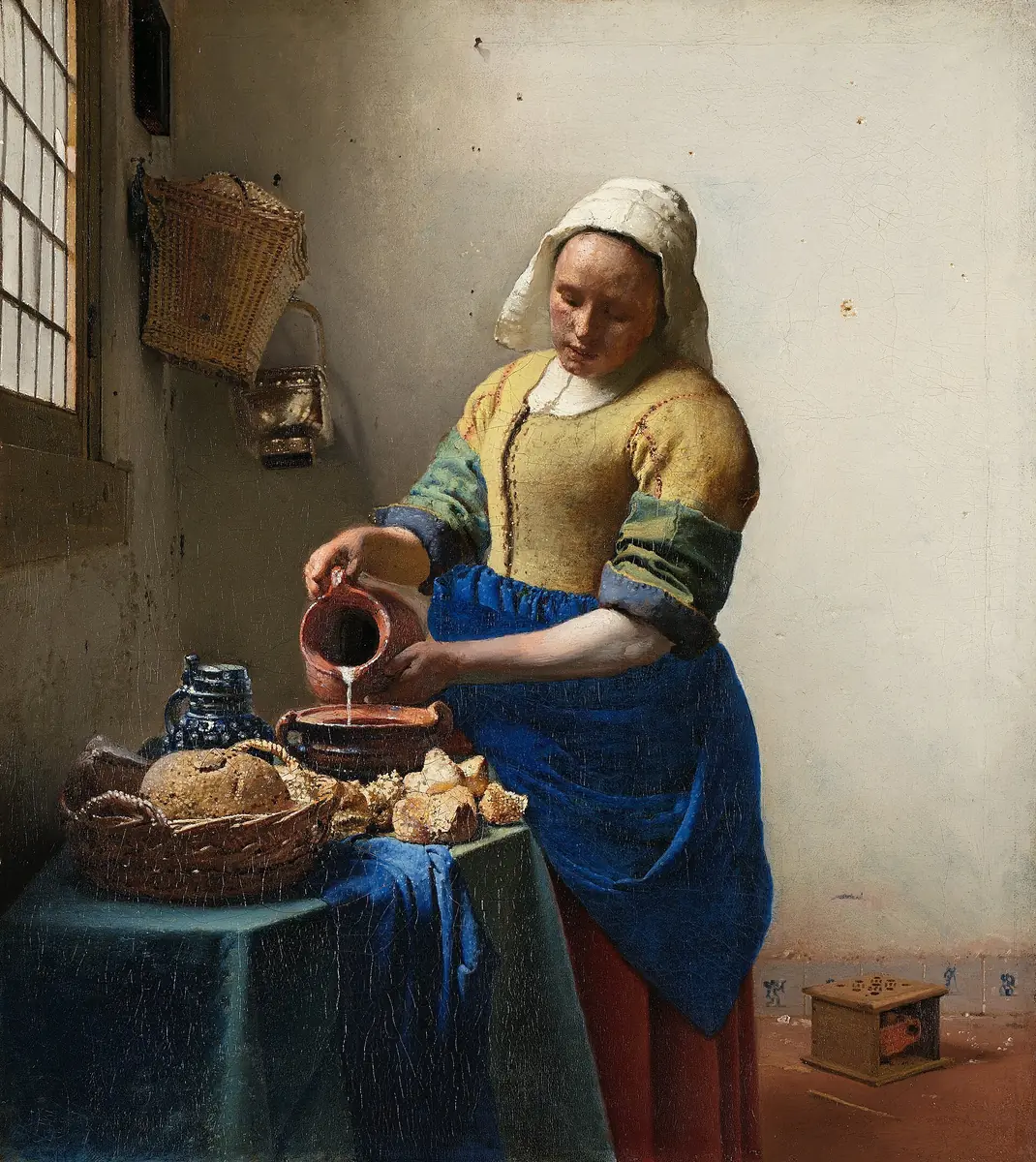
Image: Wikimedia Commons · Public domain (PD-Art) The Milkmaid
Look closely. A kitchen maid pours milk with complete care. Look at the bread on the table, made of tiny dots of light, the nail and the empty nail hole on the bare wall, and the foot warmer on the floor. An ordinary task, done faithfully, is treated with the seriousness of a sacred scene.
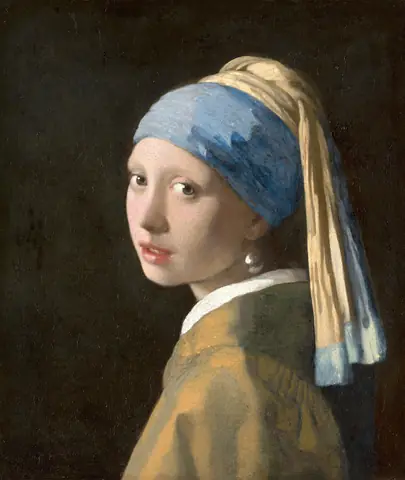
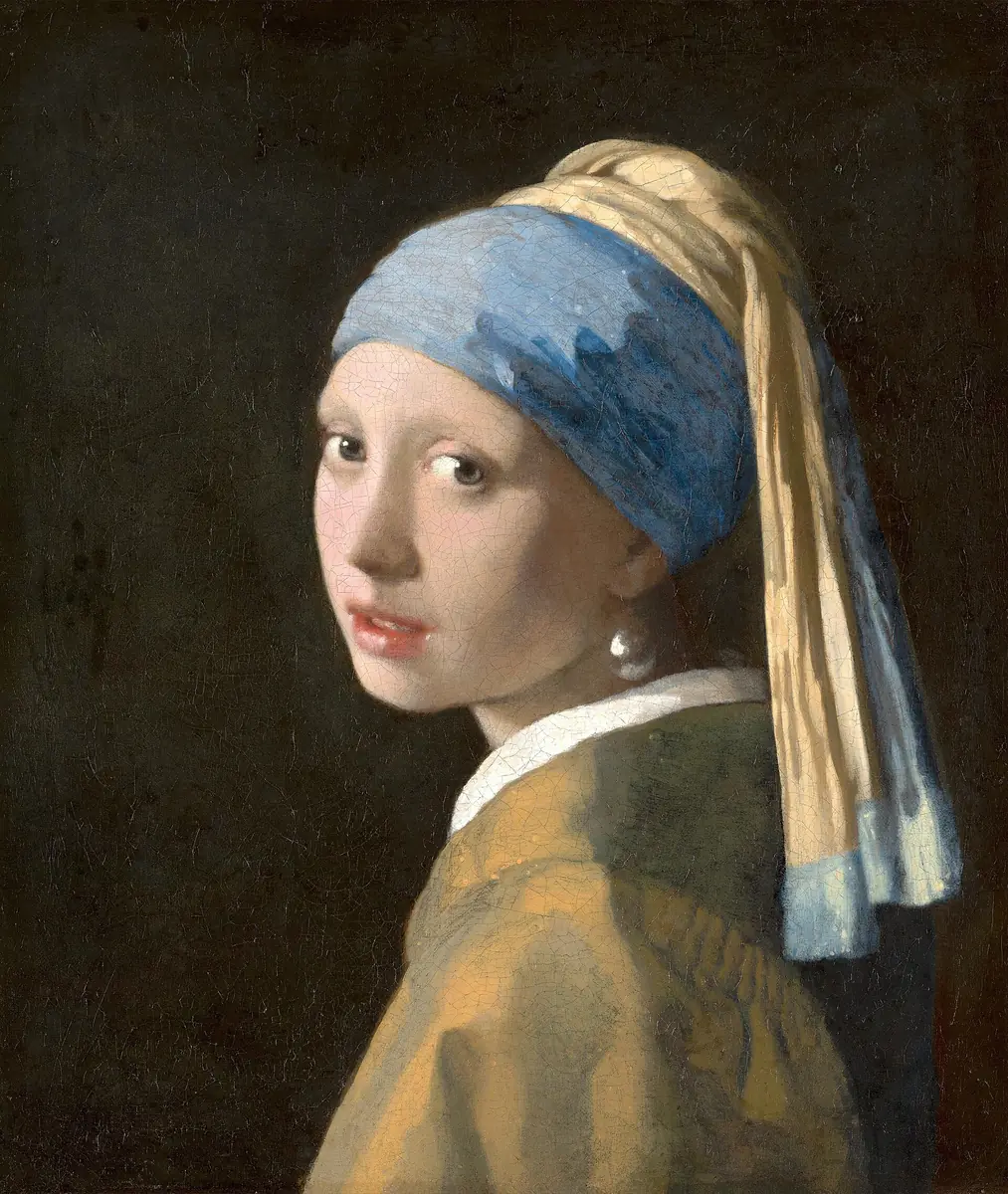
Image: Wikimedia Commons · Public domain (PD-Art) Girl with a Pearl Earring
Look closely. Not a portrait of a known person but a "tronie," a study of a face in exotic costume. She turns over her shoulder, lips parted, as if about to speak. The pearl is made of just two strokes: a bright highlight and a soft reflection of her white collar below.
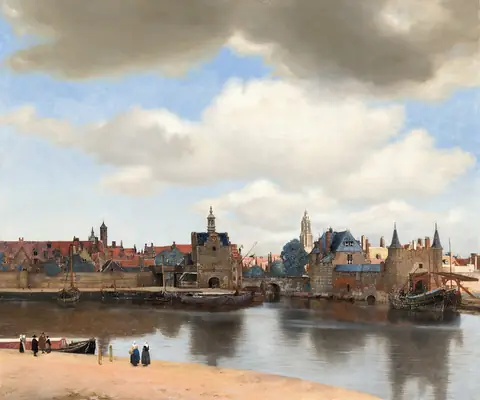
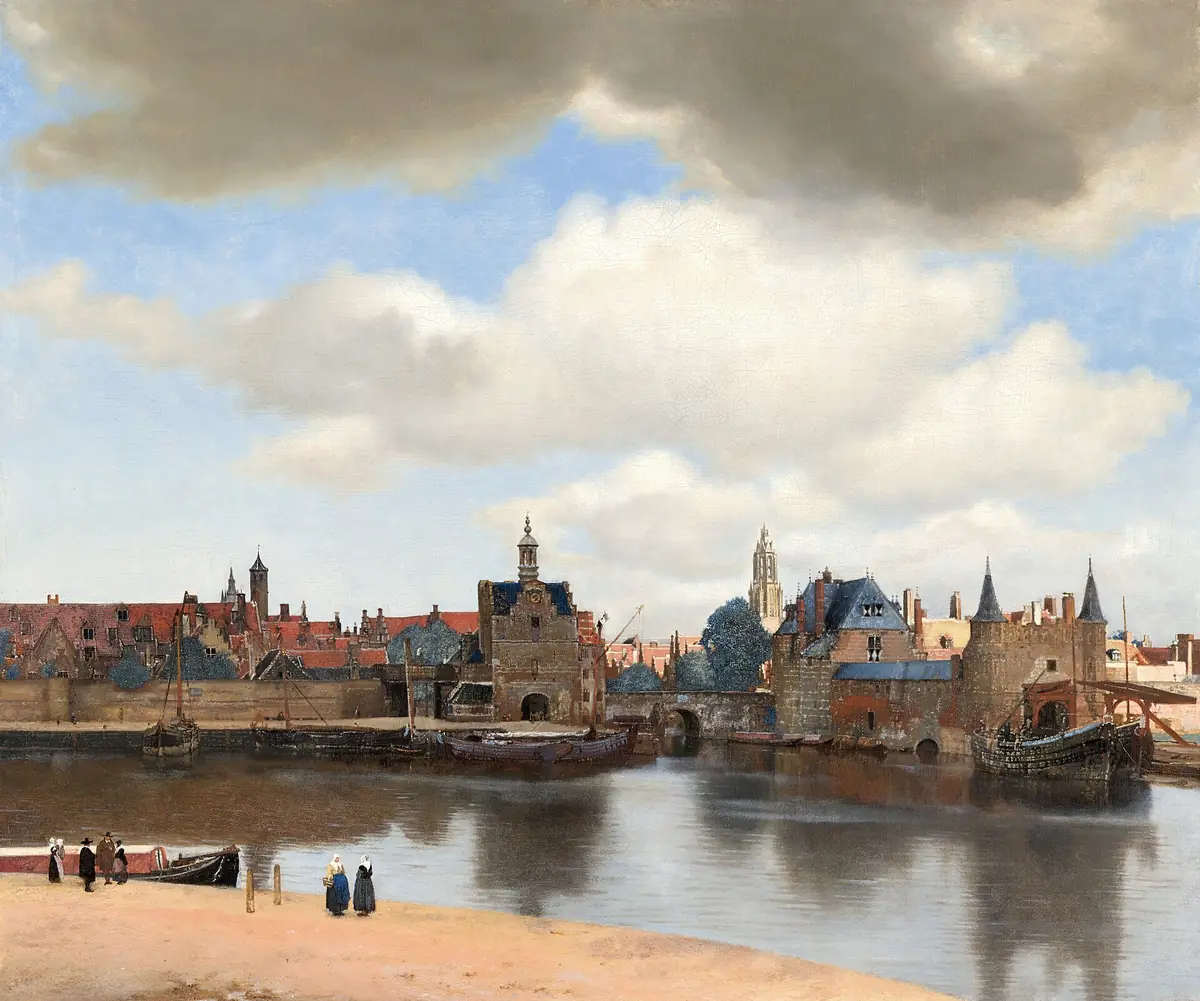
Image: Wikimedia Commons · Public domain (PD-Art) View of Delft
Look closely. Vermeer's home town seen across the harbour. Clouds shade the near walls and gates, while sunlight falls on the distant tower of the New Church, where the Dutch hero William of Orange was buried. Notice the grainy paint on the roofs and boats that makes them catch the light.
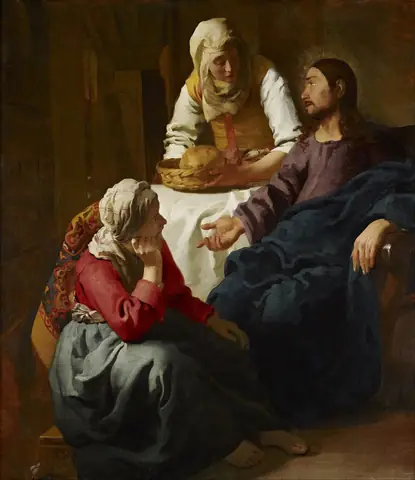
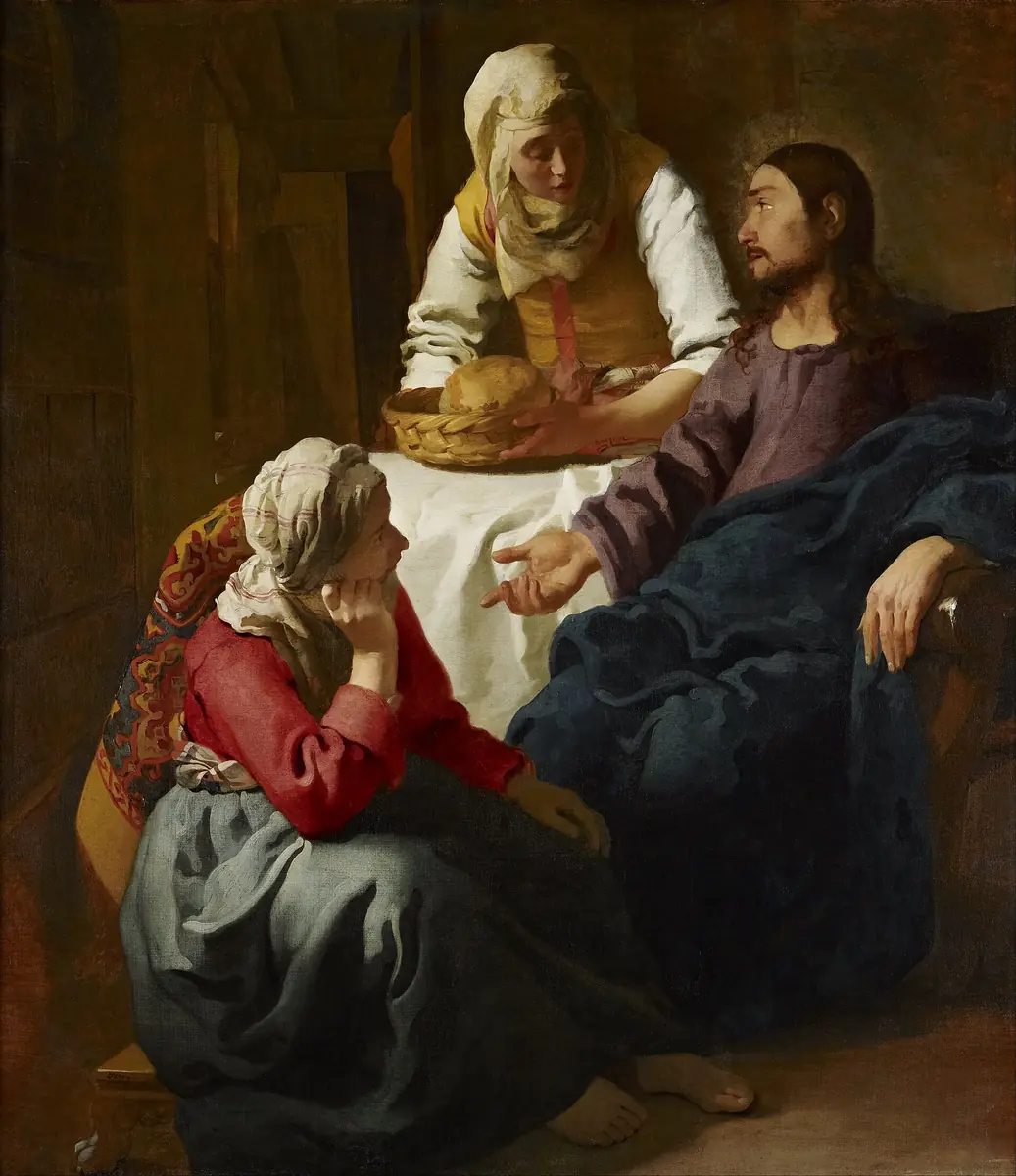
Image: Wikimedia Commons · Public domain (PD-Art) Christ in the House of Martha and Mary
Look closely. Vermeer's largest painting and one of very few religious scenes. Martha brings bread; Mary sits at Christ's feet, chin on hand, listening; Christ turns to Martha and points to Mary. The Gospel says Mary "hath chosen that good part." Compare Velázquez's kitchen version of the same story.
In the library: The Bible (KJV) · Martha of Bethany · Mary of Bethany · Velázquez's Martha and Mary (Great Art)
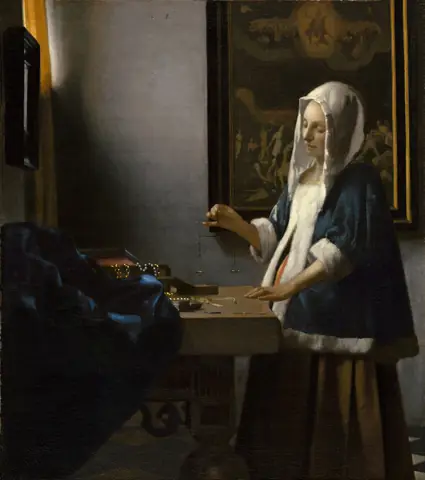
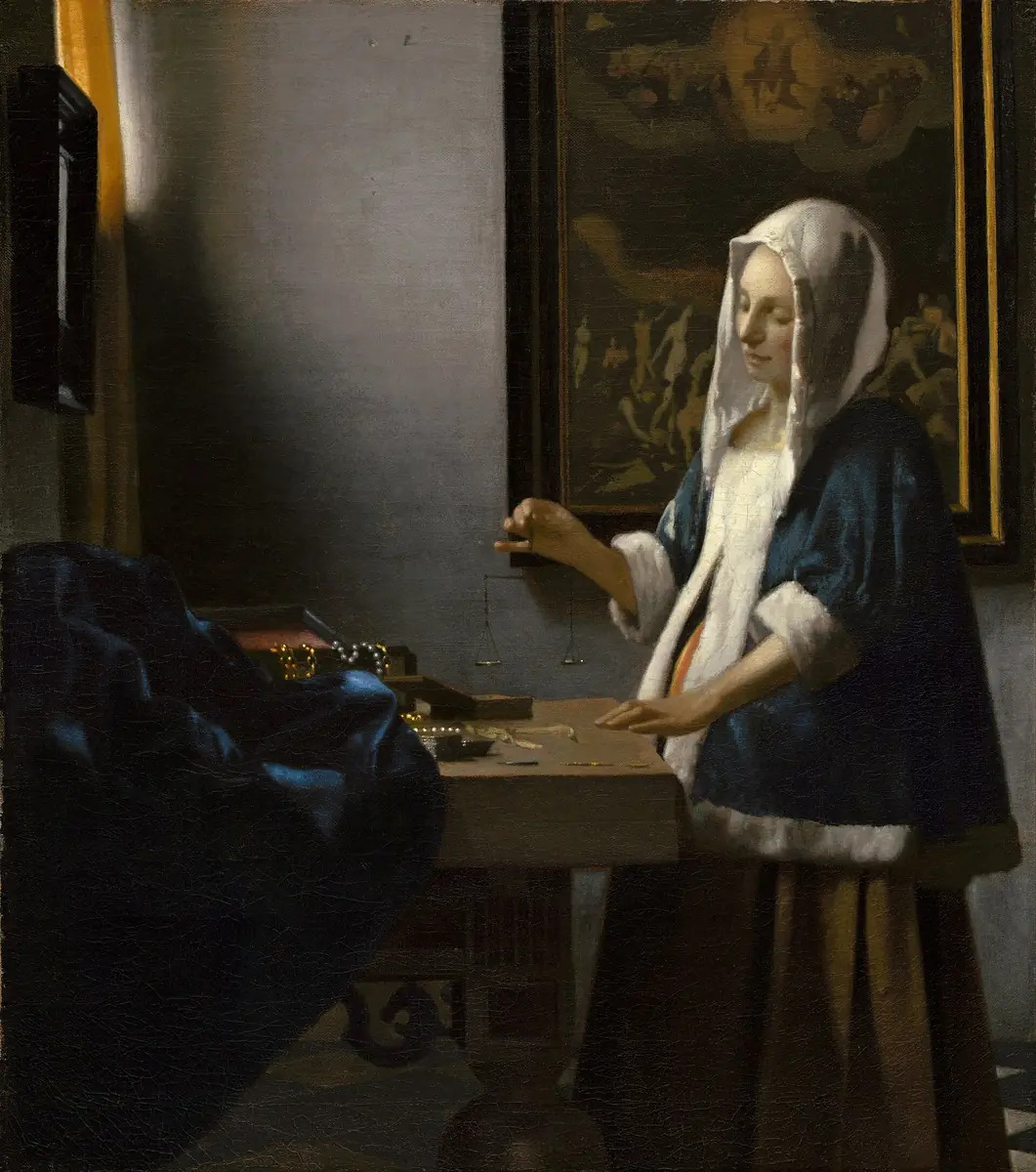
Image: Wikimedia Commons · Public domain (PD-Art) Woman Holding a Balance
Look closely. A woman holds up a small balance; look closely and you will see its pans are empty. On the table lie pearls and gold. Behind her hangs a painting of the Last Judgment, when souls are weighed. The picture quietly sets earthly treasure beside the final judgment and asks what is worth weighing.
In the library: The Bible (KJV) · Jesus Christ
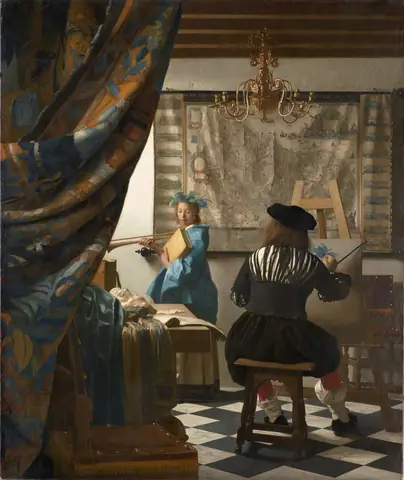
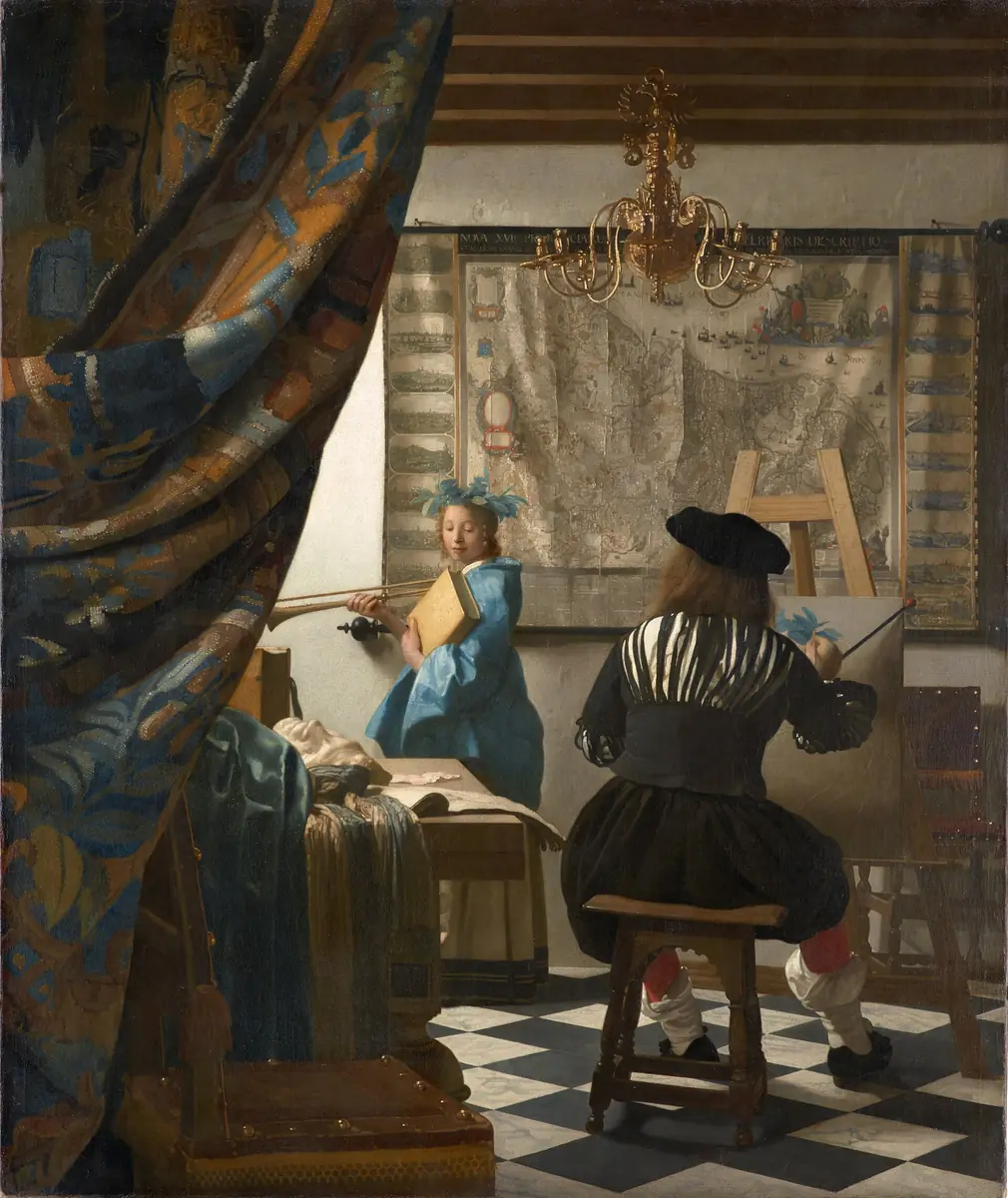
Image: Wikimedia Commons · Public domain (PD-Art) The Art of Painting
Look closely. A painter, seen from behind, paints a young woman dressed as Clio, the Muse of History, with a laurel wreath, trumpet and book. A great map of the Netherlands hangs on the wall; a crease runs down it near the old border between north and south. Vermeer kept this picture until his death. Hitler later acquired it; after the war it came to the Vienna museum.
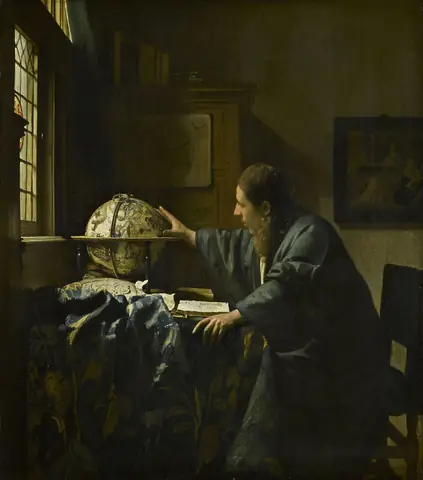
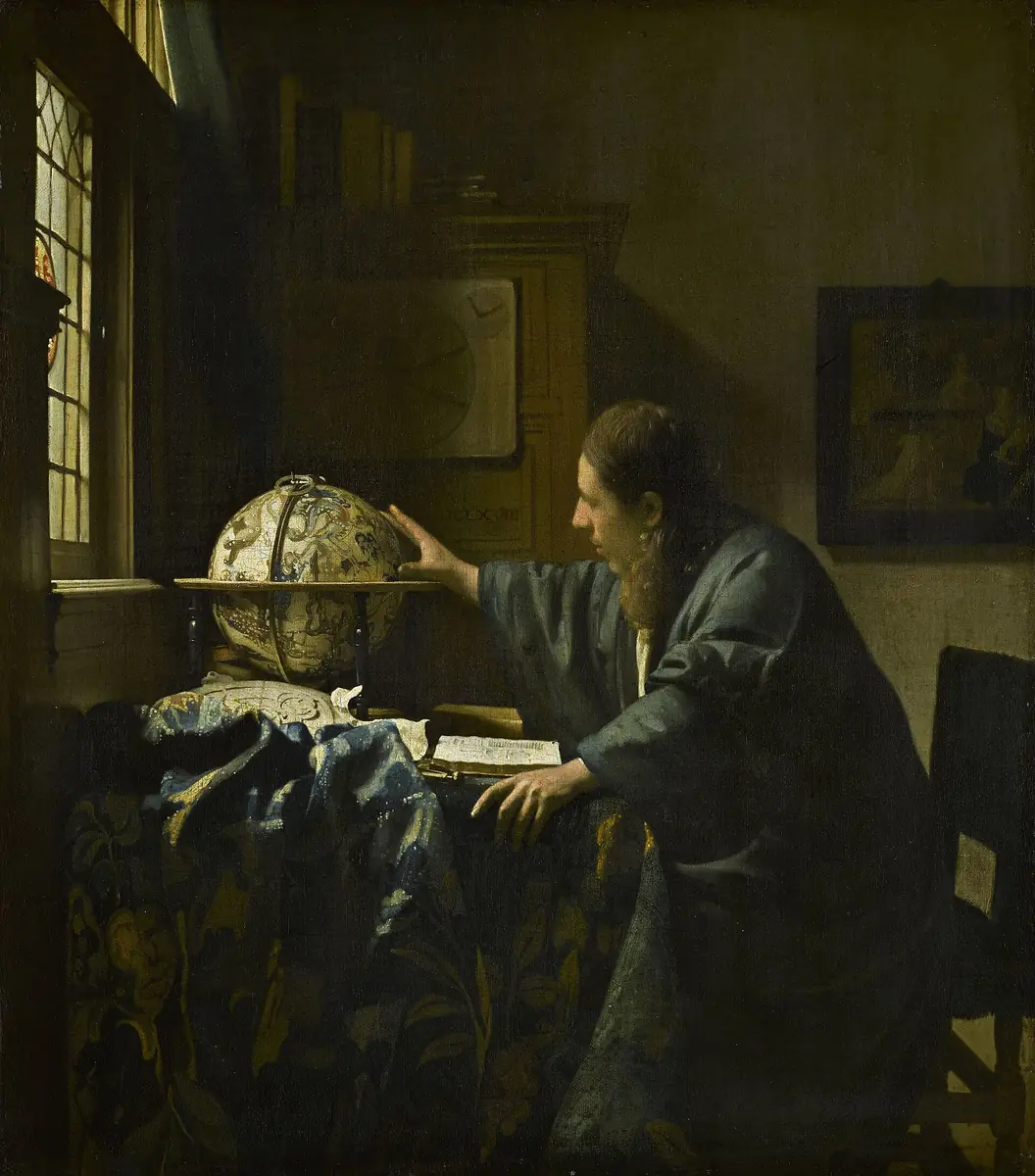
Image: Wikimedia Commons · Public domain (PD-Art) The Astronomer
Look closely. A scholar reaches to turn a celestial globe, with an astronomy book open before him. On the wall hangs a painting of the Finding of Moses; Moses was "learned in all the wisdom of the Egyptians," which in Vermeer's day included the stars. Study of creation and Scripture share one room.
In the library: The Bible (KJV) · Veronese's Finding of Moses (Great Art) · Moses · Galileo · Johannes Kepler


What to watch for in Johannes Vermeer
Look slowly- Window on the left. Daylight enters from one side and travels across the room.
- Dots of light. Tiny beads of paint make bread, metal and pearls sparkle.
- Absorbed people. His figures are wholly attentive to one task; that attention is the subject.
- Pictures on the wall. Maps and paintings in the background quietly comment on the scene.
- Blue and yellow. Look for his costly ultramarine blue paired with lemon yellow.
Dates and collections follow the holding museums and Wikidata. Images of paintings are photographs of public-domain pictures from Wikimedia Commons or museum open-access releases; photographs of sculpture are used only when the photograph itself is Public domain, CC0, or CC BY with a named credit. Each picture links to its source page with full licence details.