Great Art · Classical Greek
Phidias
The master of the Parthenon, whose Athena and carved processions taught Greece how stone could praise the gods.
His life
Phidias was the sculptor Athens trusted with its greatest offering: the marble of the Parthenon and the huge gold-and-ivory Athena who once stood inside it. The colossal Athena is lost, and so is his Zeus at Olympia, counted among the wonders of the world. What remains is the carved skin of the temple — the frieze of the Panathenaic procession, the pediment figures, and later copies of the goddess — and they are enough to show a mind that could make many figures move as one offering.
He worked under Pericles, and later tradition said he was tried for impiety or for keeping gold from the statue. The records are uneven, but the work is not. Look at the fall of a draped fold, the quiet of a horseman on the frieze, or the small Roman-period copy of Athena called the Varvakeion, and you see a gift spent on public worship, not on a private show.
Key sculptures
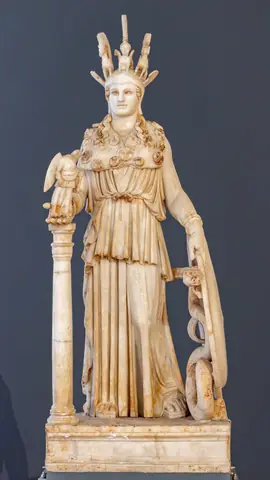
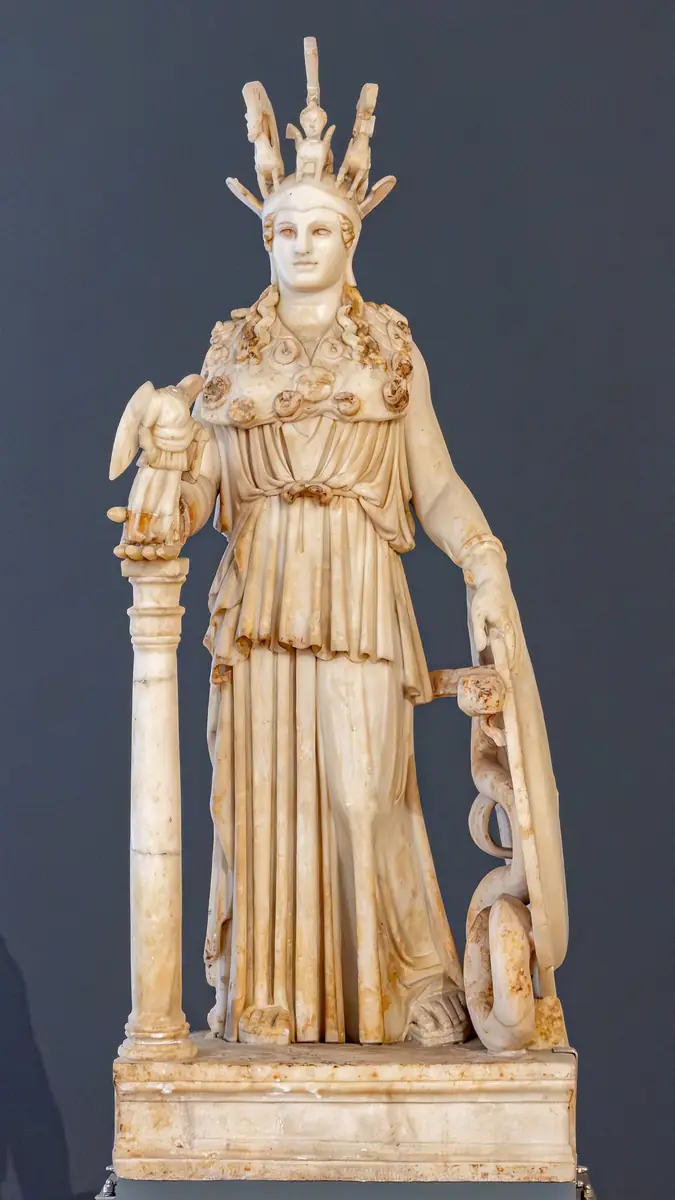
Image: Wikimedia Commons · CC BY 4.0 · Photo: Nikos Kitsakis The Varvakeion Athena
Look closely. A small marble copy of Phidias's lost gold-and-ivory Athena from the Parthenon. She stands armed, a Victory in her right hand, a shield against her left leg, and a helmet on her head; a coiled snake rises by the shield. Look at the heavy peplos, the little Victory, and the way the copyist still tries to give a colossal cult statue in a figure you could carry in two arms.
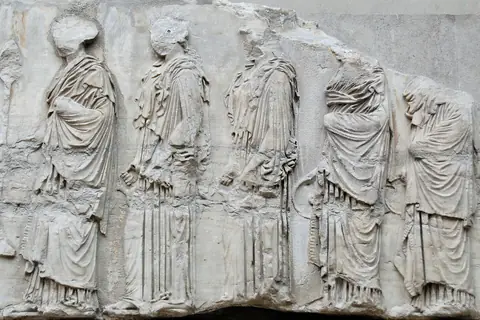
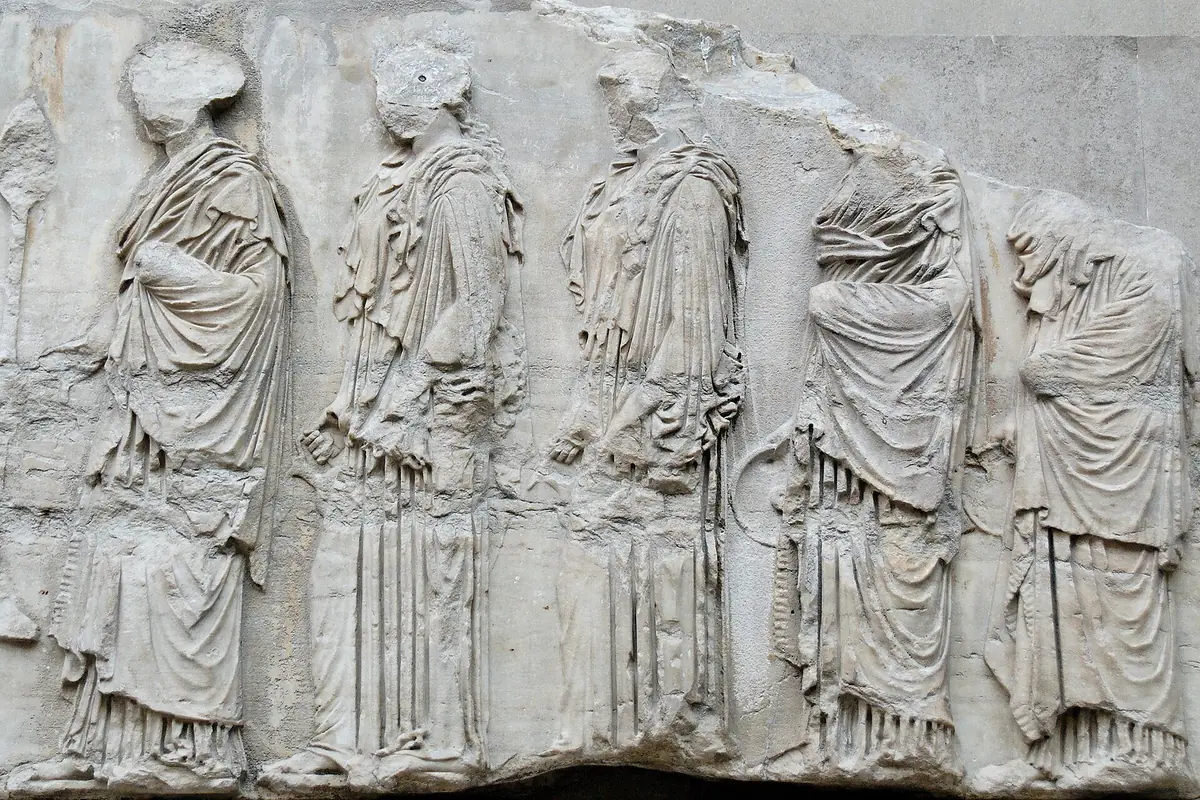
Image: Wikimedia Commons · CC BY 2.5 · Photo: Marie-Lan Nguyen East frieze of the Parthenon (figures 57–61)
Look closely. A stretch of the processional frieze that once ran around the outside of the Parthenon's inner building. Draped figures stand and turn in shallow relief, some bearing offerings, as the procession reaches the east end. Look at how the folds of the himatia break over knees and elbows, and at the quiet spacing between the bodies — a crowd that has been made orderly without being made stiff.
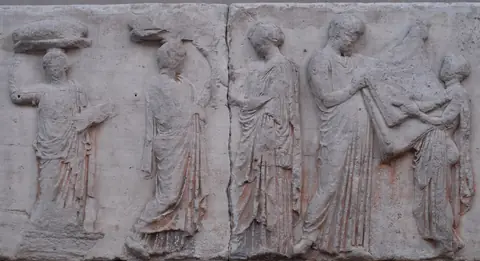
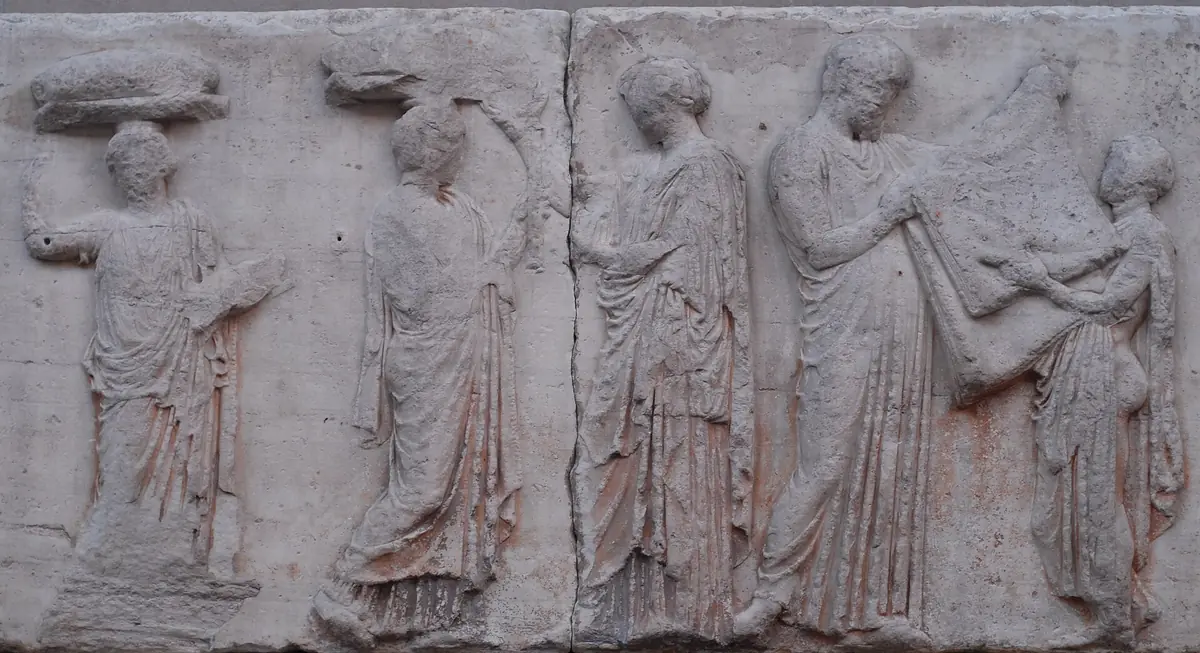
Image: Wikimedia Commons · CC BY 3.0 · Photo: Twospoonfuls The peplos scene, east frieze of the Parthenon
Look closely. The central scene of the east frieze, where a heavy cloth — the peplos — is folded or presented. A priest or official and a child handle the garment; draped attendants stand at either side. Look at the quiet of the ceremony and at the deep, still folds of the himatia.
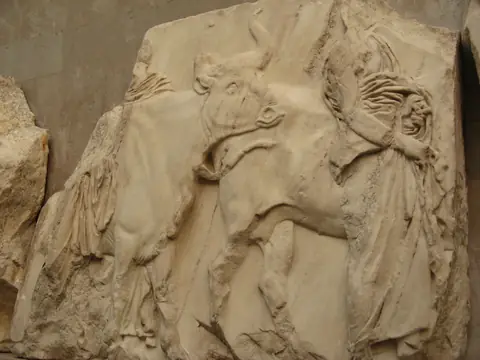
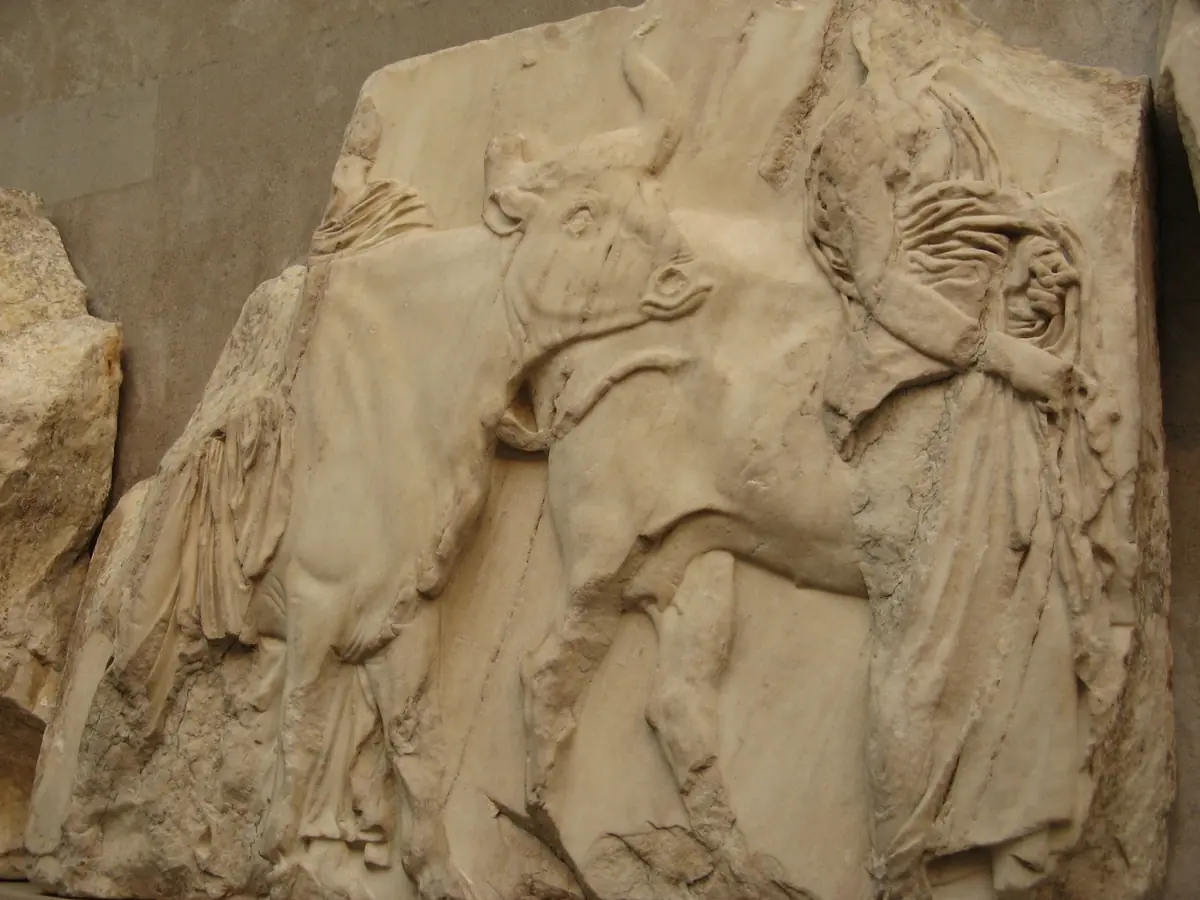
Image: Wikimedia Commons · Public domain South frieze of the Parthenon, block XLVII
Look closely. Cattle and attendants on the south frieze, part of the sacrificial train. A beast turns its head; a youth steadies it. Look at the animal's weight against the shallow slab, and at how little depth the carver needs to make a horned head and a human shoulder read together.
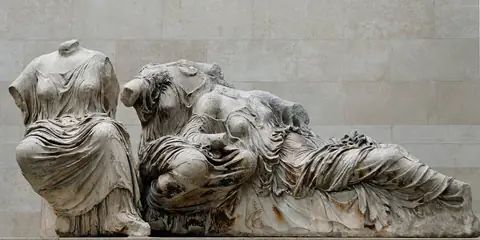
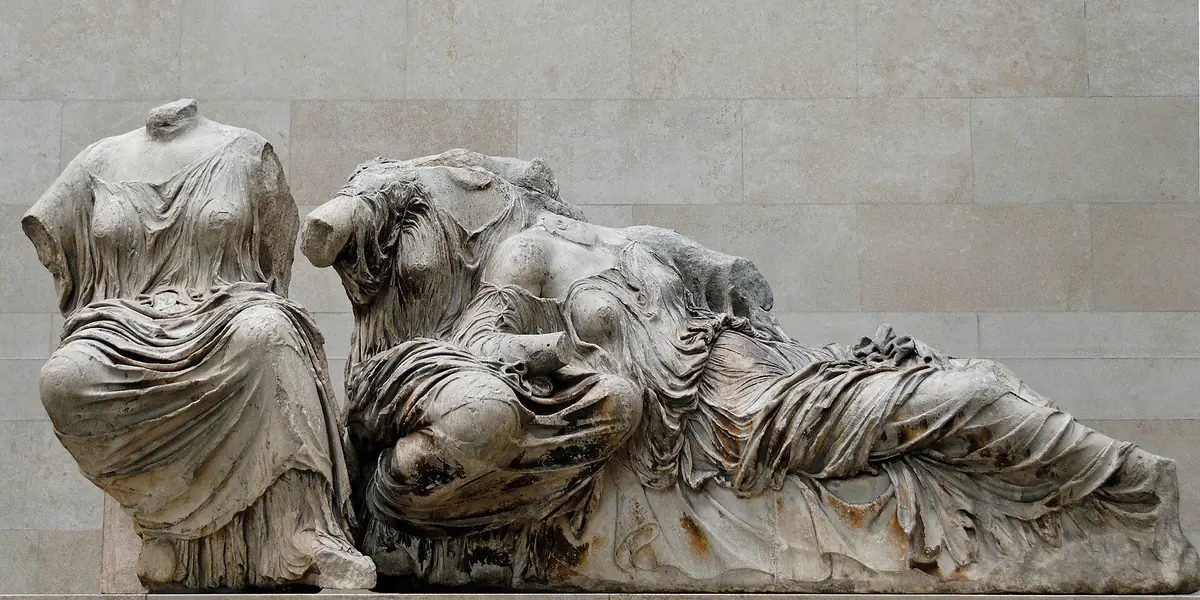
Image: Wikimedia Commons · CC BY 2.5 · Photo: Marie-Lan Nguyen Three goddesses from the east pediment
Look closely. The famous group of three heavily draped goddesses from the right side of the east pediment, often called the Fates or identified as Hestia, Dione and Aphrodite. They recline as if just roused, their clothes spilling in deep folds over the rock. Look at how the cloth both hides and shows the bodies underneath, and at the broken necks — the heads are lost, but the drapery is still a complete piece of thinking.


What to watch for in Phidias
Look slowly- Drapery that has weight. Cloth hangs, pulls, and pools; it is not a flat pattern on the stone.
- A procession, not a pile of figures. On the frieze, bodies overlap as people do in a crowd on a feast day.
- Horses and riders together. Look how a horse's neck and a youth's arm share one rhythm.
- Copies and fragments. The great gold-and-ivory statues are gone; we study official copies and the temple carvings that survive.
- Calm faces in a sacred work. The Parthenon does not grimace; the offering is made with order.
For older students
These famous works include nudity, so they are named here but not shown. Teachers and parents can decide when to look at them together.
- Reclining figure from the east pediment (Dionysus or Heracles), c. 438–432 BC, British Museum, London. A nearly unclothed male figure from the left angle of the east pediment.
- Metopes of the south side (Centauromachy), c. 447–432 BC, British Museum and elsewhere. Several of the surviving metopes show unclothed Lapiths and centaurs in combat.
Dates and collections follow the holding museums and Wikidata. Images of paintings are photographs of public-domain pictures from Wikimedia Commons or museum open-access releases; photographs of sculpture are used only when the photograph itself is Public domain, CC0, or CC BY with a named credit. Each picture links to its source page with full licence details.