Great Art · Nineteenth century
Augustus Saint-Gaudens
The American sculptor of the Shaw Memorial, the standing Lincoln, and a Puritan who still seems to be walking into the wind.
Read Augustus Saint-Gaudens's Great Life →
His life
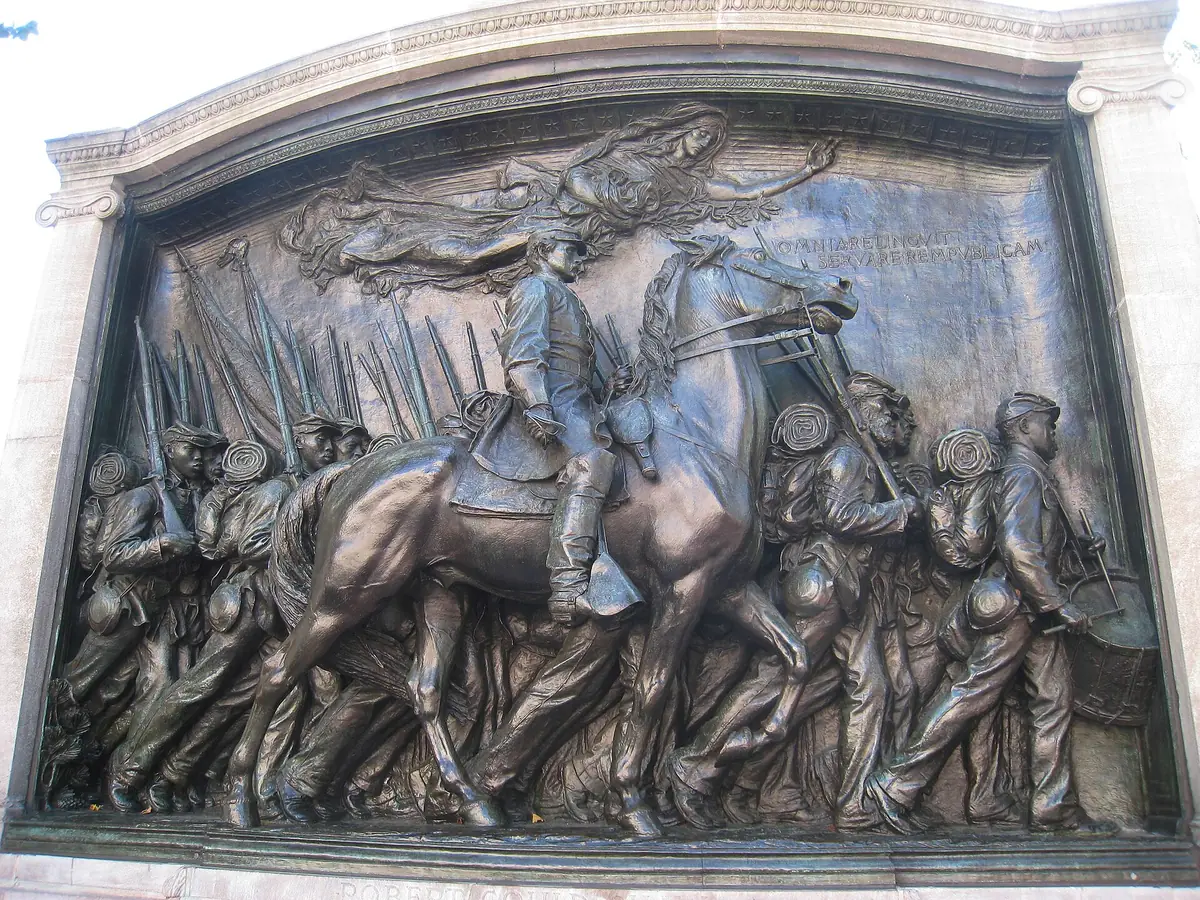
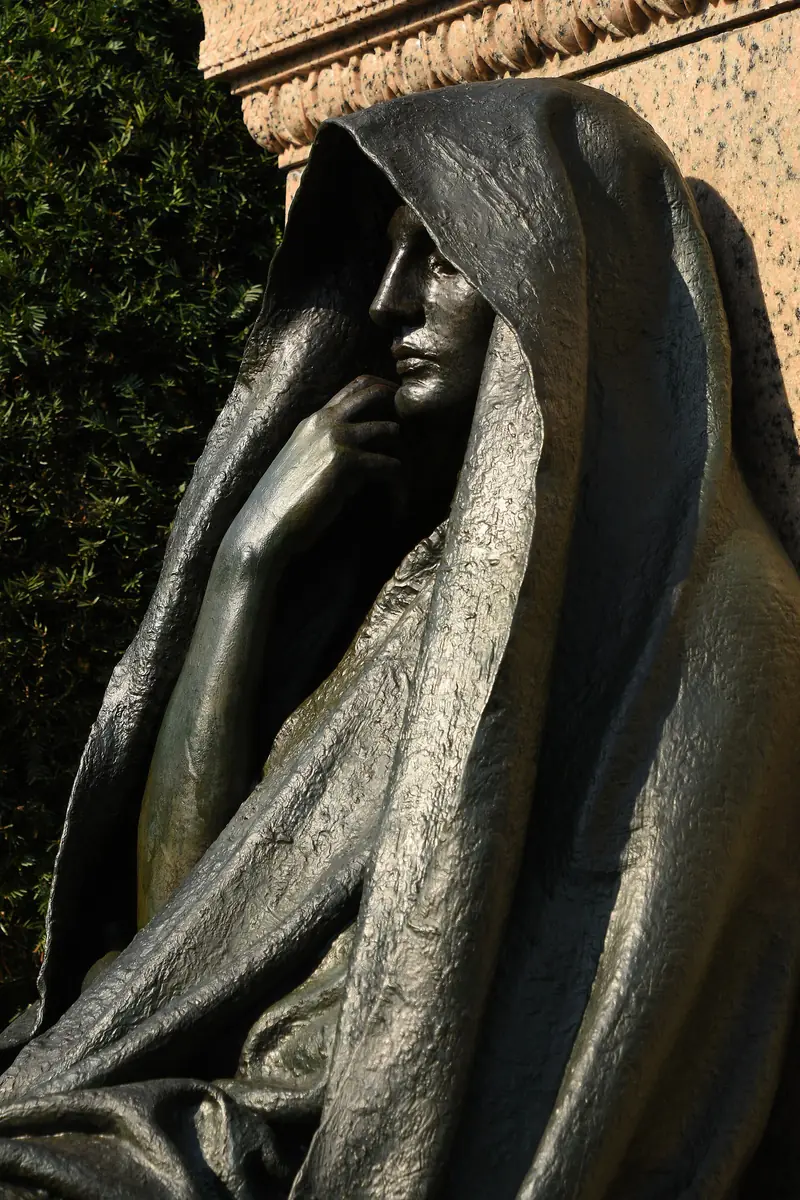
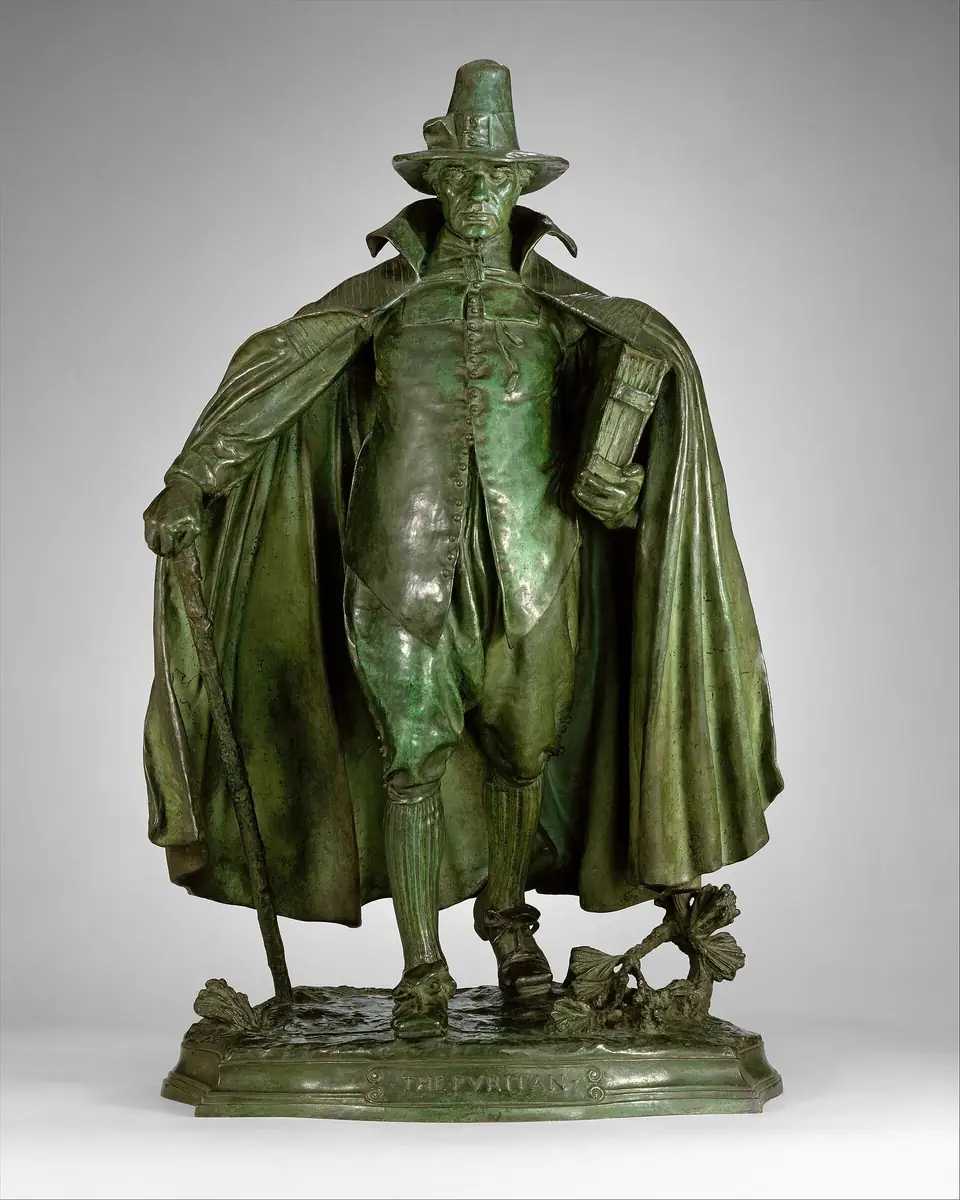
Saint-Gaudens was born in Dublin, raised in New York, and trained as a cameo-cutter before he studied in Paris and Rome. He came home and made the public sculpture of a reunited country: Admiral Farragut in New York, the standing Lincoln in Chicago, and, above all, the Shaw Memorial in Boston, a bronze relief of Colonel Robert Gould Shaw and the 54th Massachusetts, the first Northern regiment of African American soldiers in the Civil War, marching as if still on their way to South Carolina. He also made The Puritan, a walking figure with a Bible and a staff, and a shrouded memorial for Henry Adams's wife in Washington.
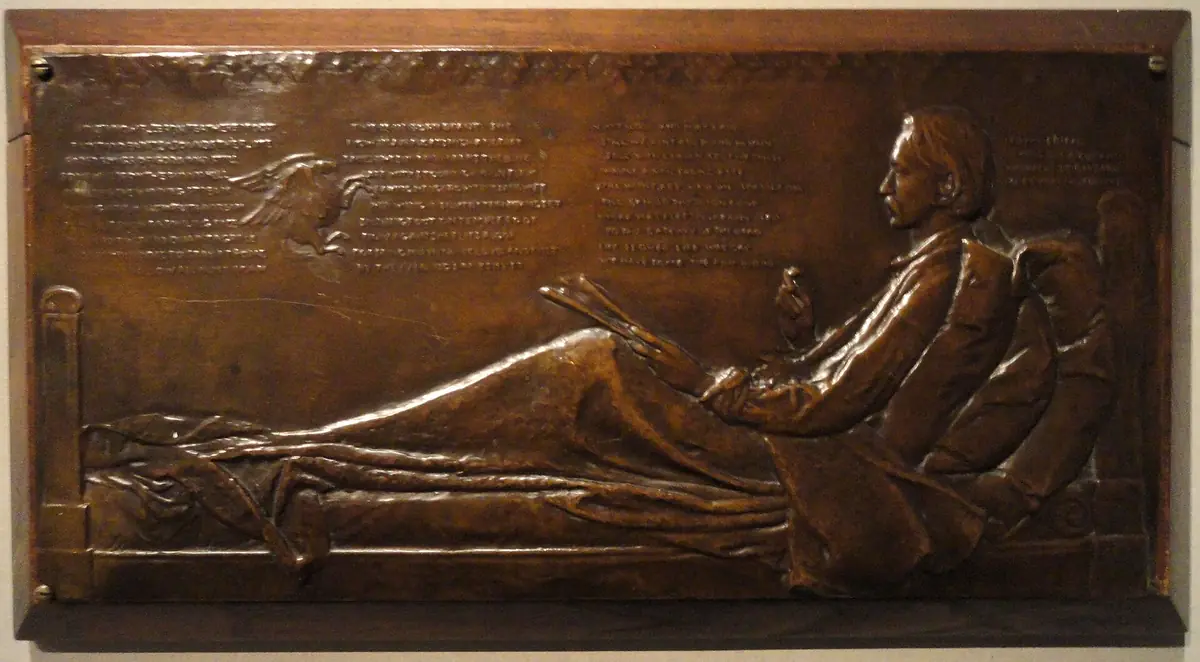
The gift is processional seriousness. His people walk, stand, or sit as if the next minute still mattered. Even a relief, like the Stevenson portrait, has the quiet of a person who has been asked to stay still and has not quite agreed to be only a profile.
Key sculptures
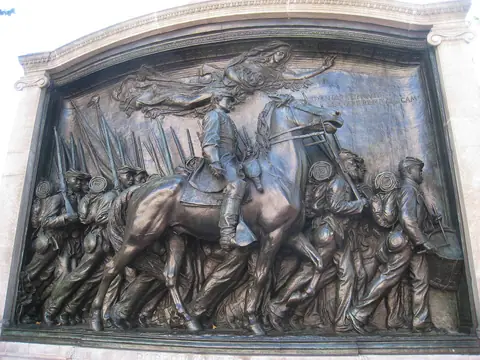
Image: Wikimedia Commons · Public domain The Shaw Memorial
Look closely. The bronze relief on Boston Common: Colonel Shaw on horseback, the men of the 54th Massachusetts marching beside him, a floating allegorical figure above. Look at the packed, advancing line of the soldiers, the overlapping rifles and bedrolls, and the way the colonel is among his regiment, not lifted away from it.
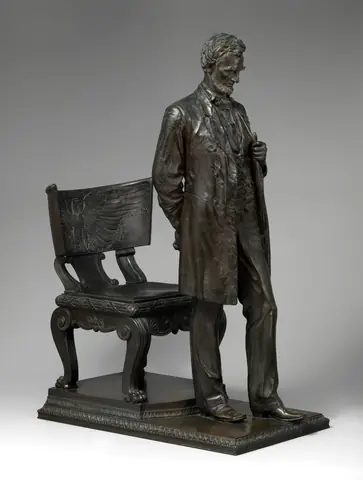
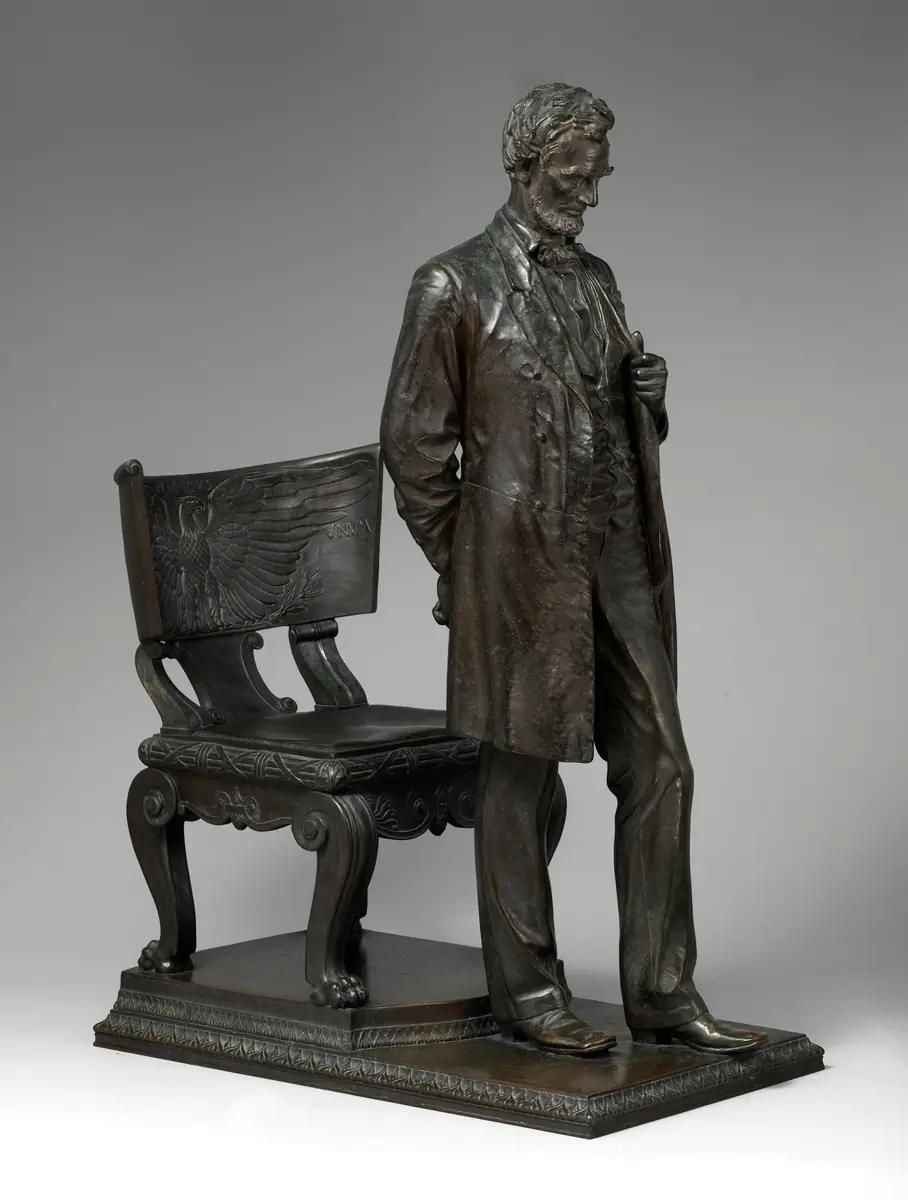
Image: Wikimedia Commons · CC0 (public domain) Abraham Lincoln: The Man (Standing Lincoln)
Look closely. Lincoln stands in front of a chair he has just left, the left hand at the lapel, the right at his side, the head slightly bowed as if mid-thought. Look at the empty chair, the long coat, and the way a president has been made to look like a man who has risen to speak and has not yet quite begun.
In the library: Abraham Lincoln
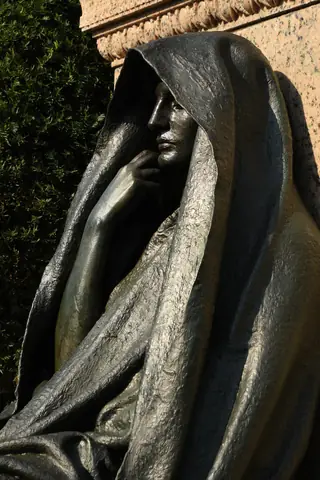
Image: Wikimedia Commons · CC BY 2.0 · Photo: Amaury Laporte The Adams Memorial
Look closely. A close view of the shrouded bronze figure: the face deep in the hood, one hand raised to the chin, the heavy cloak falling in long, simple folds. Look at how little of the body is shown, and at the stillness of a memorial that does not name itself with an inscription of grief.
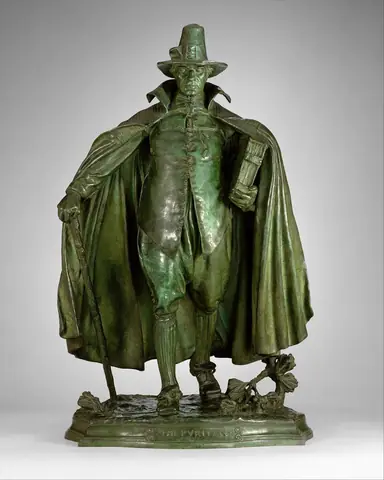
Image: Wikimedia Commons · CC0 (public domain) The Puritan
Look closely. A bronze reduction of the Springfield monument: a walking man in a tall hat and a blown cloak, a Bible under one arm, a staff in the other, the base inscribed with the old spelling of the title. Look at the forward lean, the heavy cape, and the way a single figure has been made to look as if he were still on a road.
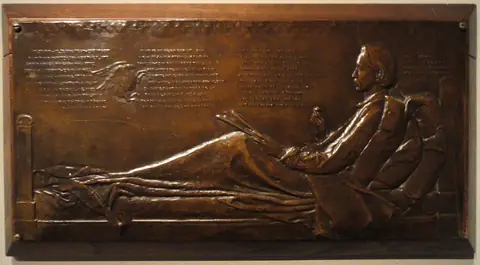
Image: Wikimedia Commons · Public domain Robert Louis Stevenson
Look closely. A bronze relief of the writer, recumbent or half-sitting, papers in his hands, a long inscription on the field of the plaque. Look at the informal pose, the thin, attentive face, and the way a portrait has been made to feel like a visit rather than a ceremony.
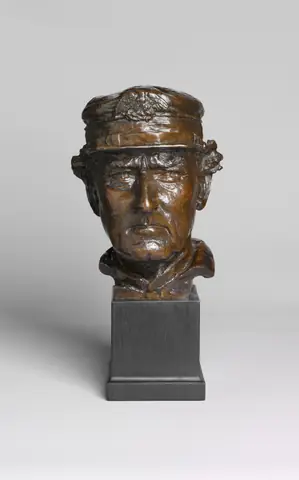
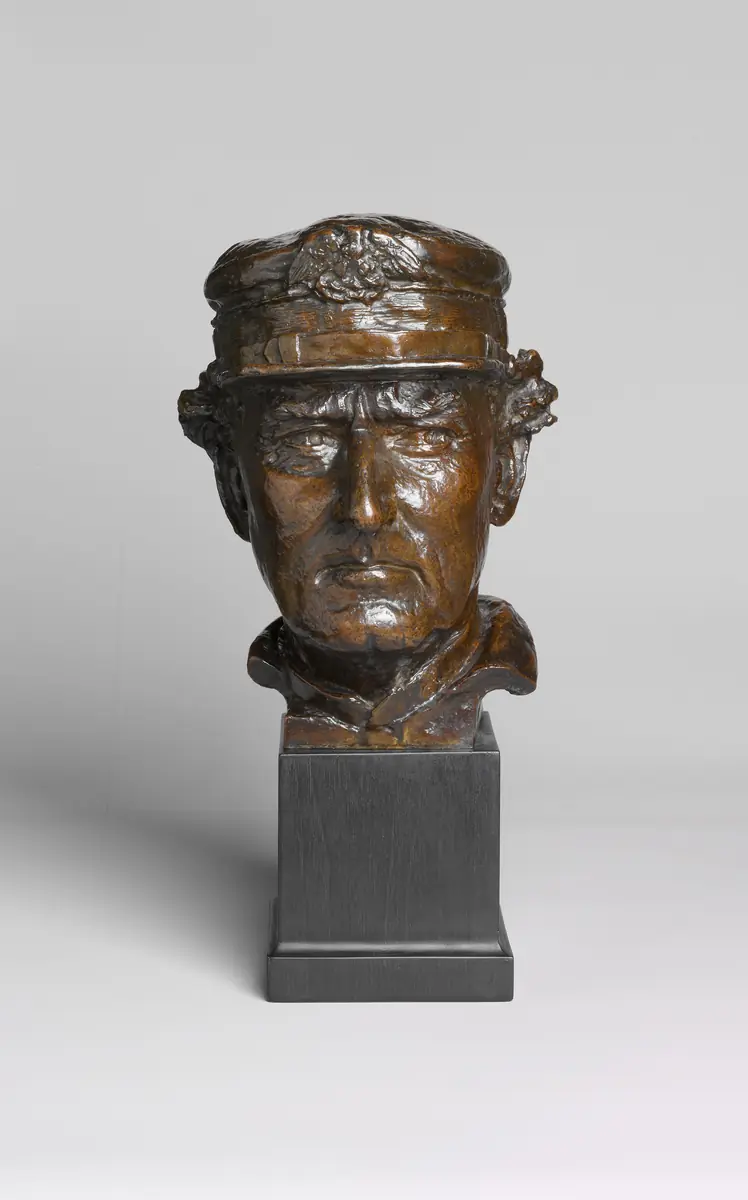
Image: Wikimedia Commons · CC0 (public domain) Admiral David Glasgow Farragut (bust)
Look closely. A bronze bust of the admiral, the head in a naval cap, the mouth firm, the eyes set. Look at the liveliness of the features under the visor, and at the way a public hero has been given a particular, slightly weathered face, not a mask of command only.


What to watch for in Augustus Saint-Gaudens
Look slowly- A regiment that still moves. On the Shaw Memorial, look at the overlapping legs and rifles, and at Shaw on the horse among his men, not above them in a separate sky.
- Lincoln standing, not only seated. The Chicago Lincoln is a man who has just risen from a chair.
- A hood that is a whole figure. The Adams memorial is almost only a shroud and a face.
- A Puritan who walks. The staff, the Bible, and the blown cloak are one motion.
- A relief that can be a portrait. Stevenson is a man in a chair, in bronze, not a stiff medallion only.
Dates and collections follow the holding museums and Wikidata. Images of paintings are photographs of public-domain pictures from Wikimedia Commons or museum open-access releases; photographs of sculpture are used only when the photograph itself is Public domain, CC0, or CC BY with a named credit. Each picture links to its source page with full licence details.