Great Art · Nineteenth century
Auguste Rodin
The sculptor who could make a burgher walk toward death in a heavy cloak, and two hands rise into a cathedral.
Read Auguste Rodin's Great Life →
His life
Rodin was the son of a clerk, failed the official school of fine arts, and spent years as a working craftsman before the world knew his name. He looked harder at living bodies than the academic statues of his youth had done, and he left surfaces rough or unfinished when the thought was already there. Many of the most famous works — the Thinker, the Kiss, the Age of Bronze, the Gates of Hell — are named below, because they are largely unclothed. This page shows the public and portrait gift: the Burghers of Calais and a single burgher, Jean d'Aire; the cloaked Balzac; a bust of Victor Hugo; and The Cathedral, two right hands rising together.
He worked again and again at a subject, in plaster, in bronze, in marble, at different sizes. The gift is not polish. It is attention to what a body does when it is afraid, proud, old, or at prayer, and the courage to leave that visible in the bronze.
Key sculptures
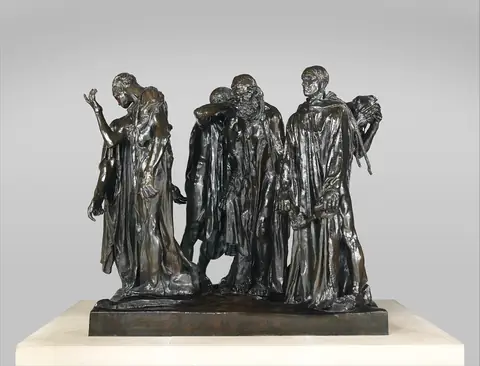
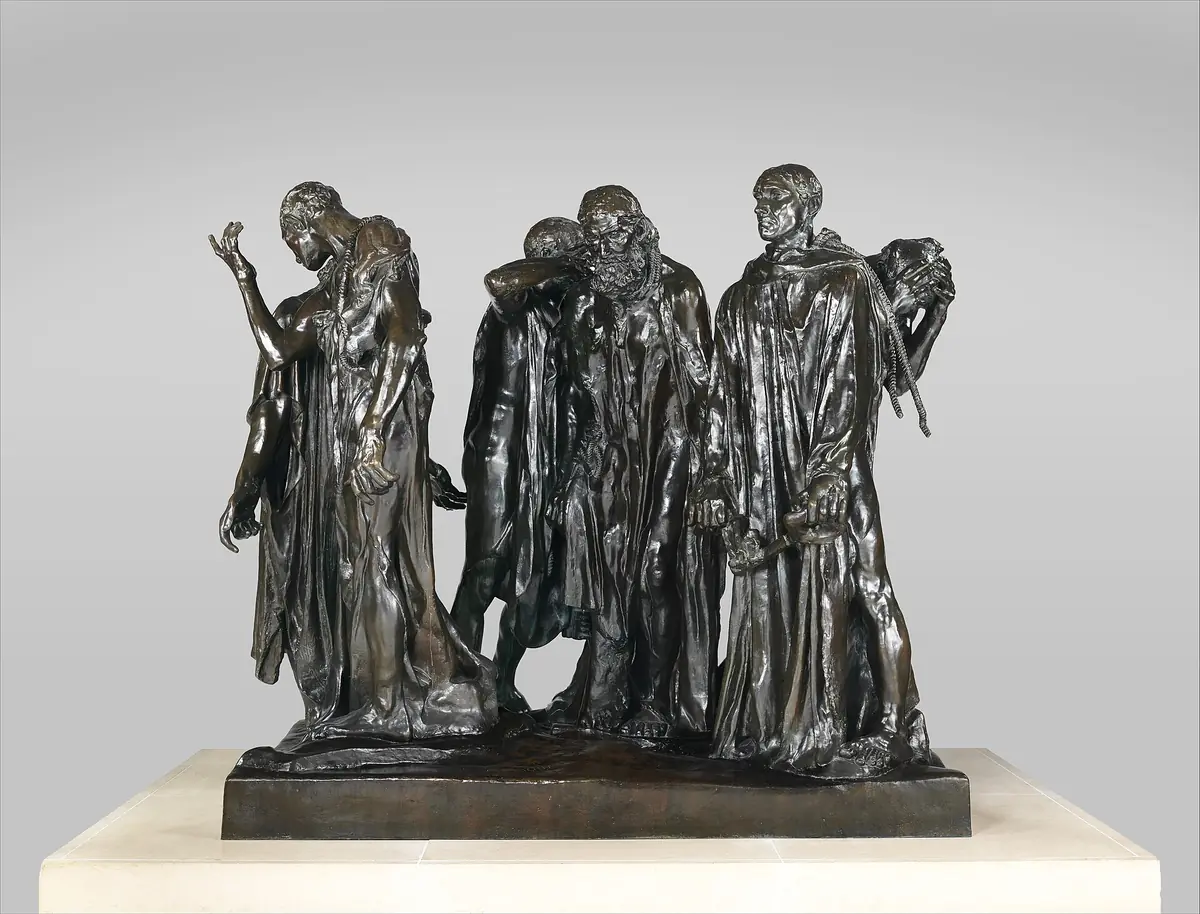
Image: Wikimedia Commons · CC0 (public domain) The Burghers of Calais
Look closely. Six burghers of Calais walk forward in heavy street clothes, ropes at some of their necks, a key to the city among them, each man in a different state of resolve or grief. Look at how they do not form a single heroic pose: one hangs back, one looks down, one already steps out. The story is in the interval between them.
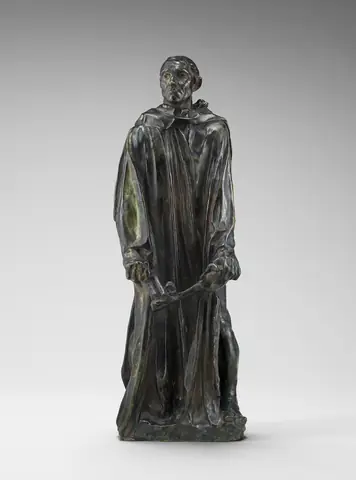
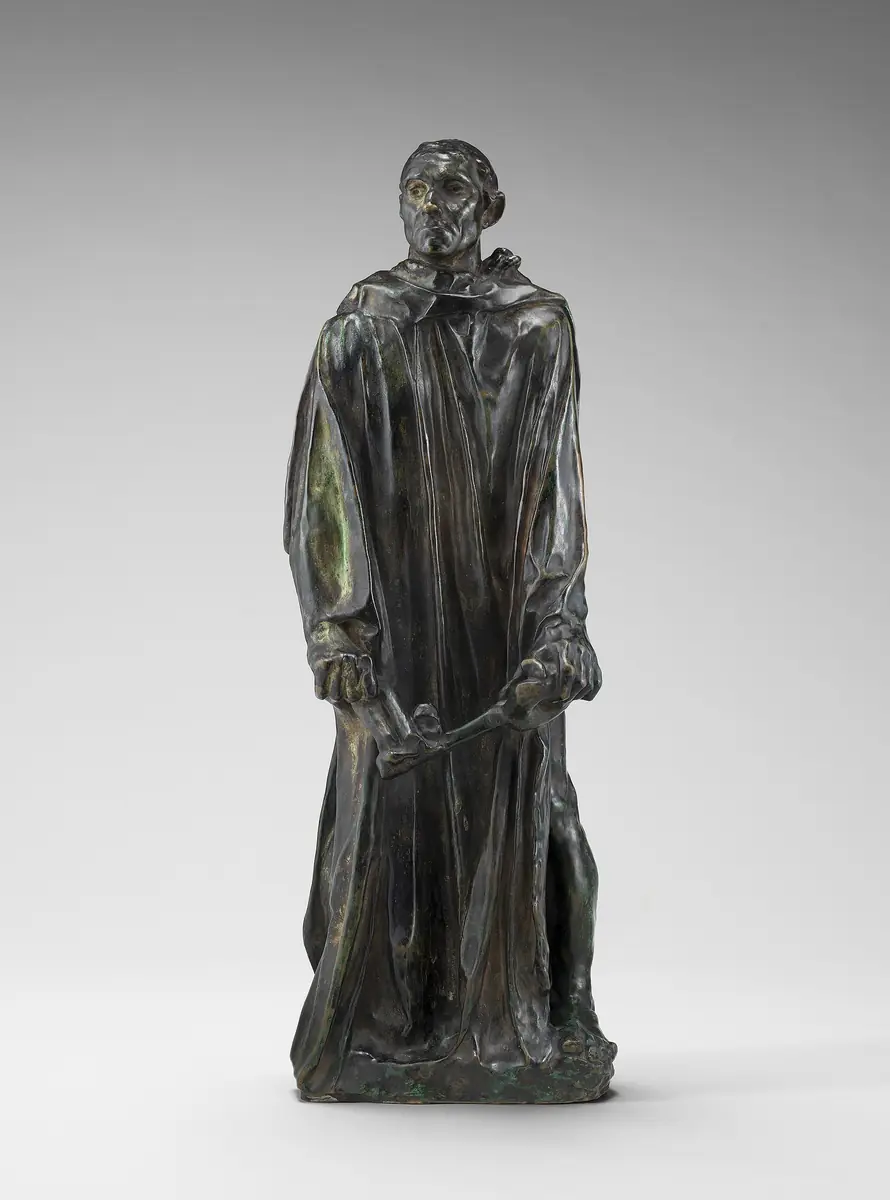
Image: Wikimedia Commons · CC0 (public domain) Jean d'Aire, a Burgher of Calais
Look closely. A single burgher from the same commission, standing in a long cloak, a massive key in his hands, the head bare, the face set. Look at the weight of the key, the fall of the robe, and the way one man from the group can still carry the whole story of a city that has had to offer itself.
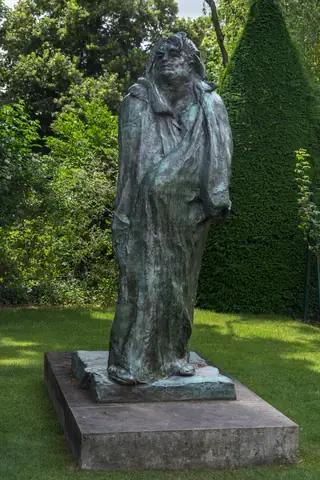
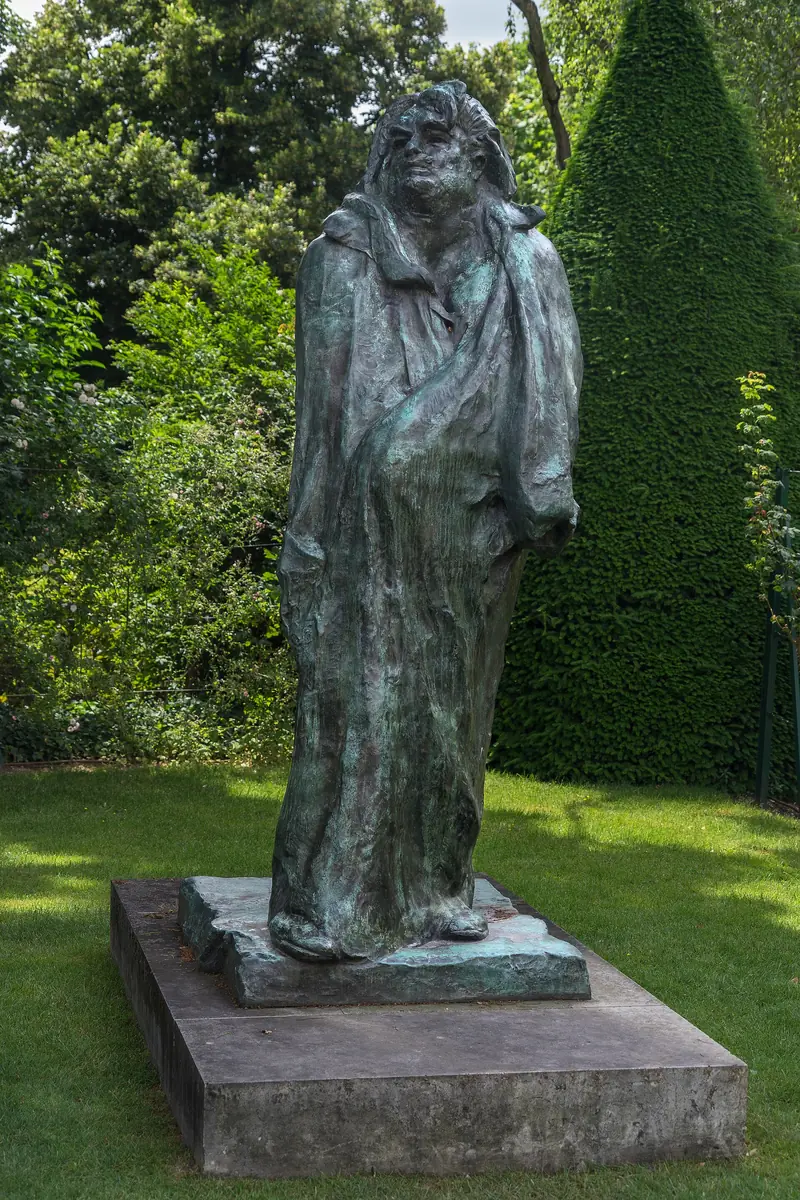
Image: Wikimedia Commons · CC0 (public domain) Monument to Balzac
Look closely. Balzac stands as a column of cloak, the head thrown slightly back, almost no arms or legs insisted on, a writer turned into a single upward mass. Look at how little of the body is described, and at how completely the robe and the head are enough.
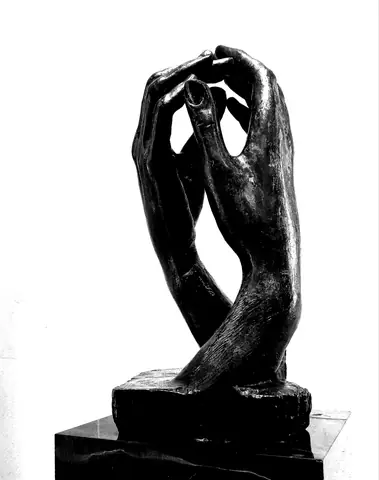
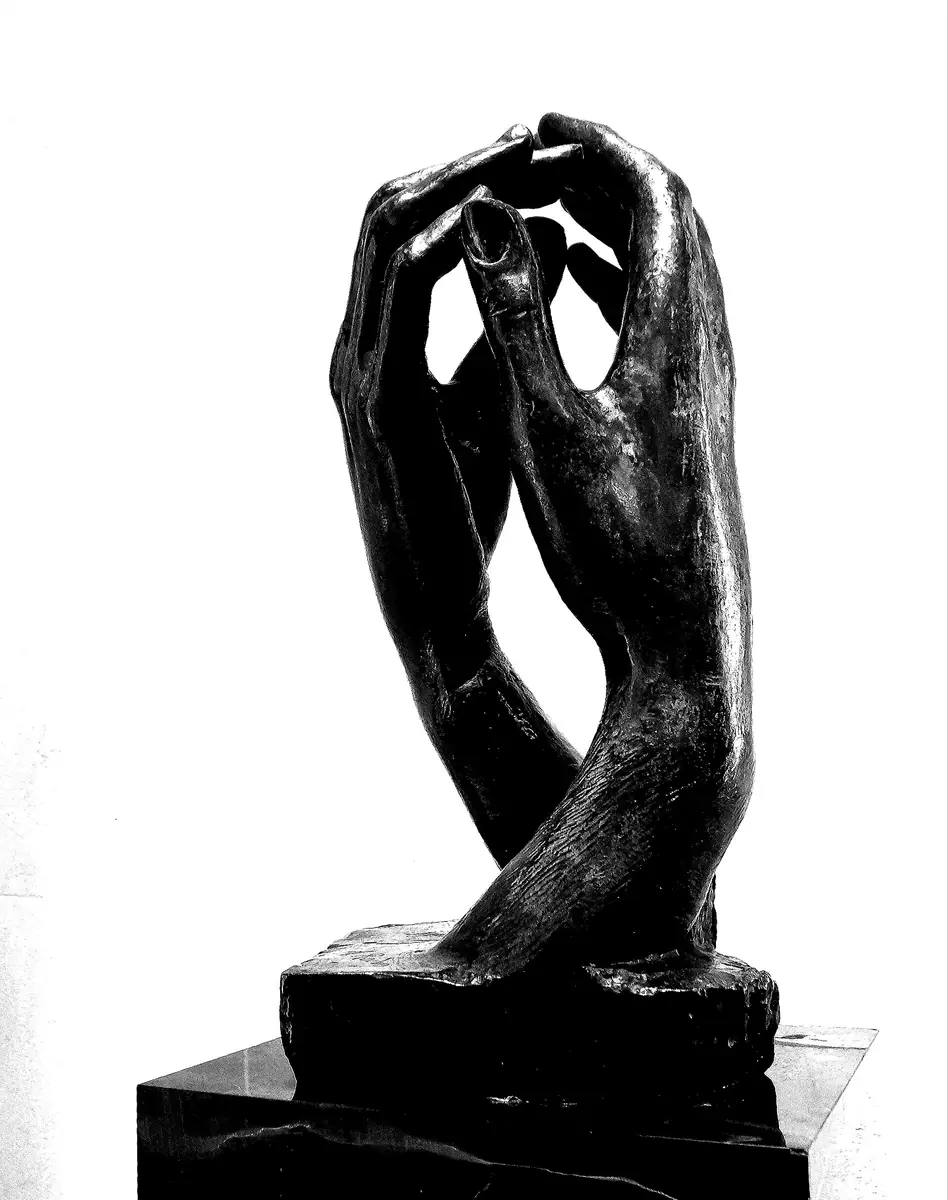
Image: Wikimedia Commons · CC BY 2.0 · Photo: Regan Vercruysse from Stewartsville, New Jersey, USA The Cathedral
Look closely. Two right hands, slightly apart, rise and lean toward each other so that the space between them is like a narrow vault. Look at the long fingers, the hollow they enclose, and the way a complete subject has been made from a fragment of the body.
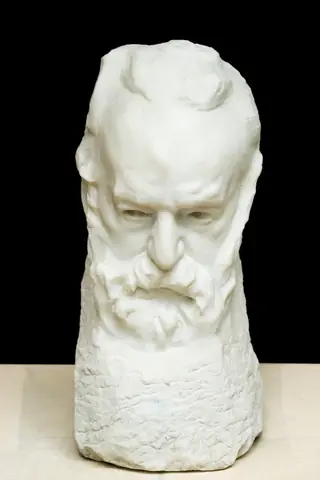
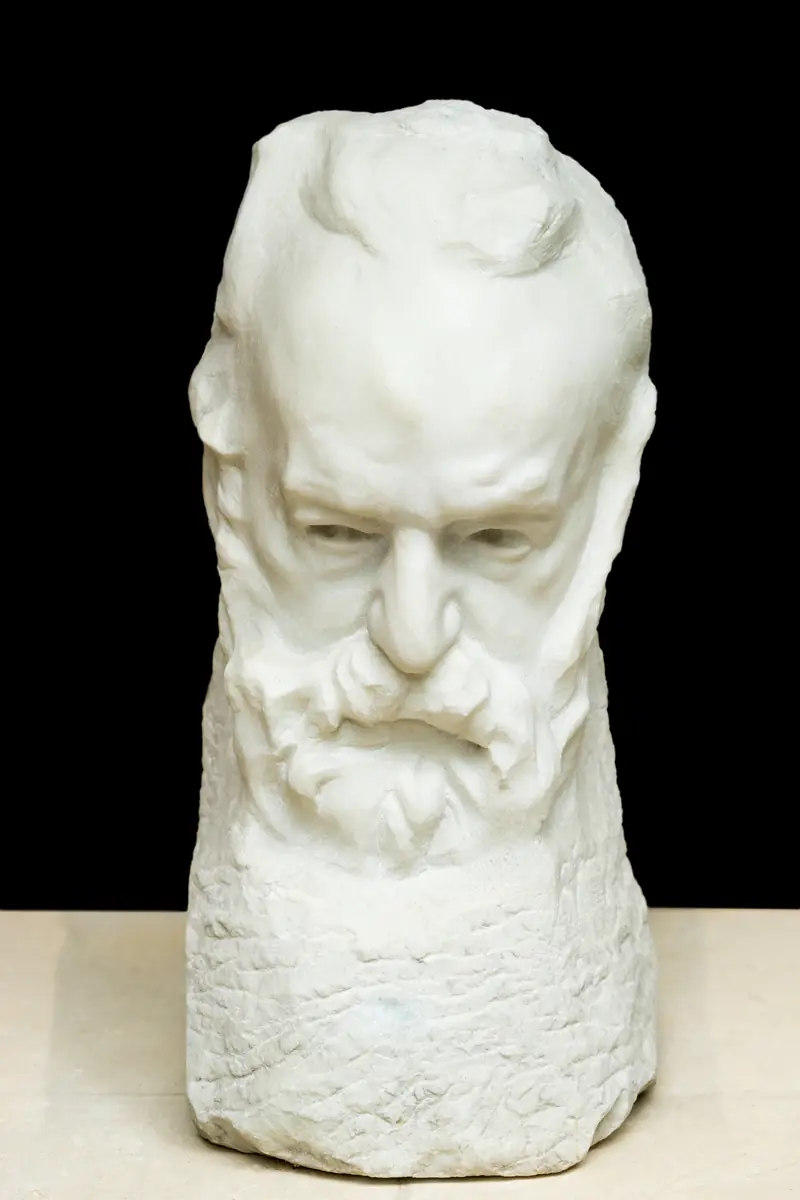
Image: Wikimedia Commons · CC0 (public domain) Bust of Victor Hugo
Look closely. A marble head of the old poet, the brow heavy, the eyes deep, the hair and beard left in a lively, almost weathered mass. Look at the contrast between the worked face and the freer hair, and at the sense of a mind still in weather rather than in rest.


What to watch for in Auguste Rodin
Look slowly- A group that does not stand at attention. The Burghers walk, hang back, and look down; they are not a single heroic pose.
- A cloak as a whole body. Balzac is almost nothing but a robe and a head, and it is enough.
- Hands as a complete subject. The Cathedral is two right hands; look at the space they enclose.
- A portrait that is also a temperament. Hugo's bust is a weather of thought, not a formal mask.
- A surface that is not smoothed away. Rodin lets tool marks and the pull of the clay remain where they help.
For older students
These famous works include nudity, so they are named here but not shown. Teachers and parents can decide when to look at them together.
- The Thinker, 1880–1904 (several sizes), Musée Rodin, Paris, and many casts. A seated male nude, originally conceived for the Gates of Hell.
- The Kiss, 1882–1889, Musée Rodin, Paris, and other versions. An embracing couple, unclothed.
- The Age of Bronze, 1875–1877, Musée Rodin, Paris, and other casts. A standing male nude, once accused of having been cast from life.
- The Gates of Hell, 1880–1917, Musée Rodin, Paris, and other casts. A great bronze door crowded with many unclothed figures.
- The Walking Man and other fragmentary figures, various dates, Musée Rodin and elsewhere. Several of the most famous fragments are unclothed torsos or legs.
Dates and collections follow the holding museums and Wikidata. Images of paintings are photographs of public-domain pictures from Wikimedia Commons or museum open-access releases; photographs of sculpture are used only when the photograph itself is Public domain, CC0, or CC BY with a named credit. Each picture links to its source page with full licence details.