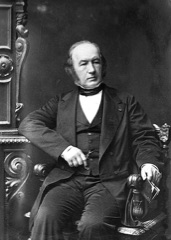
Claude Bernard
1813–1878 · French physiologist who established the experimental method in medicine and the idea of the internal environment of the body.
Claude Bernard was born in 1813 in Saint-Julien, a village in the Beaujolais region of France, where his family grew grapes. He worked as an assistant to a pharmacist in Lyon and wrote plays before a critic advised him to study medicine. In Paris he became assistant to the physiologist François Magendie at the Collège de France, whom he later succeeded as professor. Through careful experiments on animals, Bernard discovered that the liver stores sugar as glycogen and releases it into the blood, showed the role of the pancreas in digestion, and studied how nerves control the widening and narrowing of blood vessels and how poisons such as curare and carbon monoxide act on the body. He developed the idea of the milieu intérieur, the internal environment that the body keeps stable, which later inspired the concept of homeostasis. His Introduction to the Study of Experimental Medicine (1865) explained his method of hypothesis and controlled experiment. He was given a state funeral when he died in Paris in 1878.
Claude Bernard is also an author in the library: author page and works.
Faith: Sometimes described as an agnostic; after his death a cardinal claimed he had been a fervent Catholic. His beliefs remain uncertain. Source: Wikipedia

Key dates
- 1813 Born in Saint-Julien, France
- 1855 Succeeds Magendie at the Collège de France
- 1865 Introduction to the Study of Experimental Medicine
- 1868 Elected to the Académie française
- 1878 Dies in Paris; state funeral
Read about them
Grades 9–12
- An Introduction to the Study of Experimental Medicine · In the library
More lives
Edwin A. Abbott · Charles Babbage · Clara Barton · Elizabeth Blackwell · Eugen Bleuler · George Boole