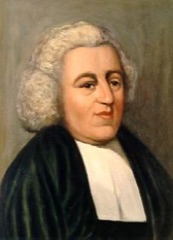
John Newton
1725–1807 · Former slave-ship captain who became an Anglican clergyman, wrote Amazing Grace and later supported the abolition of the slave trade.
John Newton was born in London in 1725, the son of a merchant ship's captain, and went to sea at eleven. Pressed into the Royal Navy, he deserted, was flogged, and later worked in the West African slave trade, at one point being held in harsh conditions himself. During a violent storm at sea in 1748 he turned to prayer, which he later saw as the start of his conversion, though he continued for some years as mate and then captain of slave ships. After leaving the sea in 1754 he became a tide surveyor in Liverpool, studied for the ministry and in 1764 was ordained curate of Olney in Buckinghamshire. There he and the poet William Cowper wrote the Olney Hymns (1779), which include Amazing Grace. From 1780 he was rector of St Mary Woolnoth in London, where he advised William Wilberforce. In 1788 he published Thoughts upon the African Slave Trade, describing its cruelties. He died in London in 1807, the year Parliament abolished the British slave trade. His hymn Amazing Grace tells his own story of conversion.
John Newton is also an author in the library: author page and works.
Faith: Former slave-trader who became a clergyman of the Church of England. Source: Dictionary of National Biography (1885–1900) (via Wikisource)

Key dates
- 1725 Born in London
- 1748 Storm at sea and conversion
- 1764 Ordained curate of Olney
- 1779 Olney Hymns published
- 1788 Thoughts upon the African Slave Trade
- 1807 Dies in London
Read about them
Grades 9–12
- Olney Hymns · In the library
More lives
Richard Allen · William Blake · James Boswell · Robert Burns · William Cowper · John Dickinson